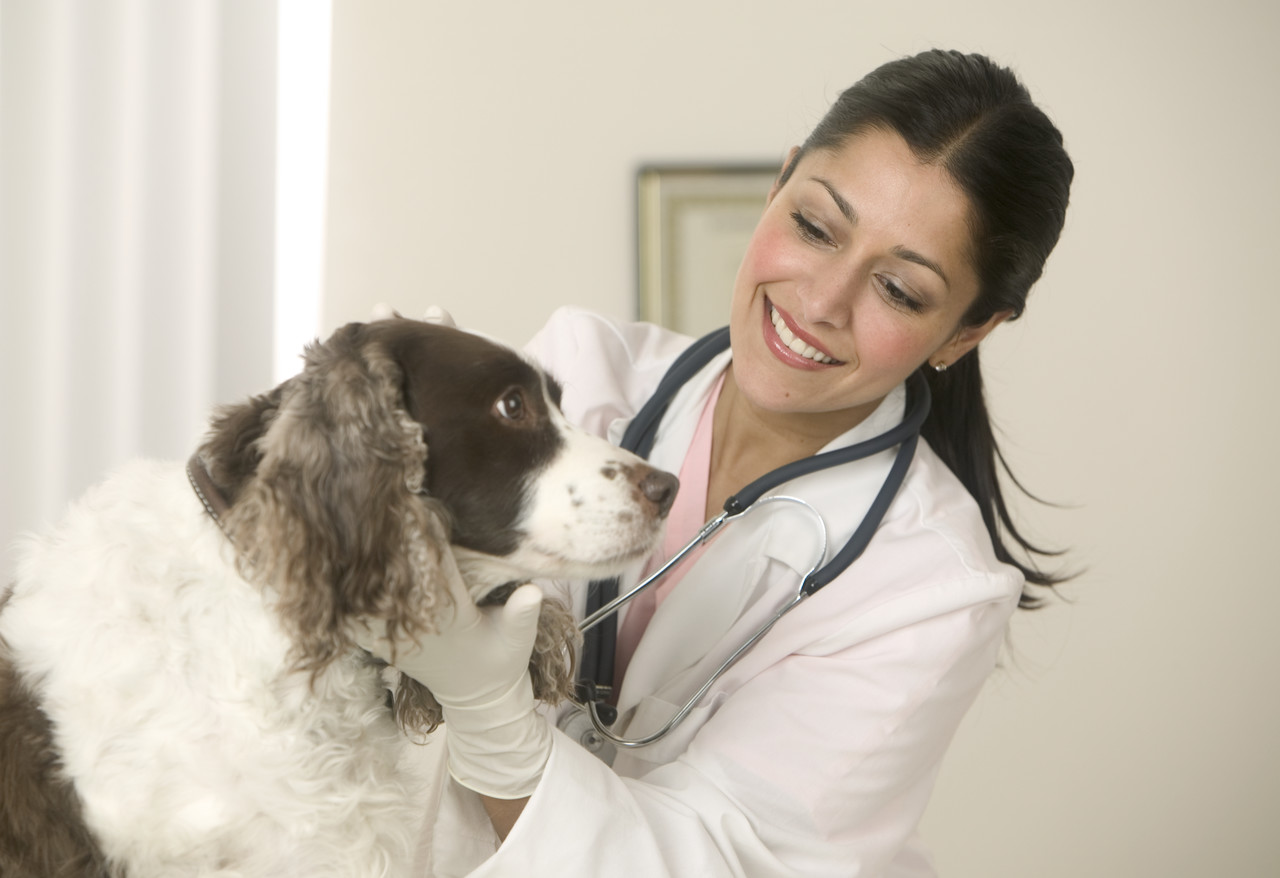
Conventional vs Alternative Animal Healing Methods

Photo courtesy of ct.gov.

Conventional (Traditional) western veterinary medicine is exactly what you have known all your life. You take your pet to the vet when they are sick or for an animal check- up much like you would do for yourself. If your pet is ill, the vet may prescribe antibiotics, pills, salves etc. Your vet will use diagnostic tests like x-rays, MRIs, ultra sounds and even exploratory surgery could be an option to obtain information to enable your veterinary professional to make a diagnosis. If your pet is healthy, they will perform several techniques to verify you pet’s health, for instance, listening to their heart or looking in their mouth and ears. They will probably run their hands over your pet looking for “issues”. You may be required to bring in a stool or urine sample for analysis. You can obtain maintenance prescriptions like heartworm or flea and tick medicines from your neighborhood vet.

While there is nothing wrong with using traditional western medicine to help your pet, there are; however, options for expanding the care you provide to your beloved animal companion. When you use alternative medicine to help your pet feel better or remain healthy you employ many different tactics for wellness.

Complementary medicine refers to healing practices and products that work in conjunction with traditional medicine. For example, a cancer patient receiving chemotherapy may also undergo acupuncture to help manage chemo side effects.

Alternative medicine is not used as a complement to, but rather as a substitute for traditional therapy. An example would be a pet with cancer whose owner forgoes recommended chemotherapy or surgery and instead chooses to treat the disease with specific dietary changes.

Complementary and alternative medicines are categories of medicine that includes a variety of treatment approaches that fall outside the realm of conventional medicine. Employing holistic therapies and medicine is about viewing and treating the body as a whole. This is very different from the conventional medical approach.

Integrative medicine draws from both complementary medicine and alternative medicine and combines these with traditional Western therapies.

Many pet owners find that the common sense principles integrative medicine relies on really resonate with them. Often, common sense principles for creating wellness are overlooked in the search for hard-core science but not without consequences.

Lots of different therapies fall under the umbrella of alternative medicine (also called holistic medicine). Many of these therapies have this philosophy in common: consider and treat all aspects of the pet’s life, not just the symptoms. Check in with my blog next week to learn more about alternative and complementary medicine.

Animal Communication… Let’s Try It!

Nico On the PhoneAnimal communication takes a lot of practice. You must clear your mind and open it to someone else’s thoughts, which is hard work for a busy individual in today’s world.

For a beginner, I would suggest a quiet meditation prior to trying the process. This will relax you and put you into the correct frame of mind to receive information. Try to communicate with   a close friend’s pet when you first begin. Do not try this with your own pet. You know too much about them to put this exercise to the test!

To start the process, sit in a quiet place, clear your mind, look softly at the animal’s picture or envision them in your head (if you know them well, this should be easy). Introduce yourself to the animal, tell them you’d like to ask them a question and see if it is okay that you talk with them. Wait for a response. This introduction is performed out of respect for the animal.

You may “hear” a reply or just get a sense of knowing what the response was. If you receive the go-ahead, ask the animal a question in your head and the first piece of information you receive, either by “hearing”, “knowing”, or “seeing visually in your head” will be your answer. You should experience the response flying into your head very quickly. Sometimes it seems you didn’t even get the entire question out of your mind and you’ve already received an answer – it’s that quick! Once you receive the answer, thank the animal for speaking with you, it’s only common courtesy! Your “thank you for speaking with me” will indicate to the animal that your session is ended and you are disconnecting from them.

Do NOT tell the pet’s owner ahead of time what question you will be asking but be sure that the answer will be easy to obtain from the owner. Write down the response of the pet, thank the pet for speaking to you then call the owner to tell them the question and the answer that you received. Don’t be disappointed if what you heard doesn’t match the owner’s reply. Just keep practicing and believe in yourself!

Listed below are some easy questions to ask your pet friend when you first start communicating:

What is your favorite toy?

What treat do you like the best?

Where do you sleep?

As you practice your animal communication skills, remember to not say anything that is not true or did not come from the animal. Have fun with the process and you will learn a lot. Our animal companions have a sense of humor and will say the funniest things, much like children! Be aware, they may decide to open up to you and tell you some very personal information regarding their home life. Please be sensitive to all individuals involved and only repeat disclosures that will not embarrass your friends or relatives. By the way, some animals may not wish to communicate with you and that is okay. Simply tell them ‘thank you’ maybe they will wish to talk at another time. Be honest if the animal declines to talk and tell your client/friend that their companion did not wish to communicate at this time.

Have fun, practice and be open to what you will hear! Our pets say the darnest things!

What is Animal Communication?

blog 2 picAnimal communication uses telepathy to communicate a thought from one person/animal to another. Messages can be given in symbols (clairvoyance) which I can visually see or in ‘thought form’.   For me, it sounds like you pet is talking to right to me (clairaudience) in my mind. In other words, I actually hear a voice. In listening to your pet, I gain knowledge about their physical and mental health and learn their choices while battling an illness or struggling with behavior problems.

In animal the communication process I am simply the go between for you and your pet. You let me know your questions and I ask your pet to obtain the answers. The pet does not have to be present but I like a photograph of the pet, I connect to the essence by looking into their eyes. Almost 99% of my animal communications are performed at a distance whether it is across a room or across the world. Many times your pets have a request for their owners. Some of the requests I have heard are shown below (this is just a small sample):

  • Change the litter box more often, get a new litter box, change the location of the litter box, put another litter box in the house
  • Change their food, locate where they eat
  • Do not take them to that groomer, do not pull their hair when combing it
  • Complaints regarding other members of the family include other pets
  • Issues with cleaning products used in the house and on floor/carpets
  • Reassurance regarding a death or upcoming passing
  • Changes in their routine or household (placement of furniture, painting, young adults off to college, divorce)

Technically, telepathy is the communication between beings using thoughts, feelings, desires, or other means that cannot be understood in terms of known scientific laws. Telepathy is considered a form of extra-sensory perception and is often connected to various paranormal phenomena such as precognition, clairvoyance and empathy.

Why use Animal Communication
Interspecies telepathic communication is used to help our companion animals to have their voice. Through animal communications we can learn how animals think and look at the world. Once we understand how an animal thinks, agreements can be made on many different types of issues.

Stumbling Blocks
Animal communication must be performed with an open heart to let the information be received accurately. A hindrance in the communication process comes when you must learn to trust that you are receiving information from your animal companion and to recognize when you’ve placed your own spin on the information. Once a dog told me he wanted his bandana back, because he had lost it. He said it was cool. I thought he was telling me that he thought he looked cool in it and told his owner that he wanted a new one because he thought he looked cool. She laughed and said he wanted one because he was a search and rescue dog and it kept him cool because it was a COOLING bandana (the kind you soak in cold water or freeze). That’s what I call putting my own spin on it! As you can see, I ASSUMED he was trying to tell me he looked cool and he was actually telling me it kept him cool!

As you can see, animal communication has many purposes and many rewards. Why not try it today? What would you learn if you’d only listen?

A Tail of Hope’s Faith – Writing the Story

9781452599922_COVER.inddAs an animal communicator and healer I have had many miraculous experiences. I firmly believe pet owners would benefit from hearing and learning about how to deal with the joy, love and ultimate loss of a beloved animal friend.

The knowledge that I have gained from talking to our animal companions astounds me. More importantly, through my thirteen years as an animal communicator and my ten plus years as an energy healer, I know that I have important information to provide to those that have an animal friend. This information should be especially welcome if they have had the heart-wrenching loss of a beloved pet or are currently going through one of the worst times in their life – trying to help a pet that has been diagnosed as terminal.

My spirit guides always told me I had a book inside me but I was not to write it just yet. As frustrated as I felt, I kept asking when I would write it, not knowing what I would write about. At the beginning of 2013, out of the clear blue, I was told through my psychic mentor that I was to write my book. The problem was, I still didn’t know what I should write about. I had so many experiences and so much to say, I wasn’t sure what to focus on. Not to worry–spirit provided again. I received a clear message that the name of the book was to be A Tail of Hope’s Faith.   Yep, they even showed me how TAIL was to be written. In the title was my answer. I was to write Hope’s story. I had just come full circle in an amazing true story of one dog’s battle against the inevitable and her triumph through re-incarnation to return to those she loved.

Let me say from the start that I believe very deeply in animal hospice. I believe our animals should be consulted on their “life wishes.” They should have a voice in how and when they will transition into spirit. Based on this belief, I have talked to and assisted many of my pet clients and their owners through the hardest decisions of their lives.

This book is a true story of dedication, love and perseverance on the part of a dog named Hope, her family and an animal communicator. Through animal communication, specific holistic healing along with the diligent assistance of her family, we were able to extend Hope’s last days. Hope was able to express her thoughts and feelings while we provided healing and guidance in a very difficult situation. Together, we gave Hope a good quality of life.

Hope had a rough beginning to her life but she didn’t have a rough end. The love she received from her human family and their dedication to helping her was a true testament to their belief that she deserved a chance just as much as a human being. She was a valuable family member who warranted all the care, love, support and healing they would provide because she was one of them.

I am humbled and proud to have been part of her journey and my life is richer for having known her. Thank you, Hope; you have provided me, your family, and everyone who knows your story, with the essence of your name–Hope.

Smuckers Buying Pet Food Maker

The J . M. Smucker Company is buying Big Heart Pet Brands because they feel it supports their purpose of helping to bring families together to share memorable meals and moments and recognizing that our pets are cherished members of the family too.

The following is a list of the food products included:  Meow Mix, Milk-Bones, Kibble N bits, 9Lives, Natural Balance, Pup-Peroni, Gravy Train, Nature’s Recipe, Canine Carry Outs, Snausages, Meaty Bones, Pounce, Jerky Treats, Alley Cats, Milo’s Kitchen.

I applaud their thinking!

Pet Food Recall – OMA’s Purr Cat Food

Oma’s Purr cat food, an Oma’s Pride product, is being recalled nationwide after routine testing revealed salmonella in some lots of the product, according to a news release from the Food and Drug Administration.

The Avon, Connecticut-based company is recalling its 12-ounce (UPC: 8 79384 00017 9) and 2-pound (UPC: 8 79384 00018 6) Purr-Complete Feline Poultry Meal products, manufactured on Sept. 12, 2014, with a use by recommended date of Sept. 12, 2015, with code #1524. The products are frozen and have plastic packaging under the Oma’s Pride brand.

Symptoms in animals may include fever, diarrhea, vomiting, loss of appetite and an abnormally fast heart rate. Some pets will have only decreased appetite, fever and abdominal pain. Infected but otherwise healthy pets can be carriers and infect other animals or humans. Contact a veterinarian if your pet has symptoms after consuming the recalled food.

If you have a recalled product, do not feed it to your pets but dispose of it safely in a tightly sealed trash receptacle or return it to the place of purchase for a refund. For more information, go to the company’s website at omaspride.com or call 1-800-678-6627 9 a.m.4:30 p.m. Monday- Friday.

Answers for Winter Respiratory Horse Health

By: Dr. Eleanor Kellon, VMD

As seen in: EWM Vol. 9 Issue 6

For most horses, winter means more time confined to the stall or indoor arena. Unfortunately, protection from the weather can come at the expense of lung health for some equines.

Inflammatory airway conditions

Inflammatory airway disease (IAD) is a condition characterized by few symptoms except a cough when the horse is at rest. When exercising, however, it shows up as poor performance, exercise intolerance, or coughing, together with an inflammatory reaction in the lung, often with excess mucus. This is unrelated to infection.

IAD can occur at any age, but the first bout is typically triggered by stall confinement and exposure to common irritants such as dust and molds from straw and hay, and airborne bacterial endotoxins, as well as ammonia.

RAO, recurrent airway obstruction, is a chronic allergic and/or hypersensitivity reaction that may have some similarities to the human condition “farmer’s lung”. Airflow is obstructed by a combination of inflammation, mucus and bronchospasm. In the later stages, gas exchange may be compromised because of irreversible damage to the lung tissue.

A major difference between IAD and RAO is the symptoms that present at rest with the latter. These include coughing, flared nostrils, expiratory wheezing, and a prominent “heave line” at the junction of the chest and abdomen where the diaphragm muscle is located. Ability to exercise is severely compromised, although correct management and treatment can ease or eliminate symptoms as long as there is yet no permanent damage.

Prevention and management

In both conditions, exposure to high concentrations of organic and inorganic material in the air can both cause and worsen symptoms. The last place these horses should be is inside a tightly closed barn. If the horse must be confined, you should guarantee good circulation of fresh air throughout the barn. Bedding should consist of woodchips or paper in all the stalls, not just those of affected horses. Hay should not be stored in the same building and should be wetted down thoroughly before feeding.


Many effective systemic and inhaled drugs can be tried and this approach should be discussed with your veterinarian. Some horses can be managed with reduced or no drugs, through a combination of environmental management and supplements.

Supplementing for lung health

Several studies have identified oxidative stress as a component of lung disease in the horse. A 2012 study found reduced serum levels of the antioxidants copper, zinc and selenium, and the glutathione enzyme system. A 2006 study found significant decreases in vitamin C in the lung fluid of RAO horses exposed to organic dusts (mold); vitamin C has been shown to be a major antioxidant in the equine lung. Revving up the glutathione system in the lungs can also help protect against the effects of organic acid exposure.

Horses can synthesize their own vitamin C and those on fresh pasture also have very generous amounts in their diet. For horses not on green pasture, supplementing 1000 to 4000 mg/day is reasonable to help counteract the drops caused by lung disease.

Plant-based antioxidants both directly combat oxidative stress and also have a sparing effect on vitamin C and the glutathione enzyme system. These antioxidants include citrus bioflavonoids, quercetin, grape seed extract, N-acetyl-cysteine and herbs such as turmeric.

Spirulina is also an antioxidant with the added benefit of blocking histamine release, and is often very helpful for horses with lung disease at a dose of 2 grams/100 lbs bodyweight, given twice daily.  Bronchospasm can be directly addressed by the use of Gynostemma pentaphyllum (Jiaogulan) at 20 mg/100 lbs bodyweight.

If you suspect breathing issues, get a diagnosis as soon as possible. Management changes and supplementation can be very effective in mild and moderate cases, and may reduce the need for medications at all stages.

Eleanor Kellon, VMD, currently serves as the Staff Veterinary Specialist for Uckele Health & Nutrition. An established authority in the field of equine nutrition for over 30 years, Dr. Kellon is a valuable resource in the field of applications and nutraceuticals in horses.

Founded in 1962, Uckele Health & Nutrition has been a trusted leader in the formulation, development and manufacture of quality nutritional supplements for 50 years. uckele.com

Pets and the Winter Weather

The American Veterinary Medical Association, Humane Society of the United States and American Society for the Prevention of Cruelty to Animals offer these safety tips for pets:

■ Keep them inside when the temperature drops below freezing.

■ Bang on the hood of your car before starting it to scare away stray cats that may have sought warmth from the engine.

■ Never let your dog off the leash on snow or ice, especially during a snowstorm, when dogs can lose their scent and become lost. More dogs are lost during the winter than any other season, so keep ID tags on a well-fitting collar.

■ Wipe off your dog’s paws, legs and belly after a walk to remove ice, salt and antifreeze. Make sure a freshly bathed dog is completely dry before taking it outside.

■ Put a coat or sweater with a high collar on short-haired dogs.

■ Check your dog’s paws frequently for signs of cold-weather injury or damage, such as cracked paw pads or bleeding. During a walk, sudden lameness may be due to ice accumulation between the toes.

■ Postpone housebreaking puppies during the coldest months.

■ Don’t leave a pet alone in a room with a space heater. It could get knocked over and start a fire.

■ Dogs that can tolerate long, cold walks — the larger breeds with thick fur — will need to eat more high-protein food.

■ Pets need a place to sleep off the floor and away from drafts.

■ Dogs that spend any time in the yard must have a dry, draft free shelter large enough to lie down in, but small enough to retain body heat. The floor should be a few inches off the ground and covered with cedar shavings or straw. The doorway should be covered with waterproof burlap or heavy plastic. Do not use metal bowls for food and water

■ Feral cats need shelter, too. Learn how to make a cat shelter at tinyurl.com/njalq4d.

■ ”The best tip of all: keep your pets with you,” the Humane Society says. ”The happiest dogs are those who are taken out frequently for walks and exercise, but kept inside the rest of the time.”