Do you know how to Bandage your Horse?

Diane Weinmann's avatarDiane Weinmann's HOPE

There are right and wrong ways to bandage horses’ limbs, no matter the wrap’s purpose

By Christy Corp-Minamiji, DVM
wrap-polos-on-horse

At some point nearly every horse, from the fine-boned, flashy Arabian halter horse to the cowboy’s sturdy, no-frills roping mount, will sport a wrap or bandage on one or more legs. Just because we see bandages around the barn frequently doesn’t mean bandaging and wrapping are easy, and that bandages and wraps are interchangeable and always appropriate. Before you reach for the nearest roll of Vetrap or grab that splint boot out of your tack trunk, look at some of the basic principles behind bandaging or wrapping equine limbs.

Owners commonly apply bandages to shield recent wounds or tendon or -ligament injuries, to protect during shipping or performance, and to prevent fluid accumulation in the limb (“stocking up”) during stall rest. Reid Hanson, DVM, Dipl. ACVS, ACVECC, professor of equine surgery…

View original post 1,822 more words

Do you know how to Bandage your Horse?

There are right and wrong ways to bandage horses’ limbs, no matter the wrap’s purpose

By Christy Corp-Minamiji, DVM

wrap-polos-on-horse

At some point nearly every horse, from the fine-boned, flashy Arabian halter horse to the cowboy’s sturdy, no-frills roping mount, will sport a wrap or bandage on one or more legs. Just because we see bandages around the barn frequently doesn’t mean bandaging and wrapping are easy, and that bandages and wraps are interchangeable and always appropriate. Before you reach for the nearest roll of Vetrap or grab that splint boot out of your tack trunk, look at some of the basic principles behind bandaging or wrapping equine limbs.

Owners commonly apply bandages to shield recent wounds or tendon or -ligament injuries, to protect during shipping or performance, and to prevent fluid accumulation in the limb (“stocking up”) during stall rest. Reid Hanson, DVM, Dipl. ACVS, ACVECC, professor of equine surgery and lameness at Auburn University’s College of Veterinary Medicine, in Alabama, adds topical dressing application, immobilization, and support to this list. However, bandaging and wrapping, while useful, are not wholly benign. Improper application and/or use of an inappropriate bandaging material can do more harm than leaving the leg unwrapped.

Architecture of a Bandage

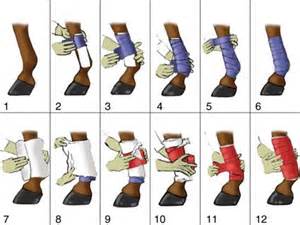
Bandage design varies according to purpose, but most bandages include the same two to three layers:

·         Topical dressing, which might be a liniment, medicated pad, ointment, or powder. These are generally used in horses with injuries or skin conditions.

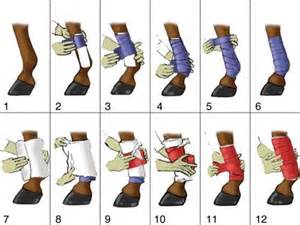
·         Thick cotton padding such as practical (roll) cotton, layers of sheet cotton, cast padding, or fabric quilt or pillow wraps.

·         Compressive/securing layer such as stable/track bandage, Vetrap, gauze, polo wrap, elastic tape, or stockinette.

Of course, veterinarians might modify or augment this basic structure to suit particular circumstances. They might recommend adding splints or bandage casts to provide immobilization in the case of a wound in a high motion area or with a severe tendon injury. As for protection, owners might use Velcro-style shipping boots, single-layer devices that provide skin protection but little compression. In contrast, some wraps and boots intended for performance might provide focal protection suited to a particular sport.

And some might not look like a traditional or prefabricated bandage at all. For some wounds, such as those in areas that are difficult or detrimental to immobilize or where topical medication application is the main requirement, Hanson describes a minimalist wound covering technique known as the “Jolly method.” This technique uses Velcro tabs to secure a wound dressing and a stockinette tube as covering.
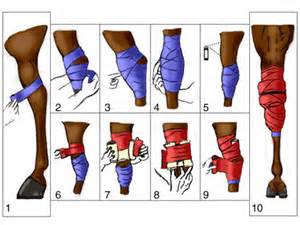
wrap-horse-hock

Bandage and Wrap Uses

Wounds Owners and veterinarians commonly bandage limbs to protect wounds and surgical sites. A bandage can prevent contamination, provide compression to minimize swelling, hold topical medications against the wound, reduce motion of the wound edges, and keep the exudates (pus) in contact with the wound.

Although exudate triggers an “ick” response in many people, that yellowish slime serves a critical purpose in the healing process. “The exudate has all of the cytokines (cell-signaling proteins) that -produce healing,” says Hanson. Many horse owners “see exudate and assume (the wound) must be infected, and so they get their iodine scrub and clean it,” but Hanson cautions against this. By scrubbing a healing wound, “they’ve removed all the good juice that allows it to heal.”

Hanson prefers using an acemannan (an aloe vera derivative) wound cleanser that is gentle to the tissues. “You should not clean a wound with anything you are not willing to put in your eye’s conjunctival sac,” he notes as a rule of thumb.

Excessive swelling or motion of the wound edges can delay wound margin contracture, a major step in the healing process. A bandage that applies compression can help prevent fluid from accumulating in the limb in response to injury and reduce this swelling.

To reduce movement, however, the veterinarian might need to amend the basic bandage design. A standard soft wrap-type bandage often does not provide sufficient immobilization regardless of how thickly or firmly it is applied. Where immobilization is required, Hanson recommends using a splint or bandage cast.

For most limb wounds, Hanson suggests applying both a primary and secondary bandage. Once a veterinarian cleans and debrides the wound appropriately, Hanson recommends applying a medicated dressing (such as an acemannan hydrogel or calcium alginate dressing) as the primary bandage to promote autolytic debridement (use of the body’s own enzymes and moisture to liquefy and remove dead tissue). In most cases he will cover this dressing with a thick layer of padding and secure it with a wrap material. If the area requires immobilization he will then apply a secondary bandage, such as a splint or a semisoft bandage cast. Hanson prefers bandage casts over traditional hard casts because he believes they produce fewer complications, such as cast sores, and generally the horse can be sent home rather than having to remain in a hospital for monitoring.

Tendon or ligament injuries Wrapping legs with suspected or diagnosed tendon or ligament injuries has its pros and cons. A wrap can control swelling and provide some support to a leg with what Hanson refers to as a classic mid-tendon bow. “However, if the injury was the result of a bandage bow (caused by a too-tight or inproperly applied wrap), I probably would not use a wrap,” he says.

While these wraps generally do not require a dressing, pay attention to the bandage basics of using padding and applying even tension. Hanson does not believe placing a support wrap on an uninjured leg is necessary.

Julie Dechant, DVM, MS, Dipl. ACVS, ACVECC, associate professor at the University of California, Davis, School of Veterinary Medicine, comments that wraps alone do not give “enough support to provide true protection for tendon injuries. We certainly use (them), but in any severely damaged tendon a bandage alone is not enough support.” In these cases, says Dechant, a splint will most likely be required.

Shipping Owners can apply wraps and/or shipping boots to trailered horses’ legs both to protect the leg from trauma and provide support. Hanson notes that he sees horses arrive at the Auburn teaching hospital in one of two types of shipping wrap: the quilt and wrap type or a more modern shipping boot with Velcro closures. Overall, Hanson prefers the quilt and wrap style, feeling that it provides “support, compression, and protection.”

However, he notes that prefabricated shipping boots can provide more complete protection of the leg, covering the coronary band. “It seems that if someone was really concerned about protection, a combination of the styles might be best,” he says. “Bell boots that cover the coronary band are a nice addition to the (quilt and wrap) bandage if one is concerned with protecting that area from injury.”

Dechant believes that shipping boots are useful during travel, but owners need to be sure the boots fit well so they don’t trip up the horse. She agrees with Hanson that “if you’re only covering the cannon, (the boot or wrap) is not as useful in the trailer where the horse is more likely to step on itself.”

Dechant recommends getting the horse accustomed to having wraps or boots on his legs prior to shipping to avoid trauma from panicking in the confines of the trailer.

Confinement Owners can use standing wraps to minimize limb swelling in a stall-confined horse. Dechant says that “whenever standing wraps are placed, they need to be monitored daily and ideally reset at least once per day.” This way owners and managers can ensure the wrap is not tightening or loosening inappropriately and that no debris has worked its way inside the wrap, where it might cause a sore.

Performance Wraps, bandages, and boots are used in a wide variety of equine performance disciplines for protection and, in some cases, support. Dechant emphasizes the importance of clean, well-fitting, and situationally appropriate equipment. “It’s important to apply and use it in the intended manner,” she says. “Some wraps intended for performance are not meant for horses standing in the stall, where they may not have the same degree of blood flow.” Also, cautions Dechant, many performance wraps have less padding, so owners need to be aware of precise application with appropriate pressure.

Bandaging Demystified

Equine wraps and bandages are sort of like sushi: The menu of supplies is extensive, and everyone has an opinion about the “right way” to combine them. While it is true that inappropriate bandage application can cause as many problems as a well-applied bandage can prevent, following these common sense steps can result in successful bandaging:

1. Keep everyone safe. Preventing human injuries is just as important as treating or preventing equine ones. The person applying the bandage should avoid kneeling or sitting on the ground, says Dechant, and should instead crouch, ready to move out of the way if necessary. She also recommends having a competent handler hold the horse during the process. Bear in mind, too, that some horses initially resent wraps on the hind legs, especially over the hocks, so it’s best to apply these in an open area in case the horse kicks out.

2. Don’t skimp on the padding. “Insufficient padding is going to cause a bandage bow,” says Hanson. Padding should be clean, dry, and in reasonable shape, Dechant adds. Since the idea of the padding is to protect the leg, it’s important to avoid incorporating frayed bits of padding or fill that contains wrinkles or bunches–these can cause pressure points under a bandage.

3. Keep it even under pressure. Remember that “anything directly against the skin should not be applied with any tension at all,” Dechant says. But uneven tension in a bandage’s securing layers also can potentially cause tendon damage. “You want an even distribution of compression along the leg” with this layer, too, says Hanson.

“The key is to apply it firmly but not too tightly,” Dechant adds. If using Vetrap or a similar flexible bandage to secure the padding, she suggests applying enough tension to remove 80% of the wrap’s innate “wrinkles.” She also stresses the importance of overlapping layers of bandage by 50% to avoid having edges of the wrap material dig into the leg.

Using a neatly and tightly rolled bandage will ease application and reduce the need to pull against the horse’s leg and sensitive tendons to tighten the wrap. This will also help ensure the bandage is as smooth against the horse’s leg as possible to avoid uneven pressure.

4. Choose your own direction. Despite barn lore to the contrary, neither sources believe the direction a wrap is applied is critical. “Counterclockwise vs. clockwise is less important than technique,” says Dechant. “I don’t think the tendons care if they’re rolled to the outside or to the inside. However, each layer should be rolled the same (direction).” Hanson agrees with Dechant, noting that he hasn’t come across anything in literature to suggest wrapping in one direction or the other is superior. It is, however, important to be consistent in your technique and not to pull too tightly across the tendons.

5. Keep it clean. Shavings, straw, dirt, and moisture can irrate the skin and increase the risk of a wound becoming infected. Start with clean, dry materials and check the bandage frequently for damage, dirt, or moisture. To seal out debris, Dechant recommends securing the top and bottom of a disposable-type wrap with elastic tape such as Elastikon.

Take-Home Message

Bandages and wraps have numerous uses in the horse world but like many things, they can cause good or ill. Proper materials, application, and devices for the case at hand are all critical to safe and successful bandaging. Equally important is experienced instruction, as the information in this article can in no way replace a veterinarian’s experience and advice.

 

Clipping A Bird’s Wing

bird-wing-cockatielClipping your bird’s wings can seem like a daunting task, and indeed it takes patience and practice to master. In the wrong hands, wing clipping can be a bit risky, but if you have a steady hand and are good at following directions, then you should be able to minimize any hazards and do a good job. By following a few simple steps, you can learn to safely clip your own bird’s wings at home without having to make frequent vet visits and playing fees to have it done for you. If you feel like you can confidently complete the task yourself, read on for instructions and advice that will help you along the way. Always keep safety as your first priority, however — if you are unsure of your ability to safely clip your bird’s wings, or if you become nervous even in the middle of doing a trim, it’s always best to stop and take your bird to an avian veterinarian to have the procedure done.

Fetch your bird first aid kit. Although you know you are going to do everything you can to minimize the risk of injury to your bird, accidents can and do occur, and it’s better to be safe than sorry! Before you begin clipping your bird’s wings, get your bird first aid kit and have it handy nearby. In the event of an unforeseen emergency, it will be helpful for you to have quick access to your bundle of medical supplies.


  • Select a quiet location. Choosing a good location for you to clip your bird’s wings will help keep your pet as calm as possible during the process. Try to choose a location away from your bird’s cage, away from any loud, sudden noises, and away from the traffic of the household. Removing your bird from areas that they are familiar with will make them less likely to jump or fight while they are getting their wings trimmed, so a quiet spot like a spare bedroom or bathroom is ideal.
  • Recruit help if necessary. The very first time to clip your bird’s wings, and subsequent times until you are confident that you can handle the procedure yourself, it’s a good idea to have a friend or family member help restrain your bird for you while you do the trimming. Most wing clipping accidents stem from trying to work on birds that are not properly restrained, so you can minimize a great deal of risk by having a partner help you while you are learning.
  •  
  • Restrain your bird using a towel. By “toweling your bird“, you will put your bird into a comfortable but secure position so that you can examine the wings and trim the necessary feathers without fear of being bitten or scratched while minimizing the risk that your bird will be able to jump, twist, or lunge. This makes the wing clipping process much safer for all involved.
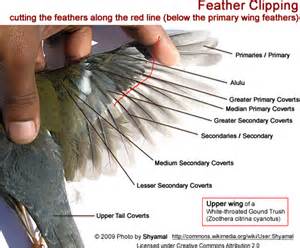
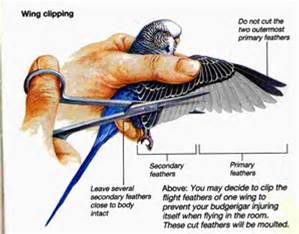
  • Clip only the primary flight feathers. Different people like different styles of wing-clipping, but in general, the most widely accepted, efficient, and effective method is to clip only the first five primary flight feathers on each of your bird’s wings. These feathers, along with an approximate location to start the trim-line, are highlighted in green in the accompanying photo. When trimming the feathers, be sure that you use sharp scissors and avoid cutting into feather shafts that appear dark in color. A dark feather shaft indicates a blood feather, which can cause serious problems if broken or cut. If you do happen to catch a blood feather between your blades, check here to find out how to fix a broken blood feather.

Once you are done clipping your bird’s wings, place the bird back inside of its cage and allow it to rest for a couple of hours. Wing trims can be very stressful for pet birds, so allowing them time to relax and recoup their strength before any further interaction is imperative. After several sessions, however, your bird should become more used to wing trims, and become more agreeable during and after the procedure.

You can re-trim your bird’s wings anytime it becomes necessary and you see your bird regaining full flight. In general, this occurs every 4 to 6 weeks as old feathers are molted away and new ones grow in. Each time, even as you become more confident in your wing clipping prowess, keep safety as your top priority. Doing so will ensure that you and your bird will have many more happy times together.

clip-birds-parakeet


How to Make a Portable First-Aid Kit for Horses

portable-first-aid-kit-lori-schmidt

Every horse owner should have an equine first-aid kit in their barn and trailer. There are a variety of equine first-aid kits commercially available, ranging from less than $50 to more than $500. While the expensive kits offer a great deal of diverse treatment options, most horse owners can get by with a more affordable homemade kit for travel.

The Bucket The first step in making your own portable first-aid kit is locating a suitable bucket. A 5 gallon bucket with a snap on lid is the best option. If you don’t have a good bucket (with a lid) you may be able to get one from any of several community locations. Many delis, bakeries, and other food producing companies buy supplies (like pickles, frosting, and filling) by the bucket. When the contents of those buckets are used the facility is left with disposal. When you ask for a bucket you may want to specify the size (5 gallons) and that it have a lid. Smaller buckets may also be available and they can be useful for other things. If you cannot find a free bucket you should be able to buy one from a local feed, supply, or tack store.

The bucket serves two purposes: 1. It is a container to hold your first-aid kit items together and keep them clean; 2. It can be emptied and used as a bucket for first-aid purposes like washing wounds. Before you begin assembling your first-aid kit, thoroughly clean and dry your bucket. There should be no residue, lingering scent, or moisture in the bucket.

Filling the Bucket Supplies for your portable first-aid kit should be carefully selected to fit inside the bucket. Liquid and gel topical medications can be transferred from larger containers into smaller leak proof applicators. Leave the larger containers at home where you have more storage room. Travel shampoo containers work well for both liquids and gels. Small size Tupperware or Rubbermaid type food containers are also handy for holding more solid compounds, and organizing supplies.

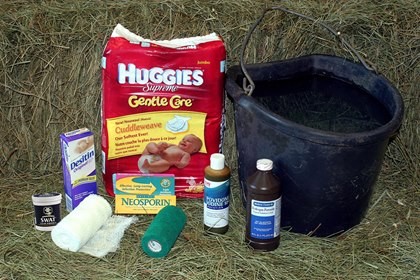
Dry Supplies You’ll Need:

  • 16″ Combine Bandage
  • 4 – 3×4″ Non-stick Telfa Pads
  • Vetwrap
  • 5 – Wooden Tongue Depressors *
  • 4 – 10 cc. Syringes **
  • 4×4″ Gauze
  • Epsom Salt
  • Thermometer
  • Stethoscope
  • Scissors
  • Tweezers/Forceps
  • Duct Tape
  • 4 – Disposable Diapers ***
  • Gloves
  • Clean, Small Towel(s)
  • Hand Sanitizer
  • 2- 6″ Sections of Rubber Tubing ****
  • Small Flashlight

Wet Supplies You’ll Need:

  • Alcohol Preps OR 4×4″ Gauze in a container with ample Rubbing Alcohol
  • Betadine
  • Dawn Dish Soap OR Betadine Scrub OR Chlorhexidine Scrub
  • Triple Antibiotic Ointment
  • 1 Gallon Bottled Water
  • Antiseptic Wound Spray

You should talk to your veterinarian about other prescription medications to include in your portable first-aid kit like anti-inflammatories, analgesics, and tranquilizers. Some prescription medication may require special handling and storage and might have to housed in a location other than your handy first-aid bucket. Once the bucket is filled just snap on the lid and you are ready. As you deplete supplies from the kit simply replace them from your barn supply. It is important that you not only carry these items, but also know how to use them. To learn more about providing first-aid care for your horse, talk to your veterinarian or attend a training conducted by a veterinarian.

*Tongue depressors can be used to apply topical medication without contaminating the wound or the medication.

**You probably noticed that this list includes syringes but not needles. For a basic first-aid kit, without any injectable medication, you don’t need needles. The syringes can be used to flush wounds. A 10 cc syringe is especially nice as you can draw up 2 cc of Betadine and then fill the remainder of the syringe with water for safe flushing of punctures and other open wounds.

***Diapers work great for packing hooves and they are very absorbent and can also be used to staunch the blood flow from a seeping wound.

****Rubber tubing can be inserted into the horse’s nostril and secured, to keep the horse’s airway open in the event of snakebite, excessive bee stings, or other bites that cause severe swelling of the face.


Cat’s Weight and Healthy Treats

By Dr. Becker and comments by Diane Weinmann

cat-hunting-outside

It’s a fact that almost 60 percent of house cats in the U.S. are overweight or obese. It’s also a fact that the formula for a fat cat is:

  • An inappropriate diet, including junk food treats
  • Free feeding and/or over feeding
  • Insufficient exercise

If you’re the parent of a corpulent kitty and you’ve committed to dieting your furry family member down to a healthy weight, the first step is to make a slow, gradual switch from dry food to canned food, then to either a balanced homemade or commercially prepared species-appropriate diet.


One cat I know is hugely overweight because he gets too many treats and not enough exercise.  This is your typical scenario but there are many ways to change the outcome for this chubby kitty.

Here’s What Biologically Appropriate Cat Food Looks Like

“Species-appropriate” for cats means a diet of animal protein that is moisture-rich and very low in carbohydrates. For example, a popular commercial raw organic chicken diet for cats consists of 98 percent chicken necks (with ground bone), backs, thigh meat, gizzards, livers and hearts.

The manufacturer adds a small amount of fish oil and a nutrient mix that includes important trace minerals, sea salt and vitamins from natural sources, as well as organic psyllium husk fiber.

There are no grains in this diet, and the protein comes from real meat, not vegetables, not plants and not meat byproducts. This meat-based diet is best fed raw, or very gently cooked.

How Much Should Your Cat Eat Every Day?cat-with-feather

Since a fresh food diet can’t be free-fed due to spoilage, you’ve solved two problems at once by transitioning your chunky kitty away from kibble. Most likely you’re feeding two meals a day, morning and evening, so now the goal is portion control of those two meals to insure you’re not overfeeding.

Let’s say your chunky kitty weighs 18 pounds and you and your veterinarian believe his ideal weight is 14 pounds. The following formula will give you the amount of calories he should consume each day to lose those 4 pounds. First, convert his goal weight to kilograms by dividing by 2.2:

14 pounds divided by 2.2 = 6.36 kilograms

Second, multiply the kilograms by 30 and then add 70:

6.36 kilograms x 30 = 191 + 70 = 261

Third, multiply that result by 0.8:

261 x 0.8 = 209

Your 18-pound cat should eat 209 calories a day, or about 104 to 105 calories at each of his two daily meals, to reach his 14-pound goal weight. If you also offer him treats, you’ll need to determine how many treat calories you’re feeding, and reduce the amount of food accordingly to maintain the 209 calories-per-day total.

This isn’t something I recommend you do on a regular basis because treats — even homemade ones — don’t offer the balance of nutrients found in a species-appropriate, fresh food diet.

In addition, most processed pet treats are loaded with sugar and preservatives. Most cats will transition from junk food treats to cubed low fat meats quite easily. But surprisingly, many cats will also eat fresh produce (think “roughage”), and there are some fruits and vegetables you can safely feed to your cat as occasional treats that are high in antioxidants and fat-free.  Shown below is a list of these fruits and veggies:

Cat Safe Veggies and Fruits for Snackingcats-safe


✓ Apple slices (no cores or seeds) — contain powerful antioxidants and vitamin C ✓ Kale — loaded with vitamins (especially vitamins K, A and C), iron and antioxidants
✓ Cantaloupe — loaded with vitamins C and A ✓ Baked sweet potatoes — rich in beta-carotene and antioxidants, high in vitamins A and C
✓ Bananas — a rich source of potassium and fiber ✓ Steamed green beans — contain vitamins A, C and K, beneficial minerals and beta-carotene
✓ Baked carrots — low in calories and high in fiber and vitamins ✓ Steamed spinach — has anti-inflammatory properties
✓ Steamed broccoli — contains healthy fiber and beneficial nutrients including potassium, calcium, protein, and vitamin C ✓ Steamed asparagus — a rich source of vitamins and minerals
Fermented veggies — potent detoxifiers that contain high levels of probiotics and vitamin K2 Cooked or canned 100 percent pumpkin — an excellent source of fiber, vitamin A and antioxidants.

All the fruits and vegetables above are safe for cats. If your kitty will eat them, remember to:

  • Cook the veggies to prevent choking and improve digestibility
  • Serve them plain (no sugar, salt, spices, butter or other additives)
  • Offer them only occasionally, and in very small portions

Foods you never want to offer your cat include onions, garlic, chives, grapes and raisins.

5 Tips for Helping Your Cat Exercise

  1. Make sure kitty has things to climb on, like a multi-level cat tree or tower.
  2. Invest in a laser toy, either an inexpensive one, or something a bit more sophisticated like the Frolicat™ line.


  1. Choose toys and activities that appeal to your cat’s hunting instinct.
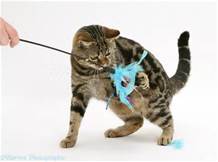
  2. Don’t overlook old standbys, like dragging a piece of string across the floor in view of your cat. Ping-pong balls are another oldie but goodie, along with bits of paper rolled into balls, and any light object that can be made to move fast and in unexpected ways.
  3. I also recommend walking your cat in nice weather using a harness. This gets him out into the fresh air, stimulates his senses and gets his paws in direct contact with the ground.

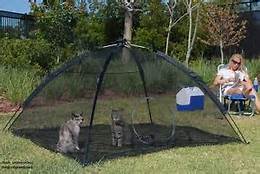
An alternative is a safe, fully enclosed porch or patio area that prevents your cat from getting out and other animals from getting in.


A cat companion that is a healthy weight will be more likely to feel better, have less vet visits and provide many more years of fun together than an overweight pet.  My question to all cat owners is how much do you love them?  Enough to keep them healthy and provide the environment they need to excel?  I know the pitfall of providing treats to show love but playful  affection is a much better choice for your kitty’s wellness!


Cushings Disease in Dogs

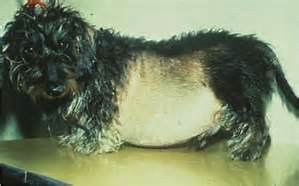
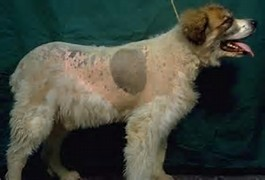
cushings-in-dogCushing’s syndrome happens when your dog’s body makes too much of a hormone called cortisol. This chemical helps him respond to stress, control his weight, fight infections, and keep his blood sugar levels in check. But too much or too little of it can cause problems.

Cushing’s, which is also known as hypercortisolism and hyperadrenocorticism, can be tricky for a vet to diagnose, because it has the same symptoms as other conditions. The key is to let your vet know about anything that’s different about your pet.

The diagnosis of Cushing’s can be done with several blood tests. A general hint of Cushing’s can be obtained by a blood panel. To confirm it, a test known as a low dose dexamethasone test is done. A baseline blood sample is drawn in the morning, an injection of dexamethasone given and a follow-up blood test done 8 hours later. In a normal dog, the dexamethasone should suppress cortisol levels in the blood stream. In Cushing’s disease this effect does not occur. Once the disease is diagnosed, it is possible to differentiate between the adrenal tumors and pituitary gland tumors using a second test, a high dose dexamethasone suppression test. Most dogs with pituitary tumors will have cortisol suppression on this test. There are other tests used, including ACTH response tests and urine cortisol/creatinine ratios to diagnose this disease. X-rays and ultrasonography can help determine if an adrenal gland tumor is present.

If it can be determined that there is an adrenal gland tumor, it can be removed. Many veterinarians prefer to have a specialist attempt this since the surgical risks can be high. Pituitary gland tumors are not usually removed in veterinary medicine. This situation is treated using Lysodren (o’p’-DDD, which is a relative of DDT) or ketaconazole. Some research with Deprenyl for treatment of this is being done, too, I think. Lysodren selectively kills the outer layer of the adrenal gland that produces corticosteroids. By administering it in proper amounts it is possible to kill just enough of the gland off to keep the production of corticosteroids to normal levels. Obviously, close regulation of this using blood testing is necessary since overdoing it can cause severe problems with Addison’s disease – hypoadrenocorticism. Adverse reactions to Lysodren occur at times but it is the standard treatment at this time. Over medication with Lysodren can cause inappetance, vomiting, diarrhea, lethargy and weakness. If any of these signs occur then your veterinarian should be immediately notified.

There are two major types that affect dogs:

  • Pituitary dependent. This form is the most common, affecting about 80% to 90% of the animals who have Cushing’s. It happens when there’s a tumor in a pea-sized gland at the base of the brain, called the pituitary.
  • Adrenal dependent: This type comes from a tumor in one of the glands that sit on top of the kidneys, called adrenal glands. About 15% to 20% of diagnosed dogs will have this type.

Another kind, called iatrogenic Cushing’s syndrome, happens after a dog has taken steroids for a long time.

Treatment

Treatment consists of several different options. Depending on the type of disease, surgery can be performed. If an adrenal tumor is identified, then surgical removal may be a viable option. There are several different forms of tumors that can invade the adrenal gland and their treatment will be based on the particular tumor type.

Nonsurgical treatment is the most common treatment for canine Cushing’s disease.

Non surgical treatment is the most often used treatment for most cases of canine Cushing’s disease. About 80% of the cases of Cushing’s disease in the dog are of the pituitary type, and since both the adrenal and the pituitary type will respond effectively to some of the oral treatments, many veterinarians do not perform the diagnostics necessary to distinguish between the two different forms. There are currently several different oral medications being used to treat canine Cushing’s disease.

Lysodren: Until recently, Lysodren (also known as mitotane, and o,p’-DDD) was the only treatment available for pituitary dependent Cushing’s disease. It is convenient to use and is relatively inexpensive and is still probably the most widely used treatment. The downside of this drug is that it can have some serious side effects and regular blood-monitoring needs to be performed. During the initial phases of the therapy, the dog must be very carefully monitored, and there must be close communication between the veterinarian and the owner.

The use of Lysodren is somewhat like chemotherapy. It works by destroying cells of the adrenal gland that produce the corticosteroid hormones. As the number of corticosteroid-producing cells is reduced, even though the pituitary gland continues to produce excess ACTH, the adrenal gland is less able to respond, so the amount of glucocorticoid being produced is reduced. The problems arise when too much of the adrenal cortex is killed off. The animals may then need to be placed on prednisone, either short or long term. The Lysodren is initially given daily while the animal is being monitored for a decrease in the symptoms (water consumption, appetite). On the 8th or 9th day of the initial therapy, the dog needs to be examined and an ACTH stimulation test is performed to determine if the drug is working. If the goal is achieved, maintenance therapy is started. If the goal has not been reached, then the dog generally remains on the daily medication for 3 to 7 additional days and is rechecked until the proper results are achieved. If the dog becomes lethargic, vomits, or has diarrhea, or if the treatment does not work by 30 days, then the treatment plan is reevaluated. If treatment is successful, then symptoms should resolve within 4 to 6 months. A certain percentage of dogs will relapse and need to undergo the daily therapy again at some point in their lives. If a dog ever becomes ill while on Lysodren, the Lysodren should be stopped immediately and the dog should be examined by a veterinarian. If the therapy is successful, the dog will need to be on Lysodren for the rest of his life.

Trilostane: Trilostane is a newer treatment that is used to treat some dogs with Cushing’s disease. It is more expensive, but may be an alternative treatment for dogs with adrenal tumors. As with Lysodren, the dog is reexamined repeatedly during the initial phase of treatment, and ACTH stimulation tests are performed. In many cases, after several months of therapy the dose needs to be increased.

Ketoconazole: Ketoconazole is an oral antifungal agent that has been used extensively since the mid 80s. One of the side effects of ketoconazole is that it interferes with the synthesis of steroid hormones. It therefore gained some popularity as a treatment for Cushing’s disease. However, it is rarely used today.

L-deprenyl (Anipryl): L-deprenyl (Anipryl) has been advocated for the treatment of Cushing’s disease in dogs, but its effectiveness has come into question.


Adrenal Harmony Gold for Dog Cushings from Pet Wellbeing

http://www.petwellbeing.com/products/dog-adrenal-glands?mkwid=Nv9L78CC_dc&pcrid=6163978366&pmt=e&pkw=cushing’s%20syndrome%20in%20dogs

  • Fresh Ashwagandha root (Withania somniferum):  A primary adaptogen in this formula, Ashwagandha assists the adrenal glands directly to respond normally and produce healthy amounts of cortisol. This is a well-known herb for helping the body’s stress levels and supporting normal, restful sleep.
  • Holy Basil leaf (Ocimum sanctum):  Also called Tulsi, Holy Basil is a gentle adaptogen for supporting the adrenal glands. Of key importance, adaptogens will neither cause the body to relax nor become stimulated, necessarily. Rather, their action is to assist the body to adapt as needed and bring it back into balance. For that reason, adaptogens are used for a variety of reasons when normal adrenal function is desired.
  • Fresh Turmeric rhizome (Curcuma longa):  One of the best antioxidant herbs available, Turmeric also supports liver health. Turmeric can be difficult for the body to absorb. Our extraction method using fresh, organic Turmeric is an extremely potent liquid extract, much stronger than a simple glycerin extraction and captures all of the useful constituents of this herb, including curcumin and other curcuminoids.
  • Bacopa herb (Bacopa monnieri):  Bacopa exhibits uses both as an adaptogen and as an antioxidant. It has also been used for stress and is said to generally contribute to healthy moods and cognitive function.
  • Sarsaparilla root (Smilax officinalis):  A traditional herb of the south western United States, Sarsaparilla has a long-standing use for helping the body to normally excrete excess toxic materials through the lymphatic system. It has also been used to support liver function and healthy blood pressure levels.
  • Astragalus root (Astragalus membranaceous):  Another popular “adaptogen”, Astragalus helps the body’s normal ability to adapt to stress. It also contains polysaccharides, constituents that assist the body’s normal immune response to fight off bacteria and viruses.
  • Milk Thistle seed (Silybum marianum):  A gentle and effective herb for normal liver function, Milk Thistle supports the liver’s metabolization of drugs and toxins for excretion. Another function of the liver is to denature (take apart) circulating hormones, thereby helping to keep the balance of hormones in the body.
  • Blessed Thistle flower (Cnicus benedictus):  Blessed or Holy Thistle has similar uses as Milk Thislte for liver support. Additionally, it has been shown to exhibit support for the immune system and digestion.
  • Chaste Tree berry (Vitex agnus-castus):  Used for its gentle, tonic action on the anterior pituitary, Vitex is an amphoteric herb, meaning it will help maintain normal hormonal levels, rather than cause them to go higher or lower. Vitex is included in this formula for its affect on the pituitary’s action in adrenal hormone regulation.
  • Prickly Ash bark (Zanthoxylum americanum):  Used by many First Nations communities at one time, the bark of the Prickly Ash tree has been termed an “alterative”, meaning that it will help support normal flow of lymphatic circulation. It also helps maintain normal arterial and capillary circulation.


Essential Oils for Cushings

http://www.animaleo.info/adrenobalance.html

dog-cushings


Hair Balls and Cats

By W. Jean Dodds, DVM Hemopet / NutriScan

persians

Pet caregivers seem to have become accustomed to thinking that hairballs are the status quo for cats. It is true that many cats spend several hours per day grooming themselves and that can lead to a build-up of indigestible keratin (the insoluble protein in hair). Veterinarians may only become concerned when the situation is a clinically significant issue or emergency marked by lethargy, unproductive retching and inappetence, which can indicate a potential hair blockage in the small intestine. Other veterinarians are not only concerned about the acute emergency, but also are worried that frequent hairball vomiting is an indicator of chronic small bowel disease.

The frequency number is a matter of debate about when we, as veterinarians, should be more proactive in pursuing a more definitive diagnosis. Some experts say hairball vomiting every week or two is perfectly within normal range. However, Dr. Gary Norsworthy, a feline medicine expert, says that frequency of vomiting is way too often. In fact, he puts greater restrictions on it: not more often than every two months or more, in otherwise healthy shorthaired cats; or, cats that are not fastidious groomers. I agree.

Landmark Study

In 2014, Dr. Norsworthy released what I consider one of the landmark veterinary studies of current time. Landmark is an impressive word but he took cat vomiting – which is still widely accepted as a normal biological function – and proved that it is not.

His journey to discovery is one for the history books. Veterinarians were all convinced that cat vomiting was due to a stomach issue. So, Dr. Norsworthy was employing endoscopy – the technique of inserting a tube with a camera into the esophagus and stomach for observation – but the results were clinically insignificant. Then he would lump everything as inflammatory bowel disease (IBD) and prescribe corticosteroids, anti-vomiting medications, a special diet and hairball lubricants. But, none of these treatment options had much impact on fixing the issues.  Eventually, Dr. Norsworthy and his team opted for ultrasound to view the stomach and the small intestine. (Endoscopy cannot enter the small intestine.)

Time and again, the stomach looked fairly normal but the small intestine was always inflamed. Eureka! Biopsy then confirmed that the walls of the small intestine were indeed thickened and that it was the cause of chronic cat vomiting.

Study Results:

  • 100 cats – Sample size
  • 1 cat – normal biopsy findings
  • 49 cats – diagnosed with chronic enteritis (usually IBD)
  • 46 cats – diagnosed with small cell lymphoma (cancer); which can be caused by untreated or undiagnosed chronic enteritis
  • 3 cats – mast cell disease
  • 1 cat – adenocarcinoma

You are probably wondering how an inflamed small intestine causes vomiting, if vomitus originates in the stomach. The explanation is that the whole gastrointestinal system is “backed up” because of hypomotility, which means that hair and food move through the bowel at subnormal speed. When more hair or food is ingested, the full bowel results in reflux vomiting.

Preventative Tips

Our goal should be to prevent the onset of IBD, because otherwise there is no cure and the current non-specific treatment measures are less than effective or desirable.

I also emphatically stress that cat caregivers need to be even more prevention vigilant as compared to dog caregivers. Why? Because cats are more finicky and become set in their ways, so you need to acclimate them to these tips at the earliest age possible. If you adopt a senior cat, please keep trying.

Food Special prescription foods for hairballs, sensitivities and urinary tract infections exist. However, they are generally cereal-based kibble and possibly have ingredients that are not only questionable, but also can inflame the bowel. This is the opposite of what we want to achieve. But, workarounds are available.

Food rotation is a key component with cats. Many cats will lock onto one type of protein because of repeatedly being fed it. We should not permit this. So, rotation from the beginning helps cats get used to the taste and consistency of many proteins. In fact, I would rotate the diet every few days or at least weekly.

The bigger problem is that we should not assault the bowel with foods that cause inflammation. So, we need to figure out which foods are causing the sensitivity or intolerance in an individual cat. Veterinarians often suggest food elimination diets, but it is difficult to ascertain which foods are causing the inflammation with this method, it takes too long (weeks), and compliance by the client or cat is difficult to maintain.  I suggest instead performing the NutriScan Food Sensitivity & Intolerance Test that I and the team at Hemopet developed. It takes out the guesswork. Once we do this, we have identified specific proteins that a cat will want to and can safely eat.

Kibble is by nature contradictory to a cat’s needs since it only contains about 10% moisture. Cats never drink enough water because they are descended from the African Wildcat. Observations have demonstrated that the African Wildcat only derives 10% of his moisture needs from freshwater sources and 90% from prey. Even though cats started the domestication process over 10,000 years ago, their primary purpose was to curb rodent populations so they continued to receive moisture through prey. So, I clearly want all cats on a moisture-rich diet that could be canned, dehydrated and moistened, or raw. At Hemopet, we feed Saucy, the feral cat that stays around our clinic canned food.

Grooming I would not be surprised if ingested hair also contributes to IBD. However, we cannot stop the hair ingestion. The best solution is investing in several of the right brushes and combs for cats. Definitely do your research about the type of hair and talk to grooming experts. Then, set aside a few minutes a day to brush your cat thoroughly or as much as you can. Many cats need to become acclimated to it but be unwavering in your commitment. In fact, some cats begin to love it so much not only for the feeling but also for the devoted affection.

Omega-3 Supplements   Omega-3 fatty acids can help improve the condition of your cat’s skin and fur, as well as the ability of his digestive system to manage the hair and debris he swallows while grooming himself. The source of omega-3’s is generally from fish, so you need to make sure your cat does not have a sensitivity to the type of fish or its oils.

Hairball Remedy Granted, not all hairballs can be stopped but, again, we want to decrease their frequency. When they do occur, many veterinarians suggest a petroleum-based hairball remedy. If you think about it, petroleum beds come from fossil fuels (e.g. dead dinosaurs) and is a little counterintuitive. Petroleum-free and all-natural options are available. They are usually made with slippery elm, papaya or marshmallow. Dab it on the tip of your cat’s nose. Your kitty will lick the jelly and swallow it. This allows the hair to pass more easily through the GI tract.

Fiber Fiber helps keep things moving. With cats, you can try pumpkin, wheatgrass, coconut fiber or psyllium seed husk powder.


Rules for Managing the Overweight Horse

Rules for Managing the Overweight Horse

 By Juliet M. Getty PHDhorse-eating

Like a person, a horse has his own metabolic rate and genetic tendencies. Add in lack of exercise, too many treats, overfeeding, and stress, and the easy keeper becomes an overweight horse at risk for hormone imbalances, arthritis and laminitis.

METABOLIC CONSEQUENCES Too much fat leads to insulin resistance, a hormonal disorder also called metabolic syndrome. It’s like Type II diabetes in people, and equally serious. An insulin-resistant horse is a strong candidate for laminitis. Elevated insulin levels also can cause hyperlipemia, a damaging liver condition. Ponies, miniature horses, donkeys and mules are particularly prone to it, but no horse is immune.

Watch for fat accumulation above your horse’s eyes, on his rump, along his neck (“cresty neck”) or in a fatty spinal crease down his back. All overweight horses have some degree of insulin resistance, so feed the easy keeper on that assumption to be on the safe side.

RULES OF PROPER WEIGHT MANAGEMENT The fi rst step in any weight management program is to have your horse thoroughly examined by your veterinarian, including a complete blood count and chemistry panel tests, to rule out any underlying medical disorders. Then take a hard look at your horse’s feeding and exercise regimens.

RULE #1: Avoid weight loss products and drastic diets. Reducing calories is fi ne, but taking away forage is not the way to help your horse lose weight. In fact, it does just the contrary. For the most part, healthy horses become obese because they are

Like a person, a horse has his own metabolic rate and genetic tendencies. Add in lack of exercise, too many treats, overfeeding, and stress, and the easy keeper becomes an overweight horse at risk for hormone imbalances, arthritis and laminitis.

RULE #2: Avoid feeding cereal grains and sugary treats. “Grain” is commonly used to describe any concentrated feed, but it really means cereal grains such as oats, corn, barley, wheat or pelleted feeds that contain cereal grains. Stay away from these. Fortunately, there are many safe low starch feeds made from other ingredients (alfalfa, soybean meal, fl ax and beet pulp). The high sugar in carrots and apples increases blood insulin levels. Avoid them, as well as any commercial treats made from cereal grains and molasses.

RULE #3: Consider an all-forage diet. Depending on your horse’s age, workload and condition, an all-forage diet can be very healthful. You may not need to feed him any concentrate at all. But have your hay tested for sugar, fructan and starch levels. Strive for a non-structural carbohydrate (NSC) level of less than 12%. Be careful when feeding high-calorie hay such as grain hays (oat, crested wheatgrass, rye) and grass/legume combinations (Timothy/alfalfa mixes). Alfalfa is a wonderful feed, but it’s higher in calories than grass, so limit it to no more than 20% of the total forage ration.

Alfalfa boosts the protein quality in the forage mix. High quality protein maintains immune function, protects the vital organs, keeps bones, muscles and joints strong, and builds healthy hooves, skin and hair. Low quality protein is unusable and can be stored as fat.

RULE #4: Feed free-choice. All horses, regardless of their weight condition, should have forage 24/7. Your horse’s digestive tract is designed to have forage moving through it consistently throughout the day. Horses on pasture self-regulate their intake. The free-choice adjustment for stabled horses takes about a week, during which the horse may initially overeat, but he will soon trust the hay to be there, and will moderate his consumption. At that point, you can measure his regular intake to make other feed calculations. And look for a bonus: fed freechoice, horses generally become calmer and more tractable.

RULE #5: Choose safe grazing times. Grass has the lowest sugar, fructan and starch levels in the early morning. As it is exposed to sunlight, it produces more NSC, making the late afternoon the most hazardous time for the easy keeper. Grass is also more dangerous in the early spring and late fall when the thermometer dips below 40°F overnight; this also raises the NSC levels.

A grazing muzzle may seem ideal, but it can be counterproductive by causing stress and slowing the metabolic rate. So watch your horse; if a muzzle is frustrating him, it’s not helping.

RULE #6: Offer a balance of vitamin/mineral supplements. Live grass offers an abundant supply of vitamins and minerals, but the nutrient content in hay diminishes over time. Minerals remain, but vitamins are very fragile, so hay only diets require supplementation. Offer these in a small non-starchy carrier meal. Avoid supplements with a molasses base.

Most comprehensive products contain a balanced mixture of vitamins and minerals. If your horse’s diet contains more than eight pounds of alfalfa, choose a supplement designed for alfalfa-based diets; it will be lower in calcium. A caution about iron: too much may increase insulin resistance as well as depress immune function. In any case, forage is iron rich, making supplementation unnecessary.

RULE #7: Add or increase exercise. Exercise reduces insulin resistance, builds muscle mass and burns more calories. And since muscle is more metabolically active than fat, more muscle means more calories burned.

horse-carrot

TLC Therapies Many Pet Owners Now Embrace

By Dr. Becker with comments by Diane Weinmannpet-rehabilitation

Rehabilitation therapy can be invaluable for pets, but it hasn’t always been considered as part of mainstream veterinary care.

Demand for such services has been growing significantly in recent years, however, including for upscale facilities that improve pets’ strength, functional ability and quality of life using tools ranging from obstacle courses and underwater treadmills to laser therapy and massage.

Let me tell you a brief story about a dog with a loving message about rehabilitation:  I was asked to talk with a dog that a vet’s office basically took care of for at least a year. The owners didn’t want to deal with his medical issues any longer and signed him over to the vet.  I was told that everyone at the clinic was heartbroken that the dog had passed away and would appreciate a message from him.  I talked to the dog and he gave many loving messages for the people who cared for him in the clinic.  One of the most profound messages didn’t make sense to me but brought all of the workers to tears.  He told me to thank them for the water.  What I didn’t know is that they let him participate a lot in hydrotherapy because he has terrible painful arthritis.   Obviously the water therapy was extremely helpful to him medically and it meant a lot to him that they took the time to let him participate .  So, that being said, listed below are some reasons why therapy helps pets…..

3 Reasons Why Rehabilitation Centers Are on the Rise

There are a number of reasons why rehabilitation centers are growing so rapidly, starting with pet obesity.


The majority of dogs and cats in the U.S. are not a healthy weight, according to the Association for Pet Obesity Prevention (APOP). The organization revealed that 58 percent of cats and 54 percent of dogs were overweight or obese in 2015.1


The extra weight puts stress on joints, which can leave your pet unable to get around. Other common complications of excess weight in pets include arthritis, torn knee ligaments and diseased discs in the spine, along with other orthopedic diseases.

While the foundational solution to address these complications is weight loss, rehabilitation is incredibly beneficial for stimulating your pet’s metabolism through movement.

For extremely obese pets who are unable to move around, rehabilitation centers can provide life-saving solutions to get your pet moving, such as walking in water, which takes pressure off joints.

Some owners also bring in their aging pets to help them retain and recover mobility and strength. Why else are rehab services becoming so sought after by pet owners?

  • High-Impact Activities: Some dogs suffer from sports-related injuries as a result of running or engaging in other strenuous activities with their owners.
  • Pets Are Part of the Family: About 90 percent of pet owners view their pets as part of their family and, as such, want to provide them with similar medical services to those available to humans, such as post-surgery physical therapy, which improves surgical outcomes and speeds recovery time.

Michael San Filippo, spokesman for the American Veterinary Medical Association (AVMA) told the Daily Herald:2

“Over the last few generations we have brought our pets into our houses, into our beds in some cases and included them as a part of our families … Along with that comes a demand or expectation that they can get the same kinds of treatments that we get as humans.”

What Types of Treatments Are Available at Pet Rehab Facilities?

From dogs with obesity and arthritis to those recovering from surgery or a sports-related injury, there are rehab options that can support your pet. These include more familiar strategies like massage, therapeutic exercise and stretching, heat therapy and acupuncture as well as:

  • Cold laser therapy (aka low-level laser therapy): This is used to stimulate cell regeneration and increase blood circulation to promote wound healing and treat arthritis, tendon injuries, sprains and strains, back disc problems and more.
  • Acoustic compression therapy: This technique uses sound waves to provide deep-tissue massage in muscles, tendons and joints. It offers increased circulation and pain relief.
  • Transcutaneous electrical nerve stimulation (TENS): This involves a battery-powered device that sends a low electrical current to the body, which disrupts pain perception pathways, helping to relieve pain. TENS is also sometimes used to stimulate acupuncture points.
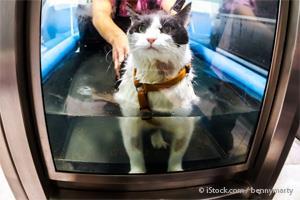
  • Aquatic therapy: Various therapies using water are available, including underwater treadmills to promote weight loss, strengthen cardiovascular health and muscle strength. As explained by the American Association of Rehabilitation Veterinarians (AARV):3

“The [underwater] treadmill can be used in the very early stages of learning to move well again; the higher the water level, the more of your pet’s weight that is supported.

As strength and correct movement improves, the water level is lowered each session to further increase strength. Underwater treadmills can decrease recovery time from surgery, improve arthritis through low impact exercise, and improve cardiovascular fitness.”

  • Thermography: Thermography is the study of how much heat the body is giving off, which reveals areas with inflammation and, therefore, likely pain. Thermography may be used at rehab facilities to diagnose orthopedic or other health issues or to monitor progress during therapy sessions.4

There are many other therapeutic modalities used as well, including:

✓ Pulsed magnetic therapy ✓ Active exercise
✓ Veterinary chiropractic ✓ Therapeutic ultrasound
✓ Joint mobilization ✓ Neuromuscular electrical stimulation

Health Conditions That May Be Treated With Rehabilitation Therapies

If your pet is having trouble recovering from an injury, is struggling with mobility, or has unresolved pain, a rehabilitation specialist may help. AARV provided the following list of conditions that may be successfully treated with rehabilitation, as well as the types of improvements that may be experienced:5

Osteoarthritis: Increased mobility and range of motion, decreased inflammation Hip dysplasia: Build-supporting muscle mass, increase mobility and comfort Muscle injuries: Speed healing, restore normal functional length and decrease inflammation
Back injuries: Prevent reinjury and manage pain Fractures: Speed recovery and prevent muscle contracture Amputation: Help with adaptation, build supporting muscles and manage pain
Neuromuscular disease: Strengthening, adaptation and pain management Joint dislocation: Strengthen supporting muscles and ligaments and prevent reinjury Tendon injury: Increase range of motion and strength, decrease inflammation and scar tissue

Keep in mind that rehabilitation isn’t only for dogs. Cats, horses, rabbits and many other pets may also benefit. In the video below, for instance, you can see underwater treadmill therapy for a rabbit. These therapies excel at providing your pet with improved quality of life, regardless of species, so if your pet is in need of extra physical support and healing, consider seeking the help of a professional rehabilitation specialist.


Why Is Your Cat Limping?

Why Is Your Cat Limping?

Info found on Pet Traxcat-with-feather

If your cat starts to limp suddenly, don’t panic.  Remember our cats are little acrobats that jump on the counters, sprint around the house, and prowl their cat trees.  The limping can be a simple paw strain that if you give your cat a couple days, he or she will be back to normal.   However, if it lasts more than a few days, you should make an appointment with your veterinarian.

But, there are many other reasons that your cat could be limping.  Below are some of the most common:

Damage to your cat’s soft tissues which is not serious.

As mentioned above, strained or sprained muscles or ligaments are usually responsible for most cat limps. A limp associated with a pulled muscle may last intermittently for a day or two.  The injury might cause a little swelling, which you can treat by place a heat pack on the sore area.

Torn ligaments are more serious than a strained muscle

Torn ligaments are a more serious source of cat limping. A partial tear to a ligament can result in intermittent limping, leading the owner to believe that the injury is less than serious. A partial tear may become a complete tear, making it impossible for your cat to put any weight at all on the affected leg. Torn ligaments are difficult to heal and often require surgery.

Foot and nail injuries are another common reason your cat might limp

Foot and nail injuries are another common cause of cat limping. Glass, splinters, and other sharp objects can cut your cat’s paw, or become lodged in the pads of your cat’s feet, causing limping. Nail injuries can also be quite painful for cats. If your cat is limping, check your kitty’s feet carefully and in between the toes. Check his nails for cracks, tearing, and dried blood.

Infections, abscesses and insect bites can cause limping

Infections and abscesses can also cause cat limping. An infection below the surface of the skin, or abscess, can cause redness, swelling, and tenderness. Any wound in your cat’s skin can become infected, from a flea bite, tick bite, a puncture wound, or an ordinary scratch.  It’s a good idea to check your cat’s skin daily for such infections.

Broken bones and dislocations of the tendon

Broken bones and dislocations are among the most serious causes of cat limping. Depending on the severity of the break, the limping may be intermittent and your cat might be able to put weight on the injury, but will limp.  In more severe cases, your cat will refrain from putting any weight on the injured limp and may experience extreme pain and severe swelling.  Your veterinarian can determine this by an x-ray.

Arthritis, most common in older cats, can cause limping

Arthritis is a common cause of limping, pain and join stiffness in older cats. Arthritic cat limping may seem worse in the morning and on colder days; a cat with arthritis may have difficulty sitting, standing, lying down and squatting. Cat limping caused by arthritis usually involves both rear legs and can result in a stiff, irregular gait. Limping due to arthritis usually gets worse with time and you can help your cat by trying to make him or her comfortable and do your best to prevent your kitty from jumping.

 tuxedo-catcat-in-tree