Estrogen’s Effect on Tumors You Really Can Help Control


By Dr. Karen Becker

It’s generally accepted as fact that female dogs spayed at a young age have a reduced risk of developing mammary tumors — the equivalent of breast cancer in humans.

However, it’s certainly worth noting that the results of a 2012 study — a systematic review conducted by veterinary researchers in the U.K. — did not validate the theory that early spaying protects female dogs from mammary neoplasia.1

Unfortunately, this study, and the questions it raises, has received very little attention, but does highlight what emerging research is now discovering: canine mammary tumors have hormone interplays potentially as complex as human mammary cancers.

New Study Raises Questions About Spaying and Mammary Cancer

Since spaying involves the removal of the ovaries, it also removes most of the body’s ability to produce estrogen. For this reason, estrogen is widely assumed to play a role in the development of canine mammary tumors. But a new study by researchers at the University of Pennsylvania’s School of Veterinary Medicine suggests the effects of estrogen on cancer risk in dogs aren’t as clear-cut as originally thought.2

Interestingly, the study found that while spaying reduces dogs’ risk of developing mammary cancer, it may increase the risk of more aggressive cancers. In addition, the researchers discovered that in spayed dogs with mammary tumors, higher serum estrogen levels were actually protective in terms of delayed metastasis and improved survival times.

“Dogs that remain intact and have their ovaries develop many more mammary tumors than dogs that were spayed, so removing that source of estrogen does have a protective effect,” says Karin U. Sorenmo, a veterinary oncologist at Penn Vet and senior author on the study, in a Penn Today news release.

“Estrogen does seem to drive mammary cancer development. But what it does for progression to metastasis — that I think is more complicated.”3

Estrogen May Play Opposing Roles in Cancer

For the study, the Penn Vet research team evaluated 159 dogs with mammary cancer, 130 who were spayed for purposes of the study, and 29 who were left intact. The researchers removed the dogs’ tumors and gathered data on serum estrogen levels, tumor type, disease grade and stage, time to metastasis, and survival time.

They discovered that despite the link between estrogen and an elevated risk of developing mammary tumors, higher estrogen levels seemed to also help prevent some of the most dangerous aspects of the cancer. From the Penn Today news release:

“Unexpectedly, when dogs were spayed at the same time their tumors were removed, those with estrogen receptor-positive tumors that had higher serum estrogen took longer to develop metastatic disease and survived longer than dogs with lower estrogen levels, confirming that these tumors depended on estrogen for progression.”

Sorenmo’s theory is that in these instances, the effect of estrogen may be nuanced. “It drives the cancer, but it also seems to control or modulate it, reining it in,” she says, because most of the dogs with high estrogen levels had lower-grade and estrogen receptor-positive tumors, which made them susceptible to hormonal deprivation by spaying.

The researchers noted that the protective effect of estrogen was also pronounced in dogs with estrogen-receptor negative mammary tumors. These are higher risk cancers, and high estrogen levels were associated with delayed metastasis, or the absence of metastasis.

Additionally, after mammary tumor surgery, dogs with low estrogen levels had a significantly increased risk for other aggressive, fatal tumors that were not mammary related, such as hemangiosarcoma.

As Sorenmo notes, some of the findings in women with breast cancer are also contradictory. For example, while higher serum estrogen levels in survivors of breast cancer are linked to higher recurrence rates, many breast cancers develop immediately following menopause, when estrogen levels plummet. So, it’s possible estrogen plays a more complex role in human cancer risk as well.

“I think this study opens some really complicated questions,” Sorenmo says. “If we start dissecting exactly what estrogen is doing, what genes or immune cells it’s interacting with, maybe we could harness the power of estrogen to be more clever in our treatment strategies.”


Metabolization of Estrogen Is Key in Preventing Certain Cancers

In order to address why dogs develop mammary tumors, we must identify why their immune systems failed and allowed cancer cells to proliferate. It’s also critical to evaluate the estrogen-mimicking chemical load in their environment.

Even animals no longer producing their own estrogen after being spayed or neutered can be exposed to overwhelming amounts of xenoestrogens (estrogen mimicking chemicals) in the environment. I’ve seen many patients over the years with wildly unbalanced endocrine systems, including male dogs with estrogen levels higher than what is normal for intact females.

When I find mammary tumors in a dog, I immediately measure the sex hormone levels. If estrogen is elevated in desexed animals, after removing the tumors I institute a protocol including DIM (diindolymethane) and high-lignan flax hulls, which may help to naturally reduce estrogen levels.4

DIM and flax hulls (not flaxseeds or flaxseed oil) have been shown to promote beneficial estrogen metabolism in both males and females. The body’s ability to effectively metabolize estrogen is an important component in the prevention of certain cancers, in particular breast cancer.5

Dietary adjustments, including the elimination of all estrogenic foods (e.g., soy and yams) and highly processed foods created via the extrusion process (kibble) is important because the manufacture of kibble creates carcinogenic byproducts.

Feeding a fresh, ketogenic, high-fat, no-carb (starch-free), nutritionally balanced and species-appropriate diet is also part of the protocol, along with beneficial immune-support supplements.

Thankfully there are a growing number of integrative veterinary oncologists popping up around the globe who can work with veterinary surgeons and local integrative veterinarians to customize treatment plans to achieve maximum benefits with the fewest possible side effects.

Sources of Xenoestrogens

In my opinion, exposure to xenoestrogens — chemicals that mimic the hormone estrogen —plays a significant role in elevated estrogen levels in dogs. Examples of xenoestrogens include:

Atrazine (weed killer) Heptachlor (restricted insecticide)
4-Methylbenzylidene camphor (4-MBC) (found in sunscreen lotions) Lindane, hexachlorocyclohexane (restricted insecticide)
Butylated hydroxyanisole (BHA) (food preservative) Methoxychlor (banned insecticide in U.S.)
Bisphenol A (used to make plastics) Nonylphenol and derivatives (laboratory detergents; pesticides)
Dichlorodiphenyldichloroethylene (DDT) Pentachlorophenol (restricted biocide in U.S.; wood preservative)
Dieldrin (banned insecticide) Polychlorinated biphenyls (PCBs)
DDT (banned insecticide in the U.S. but not other countries) Parabens (lotions)
Endosulfan (banned insecticide in U.S.) Phthalates (used to make plastics)
Erythrosine (FD&C Red No. 3) DEHP (found in PVC)
Ethinylestradiol (oral contraceptive) Propyl gallate (used to preserve oils and fats)

The problem with this list is that these chemicals often aren’t plainly labeled as such in many products found around the house. For instance, plug-ins, car fresheners, scented candles, room sprays and gel air fresheners are loaded with chemicals on this list, but manufacturers aren’t required to list them on product labels.

Endocrine disrupters, which damage your dog’s hormonal axis, including estrogen balance, are also found on many fabrics treated with flame-retardant chemicals (dog beds, carpets, couches, draperies).

Another endocrine disruptor is BPA, which is found in the lining of canned dog food containers and plastic food and water bowls, not to mention cleaning supplies that instruct you to call poison control if ingested. Always remember that any product used in your house has the potential to end up inside your pet.

It’s also important to keep in mind that pesticides and chemicals banned in the U.S. still show up on and in products imported from other countries.

12 Ways to Reduce Your Pet’s Exposure to Xenoestrogens

To reduce your dog’s exposure to these estrogen-mimicking compounds, and thereby potentially lower the risk of mammary cancer:

  1. Use stainless steel, glass, or ceramic food and water bowls
  2. Avoid plastic storage containers for pet food or water
  3. Don’t microwave pet food in plastic containers
  4. Don’t use nonstick cookware if you cook food for your pet
  5. Avoid using cling wrap that contains DEHA
  6. Avoid pet foods containing soy, the preservatives BHA and BHT, and the food dye FD&C Red No. #3
  7. Use natural pest control around your home and yard
  8. Use alternatives to chemical flea/tick repellents
  9. Use all-natural, nontoxic cleaning supplies inside your home
  10. Buy organic dog beds
  11. Remove fluoride and chlorine from drinking water
  12. Don’t buy canned food unless it’s labeled BPA-free


Is Your Cat’s Diarrhea a Cause for Concern?

By Dr. Karen Becker


Generally speaking, when it comes to digestive upsets in pets, dogs tend to have lower gastrointestinal (GI) symptoms and diarrhea, while cats are more prone to upper GI tract issues and vomiting. However, as anyone who has ever scooped unformed poop from a litterbox can attest — kitties can and do develop diarrhea sometimes.

Types of Diarrhea in Cats

When veterinarians set out to diagnose a feline patient with diarrhea, they generally put the problem into one of two categories based on where in the intestinal tract the loose stool is originating — either the small bowel or the large bowel.

If the problem is with the small bowel, the diarrhea is often large in volume, watery, and occurs with increased frequency. When a kitty’s diarrhea originates in the large bowel, it will more typically be small in volume, semi-formed, and may contain mucus. There’s often also increased frequency and straining to go.

Some feline diseases with diarrhea as a symptom involve both the small and large bowel, and in addition, a cat can start out with small bowel diarrhea that subsequently causes secondary irritation of the large bowel.

Blood in the stool can be a feature of both types of diarrhea. Dark, tarry stools indicate the presence of digested blood from the stomach or small intestine. Fresh streaks of blood in or on the stool are usually a sign of a large bowel problem. Vomiting along with diarrhea is more often seen in diseases of the small bowel but can also occur with a large bowel problem.

Causes of Diarrhea

The causes of loose stools in cats are numerous and varied, and include:

Dietary indiscretion; ingestion of foreign bodies Inflammatory bowel disease (IBD) Pancreatitis
Sudden change in diet Giardia and other parasites Immune-mediated disease
Food allergies Viral and bacterial infections Megacolon
Stress colitis Hyperthyroidism Cancer

If your cat has a one-and-done bout of loose stools that resolves within a day or two, chances are she ate something that disagreed with her (or you gave her milk, which is a common culprit in feline digestive issues) and there’s nothing to worry about.

However, since there are many serious feline diseases that have diarrhea as a symptom, if your kitty is experiencing chronic or recurrent diarrhea, it’s time to make an appointment with your veterinarian.

Dehydration is an immediate and potentially life-threatening concern, especially for kittens, petite adult cats, and kitties who are seniors or geriatric, or have a chronic illness. Also, if the diarrhea is accompanied by other signs of illness such as blood in the stool, vomiting, loss of appetite, and/or fever, it’s definitely a sign your pet is ill, and you should seek veterinary care.

I recommend you collect a quarter-size bit of poop on, for example, a stiff piece of cardboard, and slip it into a plastic baggie. Otherwise, your veterinarian may have to manually extract a sample, which will make your already uncomfortable kitty that much more so.

Your vet will probably do bloodwork in addition to evaluating the stool to determine if there’s infection present. He or she should also treat your pet for dehydration if necessary, with IV (intravenous) or SQ (subcutaneous) fluids.

Two fecal tests should be performed. One checks for parasite antigens and/or eggs, and the other checks for bacterial or viral agents that cause diarrhea.

A Too-Fast Dietary Change Is Often the Culprit

In otherwise healthy cats, often it’s a sudden change in diet that triggers a bout of diarrhea, and this is especially true for kitties who eat the same food every day. If you feed your cat the same diet every day for months or years and then suddenly switch to a new food, a case of diarrhea is almost guaranteed.

There’s nothing wrong with the new food, it’s just that kitty’s gut is conditioned to expect only one type of food, which is not ideal, nutritionally or physiologically. Cats fed a varied diet have stronger, more resilient GI tracts and can typically eat different foods regularly without a problem.

After your pet’s stools have returned to normal (I’ll discuss treating diarrhea at home shortly), I recommend you begin varying his diet to include a range of foods with different nutrient contents. This will promote a diversified gut microbiome and make his digestive system strong and resilient.

However, you need to make the transition very slowly, as in, over a period of weeks to months. I recommend starting with 10% new food blended with 90% old food for several days. Watch your cat’s stool and if all seems well, move to 20% new/80% old. Keep watching for stool changes and if none occur, move to 30% new food and 70% old, and so on, until you’re feeding only the new diet.

The process should be slow enough that no bowel changes occur. During the transition period, it’s very important to insure your kitty is eating every day, as cats can’t go without food for long or they risk developing fatty liver disease.

For tips on how to make the transition (especially if kitty is giving you a hard time about the new food), take a look at my videos titled Getting Your Cat to Eat Healthier Food, part 1 and part 2.

Treating Diarrhea at Home

If your cat is otherwise healthy and his behavior is normal, my recommendation is to withhold food — not water, just food — for 12 hours. A short-term fast gives the GI tract a chance for some R&R. Tissues can only heal when they’re resting.

Follow the 12-hour food fast with a bland diet. I recommend cooked, fat-free ground turkey and 100% canned pumpkin. Try starting with an 85-90% turkey/10-15% pumpkin blend. If canned pumpkin isn’t available, you can use fresh, steamed pumpkin or cooked sweet potato. This diet can also be pureed and syringe-fed to kitties that may not feel like eating.

Skip the outdated advice to feed ground beef and rice and go with my recommendation instead. Even lean ground beef is high in fat, which can exacerbate kitty’s tummy troubles, and rice is a starchy, pro-inflammatory carbohydrate that often provides zero nutrition or calories for animals with digestive issues.

Canned 100% pumpkin provides about 80 calories and 7 grams of soluble fiber per cup, compared to 1.2 grams of fiber in a cup of cooked white rice. The soluble fiber in pumpkin coats and soothes the GI tract, and also delays gastric emptying.

When animals have diarrhea, they can lose important electrolytes, including potassium, which puts them at risk of dehydration. Hypokalemia, or low potassium levels, can result in cramping, fatigue, weakness and heart rate irregularities.

Pumpkin happens to be an excellent source of potassium, with 505 milligrams of naturally occurring potassium per cup. Pumpkin is also safer for diabetic pets than rice. And most animals love it, including cats. Feed the bland diet to your pet until the diarrhea resolves. If it doesn’t clear up in about three days, it’s time to call your veterinarian. If at any point your cat becomes lethargic or anorexic, seek medical care immediately.

I also recommend keeping some slippery elm on hand. Slippery elm is a neutral fiber source that works really well to ease episodes of diarrhea. I call it “nature’s Pepto-Bismol” because it reduces GI inflammation and acts as a non-irritating source of fiber to bulk up the stool and slow down GI transit time.

Give your cat about a half a teaspoon or a capsule for each 10 pounds of body weight with every bland meal. I also recommend adding in a good-quality probiotic once the stool starts to firm up.

In addition to slippery elm and probiotics, many pet owners have good luck with herbs such as peppermint, fennel or chamomile. These are especially helpful for the cramping and other uncomfortable GI symptoms that come with diarrhea. Activated charcoal can also help firm the stool if dietary indiscretion is suspected.

There are also several homeopathic remedies that can be very beneficial for intermittent diarrhea depending on your pet’s specific symptoms, including nux vomica, veratrum, podophyllum, arsenicum album and china.


Got a Velcro Dog that You’d like to Liberate?

By Dr. Karen Becker


Some of you reading here today have dogs that are, shall we say, extremely bonded to you. They follow you from room to room all over the house. When you stand still or sit down, they immediately put their body in contact with yours. You’re never in the bathroom without an audience. The small ones are constantly, literally underfoot; the larger guys trot behind or next to you, an adoring look on their faces, as you move about.

“Velcro dog” behavior can be charming and lovable, but there are times when it can also be annoying or even dangerous. For example, a tiny dog at your feet trying to follow your every movement is a trip-and-fall accident waiting to happen.

Another potential issue is that clingy canine behavior can progress to or be a feature of separation anxiety, which in many dogs is a serious emotional and behavioral problem.

Most Velcro Dogs Are Made, Not Born

According to veterinarian Dr. Joanna Pendergrass in an article for PetMD, “Clinginess is often a learned dog behavior.”1 Needless to say, they learn it based on how we respond to them when they follow us about. If we reward them in some way (e.g., with a treat or a scratch behind the ears), the behavior will very quickly become imprinted.

“If we give puppies constant attention when they’re developing,” says Pendergrass, “they can become fearful of being alone and subsequently never want to leave our side. Dogs can also become clingy if we change their daily routine.”

Other reasons for clinginess can include the gradual loss of vision, hearing or cognition in older dogs, as well as illness or boredom in dogs of any age. Anxious dogs are often clingy, and because our canine companions are so attuned to our moods, they can also become clingy when they sense anxiety or stress in us.

“As if all of these reasons weren’t enough,” writes Pendergrass, “some dog breeds are prone to clinginess. For example, lapdogs, like Shih Tzus, tend be needy dogs. Also, working dogs, who are trained to be dependent, can become clingy.”

Clinginess Can Progress to Separation Anxiety in Some Dogs

While clingy dogs and those with separation anxiety share certain behavioral characteristics, the major difference between them is the way in which they handle being apart from their humans. In a nutshell, your Velcro dog wants to be as close as possible to you when you’re home but doesn’t have the canine version of panic attack when left home alone.

Separation anxiety is what triggers panic attacks in affected dogs, causing them to engage in behaviors that can be destructive and self-harming. It’s important to understand that dogs with true separation anxiety aren’t “acting out” because their owners are away — they’re feeling overwhelming panic they have no control over.

Unfortunately, clinginess can progress to separation anxiety in some dogs, so it’s important to keep a close eye on your Velcro pup for any signs of nervousness or panic when left alone. If you suspect your dog’s clingy behavior is moving in the direction of separation anxiety, it’s important to address the situation right away.

How to Discourage Your Dog’s Clinginess and Encourage Independence

The best approach to managing Velcro dogs is to help build confidence and encourage their independence while you’re at home with them, which will increase their ability to manage any anxiety they feel when you’re away. Pendergrass suggests increasing physical exercise and mental stimulation, creating a special space where they can hang out instead of trailing you around the house, and desensitization.

• Increase your dog’s daily exercise — Engage your dog in at least one rigorous exercise session daily. I can’t stress enough how beneficial intense exercise is for not only anxiety, but boredom and behavior problems as well.

If you’re concerned that your dog’s clinginess is heading into separation anxiety territory, go for a strenuous exercise (or ball playing) session before you leave the house. A tired dog gets into less physical and mental mischief when left alone.

• Stimulate her mind — Keeping your dog’s mind active is also critically important in preventing undesirable behaviors. Boredom is the breeding ground for all manner of “bad dog” behavior. In addition to daily activities to engage her brain, your dog should be continuously socialized throughout her life with frequent opportunities to interact with other dogs, cats, and people.

Regular training sessions are also a great way to keep her mind occupied and strengthen the bond you share with her. Nose work, which encourages her to use her natural hunting instincts and scenting abilities, can be a great way to keep her mentally stimulated. Even allowing your dog to have 10 minutes a day of sniff-time in a natural setting will enrich her senses and fulfill her need to experience the world through her nose.

And don’t overlook the value of treat-release and food puzzle toys, which not only challenge your dog’s mind, but also provide appropriate objects for her to chew. I find the Treat & Train Manners Minder a great tool for this purpose.

It’s also a good idea to rotate your dog’s toys regularly. If you leave all of them out in a big basket, she may lose interest in them quickly. A better idea is to leave out one or two and put the rest away. In a day or two, swap them out. Also be sure to play with your dog using her toys; rigorous, engaging play sessions several times a day are a great way to her pent-up energy and bond with her at the same time.

• Create a special dog-friendly space — This can be a crate (with the door left open) if your dog is crate trained (which I highly recommend), or a corner of the room outfitted with a comfy, nontoxic dog bed, perhaps an earthing mat or grounding pad, and a favorite toy.

Use positive reinforcement behavior training to teach your dog to respond reliably to a verbal cue such as “Go to your crate,” or “Go to your special space,” and give him the cue when you notice he’s obsessing over your every move.

• Desensitize your dog to your movements — If your dog is made of Velcro, she’s acutely aware of the movements you make as you prepare to leave the house, such as putting on your “outside” shoes, pulling on a coat/sweater/hat, grabbing your car keys, etc.

Pendergrass recommends “normalizing” these movements by performing them when you’re not planning to leave the house. Once these movements no longer signal to your dog that you’re leaving her, she’ll pay less attention to them.

Needless to say, the goal is always to prevent clinginess in the first place, which is best accomplished by asking a prospective breeder what socialization steps are taken with the litter as a part of your pre-purchase interview process. Good breeders know puppies should already have a month of focused, intentional, diversified socialization prior to going to their forever homes. Obviously, this is impossible if you rescue pups.

Once puppies reach their new homes, positive socialization must start immediately and include several opportunities for new experiences on a daily basis for the first year of life. Creating confident puppies that feel safe being alone is the best way to avoid this situation later on.

For adult dogs, if their extreme clinginess persists after you implement these suggestions, or you’re concerned it’s progressing to separation anxiety, it’s important to make an appointment with your integrative veterinarian and/or a veterinary behaviorist.

You might also find these articles on soothing an anxious dog and helping a dog with separation anxiety helpful.


Can your Dog smell Fear?

As seen in PetMD By: Dr. Sarah Wooten

Have you ever noticed that when you are feeling fearful, your dog becomes more attentive and clingy?

Have you also noticed that your dog may behave differently around people who like dogs versus people who are afraid of dogs?

Dogs have an incredible sense of smell, but can they smell fear? And if so, how?

Is It True That Dogs Can Smell Fear?

The science is in, and the answer is a resounding YES—dogs can smell fear. Dogs have olfactory superpowers that can detect a human’s emotional state by the scent that a human emits. That’s right—you can’t hide fear from dogs. They’ve got your number!

Until recently, the idea that dogs can smell fear was only a theory, but a study called “Interspecies transmission of emotional information via chemosignals: from humans to dogs” actually proves that dogs (or at least Golden Retrievers and Labrador Retrievers) can smell human emotions and respond accordingly.

When a person gets scared, their sweat glands will start secreting moisture, especially in the armpits. This sweat contains chemical signals that dogs can pick up on.

Can Dogs Smell the Difference Between Fear and Happiness?

Researchers correctly postulated that dogs would respond differently to human odors that were emitted under different emotional states—namely, fear and happiness.

In the study, dogs were exposed to three stimuli—their owner, a stranger (the control) and an odor dispenser. Dogs were assigned to different odor conditions randomly.

They collected odors from humans in three different emotional states: fearful, happy and neutral (no sweat). The odors were collected from the armpits of random male donors who were not otherwise involved in the experiment procedures.

The dogs were then observed for responses, including behaviors directed at the three targets, stress behaviors and heart rate. Researchers found that when the dogs were exposed to “happy odors,” they interacted more with the stranger and had lower heart rates.

In contrast, when the dogs were exposed to the “fear odor,” they displayed more stress behaviors and had higher heart rates associated with the fight, flight or freeze response—a  bodily response of the autonomic nervous system that is essential for adaptation and survival.

The dogs also sought more reassurance from their owners and interacted with the stranger less than the dogs that were exposed to the “happy odor.”

Researchers concluded that chemosignals—odors that we emit in response to our emotional state—communicate across species to dogs. So, if we are scared, they can smell it and get scared, too.

What Your Dog’s Senses Can Tell You About Your Own Emotions

Dogs can help us recognize our own emotional states. Many people who have chronic anxiety may not even be aware that they are walking around in fight, flight or freeze mode.

A dog that’s in tune with how you exhibit stress or fear can help signal the onset of these emotions and help you better work through feelings of anxiety.

It’s also important to acknowledge that dogs can feed off of your energy. So, try to temper your mindset throughout tense situations—say, like at your next vet visit—to help keep your pet more at ease.

Your mental health and that of your pet are both important. If you take note of how your dog is behaving, you might learn more about your own mood and mental state than expected.


Fleas getting the best of your pet?


By Dr. Karen Becker

Fleas feed on the blood of companion animals and their bites can lead to irritation and skin allergies. Sometimes these pests are no more than a nasty nuisance, but they have the potential to cause serious problems. Fleas can transmit tapeworms, bartonella bacteria, and can cause severe anemia in young animals.

They can also trigger a condition in pets called flea allergy dermatitis (FAD), which is characterized by a hypersensi­tivity reaction to flea bites. It’s important to note that it’s not the bite of a flea that makes your dog scratch; it’s the flea saliva, which can cause overwhelming irritation dispropor­tion­ate to the actual number of fleas on your canine companion.

Symptoms of Flea Allergy Dermatitis

Most pet parents assume if their pet isn’t covered with fleas, the itching can’t be caused by fleas. But if your dog has FAD, the saliva of just one or two fleas can make her miserably itchy and uncomfortable for weeks (long past the death of those two fleas).

The classic symptom of flea bite hypersensitivity is frequent or constant severe itching and scratching, hair loss, and hot spots. Secondary bacterial infections are a risk for dogs with open skin sores.

Most dogs with FAD have symptoms that worsen with age, and are often episodic, meaning they experience flare-ups in between periods of relative comfort. Sometimes they go on to develop neurodermatitis as a result of flea bite hypersensitivity. Neurodermatitis is a condition characterized by restless, anxious, irritated, or nervous behavior as a result of FAD.

Diagnosis and Treatment Options

There’s no specific diagnostic test for flea allergy dermatitis. To confirm your suspicions, the best approach is to simply have your dog stand or lie on a light-colored towel and use a flea comb to help reveal fleas and flea dirt. Flea dirt looks like real dirt, but when you drop it into a small amount of rubbing alcohol or water, it will release a red color (blood) as it dissolves.

Resolving your dog’s flea problem will depend to a large extent on whether he’s reacting to just a few fleas or an infestation. Either way, you’ll definitely want to use the flea comb at least once a day until you’re confident there are no more fleas on him or in his environment.

Dogs with a sensitivity to flea saliva should also be bathed frequently until the fleas are gone. Even if he hates it while it’s happening, his skin will feel better after a bath, and any fleas on his body will drop into the water. Another benefit: pests of all kinds are less attracted to clean animals.

An alternative to a full bath and shampoo is to simply dip your dog in a sink or tub of warm water, which will cause most of the fleas to fall off. Adding a cup of apple cider vinegar to a gallon of rinse water will help make him less appealing to fleas.

Before You Reach for a Chemical Flea Preventive

I strongly discourage pet parents from automatically applying potentially toxic chemical agents to their dogs or around their home to repel or kill pests. The use of spot-on products may cause skin irritation, paralysis, seizures and even death if used improperly, and there are effective natural alternatives that are far safer.

If, however, you live in a flea-endemic area and have a family member with FAD or an infestation that requires that you use these chemicals, follow these precautions:

  • Be very careful to follow dosing directions on the label, and if your pet is at the low end of a dosage range use the next lowest dosage. Be extremely cautious with small dogs, and do not under any circumstances apply dog product to your cat.
  • Monitor your dog for adverse reactions after you apply a chemical product — especially when using one for the first time.
  • Don’t depend exclusively on chemical treatments. Rotate natural preventives with chemicals, including diatomaceous earth, pet-friendly essential oil products and natural deterrent collars. An every-other-month rotation works well for many pet parents.
  • Since your dog’s liver will be tasked with processing the chemicals that make it into the bloodstream, it can be very beneficial to give her a supplement to help detoxify the liver. I recommend milk thistle, which is a detox agent and also helps to actually regenerate liver cells. Another product I recommend is chlorella, a super green food that is a very powerful detox agent.

Work with your integrative veterinarian to determine how much to give your dog depending on her age, weight and any medications she’s taking. I recommend one dose daily for seven days following any chemical flea, tick or heartworm preventive application, especially if dogs need regular pesticides applied to their bodies.

Safe, Nontoxic Alternatives to Chemicals

There are safe, nontoxic alternatives for flea control for dogs, and they don’t have side effects, unlike virtually all forms of chemical pesticides. Alternatives I recommend include:

A safe, natural pest deterrent (see recipe below)
Cedar oil (specifically manufactured for pet health)
Natural, food-grade diatomaceous earth, topically (not on the head)
Fresh garlic (¼ teaspoon of freshly chopped garlic per 15 pounds of body weight)
Feed a nutritionally optimal, species-appropriate fresh food diet
Bathe and brush your dog regularly and perform frequent full-body inspections to check for parasite activity
Use a flea comb daily during flea season to naturally exfoliate your dog’s skin while removing or exposing pests
Make sure both your indoor and outdoor environments are unfriendly to pests

All-Natural Homemade Pest Deterrent for Dogs

You can make an all-natural pest deterrent for your dog very easily at home. It will help him avoid a good percentage of the pests he encounters, though not all of them (as many of you know, not even the heavy duty chemicals prevent all parasites). The recipe: mix 8 ounces of pure water with 4 ounces of organic, unfiltered apple cider vinegar and 10 drops of neem oil.

Neem oil is not an essential oil. It’s expelled or pressed oil and is effective because fleas (and ticks) are repelled by it. It’s also great for pets who are very sensitive to odors. Catnip oil can also be used as a pest deterrent, since it has been proven to be as effective as diethyltoluamide (DEET), the mosquito and tick spray humans use that has a number of toxic side effects.

If you want to add some extra punch to your dog’s pest deterrent recipe, go with five drops of lemon, lemongrass, eucalyptus or geranium oil. I use geranium oil quite a bit because I find it very effective. In fact, I use it in my Dr. Mercola natural flea and tick products. If you have a dog who comes in contact with ticks, adding the extra punch of one of the essential oils I listed can be very beneficial.

You can store your homemade pest deterrent in the fridge, which is what I do. Before your dog goes outside mist him with it, being careful to avoid the eyes. The active ingredients, especially the oils in the recipe, dissipate in about four hours, so you may need to reapply it several times throughout the


Atopic Dermatitis in Dogs: Causes, Symptoms, and Treatments

Atopic Dermatitis in Dogs: Causes, Symptoms, and Treatments

Reviewed and updated for accuracy on February 13, 2020 by Dr. Hanie Elfenbein, DVM, PhD


Dog allergies are often caused by the allergens found in pollen, animal dander, plants, and insects, but dogs can also be allergic to food and medication as well.


These allergies can cause symptoms such as excessive itching, scratching, and grooming; rashes; sneezing; watery eyes; paw chewing; and skin inflammation.


When allergies cause skin disease, the condition is called atopic dermatitis (meaning itchy skin and inflammation).


Here’s everything you need to know about atopic dermatitis in dogs.


What Is Atopic Dermatitis in Dogs?


Atopic dermatitis is an inflammatory, chronic skin disease associated with allergies. In fact, this is the second most common allergic skin disease in dogs, after flea allergy dermatitis.


Causes of Dog Dermatitis


These allergic reactions can be brought on by normally harmless substances like grass, mold spores, house dust mites, and other environmental allergens.


At What Age Can Dogs Get Dermatitis?


Dogs normally show signs of the disease between 1-6 years of age, though atopic dermatitis can be so mild the first year that it doesn’t become noticeable or consistent for several years.


Symptoms of Atopic Dermatitis in Dogs


Symptoms associated with atopic dermatitis often get worse with time, though they may also be seasonal.


These are the most commonly affected areas in dogs:


·         Ears

·         Feet

·         Underbelly

·         Muzzle

·         Armpits

·         Groin

·         Base of the tail

·         Around the eyes

·         In between the toes


The symptoms associated with atopic dermatitis include:


·         Itching

·         Scratching

·         Rubbing

·         Licking

·         A yeasty smell

·         Greasy skin

·         Redness or tough skin


What Causes Atopic Dermatitis in Dogs?


Some breeds are more likely to develop allergies, including Golden Retrievers, Poodles (and hybrids), Shih Tzus, Cocker Spaniels, and Bulldogs. However, any dog can develop allergies.


While there’s no way to prevent your dog from developing allergies, there are several excellent treatment options available.


Can Dogs Get Tested for Allergies?


Prior to any treatment, your veterinarian will need a complete medical history to determine the pattern of your dog’s allergies. Some allergies are seasonal, such as mold, while others are year-round.


A complete physical examination is important in determining the best types of treatment. Your veterinarian will want to perform tests on skin samples from the affected areas.


Serologic allergy testing may be performed, which looks for antibodies in the blood, but the results are not always reliable. The quality of this kind of testing often depends on the laboratory that analyzes the results.


Intradermal testing may also be used to identify the cause of your pet’s allergic reaction. This is where small amounts of test allergens are injected into the skin and wheal (a red bump) response is measured.


Since these types of tests are very expensive, your veterinarian may recommend treatment instead of advanced allergy testing.


Treatment for Atopic Dermatitis in Dogs


The treatment will depend on what is causing your pet’s allergic reaction.


If the reaction is due to atopy, a genetic disposition to an allergic reaction, for example, hyposensitization therapy can be performed. Your veterinarian will give your pet injections of the allergens to which they are sensitive. This decreases itchiness in 60-80% of dogs, but may approximately take 6 months to a year to see an improvement.


Your veterinarian might recommend immunomodulatory medications. These are available either as a daily pill (Apoquel) or an injection given every 4-10 weeks (Cytopoint). Along with these, antibiotics or antifungal medicines are often required to treat the skin infections that result from allergies.


Additionally, regular bathing with medicated or prescription-strength shampoo can greatly improve your pet’s comfort and help skin infections resolve faster. Shampoo and other topical treatments can also be used as maintenance therapy to reduce the risk or severity of future skin infections.


Does Atopic Dermatitis Go Away?


Unfortunately, atopic dermatitis only rarely goes into remission or spontaneously resolves.


Once treatment has begun, your veterinarian must see your dog every 2-8 weeks to ascertain the effectiveness of the treatment and to check for drug interactions.


Then, as your pet’s itching becomes more controlled, they will need to be brought into the veterinarian’s office every 3-12 months for checkups. 


It’s very important to stay vigilant and make sure your dog gets treatment at the first sign of an itch.


If left untreated, allergies can change a dog’s personality—the constant itch and frustration can lead dogs to shy away from people or be aggressive when touched.


This is especially true for dogs with ear infections as part of their allergy symptoms. Chronic ear infections can also lead to deafness.


If your veterinarian should find the trigger for your pet’s allergies, he or she will advise you as to how to best avoid those type of allergens. 

5 Mistakes Owners Make When Adopting a New Cat

5 Mistakes Owners Make When Adopting a New Cat

By Dr. Karen Becker


5 Things to Avoid When Adopting a New Kitten or Cat

1. Don’t make an impulse adoption — Sadly, many pets are acquired on a whim, without thought or preparation. Your heart may be in the right place, but unless you’re prepared to invest the time, effort and money necessary to properly care for a cat for her lifetime, things can go south in a hurry.

In those cases, and there are far too many of them, the kitty is the inevitable loser. Shelters are full of pets that were the result of an impulse purchase or adoption.

Questions to ask yourself: “Can I afford to properly care for a cat?” “Is anyone in the family allergic to cats?” “Does my landlord allow them?” And, “Do I have the time available to give her the attention and care she needs and deserves for the next twenty years?”

2. Don’t assume your current cat will welcome a new feline housemate — It’s crucially important to plan ahead if you already have a kitty and want to add another to the household. Some cats with no history together can learn to get along or at least tolerate each other over time, but there are situations in which it’s just too dangerous or stressful to keep two poorly matched pets under the same roof.

Unfortunately, bringing a new cat into a home with an existing cat is often one of those situations. Give some thought to how your current cat might react to a new cat. If in the past he’s shown aggression or fear around other kitties, you could be setting the stage for a problem.

It’s a good idea to try to match the temperament and energy level of a new cat with that of your existing cat to improve the chances the two will get along. If things don’t go well initially, I encourage you to consult with an animal behavior specialist before throwing in the towel on adopting a second cat.

Often, it just takes some time and a few helpful tips to put an existing pet and a new one on the road to a harmonious relationship.

3. Don’t wait till your new cat is home to stock up on pet supplies — Purchase most of the pet supplies you’ll need before you bring the new kitty home. These include items such as a leash, harness, collar, ID tag, toys, scratching posts, litter and litterbox.

I strongly recommend you keep your new cat on the same food she’s been eating, and wait to transition to a better diet (if necessary) after she’s all settled in. It’s important to realize that change, whether good or bad, gets translated as stress in your kitty’s body.

Kittens, in particular, experience a lot of stress because often they’re being separated from their mom and littermates for the first time. They’re also changing environments, which can mean new allergens that can affect their immune systems.

Your new pet has a brand-new family, humans and perhaps other four-legged members as well. The last thing her body needs at this particular time is a brand-new diet that might cause gastrointestinal problems. That’s why I recommend purchasing whatever food your pet is currently eating, and then slowly move her to a better-quality diet if that’s your goal.

4. Don’t overlook the need to pet-proof your home — This is something you should do before bringing your new fluffy friend home with you. You might not think of every last detail beforehand, but at a minimum, you should move cords out of reach, as well as plants.

If you have children, you can involve them by having them get down on the floor to take a cat’s eye view of all the temptations your new pet might want to investigate. Pick up anything that has dropped on the floor that could pose a temptation or hazard.

Pet-proofing your home before your new kitten or adult cat arrives is the best way to prevent a choking, vomiting, diarrhea or other crisis during those important first few weeks as a new pet parent. For more information and some great tips, read 10 Ways to Kitten-Proof Your Home.

5. Don’t rush introductions and don’t leave your new cat alone with other pets until you’re sure everyone gets along — If possible, take a few days off from work to properly welcome your new kitty home. It will take some time for him to get acclimated to his new environment and daily routine.

The more time you’re able to spend with him giving him lots of positive attention, building trust and teaching him the routines in his new home and life, the better the outcome for both of you.

I recommend separating your new arrival from the rest of the household in a little bed-and-breakfast setup of his own for at least a week. This will help him get acclimated on his own terms, which is the way cat’s prefer things.

Kitties are very sensitive to new environments, sounds, tastes, smells and so forth — and they’re very easily stressed by any change in their lives. Put his litterbox, food and toys in his private room and keep noise, confusion and visitors to a minimum.

Introduce other members of the household one at a time. Ideally, this takes place in a neutral space after the new cat has ventured out on his own to investigate. Meet-and-greets should be done in a calm, quiet, low-stress environment so as not to scare or further stress the new kitty.

It’s also important that the new kitty not have free rein in your home before you’re completely confident he is safe in the new environment, and that both he and your other pets are safe in terms of interacting with each other in your absence.

Don’t ever leave a new pet unattended with existing pets until you’re very sure the new arrival has acclimated to the other animals and vice versa.


5 Types of Dog Eye Discharge (and What They Mean)

5 Types of Dog Eye Discharge (and What They Mean)

Reviewed and updated for accuracy on February 13, 2020, by Dr. Jennifer Coates, DVM

Eye discharge is a common problem in dogs. Some types are completely normal, while others are associated with potentially serious health concerns.


In order to determine when you need to take your dog to the vet, you’ll need to understand the various types of dog eye discharge and what each may mean.


5 Common Types of Eye Discharge in Dogs


Let’s take a look at five common types of dog eye discharge and what you should do about them.


1. A Little Goop or Crust


Tears play an essential role in maintaining eye health. They provide oxygen and nourishment to the cornea (the clear layer of tissue at the front of the eye) and help remove debris from the eye’s surface.


Tears normally drain through ducts located at the inner corner of each eye, but sometimes a little bit of goop or crust will accumulate there. This material is made out of dried tears, oil, mucus, dead cells, dust, etc., and is typically clear or a slightly reddish-brown color.


It’s most evident in the morning and is often perfectly normal. The amount of eye goop a dog produces each night (or after long naps) should stay relatively constant.


The goop or crust should be easy to remove with a warm, damp cloth. The eyes shouldn’t be red, and your dog should not exhibit any signs of eye discomfort (rubbing, squinting, blinking, and/or sensitivity to light).


If at any point you notice an increase in your dog’s eye goop or other worrisome symptoms, make an appointment with your veterinarian.


2. Watery Eyes


Excessive eye watering (epiphora) is associated with many different conditions that run the range from relatively benign to serious. Here are a few common causes of watery eyes in dogs:


·         Allergies

·         Irritants

·         Foreign material in the eye

·         Anatomical abnormalities (e.g., prominent eyes or rolled-in eyelids),

·         Blocked tear ducts

·         Corneal wounds

·         Glaucoma (increased eye pressure)


If your dog has a relatively mild increase in tearing, but his eyes look normal in all other respects—and he doesn’t seem to be in any discomfort—it’s reasonable to monitor the situation for a day or two.


Your dog may have simply received a face full of pollen or dust, and the increased tearing is working to solve the problem. But if his eyes continue to be watery or your dog develops red, painful eyes or other types of eye discharge, make an appointment with your veterinarian.


3. Reddish-Brown Tear Stains


Light-colored dogs often develop a reddish-brown discoloration to the fur near the inner corner of their eyes. This occurs because tears contain a pigment called porphyrin that turns reddish-brown with prolonged exposure to air.


In the absence of other problems, tear staining in this area is normal and is just a cosmetic concern. If you want to minimize your dog’s tear stains, try one or more of these solutions:


·         Wipe the area a few times a day with a cloth dampened with warm water or an eye-cleaning solution that’s made specifically for dogs

·         Keep the fur around your dog’s eyes trimmed short

·         Try giving your dog an antibiotic-free nutritional supplement that reduces tear staining


Keep in mind that it can take several months for porphyrin-stained fur to grow out and for the effects of any of these remedies to become obvious.


Make an appointment with your veterinarian for an eye examination if you notice any of the following:


·         An increase in the amount of tear staining

·         A change in the appearance of your dog’s tear staining

·         Your dog’s eyes become red and painful


4. White-Gray Mucus


Dry eye (keratoconjunctivitis sicca or KCS) is a condition that usually develops when a dog’s immune system attacks and destroys the glands that produce tears.


With fewer tears, the body tries to compensate by making more mucus to lubricate the eyes. But mucus can’t replace all the functions of tears, so the eyes become red and painful and may develop ulcers and abnormal corneal pigmentation.


Left untreated, KCS can result in severe discomfort and blindness.


If you notice white-gray mucus collecting around your dog’s eyes, make an appointment with your veterinarian. They can perform a simple procedure called a “Schirmer Tear Test” to differentiate KCS from other diseases that are associated with increased eye mucus production.


Most dogs respond well to treatment for KCS, which may involve cyclosporine, tacrolimus, artificial tears, and/or other medications.


Surgery can also be considered but should be reserved for those cases when medical treatment is unsuccessful.


5. Yellow or Green Eye Discharge


A dog whose eyes produce yellow or green discharge often has an eye infection, particularly if eye redness and discomfort are also evident.


Eye infections can develop as a primary problem or as a result of another condition (wounds, dry eye, etc.) that weakens the eye’s natural defenses against infection.


Sometimes what looks to be an eye infection is actually a sign that a dog has a systemic illness or a problem affecting the respiratory tract, nervous system, or other part of the body.


Any dog who looks like he might have an eye infection should be seen by a veterinarian as quickly as possible.


By Jennifer Coates, DVM


A First-Timer’s Guide to Caring for a Cat

A First-Timer’s Guide to Caring for a Cat

By Cindy Aldridge


As it was once so succinctly put, “Everybody wants to be a cat, because a cat’s the only cat who knows where it’s at.” Although being a cat may be out of our reach, having one might just be the next best thing. If you’re preparing for your first cat, you’re in for an exciting journey. Cats are curious creatures, and they’ll spark plenty of joy and laughter for years to come. Here are some tips for getting your first cat and making it feel at home.


Choosing a Cat


Your first step is figuring out what kind of cat you want to adopt. A first-time cat owner might be tempted to pick up a kitten, but that’s probably not the best call. Kittens are cute, but they’re also very high energy and tons of work. Moreover, it’s pretty impossible to tell what a kitten’s adult personality will be like, so a young cat is more of a gamble.


An adult cat, however, is more mature and settled. When you meet them, you can get a good sense of how cuddly or distant they’ll be, what kind of play they’ll like, and generally what you can expect from them. This will help you find a cat that suits your lifestyle. Cat personalities run the gamut from high-energy hunters to lazy lumps, from lap cats to the look-don’t-touch variety. Spend some time with different cats in the shelter to get a sense for who you click with best.


Gearing Up


You’ll need some supplies to help your cat feel at home. In addition to the basics — food, bowls, litter box, etc. — you’ll want to get some extras for your new pal. Cats love to go into small, cozy spaces, especially when they’re in an unfamiliar environment. A cat bed, from fancy self-warming models to the old-fashioned types, will give them a safe space to chill out while they adjust, and to nap once they’ve settled in.


Another great gift you can give your cat is a cat tree. These are tall structures with lots of levels of seating, usually made of a nice, scratch-safe material. Think of these as kitty jungle gyms. They’ll give your cat the chance to climb, jump, scratch, and lounge.


Finally, get plenty of different toys to ensure you’re satisfying your cat’s hunting instincts. Even the laziest cat will need playtime. Not only does this keep them physically healthy, it also helps reduce feline anxiety and aggression. Without playtime to work out energy and instincts, cats can be prone to biting, poor litter box etiquette, and other destructive behaviors.


Your New Roommate


It’s important to have the right expectations when you bring your new pet home. Cats have instincts of both predator and prey creatures, and they tend to be skittish in new environments. Many people barely see their cats for the first few days or even weeks after they’ve brought them home. This is okay! Your kitty needs time to adjust and feel safe around you.


The best thing you can do during this period is to give your cat distance and let them come to you. It may take some time, but being patient will pay off. By following your cat’s cues and allowing them to define the relationship, you send off signals that say “I’m safe!” Earning your cat’s trust will allow a positive relationship to blossom. Before you know it, you’ll be getting plenty of head boops and slow blinks — sure signs that your cat is in love.


Cats are great pets. When you get your first one, it may take you a little while to understand their style of communication and learn their personality. Once you do, however, you’ll see why so many people are obsessed with these wonderful creatures.


Arthritis In your dog?

Arthritis In your dog?

By Dr. Karen Becker

Just like older people, many dogs who are getting up in years develop arthritis, and while the condition is more often seen in large and giant breeds, it can affect dogs of any age, any size, and either sex.

The good news is that if your own dog is dealing with arthritis, there are many things you can do to help him remain comfortable and mobile in spite of his condition.

5 Critical Areas to Focus on If Your Dog Has Arthritis

In many cases, dogs with degenerative joint disease can be well managed with a natural, nontoxic protocol. The earlier supportive joint protocols are started, the better. In my experience, which is fortunately also a growing trend in the conventional veterinary community, a multimodal approach is best for slowing the progression of the disease and keeping arthritic dogs comfortable.

  1. Weight management — Keeping your four-legged family member at a lean, healthy weight is absolutely crucial in alleviating arthritis symptoms. An overweight dog with arthritis can have noticeable improvement in symptoms after losing just a small amount of body weight.
  2. Exercise — Dogs need to move their bodies more, not less, as they age. Although the intensity, duration and type of exercise will change, daily activity is still crucial to prevent musculoskeletal weakness. Muscles maintain your dog’s frame, so preserving muscle tone will also slow the amount of joint laxity (which causes arthritis) as well.

Daily, consistent, lifelong aerobic exercise is the very best long-term strategy to delay the onset of arthritis symptoms. Without it, dogs exhibit more profound symptoms much earlier in life.

  1. An anti-inflammatory diet — All dogs, and especially those with inflammatory conditions such as arthritis, should be fed a moisture-rich, nutritionally optimal, species-appropriate diet that is naturally anti-inflammatory, consisting of real, whole foods, preferably raw, organic, and non-GMO. It should include:
High-quality, lean protein, including muscle meat, organs and bone (protein coming from animal sources should make up more than 80 percent of a cat’s diet)
Low to moderate levels of animal fat (depending on your pet’s activity level)
High levels of EPA and DHA (omega-3 essential fatty acids)
A few fresh cut, fibrous vegetables, pureed
No grains or starches
A whole food vitamin/mineral supplement that meets the additional E, zinc, iron, copper, manganese, iodine and vitamin D deficiencies often found in homemade diets OR enough of these hard-to-source foods in whole food forms, daily
Beneficial additions such as probiotics, digestive enzymes, and super green foods

There is one commercially available “veterinary recommended” raw, therapeutic diet on the market that takes the guess work out of creating a balanced, fresh food diet for arthritic dogs.

Along with a nutritionally balanced, species-appropriate diet, it’s important to practice portion control at every meal. For most pets, this means a carefully measured morning and evening meal. And don’t forget to factor in any calories from treats.

You also need to know exactly how many calories your dog or cat should be eating per day. Use these calorie calculators to determine how many calories your pet should take in to lose weight or maintain his or her current weight.

  1. Increasing comfort and mobility at home — Arthritic dogs should be provided with non-toxic, well-padded bedding located in a warm, dry area of the house. A carpet-covered ramp or steps to access the bed or couch can be very helpful, along with a gently sloped ramp to the outdoors. Slippery floors should be covered with throw rugs or runners.
  2. Physical therapy — Physical therapy is an absolute must for arthritic dogs and should be designed to maintain and increase joint strength, muscle tone, and range of motion. This can be accomplished with therapeutic exercises, swimming, and massage.

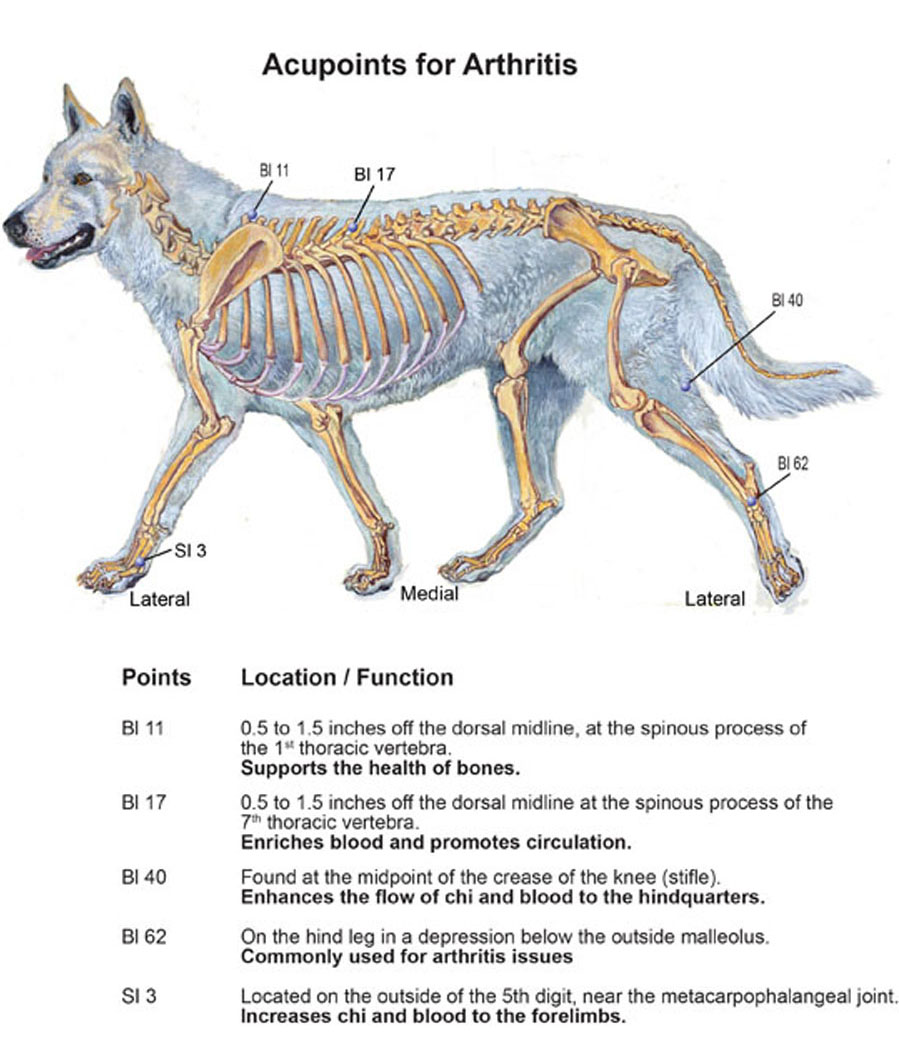
In addition to therapies such as laser treatments and the Assisi loop, I’ve found that incorporating maintenance chiropractic, underwater treadmill, massage, acupuncture, and daily stretching, along with an oral protocol (discussed below) to manage pain and inflammation yields the best results possible for an arthritic dog, and can dramatically delay the need for pharmaceutical interventions if instituted early on in the disease process.

Essential Beneficial Supplements for Arthritic Dogs

Chondroprotective agents (CPAs) that protect the joints (e.g., glucosamine sulfate, collagen, MSM, eggshell membrane, perna mussel aka green-lipped clam, Adequan and cetyl myristoleate) are essential for dogs with arthritis.

CPAs slow the rate of cartilage degeneration, which is critical. The form, dose and type of CPA your veterinarian prescribes should be based on a careful assessment of your dog’s individual needs. CPAs should be blended with pain control options as necessary.

There are many natural remedies for arthritis that can reduce or eliminate the need for painkillers in the early stages, including:

High-quality omega-3 supplement (krill oil) Devil’s Claw
Ubiquinol Supergreen foods (spirulina, astaxanthin)
Turmeric (curcumin) Natural anti-inflammatory formulas (e.g., proteolytic enzymes and SOD)
Traditional Chinese Herbs Homeopathic remedies such as Rhus tox, Bryonia, and Arnica
Boswellia serrata Esterified Fatty Acid Complex (EFAC)
Corydalis CBD oil

There are also ayurvedic herbs and nutraceuticals that can be very beneficial for dogs with arthritis, depending on their individual symptoms.

Why It’s so Important to Continually Monitor Your Dog’s Condition

It’s important to monitor your pet’s symptoms on an ongoing basis, since arthritis is a progressive disease. Your dog’s body is constantly changing, and her treatment protocol will need to evolve as well, which is why partnering with an integrative veterinarian is so important toward your goal of maintaining your furry BFF’s quality of life for as long as possible without drugs.

In the vast majority of mild to moderate joint pain cases, if CPAs and natural pain control options are initiated early, the need for intermittent NSAID therapy can be minimized to those occasional bad days when the weather or activities temporarily exacerbate the dog’s discomfort.

Moderate to severe joint pain cases (requiring consistent NSAID drug administration to maintain quality of life) can rely on lower drug doses by using an integrative protocol that is instituted early on and evolves with a patient’s age.

I definitely recommend finding an integrative or proactive, functional medicine veterinarian to work with you to customize a comprehensive protocol for your pet. Practitioners who’ve gone beyond their traditional veterinary school training of simply prescribing nonsteroidal pain medication, to learn and incorporate complimentary therapies into their practice, will have many more options to offer your dog over the course of her lifetime.

Some newer regenerative medicine options reaching small animal medicine include stem cell therapy and PRP (platelet rich plasma) injections, as well as Prolo therapy. The safety and efficacy of these treatments depends on the condition and technique used, which is another reason to partner with a functional medicine or integrative veterinarian who is well-versed in these promising, emerging procedures.

I also recommend bringing your dog for a wellness checkup with your proactive veterinarian at least twice a year to review the status of her health, and to check the range of motion in her joints, the muscle mass she’s either gaining or losing, and to make adjustments to her protocol as necessary to ensure her quality of life is optimal.

  • 0