IS YOUR PET: ITCHING, SCRATCHING OR WHEEZING AS THE WEATHER WARMS UP? SMASH SEASONAL ALLERGIES WITH THIS POWERFUL FLAVONOID!


Most content provided by Rodney Habib, recommendation and some information by Diane Weinmann

dog scratching

 Allergies are a pain, and not just for us humans.

An allergy is an abnormal response of the immune system. The body reacts to a usually harmless substance in the environment called an “allergen.” Allergens can be problematic when inhaled, ingested, or when it comes into contact with a dog’s skin.

As your dog’s body tries to get rid of the allergen, a variety of skin, digestive, and respiratory issues may surface. These include (but aren’t limited to) paw licking/chewing, ear infections, watery eyes, itchy skin, and a lot of scratching.

Histamine is one of the biggest players in an allergic response, causing much of the inflammation, redness and irritation we and our pets experience. Once the body goes through this process, being exposed to the same allergen again will result in this antibody response, hence the allergic reaction.

Quercetin is a flavonoid (also called a bioflavonoid) that has anti-oxidant, anti-histamine and anti-inflammatory properties. During an allergic reaction the body releases histamine. Histamine contributes to inflammation, redness and irritation. Research has shown that Quercetin can “turn off” histamine production and suppress, or at least moderate, inflammation. Furthermore, Quercetin helps suppress cellular activity associated with inflammation. This means less itching! For this reason, it has been coined “Nature’s Benadryl.”

Dumb me, when my husky started wheezing and coughing, I called the vet and they told me to give him over the counter Benadryl.  Little did I know a natural solution existed in the peel of many fruits and vegetables: a mighty flavonoid called Quercetin. Although herbs and botanicals have been used for medicinal purposes in many countries for thousands of years, flavonoids were not discovered until the 1930s. Flavonoids are a plant-based compound with powerful antioxidant properties. What do antioxidants have to do with allergies? Well this mighty flavonoid presents not only anti-inflammatory but anti-histamine characteristics too!

“Quercetin and other flavonoids have been shown in these studies to inhibit the growth of cancer cells from breast, colon, prostate, ovarian, endometrial, and lung tumors.” – University of Maryland Medical Center.

Quercetin supplements are available in pill and capsule form. They are often packaged with “Bromelain” which increases the bioavailability of Quercetin, meaning you get more bang for your buck when combined.

 Dosages

To work out the proper dosage in milligrams, just multiply the weight of your pet (in pounds) by 8. So a dog weighing 50lbs should get 400mg or a 125lbs dog would get 1,000mg. 1000mg of quercetin a day is roughly equal to consuming 124 red apples or 217 cups of blueberries. Researchers suggest that the average human who consumes an abundant amount of fruits and veggies is only getting about about 230mg of quercetin a day.

Remember: Whatever the amount you give your pet, always split the dosage into two separate portions throughout the day for best results.

 Remove the Itch!

One of the best ways to address allergies is to remove the allergen. Similarly to us humans, the less exposure to something the body doesn’t like, the less reactive we are to it. The more often your pet is exposed to an allergen they are sensitive to, the more intense and long-lasting their allergic response becomes.  With my dog, I didn’t let him put his nose on mold that grew on trees because that seemed to be his trigger for an attack!

There are two types of allergies: food and environmental. Your dog may have a food allergy which often shows up as itchiness, difficulty breathing, and/or gastrointestinal issues (upset stomach resulting in vomiting, diarrhea, and/or gas). Common food allergens include wheat, soy and corn.

The problem could also be an abundance of yeast. Too often, dogs are diagnosed with allergies when they are actually suffering from a systemic yeast infection which lives in the gut, which is, interestingly, where 70% of the immune system also resides.

A few common environmental allergens can include: tree, grass and weed pollens, mold spores, dust/dust mites, cleaning products, insect bites, and insect control products. Also, just like us, our pets can have allergic reactions to prescription drugs. To minimize environmental allergens, keep things clean and make sure to use natural and environmentally friendly products and cleaners in and around your home. Limit the amount of time your pet spends outside when pollen counts are high.  If you know their “trigger” just don’t go near it, hopefully it is that simple.

 What Happened during an Allergy Attack

During an allergy attack, the immune system produces antibodies to a specific allergen. These antibodies then cause certain cells in the body to release chemicals into the bloodstream. One of these chemicals is “histamine”. It’s one of the biggest players in the allergic response, causing much of the inflammation, redness and irritation we and our pets experience. Once the body goes through this process, being exposed to the same allergen again will result in this antibody response, hence the allergic reaction.

A quick safety note: Sometimes, a serious reaction called anaphylaxis can occur. This is essentially a whole body response to an allergen and can be life threatening, therefore requiring immediate medical attention. All the symptoms of a “normal” allergic reaction are exaggerated and your pet may even lose consciousness. Go to the vet immediately!

Let’s Sum it Up!

So let’s put what we know together. Quercetin is a flavonoid (also called a bioflavonoid) that has anti-oxidant, anti-histamine and anti-inflammatory properties. During an allergic reaction the body releases histamine. Histamine contributes to inflammation, redness and irritation. Research has shown that Quercetin can “turn off” histamine production and suppress, or at least moderate, inflammation. For this reason, many have coined it “Nature’s Benadryl”.

Furthermore, Quercetin helps suppress cellular activity associated with inflammation. This means less itching! It also inhibits the production of specific inflammatory molecules. This is exciting because Quercetin is actually helpful in treating asthma and respiratory issues involving inflammation. Bronchial tubes in the lungs become restricted during an asthma attack (bronchoconstriction). Medical studies show that Quercetin can actually minimize the amount of constriction!

 Just when you thought Quercetin couldn’t be more perfect….

Quercetin has an anti-cancer effect!

Flavonoids in fruits and vegetables are important in cancer prevention. According to the University of Maryland Medical Centre, Quercetin and flavonoids have been shown to limit cancer cell growth in breast, colon, prostate, ovarian, endometrial and lung tumors.  Since my mom died of breast cancer and cancer also took my dad, I will definitely be looking into this amazing flavonoid.

As you probably already noticed, our environment is becoming more and more toxic. Our pets are susceptible to toxins in the environment and in their food. This outpouring of toxins causes inflammation. If the body is overweight and storing fat (that’s me), this also causes inflammation.  To make matters worse, a lot of those nasty toxins are stored in fat cells. Cancer thrives off low-grade inflammation. Quercetin to the rescue!

Dr Demian Dressler, a renowned vet AKA The Cancer Doctor, adds that there are enzymes that are targeted during low dose chemotherapy treatment (metronomic chemotherapy) with the use of anti-inflammatory drugs. Blood flow to cancer cells is reduced which helps inhibit cancer growth.

Quercetin can partially block the very same enzymes! Given our pets ingest Quercetin, Dr. Dressler advises using it for tumors in the digestive system where they can receive the highest dosage of a tablet.

Studies have linked Quercetin to supporting bone health, weight reduction (you sold me), addressing heart disease and overall performance. Test tube studies have even shown evidence that Quercetin may protect against the damage caused by bad cholesterol (LDL) and reduce blood pressure (hypertension). Really, you and your four-legged friends can’t go wrong with this mighty flavonoid!

Quercetin in Whole Foods

Quercetin can be found in many fruit and vegetables, particularly citrus fruits, apples, grapes, dark cherries, dark berries, onions, and parsley. It also occurs naturally in some teas and red wine. An important note: Onions and grapes may cause TOXIC reactions in pets, therefore do not feed them to your furry friends.

Quercetin supplements are available in pill and capsule form. They are often packaged with “Bromelain” which increases the bioavailability of Quercetin, meaning you get more bang for your buck when combined. Bromelain is an enzyme that also helps inhibit histamine. Together, Bromelain and Quercetin suppress a compound in the body associated with some types of pain and inflammation. Suppressing it can help decrease pain and inflammation that occurs with irritated mucous membranes and body parts.

Research shows that Quercetin supplementation is generally safe for cats and dogs. Some potential side effects that have been observed in humans include upset stomach and headaches. Very high dosages of Quercetin may be damaging to the kidneys. Experts advise against taking it when one has kidney disease. There is not much known about Quercetin during pregnancy and lactation, therefore it is also advisable not to give it to your pet during these times.

Just remember, like many supplements, Quercetin isn’t meant to be taken on a long-term basis. Give your pet periodic breaks from the supplement, using only as needed. If your pet does have a preexisting condition, is currently on medication, has a planned surgery, or is pregnant, it’s advisable that you talk to your vet before feeding. 

About Rodney Habib

Labeled the “Jamie Oliver of pet food” by his supporters, Pet Nutrition Blogger Rodney Habib is an award winning blogger, magazine writer, and is currently filming a TV series for Animal Planet focusing on pet obesity. He travels around the world, gathering current data from the Pet Industry, and relays it to his supporters. He has one goal in mind when it comes to all his work: to be the change he wants to see in the world. Visit Rodney and his retail pet store, Planet Paws
 

Skin Problems in Dogs

by Marc Abraham BVM&S MRCVS

Article courtesy of Barking Heads Meowing Heads

http://www.barkingheads.co.uk/contact/dog-ticks-skin-46073724

One of the most common reasons for clients bringing their poorly pets in to my clinic is skin problems. Your dog’s skin, including coat and ear canals, is an extremely good indication of overall health. When skin problems occur, your pooch will often tell you by scratching excessively, and if it can reach, chewing and/or licking affected areas.

With our dogs exposed to so many environmental factors 24/7 it’s no surprise that there’s a wide range of skin problem causes, from external parasites (e.g. fleas, ticks), infections, various allergies, metabolic problems, even stress, or indeed any combination of these.

It’s also worth noting that because of this wide range of causes, dogs of all ages and breeds are susceptible to issues involving skin; but young, elderly, immunocompromised, or dogs living in crowded, stressful environments may be more prone than others.

Symptoms

As well as general signs of irritation e.g. scratching, licking or chewing, there can be so many indications – some more obvious than others – that your dog is suffering from skin disease. Scabs, infections, wounds, redness or inflammation, all depend on not only how active is the problem, but also if these signs are secondary to an original (primary) problem, e.g. Golden Retriever ‘hot spots’ (one particular area where itching is intense) found on their necks (below).

All parts of your dog’s skin can be affected; from round, scaly patches on the face and paws, to dry, flaky or otherwise irritated skin elsewhere. Hair loss and bald patches can often be tell-tale signs of allergies, self-mutilation, even hormonal imbalances, with angry rashes on your dog’s underside commonly indicating a reaction to something they’ve come into contact with, e.g. certain grasses, nettles, etc.

The word ‘lesion’ is commonly used by vets when we assess your dog’s skin, and it means that region in a tissue that’s suffered damage through injury or disease. This can mean anything from an abscess draining pus, to any number of variations of swellings, lumps, bumps, even changes in skin color.

Your dog rubbing its face against furniture or carpet can also be a sign so best get anything abnormal checked out ASAP as these conditions can prove extremely challenging to diagnose, expensive to treat, sometimes requiring long courses of antibiotics, washes, etc.

Causesscabies-white-dog-fur-feeling-pain-outdoor-35326213

With so many potential causes of skin disease any of the following may be enough to cause abnormalities with your dog’s skin and should always be thoroughly investigated. Top of the list – and especially when winter central heating’s turned on – must be fleas; bites and droppings from these pesky insects irritate dog’s skin, with some having an allergic response to flea saliva following a bite.


This ‘flea bite hypersensitivity’ is common with affected dogs (above) displaying itchy lesions on the lower back, tail base, and inner thighs – but can also be more generalized – distribution alone is never diagnostic. Always buy flea treatments from your vet, worm your dog regularly, and in severe cases treat your house with a special spray. Seasonal weather changes may also contribute, like with people, to dry, flaky skin as well.

Other parasites, such as ear mites, can also cause irritation resulting in severe ear infections, accompanied by smelly discharge and intense discomfort. Another burrowing mite called Sarcoptes scabei causes sarcoptic mange, resulting in extreme itching and inflammation similar to an allergic response. All require immediate treatment to alleviate symptoms.

Seasonal allergies are common, characterized by all-over scratching, and maybe due to sensitivity to allergens (allergy trigger factors) like pollen, weeds, dust, mites, trees, mold, or grasses. Particularly affected are specific at-risk dogs with defective skin barriers (allowing increased water loss and allergen penetration), and abnormal immune responses. However, some patients may even be genetically predisposed to inflammatory and itchy allergic skin disease e.g. West Highland White Terriers (below), Labradors, German Shepherds, and Shar Peis.

Another cause of skin disease can be food allergies, developed from a range of common ingredients found in dog foods, such as beef, chicken, wheat, corn, or soy. Even fillers and colorings are seen as ‘foreign’ by your dog’s immune system leading to itching and rashes. Adverse food reactions can invite a response from your dog’s immune system (hypersensitivity) or no response (food intolerances, which can include toxins/histamine release).

Frustratingly, hypersensitivity to food allergens is often indistinguishable from hypersensitivity to other (airborne or contact) allergens. So working out which is the cause – from reactions to food or parasites – is often tricky, and requires careful diagnostic work, including ruling out all other diseases causing itching.

And if all that’s not bad enough for your dog, it’s not uncommon for secondary skin infections to accompany skin allergies, usually bacteria or yeast (e.g. Malassezia), taking full advantage of damaged skin, and totally complicating the picture. Multiple treatments to manage both allergy and infection are often now required.

Another condition affecting dogs is ringworm, a highly contagious fungal infection resulting in inflammation, scaly patches, and hair loss. Due to its high potential for spread ringworm also needs to be treated immediately to avoid other pets and people in the household from becoming victims.

Stress or boredom can cause skin disease too. Your dog may lick their skin (especially legs – above) excessively for many reasons. Some will lick as a coping strategy for stress, as well as when not given adequate opportunity for physical or mental stimulation. Metabolic or hormonal problems can also cause changes in skin color, coat consistency, thickness, even distribution.

Finally, certain grooming products e.g. shampoos, can irritate your dog’s skin. Be sure to only use dog-friendly grooming products, and ask your vet if you suspect any products are responsible.

Diagnosisprofessional-vet-doctor-examining-pet-dog-skin-examining-light-29924440

Identifying the many underlying causes of skin disease is not always straightforward, so visit your vet as soon as you notice any abnormality in your dog’s skin or hair, or if they begin to excessively scratch, lick and/or bite areas on their fur.

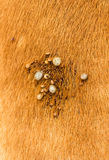
Your vet will obtain a detailed history and perform a thorough physical examination, perhaps even some diagnostic tests in order to identify the cause of symptoms. Tests may include a skin biopsy, skin scrapes, hair plucks and/or coat brushings for flea dirt (feces of fleas – below) or ringworm, microscopic examination of hair and skin for presence of parasites or infection, allergy testing (may recommend diet change), even blood tests to assess your dog’s overall health.

Food allergy diagnosis can usually only be made by response to a novel or ‘hydrolyzed’ protein diet, with treatment by avoiding offending allergens. Diagnosis is based on history, clinical signs, and response to treatment, but other concurrent allergic skin diseases may also need to be addressed as multiple allergies co-existing in one patient is not uncommon.

Once diagnosis is certain, some owners may want to pursue specific testing (intradermal allergy/serological testing) to reveal which allergens are responsible; and is also required for owners wanting to pursue allergen-specific immunotherapy – but is not mandatory – as many forms of treatment are symptomatic and don’t require identification of allergens concerned.

Treatments

As expected with so many causes, there is a wide range of treatments available, including antibiotics, antifungals or anti-itching topical products/medications e.g. shampoos, dips, creams, or spot-on products (to prevent and treat parasites). Shampoos are useful in many cases, and also help treat specific secondary infections, reduce allergen load in the coat, and improve skin barrier function.

Like all disease prevention, a healthy balanced diet is important to help maintain healthy skin and coat e.g. Barking Heads Bad Hair Day. Dietary supplements containing essential fatty acids are extremely useful, reducing skin inflammation, enhancing skin’s role as a barrier; hence very useful in chronic treatment of skin allergies, but can often take a couple of months before positive effects are noticed.

Steroids (e.g. prednisolone) are useful drugs for the short-term management of allergic disease in animals that have seasonal disease or for acute flare ups, producing rapid reductions in itching; with short acting courses being more favorable than long term. Steroids may be dispensed as tablet or topical treatments e.g. ear drops, eye drops, creams, ointments, and sprays.

Most steroids, both ingested orally or absorbed through the skin when applied topically, can lead to side effects, such as eating/drinking more, leading to weight gain. Longer term, every other day tapering therapy is recommended only in patients that cannot be managed using other drugs, with fewer side effects which may include diabetes mellitus, skin thinning, and liver changes.

Sadly, safer antihistamines e.g. piriton, aren’t nearly as potent as steroids, with some animals only responding when multiple drug combinations are trialed – if any response at all. On a positive note side effects from antihistamines are rare, although drowsiness may be seen (which in itself can reduce scratching at night).

Preventiondog scratching

Good management of canine skin disease may involve regular visits to your vet, and is generally divided between treatment of acute flare-ups and managing the chronic disease. All dog owners should try to use natural, dog-friendly hypoallergenic soaps, and shampoos. Regular brushing prevents matting of hair, carefully checking skin, paws, and ears at every grooming session.

Feed a healthy, balanced diet e.g. Barking Heads Bad Hair Day, without fillers or artificial ingredients. Vets may also recommend dietary supplements. Treat for fleas and worms, as well as regularly cleaning and vacuuming your home (remembering to always throw away the bag!) Reduce likelihood of stress try by providing calm living conditions for your dog using artificial pheromone or oral calming natural products if indicated.

Some forms of skin disease can be extremely difficult to cure, with pets often requiring lifelong medication. Despite treatment, most patients still suffer from occasional flare-ups of disease and often have secondary infections which need treatment in addition to allergy management. Occasionally referral to a veterinary skin specialist may be of benefit to discuss multiple treatment options and better control.

Common Seasonal Poisons for Cats

Beware of these common seasonal poisons for catsCat at the vet

Lots of substances that are around us everyday can be a poison or toxin for cats.  Cats are most commonly exposed to poisons by eating them but poisons can also be inhaled or absorbed through the skin.  Not all poisonings are fatal.  Most poisons do not have an antidote and treatment is usually aimed at giving supportive care and treating the signs of poisoning until the poison is removed from the cat’s system.

There are no specific signs that cover all types of poisoning.  If you notice any change in your cat’s health, such as vomiting, diarrhea, incoordination or changes in appetite or thirst then contact your vet for advice.  Other signs that your cat may have been poisoned include foreign material on his hair or feet, foreign material in his vomitus, or a strange smell to his hair, breath, vomitus or feces.

If you think your cat may have come into contact with something he shouldn’t have, contact your vet for further advice.

Below are some common seasonal poisons that cats come into contact with.

Spring and summer:

  • Permethrin (insecticides). Permethrin is an insecticide commonly found in many over the counter ‘spot-on’ flea treatments for dogs. It is very toxic to cats and unfortunately at Vets Now we see numerous cases of poisoning every month.  Poisonings happen all year round but there is a peak in late summer as this is when the flea numbers are at their highest.  Cats are most commonly poisoned after their owners mistakenly use a dog product on the cat, but they can also show mild signs after close contact with a recently treated dog. The effects are usually rapid in onset.  Signs of insecticide poisoning include drooling, tremors, twitching and seizures. Any remaining product should be washed from the cat’s hair coat (or clipped in long haired cats) using cool water, as warm water will increase the absorption of the product. Controlling the convulsions is often difficult and your cat may need to be hospitalized for several days.   The Veterinary Poisons Information Service reports that 15% of cases result in death or euthanasia.  However, cats that receive immediate treatment and survive usually suffer no long-term effects.
  • Toad toxicity. We see occasional cases of exposure to toads in the summer months when the toads are spawning.  Toads are most active around dawn and dusk and most toad-related incidents occur in the evening when cats lick them.  The onset of signs of poisoning is rapid and you can see drooling, frothing, foaming, pain around the mouth, vomiting, wobbliness, seizures and collapse in severe cases.
  • Slug and snail pellets (Metaldehyde). This is a common poison we see in dogs, however we do see occasional cases in cats. The toxic compound is metaldehyde (note – not all slug pellets contain metaldehyde).  Only small amounts of pellets are needed to cause significant poisoning.  Signs will be seen within an hour of ingestion and include incoordination, muscle spasms, twitching, tremors and seizures.  Pets need urgent veterinary treatment if they are to survive poisoning with slug pellets.
  • Anti-histamines. Antihistamines are quite low toxicity – your cat needs to eat quite a few to cause problems.  However ingestion of large amounts of anti-histamines can result in signs including vomiting, lethargy, incoordination, wobbliness and tremors. Signs are seen within 4-7 hours of ingestion. Some cats can become hyperactive and hyper-excitable.

Autumn and winter:

  • Ethylene Glycol. Unfortunately ethylene glycol poisoning is commonly seen in cats.  Ethylene glycol is the compound in most types of antifreeze and is also present in other products.  It smells and tastes sweet so cats will drink it from puddles/spills on the ground or will lick it off their paws if they walk through some.  The toxic dose is very small and even a few drops of ethylene glycol in a puddle will be enough to cause serious kidney damage and can be fatal.  Signs will be seen within the first few hours after ingestion but are mild and easy to miss.  They include vomiting, drooling, incoordination (drunkenness – ethylene glycol is a type of alcohol).  After the first 24-48hours, signs of poisoning are related to kidney failure and will include loss of appetite, vomiting, excessive urination or no urination at all.  Seek urgent veterinary attention if you suspect your cat has ingested ethylene glycol – the longer the delay between ingestion of the anti freeze and initiation of treatment, the less favorable the prognosis.
  • Luminous necklaces. Luminous necklaces consist of plastic tubing with a core of luminescent chemicals, which are apparently attractive to cats as they account for the majority of reported poisonings.  The chemical mixture is very irritating to the mucous membranes of the mouth – commonly causing salivation, frothing/foaming from the mouth, vomiting and stomach pain. Whilst these signs look dramatic, ingestion is unlikely to cause significant problems, with effects mostly limited to gut and mouth. Contact your vet for further advice. Assume all human medications are poisonous to your cat, unless instructed otherwise by your veterinary surgeon.  Some everyday, over the counter human medications such as paracetamol are highly toxic to cats and can lead to kidney or liver failure and death. Increasingly animal medications are being made ‘palatable’ to make them easier to give to your pet.  The downside is that if your cat gets hold of the medication they may eat more than they should.  Make sure you keep all animal medications safely locked away to avoid these cases of self-overdosing. There are a number of plants toxic to cats and some of these are listed below.  Assume all parts of the plant are poisonous, although some parts of the plant may have higher concentrations of the toxin than others. Many plants are irritants, causing inflammation of the skin, mouth and stomach.

Plants

  • Lilies (Lilium sp.) (including daffodils)
  • Sago Palm (Cycas revoluta)
  • Tulip and Narcissus bulbs (Tulipa and Narcissus sp.)
  • Azaleas and Rhododendrons (Rhododendron sp.)
  • Oleander (Nerium oleander)
  • Castor Bean (Ricinus communis)
  • Cyclamen (Cyclamen sp.)
  • Kalanchoe (Kalanchoe sp.)
  • Yew (Taxus sp.)
  • Amaryllis (Amaryllis sp.)
  • Autumn Crocus (Colchicum autumnale)
  • Chrysanthemum (Chrysanthemum sp.)
  • English Ivy (Hedera helix)
  • Peace Lily (Spathiphyllum sp.)
  • Pothos (Epipremnum aureum)
  • Schefflera Schefflera (Brassaia actinophylla)

Foods

Here is a list of human foods that can be dangerous for your cat. 

  • Alcohol
  • Chocolate
  • Coffee, Tea, Energy Drinks
  • Dairy Products
  • Fat Trimmings, Raw Meat, Eggs, Fish
  • Grapes and Raisins
  • Onions and Garlic
  • Tuna
  • Xylitol
  • Bones

  Inhaled Toxins Prevention

If you suspect your cat has been poisoned, identify the poison involved (if at all possible) and bring the container label, plant or any other information you have with you when you visit the vet.

Keep all chemicals, medications, plants and food items out of cat’s reach.  Ensure you read all labels carefully and follow product guidelines on species, age and weight.

  • A variety of inhaled substances can have adverse affects on cats. In general, these substances are the same things that would cause problems for people such as carbon monoxide, smoke, fumes from bleach and other cleaning products and sprayed insecticides.  Most of these substances irritate the airways.  If your cat is exposed to an inhaled toxin, move him immediately to an open, well-ventilated area with clean air, then call your veterinary surgeon for further advice.
  • Wearing protective gloves, remove as much of the foreign material from your cat as you can.  Do not let your cat lick the substance – wrap him in a towel or put a buster collar on if you have one.  Contact your vet for further advice.cat-doctor-8931746

Contact Dermatitis

  • Contact dermatitis can occur if your cat comes in to contact with something that causes irritation to the skin.  If your cat licks or swallows these toxins, his mouth and digestive tract can be affected as well.  Look out for any foreign substance on your cat’s body and feet, any unusual smells, especially a chemical smell, redness, swelling, hair loss, itchiness, blisters, or ulcers on the skin or feet where the substance is located.  You may see drooling, coughing, sores in the mouth, vomiting or diarrhoea, if your cat swallowed the substance.

    Contact dermatitis is most commonly caused but household chemicals, insecticides, and petroleum products.

    What can I do?

    Wearing protective gloves, remove as much of the foreign material from your cat as you can.  Do not let your cat lick the substance – wrap him in a towel or put a buster collar on if you have one.  Contact your vet for further advice.

    Inhaled Toxins

    A variety of inhaled substances can have adverse affects on cats. In general, these substances are the same things that would cause problems for people such as carbon monoxide, smoke, fumes from bleach and other cleaning products and sprayed insecticides.  Most of these substances irritate the airways.  If your cat is exposed to an inhaled toxin, move him immediately to an open, well-ventilated area with clean air, then call your veterinary surgeon for further advice.

    Prevention

    Keep all chemicals, medications, plants and food items out of cat’s reach.  Ensure you read all labels carefully and follow product guidelines on species, age and weight.

    If you suspect your cat has been poisoned, identify the poison involved (if at all possible) and bring the container label, plant or any other information you have with you when you visit the vet.

Heat Stroke – Recognize the signs in your dog!

Information compliments of Dog’s Naturally Magazine

Hot weather is here and you’re walking along with your 80-pound, long-haired shepherd one warm, sunny afternoon. You’re breaking a bit of a sweat, but you feel just fine in your shorts and tank. But then you look over at Thor, and he’s not looking too good … his eyes are glazed, he’s panting heavily and he’s starting to pull back on the leash.

“But, it’s not that hot,” you say to yourself. “What is up with Thor?”

Thor is probably on his way to having heatstroke, which means he is quickly losing his ability to regulate his body temperature because of an overabundance of heat. Dogs don’t sweat the way we do – they only have sweat glands in their nose and pads of their feet. And their only real recourse when they are overheating is to pant, which sometimes isn’t enough. Add to that the fact that their bodies are covered in fur and their paws are usually in direct contact with hot concrete or asphalt … and well, it’s easy to see how they can get much hotter than we can – fast.

And since heatstroke can quickly lead to irreversible damage to major organs like the kidneys, liver, heart, brain – and can even cause death – it’s important to know the signs.

How Do I Know If My Dog Has Heatstroke?

Normally, a dog’s body temperature is somewhere between 100.5 to 102.5 degrees Fahrenheit, slightly higher than for humans. A dog will start to experience heatstroke at over 105 degrees. At around 106 to 108 degrees, organ damage can occur. Always keep a rectal thermometer handy for your dog and check his temperature if you suspect heatstroke.

Other signs to look out for include:

🔹Excessive panting

🔹Excessive thirst

🔹Glazed eyes

🔹Hyperventilation

🔹Increased salivation

🔹Dry gums that are pale or grayish

🔹Bright or dark red tongue or gums

🔹Rapid or erratic pulse

🔹Weakness

🔹Staggering

🔹Confusion

🔹Inattention

🔹Vomiting

🔹Diarrhea

🔹Rectal bleeding

🔹Collapse

If the overheating isn’t stopped, your dog’s breathing will slow or stop, and he can have seizures or fall into a coma. Obviously, we don’t want any of that to happen. So, what should you do if you think your dog has heatstroke?

My Dog Has Heatstroke, What Do I Do?

Whenever the weather gets warms, it’s a good idea to pay special attention to how your dog is doing. And know your dog: Breeds with “flat faces” like Pugs and Boxers, elderly dogs, puppies and sick dogs are at even greater risk of overheating. Things progress quickly when it comes to heatstroke, so as soon as you detect a problem, act quickly.

Get him into shade.

Since heat is the obvious problem, the goal is to get him out of it and away from direct sunlight.

Apply cool water.

Get water on his inner thighs and stomach where there are more large blood vessels, and on the pads of his feet. Use running water via faucet or hose and avoid submerging your dog in a tub or pool because this could cool him too fast and cause other problems like cardiac arrest and bloat. Also, avoid cold water or ice because these will cause the blood vessels to constrict, slowing blood flow and the cooling process.

Air him out.

To help cool your dog, you want to make sure the water you’re putting on him can evaporate. To that end, you’ll want to avoid covering him up with a wet towel or blanket because rather than allowing the water to evaporate, this will create a sauna effect – which you don’t want. Keep him out of enclosed areas like a kennel; instead, keep him near flowing air like from a fan or air conditioner.

I witnessed this in my own dog just yesterday!  He was panting, a lot! I immediately put him into my family room which is freezing cold with the air conditioner going and I put the ceiling fan on him.

Keep him moving.

Encourage your dog to stand or walk slowly while he’s cooling down, so that his cooled blood can circulate throughout his body.

Give him small amounts of cool – not cold – water.

If he gulps down too much water too fast, it can cause vomiting or bloating.  With my dog,  I put some water from the refrigerator into his bowl to “freshen it up” and make it cool.

Give him some chicken or beef broth

…if he doesn’t want water, but avoid human performance drinks.

Get him to the vet.

Once your dog has started to cool down, you can stop your efforts and take him to his vet right away. You don’t want to continue trying to cool down your dog for too long or you’ll risk him getting hypothermia. Your dog will need a veterinary exam even if he seems fine because there may be underlying damage to his organs that you can’t see. Even if he seems normal, the effects of heatstroke can continue for 48 to 72 hours following the initial heatstroke. According to William Grant DVM, the most common cause of death following heatstroke is disseminated intravascular coagulopathy (DIC) which is blood coagulating throughout the body; it can occur hours or days after the heatstroke episode.

In my situation, it was not necessary to take my dog to the vet.  He bounced back and seemed fine in a short period of time.  It was so humid outside that my husband probably didn’t think about what he was subjecting the husky to when they went for a walk in the neighborhood and I had a friend over and wasn’t paying attention until they got back and I saw my dog panting so much!  I can guarantee you that this situation will NEVER happen again!

(Courtesy of Robert Newman and Diane Weinmann)

3 Homeopathic Remedies for an Overheated Dog

In addition to cooling down your overheated dog and taking him to the vet, consider giving him one of these homeopathic remedies to help in his recovery.

Aconitum napellus 6C to 30C
This is a good first choice at first sign of heatstroke. If your dog needs this remedy, he may also seem very fearful or anxious. Give three pellets every 10 minutes for up to three doses. If he doesn’t seem better, try one of the other remedies listed.

Gelsemium 30C
If the dog needs this remedy, he may seem very weak and his muscles may be trembling. Give three pellets every 10 minutes for up to three doses. If the dog is not any better, try the next remedy.

Glonoinum 6C to 30C
You may see vomiting and weakness. His gums may be pale, red or have a bluish cast. Give three pellets every 5 minutes.

Common Seasonal Poisons and Food Dangers for Dogs

Courtesy of VetsNowdog getting meds

Shown  below are some common poisonous substances and foods we see affecting dogs.  We have split them into seasons, but actually most can be seen at any time of year.  In all cases, if you suspect your dog has eaten something he shouldn’t, try and get as much information as possible for the veterinary team – trade name, active ingredient, amount ingested, time ingested.  If you have the original packaging take that with you for the vet to see.

Spring and Easter poisons

  • Chocolate. Chocolate contains a stimulant called theobromine (a bit like caffeine) that is poisonous to dogs.  The amount of theobromine differs in the different types of chocolate (dark chocolate has the most in it
  • Raisins. Don’t forget that goodies such as hot-cross buns contain raisins.  Grapes, raisins, currants and sultanas can cause renal (kidney) failure in dogs.
  • Spring flowers. Daffodils can be toxic, most often after ingestion of the bulb but occasionally after ingestion of flower heads and can cause vomiting, diarrhea and lethargy that in severe cases may result in dehydration, tremors and convulsions. These signs can be seen from 15 minutes to one day following ingestion. Other spring flowers, such as Crocuses and Tulips, are considered to be less toxic but seek veterinary advice if you are worried your pet has ingested them.
  • Ivy. Dogs that eat ivy (Hedera helix) commonly develop salivation (dribbling), vomiting or diarrhea. In more severe cases you may see blood in the vomitus or bloody feces.  Contact with ivy can cause skin reactions, conjunctivitis, itchiness, and skin rashes. Note that “Poison Ivy” is a different plant – Rhus radicans.
  • Bluebells. All parts of the plant are poisonous to dogs.  Signs are related to stomach, intestine and heart function and include vomiting, diarrhea and abdominal discomfort. There is a risk of heart beat irregularity (arrhythmia) if a significant quantity be ingested.
  • Adder bites. The European adder is the only venomous snake native to the UK. Adults are around 50-60cm long and are characterized by having a black / brown zigzag pattern along their back and V shaped marking on the back of the head. They are commonly found on dry, sandy heaths, sand dunes, rocky hillsides, moorland and woodland edges. They generally only bite when provoked by humans, dogs or cats and bites rarely occur during the winter when the snake is hibernating. Bites are more frequent in the spring and summer and result in local swelling.  The swelling may spread and can be severe. Other signs include pale mucous membranes, bruising, salivation, vomiting, diarrhea, dehydration, restlessness, drowsiness and lethargy. Eventually animals may collapse, have blood clotting problems, tremors or convulsions. Seek veterinary attention quickly if your dog is bitten.  Anti-venom is used if available (although it can be difficult to obtain) and if considered appropriate.
  • Anti-histamines. From spring to early summer the pollen count is at its highest and this is when owners are likely to be stocking up on their anti-histamine medication.  Ingestion of large amounts of anti-histamines results in signs that may include vomiting, lethargy, incoordination, wobbliness and tremors. Signs develop within 4-7 hours of ingestion. Some dogs may become hyperactive and hyper-excitable and if large amounts of anti-histamine have been eaten convulsions, respiratory depression and coma may occur.

Summer poisons

  • Xylitol. Xylitol is an artificial sweetener commonly found in sugar free chewing gum, nicotine replacement gum, sweets and as a sugar substitute in baking. If ingested by dogs it causes hypoglycemia (low blood sugar level).  You may see vomiting, an increased heart rate, wobbliness, convulsions or coma. In severe case of hypoglycemia fitting may result which if prolonged, can lead to permanent neurological (brain/nerve) damage.  Liver failure has also been associated with the ingestion of xylitol in dogs.  The onset of signs is often less than an hour but can be delayed for 24-48 hours after ingestion. Liver damage may also develop without the signs associated with hypoglycemia and may occur up to 3 days after ingestion.
  • Ant powders, baits and gels. Ingestion of ant powders, baits or gels rarely results in significant poisoning. The active components of home use products tend to be at a low concentration and are often housed in containers e.g. ant bait stations. However ingestion of some products causes significant problems and you should contact your vet for advice.  Signs you may see include constricted pupils, salivation, wobbliness, tremors and an increased body temperature. Severe cases may produce respiratory depression (not breathing fast enough), convulsions and coma and the duration of effects can be very prolonged.
  • Slug and snail pellets. Metaldehyde based slug pellets are among the most dangerous and common poisonings we see in dogs.  Even small amounts of pellets can cause significant poisoning and severe signs can occur within an hour of consumption.  Dogs that have eaten slug pellets need to be seen ASAP as rapid intervention can save their life.  Signs of poisoning can include; incoordination, muscle spasms, muscle rigidity, twitching, tremors and convulsions. Intensive treatment involving heavy sedation, control of convulsions and associated life support measures is often needed.
  • Toad toxicity. There are two species of toad native to Britain, the Common toad and the Natterjack toad. The Common toad is widespread, whilst the Natterjack toad is a protected species found in East Anglia and the North West of England. Exposure to toads occurs between June and August when they are spawning, toads being most active around dawn and dusk. Most toad-related incidents occur in the evening when cats or dogs lick or eat them.  This can lead to signs including hyper salivation (dribbling), frothing, foaming, oral pain, vomiting, wobbliness, shaking, an increase in body temperature and collapse. In severe cases convulsions can occur.  You can thoroughly rinse your dog’s mouth out (don’t let them swallow the water) then contact your vet for further advice.

Autumn poisons

  • Conkers. Serious cases of poisoning are rare – ingestion can cause marked gastro-intestinal signs – drooling, retching, vomiting, diarrhea and abdominal pain. The conker’s case and conkers themselves also present a risk by causing an intestinal blockage. Dogs usually vomit any ingested conkers quickly and treatment to control vomiting may be needed.
  • Anticoagulant rodenticides. Most, but not all, rodenticides in the UK contain anti-coagulant compounds that interfere with a rat’s ability to clot its own blood. One off exposure to products bought in garden centers often does not cause problems. However, repeated exposure to products or exposure to professional rodent baits can cause disruption to a dog’s blood clotting ability and result in massive hemorrhage (bleeding). The effects may be delayed for several days – blood-clotting (coagulation) tests are often needed to determine if a dog is at risk of developing problems. Treatment involves giving an antidote and in severe cases transfusions of plasma or whole blood.
  • Luminous necklaces. The chemical mixture within these necklaces is very irritating to the gums – commonly causing salivation (dribbling), frothing/foaming from the mouth, vomiting and stomach pain. Although the signs can look dramatic, ingestion is unlikely to cause significant problems.
  • Oak/acorns. Exposure to acorns in dogs is common in the autumn and winter months.  The toxic ingredient is thought to be tannic acid, which can cause damage to the liver and kidneys. Signs include vomiting, diarrhea (with or without blood), abdominal pain, no appetite and lethargy.  Ingested acorns can also cause an intestinal blockage.

Winter and Christmas poisons

  • Food hazards. Chocolate, onions, nuts, blue cheese, fruit cakes, puddings and mince pies can all be toxic to dogs.  Watch out for turkey bones as these can cause choking, constipation or cause damage to your dog’s intestines.
  • Christmas trees and plants. Most species are low toxicity but may cause a mild gastrointestinal upset (vomiting and/or diarrhea) if chewed. Tinsel and decorations can cause intestinal blockages if eaten and your pet may get a nasty shock if they chew through the electrical cable for your Christmas lights.  Holly, mistletoe and poinsettia are all toxic to dogs so keep them out of their reach.
  • Batteries. Ingestion of batteries is more common at this time of year.  If the battery is chewed and pierced it can cause chemical burns and heavy metal poisoning.  If they are swallowed whole it is possible they will cause a blockage.  All batteries are potentially toxic so if you suspect your dog has chewed or swallowed a battery speak to your local vet.
  • Antifreeze. Ethylene glycol (anti freeze) ingestion is very dangerous. It is sweet-tasting and very palatable. Even a relatively small quantity can cause serious kidney damage and can be fatal.  Unfortunately the longer the delay between ingestion of the anti freeze and initiation of treatment the less favorable the prognosis.

All year round

  • Non-steroidal anti-inflammatory drugs (NSAIDs). NSAIDs are used for pain relief. Many human products are available over-the-counter, such as paracetamol, ibuprofen, diclofenac, naproxen or aspirin.  Human NSAIDs can be toxic to all animals, but particularly to dogs where they can cause severe stomach ulceration and acute kidney or liver failure. Please do be very careful and always consult your vet before giving your dog any form of medication.
  • Animal NSAIDs are commonly used in veterinary medicine with trade names including Rimadyl and Metacam.  Many of these have been made palatable to assist owners in giving medications to their pets.  However if your pet gets hold of the medication they can eat more than they should.  In cases of poisoning or overdose, toxic effects develop quickly and include persistent vomiting, vomiting blood, diarrhea, and abdominal tenderness. Weakness and depression are often noted, though some animals show no signs of pain. Gastric (stomach) ulceration can occur without other clinical signs being present. Kidney damage is usually delayed by up to five days after poisoning and animals that are already unwell, dehydrated or with poor kidney function are at greater risk of toxic effects.
  • Vitamin D. Vitamin D compounds (calciferol, calcipotriol, calcitriol, cholecalciferol, tacalcitol, alfacalcidol and paricalcitol) are present in a wide variety of products. Examples include vitamin supplements, cod liver oil, rodenticides and feed additives. In human medicine they are commonly used in psoriasis treatments and vitamin D deficiencies. Veterinary uses include control of low blood calcium in cats and dogs with kidney disease.  All vitamin D compounds are potentially toxic to dogs.  Signs of toxicity depend on the compound and amount ingested, in the case of calcipotriol, calcitriol and tacalcitol signs may be seen within six hours and include weakness and lethargy, depression, increased water intake and increased urine output, profuse vomiting and diarrhoea. Signs progress to wobbliness, arching of the back, muscle spasms, and twitching. Fatal cases do occur, especially in dogs following ingestion of human psoriasis creams, however effective treatments are available in animals that have not developed advanced poisoning.
  • Mushrooms. The most common account of poisoning is by the mushroom Amanita phalloides, which is extremely toxic. Signs include mild vomiting and diarrhea and can lead to more severe digestive problems, neurological (brain/nerve) disorders and liver disease.
  • Salt. Common products that are very high in salt include – sterilizing fluids, water softeners, dishwasher salt, rock salt (used to de-ice roads) and some bath products (e.g. dead sea salt, bath salt), stock cubes, homemade play-doh and gravy powders.  Salt (sodium chloride) toxicity is extremely dangerous and potentially fatal – a toxic dose may be as little as 1/16th of a teaspoon per kg of body weight.  Do not attempt to make your dog sick (following ingestion of a poison) using salt water, it can cause severe problems and interfere with the treatment your dog needs.

Substances of low toxicity

Here is a list of common items that owners report their dogs have eaten.   Most cause only mild gastrointestinal signs (such as vomiting or diarrhea) but nevertheless contact your vet for further advice if your dog has eaten any of the following.

  • Blu-tack – and other similar adhesives
  • Chalk
  • Charcoal
  • Coal (real or artificial)
  • Cut-flower/houseplant food
  • Expanded polystyrene
  • Folic acid tablets
  • Fuchsia plants
  • Honeysuckle plants
  • Matches
  • Oral contraceptives and hormone replacement therapy tablets
  • Pyracantha plants
  • Rowan tree
  • Silica gel – in small sachets found in packaging of moisture sensitive goods
  • Wax candles / crayons
  • Sun cream
  • After sun
  • Ice packs (methylcellulose)
  • Sunflowers
  • Sand
  • Slugs and snails (not toxic but are potential carriers of Lungworm)sick-dog-10980120

Ibuprofen is Poisonous to Dogs

After the party

Courtesy of VetsNow http://www.vets-now.com/home/

We’ve all been there, your dog comes in having had a scrape and you think ‘ouch, where are the painkillers?’ One of the most common pain killers used by ourselves is Ibuprofen commonly sold as Nurofen, but please do not be tempted – although safe in people, it is poisonous to dogs.

So, why is ibuprofen poisonous to dogs?

Within a dogs body, much like ours, there are substances produced that protect us. An important example is prostaglandins. Prostaglandins are complex molecules which protect many of a dog’s internal organs. One of the effects of ibuprofen in dogs is to stop prostaglandin production, so organs that need prostaglandins for protection can be damaged.

What can you do to protect your dog?

If your dog seems unwell or has a minor injury, it is extremely tempting to reach into the medicine cabinet for a drug that you would use for yourself and administer it to your pet. Likewise if your dog requires long term pain medication for diseases such as arthritis and you run out or are looking for an easier option, it might be tempting to use a human drug.However please don’t use ibuprofen. The fact is that different species react to drugs in different ways and this applies as much to dogs and cats as it does to dogs and people. If your vet has prescribed pain killers these will have been extensively tested by drug companies to ensure that they are safe to your dog.

What should I do if my dog has ingested Ibuprofen?

Please call your vet immediately, as the best treatment is to induce vomiting ideally within 3 hours of ingestion. If ingestion was longer than 3 hours ago, the body might have absorbed enough and there is a need to protect the kidneys and the intestines. Your dog may be admitted into the surgery and placed on a drip to maintain blood pressure and help the kidneys. To protect the intestines, gastric protectant medicines may be used.

Pet Hazards in the Home and Garden

After the partyPoisonings in the home occur in a number of cases each year.  The most common are chocolate and other food stuffs, contraceptive medicines, other prescription medicines, non-prescription drugs, dog flea products used on cats and washing powder.  Keep all substances that are toxic to pets well out of their reach and in secure containers.  If your pet is unwell, phone your vet for advice, DO NOT give any human medications to your pet without veterinary advice.  Ibuprofen can be toxic to dogs and paracetamol is highly toxic to cats.

Foreign bodies – dogs in particular like to pick up and carry objects like shoes, socks and toys.  Unfortunately occasionally these items are swallowed and can lead to a blockage in your dog’s (or occasionally cat’s) intestines.  Our vets have removed all manner of items from animals’ intestines over the last couple of years including; socks, pants, stones, corn on the cob, rubber ducks, toy soldiers, batteries, babies dummies, teats from babies bottles, leather strap from a handbag, bones (most commonly lamb), small rubber bouncy balls, kebab stick, latex glove, sewing needle and thread.

Try to prevent your dog carrying around and chewing inappropriate items.  Some dogs (especially the gun dog breeds) were bred to carry things in their mouths so ensure they have appropriate dog toys they are allowed to carry to try and prevent them picking up things they shouldn’t.

Vomiting and diarrhea – the majority of cases of vomiting and/or diarrhea in dogs is caused by a dietary indiscretion (eating random things!) or scavenging.  Try to prevent your dog picking up rubbish like discarded sandwiches or other food or eating dead birds, rabbits or similar he might find on his walk.  Some dogs have quite sensitive stomachs, so avoid giving them food leftovers, especially high fat foods.

Out and about

A large number of the cases we see are as a result of trauma.  From road traffic accidents to falling off a cliff and everything in between.

Road traffic accidents – If you are going to let your dog off the lead make sure you are in a safe environment.  Ensure your dog is well trained (especially the recall and wait/stop command), under control and within your sight at all times.  Even the best trained dog can be spooked and run off, so ensure your dog is wearing a collar, ID tag and ideally is microchipped (don’t forget to keep your contact details up to date).  This will make it much easier to reunite you with your pet if they do become separated from you.

Indoor cats do not get hit by cars or attacked by other cats or dogs.  If you decide to let your cat out, try and train them to be out during the day and in overnight as the majority of cats are hit by cars during the hours of darkness.  We see a significant increase in road traffic accidents in the autumn when the clocks change – so try and ensure your cat is back safely in the house by the time it is dark and rush hour begins.  Ensure your cat is microchipped to increase the chance you will be reunited should anything happen to your cat.

Sticks – we frequently see injuries associated with sticks.  The most common cause of the accident is the when the stick is thrown for the dog and lands like a javelin sticking up out of the ground – the dog then runs onto the stick and can injure the back of the mouth, tongue and oesophagus (food pipe) or trachea (windpipe).  Sadly we also see cases of dogs choking to death on balls – the worst are small hard rubber balls, with or without rope attached.

Health issues

Pyometra – a pyometra is a uterine infection that is most commonly seen in older non-speyed females (both dogs and cats).  By neutering your female pet you eliminate this risk altogether.  Neutering your pet also brings other health benefits including reducing the risk of mammary (breast) cancer if performed when young.

Kittening/whelping problems – complications arising from kittening or whelping can be numerous so think carefully about whether or not you should breed your pet.  Aspects to consider include the suitability of your pet for breeding (temperament, health), time involved and the fact that there is a high number of stray pets in the USA.  Another area to consider is the costs that may be involved – a caesarean section in the middle of the night can cost quite a lot of money.

Article courtesy of VetsNow


How to identify a possible poisoning and what to do if you think your pet has been poisoned


There are lots of different chemicals, drugs and plants that are poisonous to our pets.  Here is an overview of common poisons. dog with headache

Symptoms of poisoning

  • Contact poisons – chemicals or plants that come into contact with your pet’s skin can cause irritation.  You may see sign of discomfort, agitation, excessive scratching, swellings (hives) or pain.
  • Swallowed poisons – can cause gastrointestinal irritation, vomiting, diarrhea, restlessness, staggering, disorientation, convulsions, lethargy, loss of appetite, twitching, dilated pupils, ulcers, heart palpitations, and coma.
  • Inhaled poisons – coughing, drooling, difficulty breathing, unconsciousness or coma.

Poisons for which immediate care should be sought:

Skin contact

  • Tar
  • Petroleum products
  • Household chemicals
  • Paint or paint remover
  • Gasoline
  • Stinging nettles
  • Flea and tick medication – if overdosed, or if dog products are used on cats

Inhaled poisons 

  • Smoke
  • Tear gas
  • Insecticides
  • Household chemicals

Swallowed poisons

  • Alkalis
  • Acids
  • Household and garden chemicals
  • Petroleum Products
  • Antifreeze, screen wash
  • All drugs/medications – human or pet
  • Luminous necklaces/glow sticks
  • Batteries

Poisonous plants 

  • Ivy
  • Foxglove
  • Hemlock
  • Mushrooms
  • Mistletoe
  • Oleander
  • Lilies, including daffodils
  • Tulip
  • Oak/acorns

Food items

  • Chocolate
  • Onions, garlic, chives
  • Raisins/grapes
  • Caffeine
  • Alcohol
  • Avocados
  • Macadamia nuts
  • Xylitol (an artificial sweetener commonly used in chewing gum and diabetic sweets)

What to do if you think your pet has been poisoned – immediate care

  • Contact your vet immediately upon ingestion or exposure to any known or possible toxin with as much information as possible regarding the toxin (name, strength, amount ingested).
  • If the poisoning is primarily from noxious fumes or a gas, get your pet to fresh air, but don’t put yourself at risk for poisoning.
  • If the poisoning is by contact with the skin, wear protective gloves and remove the substance from the skin/hair. Use paper towels or clean rags to remove liquids. Do not use water, solvents or anything else to remove the poison unless specifically directed to do so by your vet.
  • If the poison was in the mouth or swallowed, contact your vet. DO NOT induce vomiting unless specifically directed to do so, as some poisons can cause more damage if vomiting occurs than if left in the stomach.

Veterinary care – what to expect

  •  Diagnosis can usually only be made if you have observed your pet eating a specific toxin.  It is impossible to test for all toxins and for some toxins there is no test available.  Other tests may be done to assess the function of your pet’s internal organs and other health parameters.

Treatment

  • If we know the specific poison, we may be able to give an antidote (but not all poisons have antidotes). If the type of poison is uncertain, or there is no antidote, treatment will be supportive in nature (i.e., we treat the symptoms) in an effort to maintain normal function of the organs until the poison has been processed out of the body. Unfortunately, for some poisons, despite treatment your pet may not survive. 

Prevention

  • Keep your pet away from areas where chemicals and toxins are being used (kitchen, bathroom, garage) and ensure all chemicals are safely contained and stored out of reach of inquisitive paws and noses when not in use.
  • Do not keep poisonous plants in or around your home and watch for them while taking your dog outside.
  • If you use insecticides and/or rodenticides, follow the instructions carefully and make sure your pet cannot reach the treated area(s).
  • Keep human and pet medications stored in a safe and secure location. Label them carefully and keep count of how many are in each container. This information will be extremely useful in case of ingestion or an overdose.

dog with med bottles

Pet CPR

http://www.nbcmiami.com/news/local/Help-My-Pet-Isnt-Breathing-How-To-Administer-CPR-To-Your-Pet-300548141.html

CPR for your Dog

By Dr. Ian Kupkee

April is the American Red Cross’s Pet First Aid Awareness Month. What better time to go over the basics of administering CPR to your pet?

Let me start by saying I hope my readers never need this information. No pet parent wants to think about the possibility that their pet might stop breathing and collapse. Unfortunately, the unthinkable can, and sometimes does, happen. Knowing the basics of CPR can give pet owners the confidence needed to stay calm and work the problem in a life or death situation.

Be Prepared

One of the basic elements of pet CPR is the chest compression. I’ll get to the details in a moment, but before administering chest compressions, you must first be able to locate your pet’s heartbeat. In the spirit of preparedness, it’s a good idea to learn how to do this before an emergency strikes. When your pet is lying on her right side, the heart will be facing upward. Gently pull the front leg back, and feel for the heartbeat near what we would call the armpit. You can also find a pulse at the femoral artery, but the heartbeat is the easiest to find. This activity can easily be incorporated into routine down time with your pet. You can take your time, and your pet will simply think she is getting a massage! The more you practice, the more easily you will be able to locate your pet’s heartbeat. Be prepared. You don’t want to waste time finding it in an emergency situation when every second counts

The ABC’s of CPR

Now let’s imagine a worst-case scenario. Fluffy has collapsed. First, call for help. If you can perform CPR while someone else drives you to the vet, you will greatly improve your pet’s chances. Next, remember your ABC’s. In addition to being very easy to remember, in rescue medicine, ABC is an acronym: Airway Breathing Compression

Check to see if she is breathing by watching for a rise and fall of the chest, and putting your face close to her mouth in an attempt to hear or feel any breaths. If she has indeed stopped breathing, you will need to open the Airway by lining up the head with the neck. Next, open the mouth, gently pull out the tongue, and have a look inside. You’re looking for a foreign body that might be blocking the Airway. If you see one, reach inside and pull it out. Get your hand out of the mouth quickly, as the pet may wake up startled, and frightened animals often bite. If there’s nothing there, you’ll need to start rescue Breathing. Hold the pet’s muzzle closed, put your mouth over the nose of a large dog, or the nose and mouth of a small dog or cat. Give four to five quick rescue Breaths – not too deeply, just enough to make the chest rise. Make sure the chest falls between Breaths. Check for a heartbeat, and if you don’t feel one, you’ll need to start chest Compressions.

Before beginning chest Compressions, be sure Fluffy is lying on her right side, so that the heart faces upward. Place the heel of your hand over the heart, lock your hands together, straighten the arms and give 30 rapid chest Compressions. For a large dog, Compressions should go down about two to three inches. For small dogs and cats, a half inch to full inch is an adequate Compression. After your 30 Compressions give two more rescue breaths, then resume chest compressions. This is called a cycle, and is defined by 30 compressions, followed by two rescue breaths. After four cycles – or about one minute – check again for a heartbeat and signs of independant breathing. If you can’t find either, keep going – 30 compressions, two rescue breaths.

You can continue for as long as 20 minutes, but by then, you really need to be at your vet’s office or an emergency clinic if you want to give your pet the best chance of survival.

This truncated recap can be printed out and placed in your pet’s first aid kit – Know how to find your pet’s heartbeat in advance. – Know your ABC’s: Airway, Breathing, Compression. – In an emergency situation, call for help and get someone to drive you to the vet. -Lie your pet on the right side. -Quickly check for heartbeat and breathing -Align the head and neck -Pull the tongue out -Look inside for a foreign body -Close the muzzle, give 4-5 rescue breaths -Check for signs of life -Give 30 chest compressions -Give two rescue breaths -Repeat three more times -Check for signs of life -Keep going if needed

Remember, your can really increase your pet’s chances if you do this on the way to the vet. Even if you are able to revive your pet at home, get her to the vet for follow up care and observation. Diagnostics performed in the wake of an emergency can give your veterinarian an idea as to what caused the crisis in the first place. There is nothing quite like the rush one gets from successfully administering CPR. That being said, you’re not likely to want to do it again anytime soon.

http://www.nbcmiami.com/news/local/Help-My-Pet-Isnt-Breathing-How-To-Administer-CPR-To-Your-Pet-300548141.html

dog with vet
dog with vet


TREATS FOR DOGS WITH SPECIAL NEEDS

Compliments of Animal Wellness Magazine

If your dog has a health issue such as arthritis, cancer or diabetes, you need to watch what they eat.  Being certified in canine nutrition I know that providing healthy food and treats for your pet is your first defense against disease.

Good, healthy food and treats please!

The treats in this article are easy to make – just refer to the chart at the end of the article to find your dog’s condition, select from the ingredients specified, then follow the instructions for mixing and baking.

 Instructions:

  1. Choose four cups of whole flour. You can use one flour or a combination.

2.Choose 1½ cups of filling. Have fun with it. Depending on the flour/s used, additional liquid may be needed.

3.Choose 2 teaspoons of healing spices.

4.Combine all ingredients in a food processor or blender, until the dough pulls away from the side of the bowl. This recipe can also be mixed by hand.

5.Preheat your oven to 325°F. Cover a large cookie sheet with parchment paper, for easy cleanup.

6.Turn out dough onto a lightly floured surface and knead well.

7.Roll out and cut the dough into desired shapes using cookie cutters or cut it into squares. You can also take small pieces of dough, roll them out to the thickness of a crayon, and use a sharp knife to cut pieces appropriate to the size of your dog.

8.Bake for 20 minutes, then turn the oven down to 175°F and bake for 40 more minutes. Turn the oven off and allow biscuits to cool completely before removing.

9.Store in an airtight container or Ziploc bag.

Treat Ingredients for Common Conditions

Health Issue Whole Flour Filling Healing Spices
Arthritis Oats, brown rice, chia, quinoa, coconut Pumpkin puree Ginger, turmeric
Cancer Chickpea, sweet potato, oats Fruit and/or vegetable mash, including apples, blueberries, broccoli, carrots, green beans, pumpkin, and/or shiitake mushrooms Cinnamon, carob, turmeric, green tea
Diabetes Brown rice, quinoa, oats Applesauce, green vegetables, pumpkin puree Cinnamon, oregano, thyme
Gastrointestinal problems Oats, chia, coconut Applesauce,  pumpkin puree Cinnamon, carob, ginger, turmeric, dill
Heart Brown rice, oats, sweet potato Broccoli, carrots, green beans, squash, blueberries Cinnamon, oregano, turmeric, green tea
Kidney Brown rice, oats Green beans, squash, turnips, zucchini, carrots, cranberries Cinnamon, ginger, parsley
Liver Quinoa, oats, coconut Shiitake mushrooms, broccoli Ginger, parsley, turmeric