Some plants and cut flowers can actually be toxic to dogs, causing symptoms such as swelling of the mouth, vomiting, trembling, loss of coordination, seizures, difficulty breathing, or even death.
But that doesn’t mean you can’t ever decorate your place with indoor plants or accept a gift of flowers from a friend. Before you bring home a nice flower arrangement or new houseplant, you just need to make sure it’s on the list of flowers and plants that are safe for dogs.
Flowers That Are Safe for Dogs
Some safe flowers for dogs include:
Alstroemeria
Asters
Gerber Daisies
Orchid
Roses
Snapdragon
Statice
Sunflowers
Houseplants That Are Safe for Dogs
Here a few plants that are safe for dogs:
Ferns:
Boston Fern
Herbs:
Basil
Cilantro
Dill
Lemon Balm
Rosemary
Sage
Perennials:
African Violet
Aluminum Plant (aka Watermelon plant)
Bamboo
Friendship Plant
Spider Ivy (aka Spider Plant)
Swedish Ivy
Succulents:
Blue Echeveria (aka Wax Rosette, Painted Lady)
Christmas Cactus
Haworthia
Hens and Chickens
Palms:
Areca Palm
Dwarf Date Palm
Dwarf Palm (aka Good Luck Palm, Bamboo Palm, Parlor Palm)
Lady Palm
Why Do Dogs Eat Plants and Flowers?
Pets are curious, so it’s not unlikely that they would try to munch on plants or flowers that you bring into the home.
“Exposure of dogs and cats to household plants occurs commonly, especially with younger animals that tend to be very inquisitive. Some plants are extremely toxic to our pets,” says Dr. David Dorman, DVM and professor of Toxicology at North Carolina State University of Veterinary Medicine.
Dr. Dorman says, “It’s important to remember that your pet cannot distinguish between safe-to-eat plants and those that are dangerous. The key to preventing poisonings in your pets is to prevent exposure.” Thus, don’t bring poisonous plants into the home with cats and dogs, period.
What to Do If You Suspect That Your Dog Ate a Toxic Plant or Flower
Plants that are considered dangerous for dogs can cause a range of symptoms—some much more serious than others.
If you’re concerned that your pet has ingested a poisonous plant or flower, or they’re showing symptoms of poisoning, contact your veterinarian, or the ASPCA Animal Poison Control Center at 888-426-4435, or the Pet Poison Helpline at 855-764-7661 immediately.
Before you add eco-friendly décor to your home, do your research to keep your pets safe.
Reviewed on March 19, 2020, by Dr. Jennifer Grota, DVM as seen in PetMD
Did you know that certain plants and flowers can actually be dangerous for your cat?
“While any plant material can cause mild stomach upset, some plants are much more dangerous,” says Tina Wismer, medical director at the ASPCA Animal Poison Control Center.
It’s also important for cat parents to know that some plants and flowers that are relatively safe for dogs can be deadly for cats. “Members of the Lilium (true lilies) or Hemerocallis (day lilies) can cause kidney failure in cats, but only mild stomach upset in dogs,” says Wismer.
If you’re considering an eco-conscious revamp of your home décor, check this list to find out which flowers and houseplants are safe for cats.
Flowers That Are Safe for Cats
Avoid bringing dangerous flowers into your home with this list of safe flowers for cats:
Alstroemeria
Asters
Freesia
Gerber Daisies
Liatris
Lisianthus
Orchid
Roses
Snapdragon
Statice
Sunflowers
Wax Flower (Madagascar Jasmine)
Air-Purifying Plants That Are Safe for Cats
Houseplants cleanse the air we breathe from toxins found in many household products—formaldehyde, benzene, and carbon monoxide, just to name a few.
Here are some air-purifying plants that are also safe for cats:
Areca Palm
Bamboo
Basil
Boston Fern
Cilantro
Dill
Dwarf Date Palm
Friendship Plant
Hens and Chicks
Lady Palm
Lemon Balm
Old Man Cactus
Painted Lady
Reed Palm
Rosemary
Sage
Shrimp Cactus
Spider Plant (Spider Ivy)
Venus Flytrap
Zebra Haworthia
Even Safe Plants Can Pose Dangers to Cats
Wismer suggests that you keep these plants and flowers out of reach of curious cats even though they are considered safe, because there are other dangers to watch out for.
Most cut flowers come with a powdered flower food to keep them fresh, and this can be toxic to cats. Even the vases could pose a problem. “Cats especially like to drink from vases, so make sure the cat cannot overturn heavy vases and hurt themselves,” Wismer adds. “Breakable vases can also be a hazard for your pets…and you, when you have to pick up the pieces.”
Karen Lawrence, director of The CFA Foundation and manager of the Feline Historical Museum, suggests using hanging planters as a way to keep plants out of the reach of your pets.
What to Do If Your Cat Eats a Plant That Might Be Poisonous
If your cat nibbled on a flower or plant, and you are unsure whether it may be toxic, call your emergency vet, or the Pet Poison Helpline at 855-764-7661, or the ASPCA Animal Poison Control Center at 888-426-4435.
You should call even if you just suspect that your cat might have eaten part of a plant or flower.
If you’re looking for something to do with your dog this summer, and aren’t sure what to do as the pandemic winds down, check out this list of seven fun and simple ideas.
Even as the pandemic seems to be winding down in some places, it remains important to follow existing restrictions as long as they’re in place. So if you’re looking for some fun things to do with your dog this summer, and aren’t sure what’s available to you, check out this list of seven fun and simple ideas.
1. Enjoy a long walk
You and your dog need regular exercise. Taking a long walk is a great way for you both to stay fit. Fortunately, you can still enjoy walks with your dogs and stay within COVID rules. Be sure to bring along your mask in case you encounter other people.
For a dog, going for a walk is more than just a potty break – it also provides mental stimulation and socialization. And it’s a great way for the two of you to bond and enjoy the outdoors together this summer.
2. Do a summer photoshoot
Find the perfect location to take pics, while being sure to follow any social distancing rules. Bring lots of treats to motivate your buddy to keep posing, as well as some water in case he gets thirsty. Try one of these locations as a backdrop – just make sure beforehand that they’re dog-friendly, and follow the regulations:
Beach — Water, sand and sun make beautiful settings for a photoshoot. Choose a time of day that gives you the best sunlight without too much shade. Mornings and evenings are great, and won’t be too hot for your dog. Allow your pooch to romp in the surf or run along the beach for awesome action shots.
Favorite park — Parks provide plenty of natural beauty in dog photos. Every season offers a unique backdrop. In the summer, colorful flower beds make a great setting – just don’t let your dog trample the gardens!
Field or wooded area – If safe and permitted, allow your dog to run around in a field or wooded area while you take photos (watch out for ticks, though). For different effects, choose different times of the day to take your pictures.
Backyard – Sometimes, the best place to take photos is in your own backyard. Give your dog a new toy to play with while you take pics of him, or throw a ball for him to get some action shots.
3. Engage your dog in interactive play
Playing with your dog reinforces communication, strengthens your bond, and improves obedience. Try a variety of toys to see which one he likes best. Once you find his favorite, try to make it even more fun by moving it around or throwing it for your dog to chase. Some of the best-loved dog toys are often those that have been around for years like balls, Frisbees or rope pulls.
4. Practice basic commands
Giving your dog a training refresher doesn’t have to be work! In fact, it’s a fun way to hang out together. It keeps your mentally sharp and physically challenged. Revisit the basic commands you’ve taught your dog — or teach him some new tricks such as high five, or jump through a hoop. When you teach your dog new tricks, it not only improves his health, but boosts your confidence as a dog parent.
5. Go swimming together
Whether you have a pool in your backyard or just bought a kiddie pool, your dog will love splashing and cooling off in the water with you this summer. Afterwards, don’t be surprised if your dog runs around the yard or rolls around in the grass. Called the ”zoomies,” this familiar behavior occurs when a dog gets a rush of energy after a bath or swimming. It’s thought this activity could be a release of nervous energy — or it could be that your dog just feels good after his time in the water!
6. Create an agility course in your backyard
A backyard agility course doesn’t need to be expensive or elaborate. Use items you have around the house such as two laundry baskets to hold a broom handle for jumping over, a children’s playground slide or cloth tunnel. Agility courses provide many benefits for your dog such as mental stimulation, exercise, better obedience, and an improved relationship with you. They also give your dog a full-body workout since he will need to jump, climb, crawl, and run through the various obstacles. Once your dog has learned the course, challenge him by changing out the obstacles or move the course to a different part of your yard. This is guaranteed to be fun for both of you!
Having fun with your dog this summer doesn’t have to stop because of the ongoing pandemic, and these ideas are just the beginning. Get creative and try new activities with your dog!
By Joanne Keenan as seen in dogs Naturally Magazine
Have you ever searched online for the best dog food to help your overweight dog with weight loss? You’ll find the who’s who of commercial dog foods. But will the food help your dog lose weight?
Probably not. What you’ll find is that the ingredients don’t differ much from the standard dog processed diet. Some are labelled low-fat … but (just like the human weight-loss industry) … they use extra carbs to replace fat.
Dog Food For Overweight Dogs
Your first stop for a diet for overweight dogs might be the pet store or your vet’s office. You’ll find a wide range of weight-loss, grain-free, and reduced-fat options, with questionable ingredients. Here are some of the ingredients used in weight-loss diets as fillers. And they also lack nutrients.
Powdered Cellulose This is non-digestible plant fiber, often from wood pulp. It’s essentially sawdust … woody fiber without any nutritional value. Cellulose dilutes the number of calories in each serving. It also gives your dog the feeling of fullness. But you’ll notice the volume of poop also increases.
Beet Pulp This is a high fiber by-product of the sugar beet industry. It’s considered an inexpensive filler. Some reports say it has health benefits. Still, its vitamins and minerals get removed for other purposes. All that remains is fiber that passes through your dog like any other fiber, despite its origin in a root vegetable.
Brewers Rice This is the small grain fragments left over after whole grains of rice are milled. It’s an inexpensive grain filler without any nutritional value. It will bulk up your dog’s poop and make him feel fuller.
Chicken By-Product Meal This is a dry rendered product known as slaughterhouse waste. This is what remains from slaughtered chicken. It’s usually anything but meat and includes feathers, fat, feet and beaks.
Soy Flour, Soy Grits, Soybean Mill Run Soy is problematic for several reasons. Soy is a low-cost alternative to meat protein but can be highly allergenic. Most soy is also genetically modified and harvested using toxic glyphosate as a desiccant. Soy grits are left after the extraction and removal of oil and soy meat. Soybean Mill Run is the hulls after the soy meat is removed.
So … when there’s soy in a dog food, it artificially increases the protein content without adding meat. These soybean by-products are also inferior sources of amino acids. They are an unusable protein that your dog can’t digest.
You’ll also find grain-free foods that contain different legumes (also used as a low-cost source of protein), instead of grains. These are just as starchy as grains and should be avoided for your overweight dog.
Many ingredients in manufactured, weight-loss dog foods include grains, legumes and low-quality proteins. And you should also be aware of ingredient splitting. That’s when the same ingredient gets divided into sub-types and listed separately on the label. But added together, they’d usually be the largest ingredient (by weight).
Weight Control Dog Food Labels
Here are the top ingredients listed on a few random labels.
With the exception of pork liver, deboned cod and chicken, the above ingredients offer little to no nutritional value. Those that aren’t stripped-down grains or fillers are carbohydrates your dog doesn’t need.
How Carbohydrates Cause Overweight Dogs
Processed diets are high in carbs and unhealthy fats, and low in protein …. and that leads to weight gain.
According to animal nutritionist Dr Richard S Patton PhD, dogs in the wild ate a diet that was 4% carbohydrate. They’d get some carbs from wild berries or the stomach contents of their prey. Yet today’s processed food often has 40% carbohydrates or more.
Most dogs need about 25–30 calories per pound per day to maintain a healthy weight. So, a 30-pound dog needs about 800 calories a day. And a lot of the calories in kibble are from carbs. So, if you reduce the kibble and feed a whole food, meat-based diet, you can feed your dog the same amount of calories … but he’ll get healthier foods and better nutrition. And it’ll be easier to control his weight.
Is My Dog Overweight?
So … how can you tell if your dog is overweight? The easiest way to tell is to see if you can feel his ribs. Holistic vet Dr Edward Bassingthwaighte offers this guideline: make a loose fist and run your other hand over your knuckles. That’s what your dog’s ribs should feel like. There shouldn’t be a layer of fat preventing you from feeling the ridges of his ribs. And he should have a defined waist that you can see from above and from the side. You should be able to see where your dog’s chest stops and his stomach area begins.
What To Feed Your Overweight Dog
Here are the most effective foods to help your dog lose weight.
Raw Diet A whole food, raw meat diet is the best option for your dog. You can buy pre-made frozen raw food. Most should be complete and balanced, and some will contain fruits and vegetables. Higher quality foods won’t have added synthetic vitamins and minerals. Instead, the nutritients come from the ingredients.
Or you can follow recipes to prepare raw food meals yourself. Here are some tips to help your overweight dog …
Stick to lean meats including turkey, chicken and beef
Feed a balanced raw diet that includes muscle meat, organs and bones plus fruit, vegetables, eggs and fish. Otherwise, your dog will lack essential nutrients.
Use fruits and vegetables from your dog’s meals to create healthy treats. You can freeze broccoli, green beans or carrots or small pieces of meat.
Give raw meaty bones as treats or as an occasional meal replacement. Bones will keep your dog occupied for hours and satisfy his need for food. Give your dog knuckle bones, lamb femurs or pork or beef neck bones. They are healthier choices than commercial chews.
Include omega-3 fatty acids to balance the omega-6 fats found in most dog food
Include probiotics to balance the gut microbiome and help digestion and the immune system
DNM RECOMMENDS: Four Leaf Rover offers Protect, soil-based probiotics with bentonite clay, humic and fulvic acid, dandelion and burdock root powder. It’s rich in antioxidants and helps remove toxins. Buy Protect Now. >>
Low In Starch Whether you feed your dog raw or home-cooked, leave out the starchy foods. Dogs have no nutritional requirement for starch to survive. A diet of protein and fat supplemented by some low-carb fruit and vegetables meets your dog’s energy needs.
A low-carb or low-starch diet includes raw meat or gently cooked meals without any carbohydrates in starch or grain form. Avoid legumes as well. These add starch to the diet … and plant-based protein doesn’t nourish your dog like the animal protein he needs. You can include low-carb vegetables (steamed or pureed for digestibility) like leafy greens (spinach, kale, dandelion greens), mushrooms, broccoli, zucchini, cauliflower or asparagus.
Freeze-Dried Raw Diet Most freeze-dried diets have the same ingredients as pre-made raw frozen diets … muscle meat, organs and ground bones. Some will include fruits and vegetables. Like raw foods, the better options don’t have added synthetic vitamins and minerals.
Freeze-dried dog foods aren’t heated during the manufacturing process. Frozen food goes into large machines that lower the atmospheric pressure around the food. This removes moisture from the food. So, freeze-dried dog food isn’t cooked at all. But it’s very low in moisture, which gives it a long shelf life and makes it easy to store and serve.
What Can I Do If My Dog Is Overweight?
Besides feeding your dog a raw, home-cooked or freeze-dried diet with minimal carbs, here are some other things you can do to help your overweight dog lose weight.
1. Feed the Right Amount The guideline for whole food, raw meat-based or home cooked diets is 2 to 3% of your dog’s ideal body weight at maturity. If your dog isn’t an active breed, feed on the low side; higher if he’s an active dog. If your dog is overweight, feed him based on what his healthy weight should be … not his actual weight. Start at 2% … then you can increase or decrease depending on whether he loses or gains weight.
If you do feed kibble, keep in mind that the recommended feeding amounts are usually too high. If your dog gains weight, cut back his portions.
2. Reduce Feedings … or Food Portions You may have to experiment with this for your overweight dog. Some dogs will lose weight with just one meal a day. This mimics what would happen in nature, when dogs would only eat when they found food. And it gives your dog’s digestive system a healthy break between meals.
But you might need a different approach if your dog seems ravenously hungry all the time. Your dog might lose weight more easily if you split his daily food amounts into 2 or 3 feedings a day. If he doesn’t finish his food in 15 minutes, remove it for later. Don’t keep topping up the bowl. Of course, make sure your dog has water available all day.
3. Don’t Free Feed
Some dog owners free-feed. This is the practice of keeping the bowl full for your dog to eat at will. But you have no way of knowing how much he’s eating through the day, so it’s a bad idea for an overweight dog.
4. Feed Nutritious Food Feed more protein and veggies, with no simple carbs … and only healthy fats. Supplement your dog’s existing food with add-ins like veggies, fruit, eggs, sardines. You can include non-starchy veggies like broccoli, green beans, celery, or asparagus. Include low-sugar blueberries, raspberries, blackberries or cranberries.
Is The Green Bean Diet Good For Dog Weight Loss?
This is a popular diet, but it’s not the best idea. Many vets recommend swapping a portion of your dog’s food for green beans. The problem is your dog is only getting limited nutrition from the beans, so you could be creating a nutrient deficiency. You can feed them as treats instead.
5. Add Foods with Healthy Fiber Fiber gives your dog a feeling of fullness without the calories. But that doesn’t mean you need to give him cellulose or other fillers found in processed dog foods. Instead, give him healthy fiber. There are 2 types and your dog can have both.
Soluble fiber dissolves in water. It travels into the colon where fermentation by beneficial bacteria creates short chain fatty acids (SCFAs) that support your dog’s immune system. Soluble fiber can also help improve blood sugar levels to lower diabetes and obesity risk. Your dog can get soluble fiber from foods like fruit, mushrooms and seaweed.
Insoluble fiber is fiber that doesn’t get digested as it travels through the digestive system. It attracts water to the stool and bulks up food to help it pass through the colon. Your dog can have insoluble fiber found in plants and vegetables like broccoli, cauliflower and green beans.
6. Increase Daily Exercise Dogs can be victims of their owners’ sedentary lifestyles. Depending on age and health, most dogs need 30 minutes to 2 hours of physical activity every day. Even a walk around the neighborhood to sniff out the surroundings engages and benefits your dog physically and mentally.
7. Keep Track Of Treats Your dog can easily gain weight by eating too many treats. It’s great to use treats for training or to reward your dog “just because” … but keep track of the treats for an overweight dog. You may need to remove some food from his meals. And try to use healthy treats like freeze dried or dehydrated meats or veggies, instead of cookies or other starchy treats.
The Dangers Of Having An Overweight Dog
In 2018, the Association for Pet Obesity Prevention estimated that 56% of dogs in the US were overweight or obese. Dog obesity is just as dangerous as obesity in humans. It reduces the lifespan and quality of life of your dog.
Here are some health issues that affect overweight dogs.
Orthopedic disease
Ligament rupture
Tracheal collapse
Arthritis
Diabetes
Urinary issues
Heart disease
Joint issues
Pancreatitis
Heart and lung diseases
Cancer
Skin problems
What Causes Dogs To Be Overweight?
There are several physiological reasons for weight gain:
Aging – older dogs are less active and need less food, but owners continue to feed them the same amount from their younger days
Breed – some breeds are prone to gain weight
Neutering or spaying can lower your dog’s metabolism
Lack of exercise
But the prime reason for overweight dogs is … overfeeding. One person controls what goes into the food bowl and that’s you. So it’s your responsibility to prevent weight gain by managing what your dog eats. It’s all too easy to feed dogs too much because it makes owners happy to see their dogs happy … when they’re eating.
But you can have a happy … and healthy dog … by feeding a diet with minimal carbs and starches and lots of fresh whole foods. And reward your dog with love, attention and exercise … not food.
That sneezing, wheezing, congested, itchy eye, must-escape-this-room-because-I-can’t-breathe-around-this-cat feeling can ruin even the best of days—especially if you are a cat lover.
But now, you might be able to avoid the allergies altogether, instead of avoiding the furry feline.
You read that right. There have been some very promising scientific breakthroughs that can help alleviate the symptoms of cat allergies altogether. Breathing comfortably without red, itchy eyes could become the norm for allergy sufferers.
And we aren’t talking about allergy shots or desensitization therapy, either.
These new treatments for cat allergies aren’t for you—they’re actually administered to your cat. The goal is to help make them less likely to incite an inflammatory process in you.
Here’s everything you need to know about the potential new cat allergy treatments.
Am I Allergic to Cat Hair?
To help you understand how these new treatments would work, let me quickly break down cat allergies.
If you are amongst the 1 in 5 people worldwide who suffer a range of allergic symptoms when you’re near a cat—or even near someone who has a cat—your allergies are actually NOT caused by the animal’s fur.
This is why a short-haired cat likely invokes the same allergic response as a long-haired Persian cat.
The culprit behind your sneezing and wheezing and puffy eyes is a protein in a cat’s saliva and sebaceous glands (hair follicle glands that produce sebum, an oily secretion that waterproofs their coat and maintains skin health). That glycoprotein is called “Fel d1.”
When cats groom themselves, some hairs break loose and become airborne. The offending protein in the saliva—that Fel d1 allergen—is carried on the hairs, so they become distribution vehicles for the potent allergen that’s causing your inflammatory response.
Recent Studies for Cat Allergy Cures
For the first time ever, science is offering hope to cat-allergy sufferers everywhere. In just a few years, your options may extend beyond HEPA filters, asthma inhalers, allergy medications and avoidance.
Two studies have discovered different ways to tackle the problem at its root. The idea is to neutralize the feline allergen itself instead of trying to minimize a person’s allergic response.
HypoPet AG Vaccine Study
Scientists at a pharmaceutical company in Switzerland have announced the development of a conjugate vaccine called HypoCat (hypoallergenic cat) that binds to and neutralizes the major cat allergen, Fel d1.
According to the studies recently performed, cats who received the HypoCat vaccine according to the protocol did indeed have lower levels of Fel d1 in the blood.
Although it is somewhat more subjective, the allergic humans involved in the study did show less allergic symptoms around the vaccinated cat compared to unvaccinated cats.
Due to the encouraging results, the Swiss company is moving ahead with registration studies and discussions to bring the vaccine to market in the US and Europe.
HypoPet is hoping to have their HypoCat vaccine on the market in 2022, and they also have a HypoDog vaccine in the pipeline too.
Purina has taken a different approach to tackling the Fel d1 protein. They are working to neutralize the allergen through a cat’s diet.
The company recently published a study explaining how an egg product ingredient can be introduced to a cat’s diet to help neutralize the major cat allergen, Fel d1.
The concept is similar to the vaccine, with the goal being to decrease levels of active Fel d1 found in cat saliva.
While Purina’s study did not yet incorporate humans’ allergic response rates, an encouraging 86% of cats saw at least a 30% reduction from the baseline Fel d1 levels.
What This Means for Pet Parents With Cat Allergies
The reality is that many people go through extreme efforts to “manage” allergies to keep their beloved feline in their home. While a number of those people are successful, a number are forced to re-home a cat if someone new to the household has an intolerable allergy.
These two studies and potential new products offer a glimpse of hope for cat-allergy sufferers.
As this research is still ongoing, I would anticipate the efficacy of this product only to improve.
Fighting the problem at the source, instead of alleviating the symptoms—it’s so brilliant, and yet so simple. It’s one of those times that I find myself wondering, “Why didn’t I think of that?”
By: Dr Edward Bassingthwaighte As seen in Dogs Naturally Magazine
Skin is often one of the first places your dog will show signs of chronic disease. So it’s always important to pay attention to your dog’s skin health before problems appear.
Dog skin conditions are an indicator of your dog’s deeper health. Often they are the first sign of immune disease. Early signs of skin conditions can be subtle at first. And, left untreated, they can progress.
Unfortunately, itchy dogs are very common. Chronic skin complaints are one of the most pervasive (and hard to treat) health problems in dogs.
Common Dog Skin Conditions
Although skin conditions in dogs can appear in various forms, the underlying cause is always the same. Chronic ear infections, chewed feet, hot spots and other skin complaints are always the tip of the iceberg. They all stem from a deeper problem with your dog’s immune system, or toxins in his body. Often, it’s both.
Here are some ways skin conditions show up in your dog:
Bacterial infection
Yeast infection
Fungal infection
Allergic reaction
Environmental allergens
Atopic dermatitis
Allergic dermatitis
Flea bites or flea allergy
Food allergies and reactions
Even though dog skin conditions may seem superficial, they run much deeper. This means you’ll need to treat the inside of your dog to see changes on his outside.
Here are my top 10 natural steps to reverse your dog’s skin conditions from the inside out …
Home Remedies For Dog Skin Infections
#1 Switch Your Dog To Raw
This is the first step for any health issue. Change your dog from processed pet food to a whole food, raw meat diet. It’s healthier and it eliminates food intolerances from commercial diets. Dogs with severe gut problems may need to have home-cooked food, but it’s rare. You should also add plenty of vegetables like broccoli, cauliflower, leafy greens, and zucchini to help filter toxins.
Avoid starchy carbohydrates as much as possible … they can aggravate skin conditions. This means no foods ike rice, grains, potatoes, or legumes. And never feed any foods with preservatives, colorings or other chemicals.
#2 Use Herbs To Detoxify Your Dog
This will help clear toxins from his gut, liver, lymphatics and kidneys. Here is the best way to detoxify and support your dog’s gut and immune system:
Buy the following dried organic herbs for your dog:
Calendula
Chamomile
Parsley
Burdock
Nettle
Dandelion
Mix all the herbs together in equal parts in a large jar. Every night, put two tablespoons of the herbs in 1 cup of boiling water, cover the cup and let them steep overnight. Strain the fluid and mix it into your dog’s meals.
Milk thistle is the go-to herb for cleaning out the liver. If you’re using a human product, assume the dose is for a 150 pound person and give your dog an amount based on his body weight. For extra strength, you can add glutathione to the milk thistle (again, adjusting the dose if it’s a human product).
Don’t use milk thistle long-term. It’s best given for only 2 to 4 weeks at a time and then take a break, and repeat every month or two.
#4 Detox The Kidneys
Every month or two, you can make a tea to detox the kidneys following the same directions as above, but using these herbs …
Regular exercise is great for this, as is massage and bodywork. You can also make an herbal tea to detoxify and support the lymphatic system with:
Plantain
Red clover
Cleavers
Fenugreek
#6 Use Homeopathy
This will address the deep distortions of your dog’s vital force. Homeopathy is the best way to address the deep down causes of dog skin conditions. Working with a homeopath is easy and can be done by phone. You can find a homeopathic vet at theavh.org.
Since most of the immune system lives in your dog’s gut, you need to address his gut health. The best way to do this is to feed your dog high-quality probiotics daily for several months. The probiotics will balance the bacteria in the gut and restore the health of the immune system. A high fiber diet will also help provide prebiotics, which are like soil for the probiotics to grow on.
DNM RECOMMENDS: Four Leaf Rover offers Protect, an everyday soil-based probiotic with prebiotics and antioxidants, plus humic and fulvic acid to help remove toxins from the body. Buy Protect now >>
#8 Support The Immune System
Medicinal mushroom blends do a fantastic job of supporting the immune system. There are several good products for pets.
Make sure the mushrooms are organic and made from whole mushrooms. Many mushroom products are made from mycelium, which is only part of the mushroom. Mycelium is grown on grain which means it’s higher in starch and lower in important beta glucans medicinal properties than whole mushrooms. Follow the instructions on the packaging. You can also use human products and again, adjust the human dose for your dog’s weight
Vitamin C is also very helpful for healthy immune function. But don’t buy ascorbic acid … find a natural form of vitamin C from camu camu or acerola instead.
#9 Avoid Environmental Toxins
While you detoxify your dog, you’ll want to make sure you’re not adding new toxins. If you do, his skin condition will continue. Go through your home and remove as many chemicals and artificial fragrances as you can. These are very toxic to your dog.
#10 Reduce Stress
Last, but not least, reduce any stress in the humans and dogs in the household. Emotional stress is a big trigger for skin conditions. Take time out as a family to relax, meditate and exercise. If there is major stress going on, get help to process and move through it. If your dog has stress, anxiety or trauma, think about training or bodywork. It will all help!
Allergies occur when your immune system overreacts to seemingly harmless substances in the environment. People can be allergic to a wide range of things, but some of the more common allergens come from dogs and cats, including their dander.
But is saliva on that list? If your skin ever started itching or you developed a rash after getting licked by a dog, you might wonder if you could be allergic to dog saliva.
Can People Be Allergic to Dog Saliva?
The simple answer is yes, you can be allergic to a dog’s saliva.
In the United States, it is estimated that up to 30% of the population is allergic to dogs and cats.
Many people believe that if you are allergic to pets, it’s the fur that’s the problem. But contrary to popular belief, dog hair is not the culprit. Instead, your body’s allergic responses are directed toward proteins found in a dog’s dander (skin flakes), urine, blood, and saliva.
Dog saliva has multiple protein profiles that may trigger your immune system. In fact, a dog’s saliva has more protein types than their skin, so it can potentially cause more allergies than dander.
If you’re allergic to the proteins in a dog’s saliva and the dog licks you, your immune system will activate and attack the proteins in the saliva just as if they were a virus or bacteria on the skin. This can result in a rash or hives, and your skin can become itchy, red, and/or swollen.
In addition, if your pet licks their fur or your furniture, carpet, clothes, and other items, it leaves salivary proteins that can dry and be dispersed through the air. If you’re allergic to dog saliva and inhale airborne proteins, it can cause watery eyes, sneezing, and/or coughing. In severe cases, this can lead to an asthmatic attack.
That means you do not have to be directly exposed to dog saliva to have an allergic reaction. Interestingly, 90% of households in the United States have detectable levels of dog/cat allergens, which means salivary proteins are carried around by people and on inanimate objects. As a result, people who do not have pets can still be at risk for a reaction through inadvertent exposure.
Can You Be Allergic to Just Certain Dogs’ Saliva?
Yes. Dogs can have different protein profiles, so you can be allergic to saliva from other people’s dogs even if you are not allergic to your own dog’s saliva. Also, you may have become desensitized to allergens in your dog’s saliva over time, which is why you do not react to it.
Dog breed, size, age, and gender do not play a role in determining whether a person will be allergic to the saliva or not. Even two dogs of the same breed will have different protein profiles in their saliva. A person may react to one of the dogs and not the other.
There are some breeds that produce more saliva, like the Saint Bernard, and you would think this would cause more problems for a person with allergies. However, if you do not have a sensitivity to the proteins found in the Saint Bernard’s saliva, there will not be a reaction.
How Do You Know If You’re Allergic to Dog Saliva?
If you think you may have a sensitivity to dog saliva, ask your doctor. They may order a skin-prick test or intradermal skin test. With these tests, a dog salivary/dander protein extract is introduced under the surface of your skin, and the area is monitored over time for signs of redness, inflammation, and swelling.
Another type of test can be performed on your blood that measures the level of immune response to different allergens (including dog saliva).
Chan SK, Leung DYM. Dog and Cat Allergies: Current State of Diagnostic Approaches and Challenges. Allergy, Asthma & Immunology Research. 2018;10(2):97.
Polovic N, Wadén K, Binnmyr J, et al. Dog saliva – an important source of dog allergens. Allergy. 2013;68(5):585-592.
Why did my dog just eat that? As a dog parent, you’ve probably asked this question at some point, whether your dog ate a stick, a rock, or dirt. Consuming objects that are not food-related is an eating disorder called pica. A form of pica called geophagia causes dogs to purposely eat dirt or mud.
Why Does My Dog Eat Dirt?
Your dog’s desire to eat dirt may be caused by nutritional, behavioral, or medical reasons.
Nutritional
All dog foods are not created equally. Some diets do not contain all the nutrients that a dog needs to live a healthy lifestyle.
Dietary deficiencies can cause dogs of any age to eat dirt to obtain minerals, like sodium, iron, and calcium from the soil. Dogs that are underfed may also eat dirt and other objects due to hunger and nutritional deficiencies.
When selecting a good quality dog food, make sure the food you choose meets the World Small Animal Veterinary Association (WSAVA) nutritional guidelines and is made by a large, experienced, and reputable manufacturer. Brands such as Royal Canin, Hill’s Science Diet, and Purina all meet WSAVA guidelines.
Behavioral
Dogs can get bored if they don’t have enough exercise or enrichment, and some will eat dirt to occupy their time.
Dogs with separation anxiety may eat dirt due to stress when they are separated from their pet parents. Dogs can develop anxiety at any age.
Medical
Several medical issues can also cause dogs to want to eat dirt.
Anemia
This medical condition refers to a low red blood cell count. Anemia can be caused by a variety of things, such as hookworms, flea infestation, tick disease, cancer, immune-mediated diseases, or bleeding disorders.
It is more common for puppies to have hookworms since they can typically contract these parasites through their mother’s milk when nursing. However, dogs of any age can get hookworms from the environment if they are not on heartworm prevention.
All dogs are prone to fleas and ticks, which are blood-sucking parasites that can cause severe anemia. Keep your dog on a good flea/tick prevention year-round, such as Simparica, NexGard, or Bravecto.
Adult and senior dogs can develop a severe anemia due to internal bleeding from certain types of cancerous masses. Immune-mediated diseases and bleeding disorders are very rare but can also cause anemia in a dog of any age. Any anemia, if severe enough, can cause a dog to eat dirt.
Portosystemic (Liver) Shunt
A shunt is an abnormal blood vessel that allows blood to bypass a dog’s liver. As a result, the liver receives an inadequate blood supply and does not function properly. Shunts are rare but can be congenital (in puppies) or seen in adult or senior dogs.
Gastritis (Inflammation of the Stomach)
When dogs have an upset stomach, they sometimes eat dirt and/or grass to try to make themselves vomit.
Is Eating Dirt Bad for Dogs?
Absolutely! Eating dirt can pose a variety of problems for dogs. Eating clumps of dirt, mud, or other objects can pose a choking hazard. Chewing and consuming hard objects, like rocks and animal bones that may be mixed in with the dirt, can also fracture teeth.
Aside from the more obvious dangers, here are some others that you may not be aware of.
Gastrointestinal Obstruction
Dirt, rocks, sticks, or other objects, also called foreign bodies, can get stuck in a dog’s esophagus, stomach, or intestines. This is called a gastrointestinal obstruction. Surgery is often needed to treat an obstruction.
As soon as you see your dog ingest a foreign body, call your local animal hospital or emergency vet hospital immediately. A veterinarian may have you bring your dog right to the hospital so that vomiting can be induced to prevent possible obstruction. Timing is crucial. You must get your dog to a vet within an hour of ingestion of the foreign material because a dog’s stomach usually empties within two hours.
Toxins
Another risk of eating dirt or grass is that it may contain pesticides, fertilizers, or other toxins that can be severely harmful to your dog.
If you see your dog eating dirt from a lawn that may have been treated with pesticides or fertilizer, call the Pet Poison Helpline at 855-764-7661 or ASPCA Poison Control at 888-426-4435 immediately.
There is a fee for calling either of these helplines, but you will be advised on whether or not your dog needs immediate medical care. You will also receive a case number that you can give to your local vet or emergency vet.
Damage to the Gastrointestinal Tract
Dirt and rocks may also cause abrasions and inflammation to the lining of a dog’s gastrointestinal tract as they work their way down the esophagus, into the stomach, and through the intestines.
Parasites
Dogs that eat dirt are also more prone to ingesting soil-dwelling parasites, such as Capillaria, Giardia, hookworms, roundworms, and whipworms. They may also ingest fleas that are on the ground, which can transmit a parasite called tapeworms.
What to Do If Your Dog Is Eating Dirt
Eating small amounts of dirt on occasion will likely not harm your dog but should still be discouraged. If your dog eats a lot of dirt or suddenly eats dirt for the first time, this could be a sign of a medical condition and you should call your vet as soon as possible.
The vet can run diagnostic tests to determine an underlying cause and proper treatment.
Take your dog to a vet if they have any of the following symptoms:
Eating dirt frequently or suddenly
Decreased appetite
Straining to poop or irregular bowel movements
Lethargy
Pale gums (sign of anemia)
Vomiting multiple times in a 24-hour period, especially if vomiting occurs soon after eating or drinking
Your vet will want to know the following:
What are your dog’s symptoms?
How long has your dog been sick?
Did your dog eat any foreign material (dirt, rocks, toxins, etc.), and if so, how long ago?
Is your dog taking any medications?
What food is your dog eating? Any recent diet changes?
Any vomiting and/or diarrhea?
Is your dog taking heartworm and flea/tick prevention regularly? Has there been a lapse in prevention?
Your vet may need to do several diagnostic tests to determine why your dog is repeatedly eating dirt or foreign objects, including:
Baseline blood cell count (CBC), electrolyte panel, and chemistry panel to check for anemia, liver disease, and possible causes of gastritis
Urinalysis to check for urate crystals in the urine (a possible sign of a portosystemic shunt)
Fecal float and fecal antigen tests to check for intestinal parasites
Gastrointestinal panel to test for exocrine pancreatic insufficiency
Bile acid test to assess liver function and help in the diagnosis of a portosystemic shunt
Abdominal ultrasound to look for cancerous masses, portosystemic shunt, thickened intestinal wall (suggestive of a food allergy or inflammatory bowel disease), cancer, or gastrointestinal obstruction
Endoscopy/colonoscopy and biopsies of the gastrointestinal tract to determine if there is inflammation, infection, or cancer
Food trial to test for food allergy
How to Keep Your Dog From Eating Dirt
Here are some tips to keep dogs from eating dirt and help protect them from parasites that can come from soil.
Proper Diet
Feed your dog a good quality diet so your dog receives the proper nutrition to live a healthy lifestyle. Talk to your local vet about the best diet to feed your dog.
It is recommended that most dogs eat twice a day. Dogs under 10 pounds should eat 3-4 small meals a day. If your dog is only being fed once a day and you notice that they are eating things outside (dirt, sticks, rocks) or objects in your house, this may be due to hunger. It may help to divide your dog’s daily food portions into 2-3 meals to keep your dog’s stomach content throughout the day.
Supervised Walks
Leash-walk your dog whenever you go outside so they are always under direct supervision. Then you will know if your dog tries to eat anything unusual. You can immediately remove an object from your dog’s mouth and lead your dog away.
If it is too difficult to walk your dog on a leash, or your dog is quick to eat dirt or other objects, try having your dog wear a basket muzzle. This muzzle sits loosely over the mouth and will prevent your dog from being able to eat dirt and other foreign objects.
Parasite Prevention
Keep your dog on year-round heartworm and flea/tick prevention to protect them from intestinal parasites, fleas, ticks, and heartworm disease. Heartworm prevention is prescription only. An oral flea/tick prevention is the best way to protect your dog from fleas and ticks and also requires a prescription.
Reducing Anxiety and Boredom
Make sure your dog gets plenty of exercise and has toys to play with. This will help reduce anxiety and prevent your dog from eating dirt out of boredom.
If your dog suffers from severe anxiety, consult with your local vet. You may also need to hire a professional dog trainer or seek help from a boarded veterinary behaviorist to learn how to ease your dog’s anxiety.
It’s an important question you need to answer because, left unchecked, mold exposure in dogs can cause serious health problems (and it’s true for you too).
Your dog is continuously exposed to mold spores in the air. Like humans, some dogs are more susceptible to mold spores than others. By understanding how to spot and address mold exposure, you can protect your dog from the harmful effects of mold.
What Is Mold?
Mold is a fungus that grows anywhere there’s moisture. Outdoors, mold typically grows in damp shady areas. Indoors, mold can grow anywhere in your home that gets damp and retains moisture. Mold spreads by releasing spores into the air … and the spores can grow on just about any surface.
Every home has moisture issues, whether from condensation, high humidity or water leaks. And every home has the elements that are required for mold growth … moisture, oxygen and organic material. Mold can damage your home structure and create costly repairs … but worse, mold can damage the health of the people and pets who live there.
The health risks of human exposure to mold are well documented. According to the CDC, symptoms of mold exposure can include nasal stuffiness, eye irritation, wheezing, or skin irritation. More severe reactions may include fever and shortness of breath. People with chronic lung illnesses may develop mold infections in their lungs.
And it’s not just people who can get sick from mold … it can harm your dog too. So here’s a closer look at mold exposure in dogs …
Is Mold Bad For Dogs?
Yes, mold is bad for dogs (as well as people). Mold exposure in dogs can cause adverse health effects like …
Lung and respiratory issues
Damage to the gastrointestinal tract
Serious digestive problems
Allergic reactions
Neurological issues, including tremors and seizures
While the immediate impact of mold is often treatable in the short term, longer term exposure can be more serious and more difficult to manage. When left untreated, mold exposure can lead to organ damage, creating more serious complications.
The dangers of mold exposure in pets came to light in 2007, when a veterinarian found pulmonary hemorrhages in two cats during pre-op procedures (1). Both cats died after complications. According to the report, the home was contaminated with mold from flood damage.
The Truth About Black Mold Do dogs get sick from black mold? You may have heard that black mold is the most dangerous type of mold, but this isn’t really accurate. In reality, there are over 10,000 species of mold, many of which look quite similar. These species of mold come in a variety of colors and shapes, so you usually can’t identify it just by looking at it.
Any color mold exposure in dogs can be dangerous. So what should you be looking out for?
Dog Mold Exposure Symptoms
Symptoms of mold exposure in dogs include:
Respiratory distress (rapid or labored breathing)
Nasal discharge
Coughing, wheezing, sneezing
Lethargy
Bleeding from the mouth and/or nose
Some dogs will have an allergic reaction … with excessive scratching, chewing or licking that can lead to fur loss and the development of painful sores.
If your dog eats mold, it can cause reduced appetite, vomiting and changes in stool.
Signs and symptoms of mold exposure can mimic other health conditions. If your dog is showing any combination of the above symptoms, it’s a good idea to take her to your vet.
Long-Term Mold Exposure In Dogs
Over time, mold can cause other problems. One of the long-term consequences of mold exposure in dogs can be aspergillosis, an opportunistic fungal infection. Aspergillosis usually occurs in the nasal passages (nasal aspergillosis).
Symptoms of nasal aspergillosis include
Nasal pain, swelling, discharge
Nose bleeds
Sneezing
Reduced appetite
Note: There’s a systemic type of aspergillosis called disseminated aspergillosis (2). Animals with disseminated aspergillosis may experience spinal pain, bone inflammation, fever, vomiting, and weight loss. These symptoms generally develop more gradually after mold exposure. However, disseminated aspergillosis isn’t common … according to the Merck Veterinary Manual, it’s seen most often in middle-age, female German Shepherds. Dogs with compromised immune systems are also at higher risk.
DNM RECOMMENDS: Four Leaf Rover offers Immunity, a blend of 7 organic mushrooms selected to support your dog’s immune system. Buy Immunity now >>
Where To Find Mold
Because of its location underground, most people recognize that the basement is a prime spot for water leaks and mold. A recent survey found that 55% of homeowners and renters have lived in a home with a wet basement. But water has ways of getting in that are not immediately obvious … and those are the places where mold can thrive. Check these less obvious places for mold in your home:
Cluttered Places When airflow is blocked by clutter, your heating, ventilation, and air conditioning (HVAC) system can’t properly circulate the air. Condensation can build up on your curtains and vents, creating a moist environment where mold can grow.
Steamy Spaces Your kitchen, bathrooms, laundry room and other areas that get steamy and humid are problem areas that need proper ventilation fans to remove the damp air.
Dripping Water Leaky pipes and drips from condensation that forms on pipes and windows create conditions for mold to grow.
Refrigerator Drip Pan The drip pan is a place where standing water goes unnoticed and undisturbed — the perfect environment for mold growth.
Air Conditioning Ducts Mold can grow in organic matter, standing water or condensation in your air conditioning ducts. Preventative maintenance can keep mold from growing in your air conditioning system.
How To Prevent Mold In Your Home
To keep your dog and your family safe from mold, it’s important to remove existing mold and take steps to prevent mold growth.
Check the underside of hidden areas such as ceiling tiles, drywall, carpets, and wallpaper for mold, since these places can attract and retain moisture. You may be able to remove small areas of mold from solid surfaces with vinegar or baking soda. Be sure to wear gloves and goggles and avoid breathing in mold or mold spores.
Keep your home’s interior as dry as possible. Repair your leaky basement, roof, pipes, windows, and other areas where water is getting in or accumulates from drips or condensation.
Ensure that your bathroom and kitchen fans and all ventilation systems are working as they should.
If water does get in, clean and thoroughly dry the area as soon as possible.
If you find large areas of mold, you may want to hire professional help to take care of the clean up.
When Should You Call A Pro?
It’s important to remember that mold infestation often involves more than meets the eye. If you suspect you have hidden mold, or if the moldy area is too large to clean up with vinegar or baking soda, your safest course of action is to call a professional.
A general contractor or handyman won’t necessarily have the expertise to manage the job. The Environmental Protection Agency (EPA) recommends you “make sure the contractor has experience cleaning up mold.” Be sure that the professionals you hire have experience, can provide references (be sure to check the references!) and are bonded and insured.
What Will The Pros Do? When you hire a professional to assess the situation and remove mold from your home, expect the process to look something like this:
First, the company should inspect your home and advise you of the extent of your mold problem. Ask them to provide you with a written schedule (including how much time areas of your home will be unavailable to you), instructions on how to prepare and what to expect. For your own safety, your family will not have access to rooms or areas where the mold cleaning team is working.
To prevent the mold spores from dispersing into the air, the mold removal specialist will seal off the work area with plastic sheeting. You may have to turn off your heating or air conditioning systems.
They’ll remove and discard mold-damaged building materials (drywall, insulation, baseboards, carpeting etc). Restoration is not typically included as part of the mold clean-up.
In addition to fans and high efficiency particulate air (HEPA) vacuums to remove mold spores, most services use antimicrobial chemicals to clean the mold and the stains. Some services use “green” cleaning solutions but even “green” cleaning product can contain dangerous ingredients. A 2015 Australian study found that 100 percent of goods labeled “natural,” “organic,” “non-toxic,” or certified as green gave off at least one potentially toxic chemical (3).
The mold removal service should show you where and how the water is getting in. Remember that moisture is what allows the mold to grow so you will need to take steps to keep the water out in future. Your mold removal company may offer this service or should be able to recommend a provider.
If you suspect your dog is ill due to mold exposure, talk to your vet. She may not consider the possibility that your dog’s symptoms stem from mold. In addition to treating your dog’s symptoms, be sure to check your home for hidden mold and call a professional if you’re unable to manage the clean-up on your own.
By: Austin Werner is the President of Real Seal LLC, a basement waterproofing company based in Schaumburg, IL. Real Seal is committed to personalized and expedited service and, of course, dry basements. Check Real Seal LLC out at http://therealsealllc.com
Performing gentle acupressure sessions on your senior horse can help enhance his spirit, strength, and longevity.
The more time that passes, the dearer our senior horses become. We share many good times and a few hardships with these equines, growing closer to them through each new experience. So when their beautiful bones become more visible, the hairs around their muzzle turn gray, and they develop a hitch in their step – it’s not easy for us to watch. But while a senior horse often loses his status in a herd, and might not be able to sail over jumps with as much ease, he can still thrive well into his golden years! As long as he’s still here, there are steps you can take to maximize his quality of life – including acupressure.
Supporting his spirit
The more you can support your senior horse during this period of his life, the longer you will have him to love. Chinese medicine offers caring, gentle methods of nourishing your senior horse’s spirit, strength, and longevity. By promoting the harmonious flow of chi, blood, and other vital substances within the horse’s body, you can help him through these latter years in comfort.
Specific acupressure points, called “acupoints”, address and enhance the spirit as your aging horse adjusts to his changing status within the herd. Helping our horses live healthfully and comfortably as they age is the goal, and there are acupoints to help accomplish this.
According to Chinese medicine, emotions impact the horse’s entire being. The ancient Chinese saying, “The spirit is housed in the heart and revealed in the eyes,” couldn’t be truer for horses. When we see a horse with dull, absent-looking eyes, we know he is suffering. An aging horse is bound to lose status in the herd, and is bound to experience a wide variety of emotions during the adjustment period – from fear and anxiety to resignation and withdrawal. Offer your senior an acupressure session that can help calm and nourish his spirit, and clear his mind.
Strengthening muscles
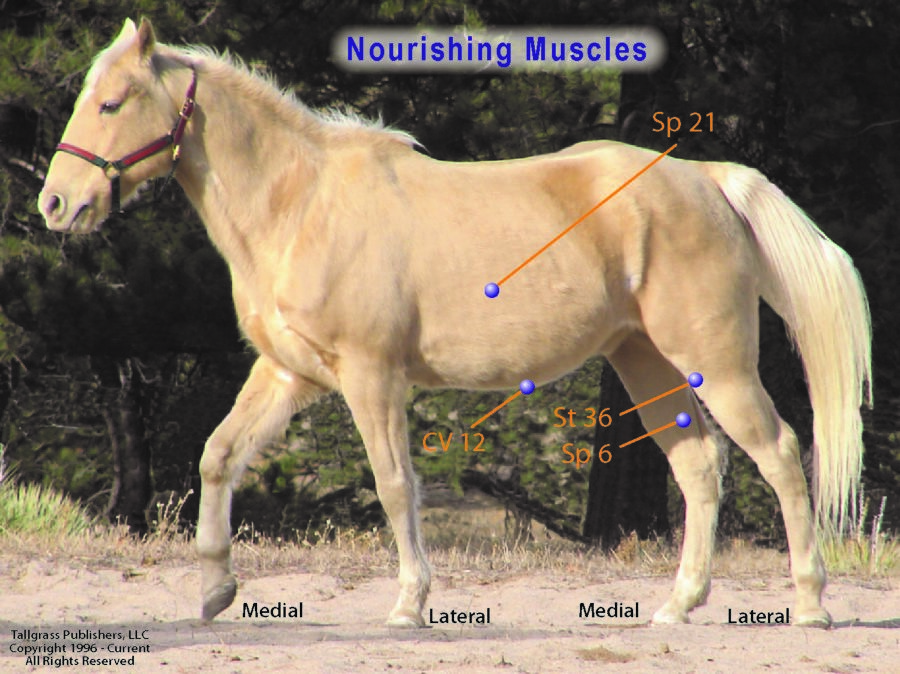
Muscle tone and mass decrease with age; that’s the way it is. However, there are acupoints that enhance the circulation of energy and nourishing blood to the horse’s muscles, helping to sustain and build strength even as he ages. Two actions must occur to accomplish this. First, the horse’s digestive system must be able to break down the ingested forage into bioavailable nutrients; and second, the horse’s vascular system must be able to circulate nutrient-rich blood to the muscles.
When stimulated, the acupoints indicated in the chart below help strengthen muscles and sustain muscle tone, while also supporting digestion and blood circulation.
Equine longevity
Living a long time is one thing. Living a long time in good health is another. We all wish for our senior horses to live long and well. Chinese medicine is known for its attention to longevity. Ancient Chinese doctors knew that longevity is dependent on a robust flow of life-promoting energy (chi), blood, and the circulation and balance of all the vital substances needed to nourish the body. This is a tall order, acupoints known to enhance longevity have been used for thousands of years.
Between current conventional medicine and ancient Chinese medicine, we have the opportunity to enjoy our senior horses longer than ever before. These elders have nourished our lives, so it feels good to offer them acupressure sessions that help them feel their best. In many ways, our caring nourishes us both.






 Diane Weinmann's HOPE