Cat Scoot—is this a new dance??

Cat Scoot—is this a new dance??


By Geoff Williams and comments by Diane Weinmann

If you have ever tried to explain the concept of cat scooting to your friends, you probably quickly realized that there is no graceful way to put it. If your cat is scooting, your cat’s butt is dragging along the carpet or ground.


Scooting or butt dragging is a problem far more common among dog owners, but it does occasionally happen to cats. And while it may look funny or strange, cat scooting could signal a medical problem that needs to be addressed.


Why do Cats Scoot?

“Scooting is normally associated with pruritus of the posterior end,” says Jim Lowe, a technical services veterinarian with Tomlyn, a company that makes pet healthcare products. Pruritus is a medical term for severe itching of the skin.


While it’s fairly rare, this can happen to any cat—there is no particular breed that experiences it more than another. And the reasons your cat’s bottom is itching, Lowe says, might be due to a number of factors, including parasites, impacted anal glands and allergies.


Cat Scooting and Parasites

If your cat is dragging its bottom on the carpet, there’s a chance your cat has worms. Parasitic worms, such as tapeworms, can cause irritation to the posterior area. And while you may check your cat’s stool for worms, you may not be able to see them.


“Just because the owner doesn’t see the worms doesn’t mean that they aren’t there,” says Dr. Carol Osborne, who owns the Chagrin Falls Veterinary Center and Pet Clinic in Chagrin Falls, Ohio. Most worms only become visible in the stool after deworming, and sometimes not even then.


And if you do see worms, your cat is likely experiencing discomfort, Osborne says. In other words, get your cat to a vet immediately.

Cat Scooting and Impacted Anal Sacs

All cats have anal sacs located near the opening of the anus. Inside those sacs is a dark, smelly and slightly oily liquid.


“The anal sacs typically release their contents when a cat defecates,” says Laura Pletz, a St. Charles, Missouri-based veterinarian.


But when the sacs get clogged, they are considered impacted. That means the sacs don’t express when your cat goes to the bathroom, and the area becomes irritated, potentially causing your cat to scoot. In severe cases, a cat’s anal sacs can become infected, which is even more painful.


Cat Scooting and Allergies

If you see your cat dragging his or her bottom, there may be something in or around your home affecting the feline.


“Environmental allergies are caused by many things, such as dust mites, grasses, molds or fleas,” Pletz says.


The problem may also be due to whatever you’re feeding your cat. “Food allergies are typically an allergy to a particular protein source, such as chicken or beef,” Pletz says.


Pletz says that there are medical therapies that can help with scooting caused by environmental allergies, but if there is a food allergy contributing, your veterinarian will likely be putting your cat on a new diet.


What You Should Do if You See Your Cat Scooting

Your cat scooting action plan is pretty simple—if you don’t want to rush to the vet, start by taking a close look underneath your cat’s tail. Maybe there are some dried feces or another irritant there that is causing your cat to scoot. If so, simply wash gently underneath your cat’s tail and monitor his or her behavior to watch for scooting.


But if you don’t see an obvious culprit for your cat’s scooting, then contact your vet and get your pet checked out. Your vet may be able to express your cat’s anal sacs, check for problem-causing parasites, recommend a different diet or prescribe antibiotics or anti-itch medications.


My mother-in-law’s cat is constantly leaving a poop trail on the floors in her kitchen, living room and bedroom.  Obviously a vet visit will be required to fix this situation.  But I must admit, it’s a hoot to watch him slide around on the floor.  Wonder if he could ride a skate board??


Trail Riding First Aid

Learn first aid for hoof emergencies in one of the most inconvenient environments you and your horse will encounter – out on the trail.

Accidents happen. And hoof injuries tend to elicit the most anxiety and worry from horse owners, because they remind us of that all-too-common adage – no hoof, no horse. They can occur at any time, but can be of particular concern when you’re out on the trail, far from the barn’s first aid kit, the cold hose and your veterinarian’s number.

Cuts, abrasions and puncture wounds are the most commonly seen injuries out on the trail or during the regular roadside hack. The best advice is to pack a basic emergency kit whenever you are out on the trail, although I’m sure we’ve all gone off for a “quiet hack down the road” with no thought of packing a first aid kit. If nothing else, at least pack a hoof pick for any ride – fold-up picks fit nicely into a pocket, or can be safely tied to a saddle.

Cuts and Abrasions

The equine foot is a highly vascular structure, and cuts or abrasions to the coronet band or heel bulbs will often produce a lot of blood and can appear quite alarming. However, bleeding helps to naturally cleanse a wound, so take a deep breath and let the blood flow for a little while before attempting to stop it. If you are near a clean water source, standing the horse in running water can be beneficial as it cleans without abrading healthy skin, slows the blood flow, helps ward off swelling and lessens sensation and pain. Be aware that some water sources can harbor bacteria that are best kept out of an open wound – common sense must prevail.

If you do carry a small first aid kit, it is a good idea to pack a small spray bottle containing a tea tree oil mixture. This will address immediate concerns about infection. If the cut appears deep, is fairly large, or if there are loose flaps of skin, the hoof should be wrapped for the walk home. A quick interim “hoof boot” can be made with gauze, vet wrap, and of course, duct tape!

Puncture Wounds

These are something you definitely want to try and avoid. Foreign bodies such as nails, fencing staples, broken glass, sharp flints or broken wire, can all pose a hazard. Punctures that penetrate the hoof’s horny sole or frog and enter the sensitive tissues below can vary from trivial to fatal, depending on the depth and follow-up treatment. If nothing else, be sure to have your horse’s tetanus shots up to date!

So, what if you are out riding and pick up a nail or foreign object from the trail? Clean and examine the foot as thoroughly as possible. If you were at home, it might be best to leave the puncture object alone until your vet arrives. Generally, this is not a feasible option when out on a trail, some distance from the barn. It may be necessary to remove the item in order to make the trek home without causing further damage. If you do remove it, keep it to show your veterinarian later. Again, tea tree oil applied directly into the puncture can help keep the wound clean, and a gauze/duct tape wrap will get you home.

Little else can be done on the trail, but a call to your vet is recommended as soon as you return to the barn. Deep penetration wounds are susceptible to infection, in which pus and gas will build up in the hoof. If the pressure builds up within the hoof and no drainage is provided, the pus may eventually run under the sole and up the white line before bursting out at the coronary band. Depending on the nature and placement of the object invading the foot, your veterinarian may suggest x-rays to see if there is any damage to the internal structures and hoof bones.

Hoof Protection For All

Barefoot horses that enjoy the benefit of natural hoof care, including proper trimming, a healthy environment and good nutrition, will grow a strong hoof with over ½” of hard callused sole, a solid rubbery frog and often a ¼” thick strong hoof wall. Certain wounds can still occur, but are less likely. A naturally barefoot hoof has excellent sensory receptors in the frog and sole, so the horse can often avoid serious injury by immediately detecting dangerous footing.

Shod horses, or those subject to improper trimming methods and compromised hoof mechanism and form, are generally more susceptible to injuries on the trail and elsewhere. Riders of such horses are strongly advised to carry an emergency hoof boot in the event of a lost shoe. That said, an extra hoof boot should be included in anyone’s first aid kit!

A small utility tool, such as a leatherman, may also be useful if your horse has shoes. Shoes that are only half off are more of a concern than a shoe that is lost entirely. A leatherman can often be used to pull any remaining nails, or to nail a loose shoe back on. Once again, duct tape is your friend. Wrap the hoof wall and shoe in a figure eight pattern, but avoid taping above the coronet band unless you’ve put a layer of vet wrap down first – the hair will get stuck to the duct tape and can cause problems during removal.

While accidents can and do happen, a little precaution can help you avoid many trail injuries and prepare you to effectively deal with those that do occur.


Johanna Neuteboom is a professional barefoot trimmer and natural horse care advocate, living and working in the Muskoka region of Ontario. For more information on her services, visit barnboots.ca.


Problem Urination in Dogs

By Dr. Becker

If when you arrive home your excited, delighted dog leaves a little puddle of pee at your feet (or even on your feet), it could be your furry family member is dealing with a submissive or excitement urination problem.

It’s important to understand your piddling pooch has very little control over the situation, so it’s pointless, unkind and confusing to punish her for the behavior.

The first thing to do is make an appointment with your veterinarian to rule out a physical cause for her random peeing. Urinary incontinence is a disorder with similar symptoms but very different causes.

These can include a birth defect, central nervous system trauma, damage to the pudendal nerve, bladder stones or a urethral obstruction, age or hormone-related incontinence, or a disease of the kidneys, adrenal glands, or the bladder (including infection).

Many causes of urinary incontinence are serious and require medical intervention, so it’s essential to rule all those things out before deciding your dog’s dribbling problem is behavioral in nature.

Once your veterinarian gives your pet a clean bill of health, the next step is to determine the trigger for his inappropriate urination.

Excitement Urination

Generally speaking, if your dog doesn’t pee when you look him in the eye, bend over him, or greet him face-to-face – in other words, when you’re in what canines consider a dominant position – he’s an excited rather than a submissive dribbler.

His triggers are probably playtime and when family members come home or guests drop by. If he’s still a puppy, he’ll quite likely outgrow the problem if addressed correctly, so the challenge is to avoid as many triggers as possible.

Managing Excitement Triggers

Take playtime outdoors whenever possible, and when it isn’t possible, make sure your dog has had a chance to relieve himself before engaging in play. Prepare an area of your floor with newspaper or puppy pads before play begins.

This should help keep accidents to a minimum, but when he has one (and he will), don’t discipline or punish him.

The best approach is to simply stop the action, grab some treats, and take him outside to his potty spot (or to his puppy pad). Give him lavish praise and treats the second he pees where he should. Once that’s done, clean the floor without making a fuss.

If your dog tends to leak when you come home, make sure to keep greetings on your end very low key. Move around quietly and speak in a calm, soothing tone.

If that doesn’t alleviate the leaking, try ignoring him when you first arrive home to help him learn to calm down on his own. Once he’s relaxed and if he hasn’t peed, offer him praise and treats.

Boosting a Submissive Dog’s Self-Confidence

Submissive peeing is most often seen in timid, nervous, shy dogs. Common triggers for these dogs include being greeted or approached by someone, or being yelled at or disciplined. Many pets with this problem have a history of receiving harsh punishment for peeing accidents.

If your dog has a submissive urination problem, it’s extremely important to avoid scolding or punishing her when she has an accident. This will only increase her anxiety and make peeing mistakes more likely.

A much better approach is to give your dog plenty of affirmative, high quality attention to build her confidence. Use positive reinforcement behavior training to teach her basic commands like sit, stay, come, and drop it, as well as simple tricks. Lavish her with praise each time she does what you ask.

The goal is to give your dog tons of opportunities to succeed and earn praise, while avoiding situations that trigger submissive peeing.

How to Approach a Submissive Dog

It’s also important to approach a submissive dog using non-dominant body language, which means you should:

·     Avoid direct eye contact

·     Approach from the side vs. head-on

·     Lower yourself to your dog’s level

·     Scratch her under the chin vs. the top of the head

When your shy dog has an accident (and she will), as I mentioned earlier, it’s extremely important not to raise your voice or punish her. Instead, handle the situation as I outlined above for dogs with excitement peeing.

Calmly get a few treats and take your pup outside to her potty spot (or to her puppy pad). Praise her like crazy and offer treats the second she pees where she should.

If she tends to dribble when you arrive home, make sure to keep greetings low key. You can also try ignoring her when you first come through the door to help her learn to self-soothe. Once she’s calm and as long as she hasn’t peed, give her some loving attention and treats.

Additional Suggestions

Something else to consider is a wrap (belly band) for male dogs or bloomers (I call them hot pants) if your dog is female.


You can put it on before indoor playtime or when you’re expecting guests. It’s important to remove it once the situational trigger has passed, since you never want to leave urine against your dog’s skin.

A wrap or bloomers will not only save your floor, it may also help gently remind your pup that if he pees, he won’t be able to walk away from it. Canines are naturally disinclined to soil themselves. I have clients whose dogs have been completely cured of excited or submissive urination after a few weeks or months of wearing a wrap.

It’s also important with a leaky dog to continue to offer lots of praise and treats whenever he pees in his outdoor potty spot and on walks.


My Moment


Do you ever get down in the dumps?  Feel like life is going nowhere or that it is not what you planned or expected?  We’ve all been there.  Life can be a real downer sometimes.  I am not going to sit here and tell you that there is a silver lining and that you should count your blessings but I will tell you how I handle those set- backs in my life.  I remember.


It came to me as I was convalescing from a terrible accident that caused me to have three operations and forced me to stop doing one of the things in life that brought me my greatest joy—horseback riding.  I have had horse for 42 years and now I am horse-less thanks to this accident.  In order to try to bring sense to my life I pondered on what gave me joy.  I am truly blessed with a wonderful family, friends and I am retired from my 9-5 banking job.  This freedom enabled me to concentrate my talents where my heart always led me all my life—to animals.


So then I thought, what has been my defining moment in my life?  Was it my wedding? No, I am happily married to a wonderful man, who I love with all my heart, but that was not a defining moment for me.  Was my moment when I gave birth to my pride and joy –my son?  No, although I have been blessed to have a great child who is the one of the biggest blessing I have in life– his birth was not my defining moment.  Was it the 35 years I spent in banking, working myself up from entry level to being in charge or over 50 people?  Definitely not!  That was what I had to do to survive. It was a career, not just a job, but I wasn’t doing what I longed for–what made my heart sing.

You know what I mean by defining moment—when you are so proud of what you, yourself, have accomplished, on your own, using your own talents? Then I closed my eyes and thought what have I done that made me proud to be me?  Then it came to me—I saw myself, standing up behind a podium talking at my book launch party about the book I had written.  A Tail of Hope’s Faith was an accumulation of years of learning, practicing and working with animals.  It defines who I am deep down inside—it is who I am and who I will always want to be and what I believe in my soul. 

So when I get down in the dumps, when I think life is not as interesting without my precious horses in it– I picture myself behind that podium.  I smile and tears come to my eyes as I remember that moment.  I am so very proud that I was able to change someone’s life, to bring comfort and healing to an animal and her family and then to document it for anyone else who may be going through the same experience of a terminally ill pet.  That’s my moment—that’s what I am proudest of! 

What is your moment?  We all have one.  Think about it and then recall it whenever you need a reminder that you are freaking awesome and no one can take that away from you!

Tips On Walking Multiple Dogs

Tips On Walking Multiple Dogs 

by Chamois Beal Lopez

Featured in Animal Wellness Magazine ~ Vol. 16 Issue 1


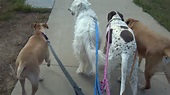
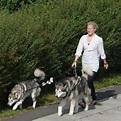
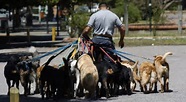
Walking two or more dogs at once is fun, but can be difficult and even dangerous if you don’t know what you’re doing.

Linda has three dogs – a Rottweiler, retriever and a feisty border terrier mix. She walks all of them twice a day, at the same time. One afternoon, she found a lost shepherd mix in her office parking lot, and welcomed the stray into her household until she found her a permanent home.

All four dogs adapted relatively well to one another. Then, Linda took them out for their first walk as a pack. Things progressed smoothly until the shepherd mix laid eyes on another passing dog. Suddenly, she lunged at one of her fellow pack mates with shocking aggression. An experienced multi-dog walker, Linda was able to bring the situation under control, but in other hands, it could have been disastrous.

According to the American Veterinary Medical Association, approximately 43 million households have more than one dog. And caring canine parents want to exercise those dogs. When time is at a premium, as it so often is, walking two or more dogs at once seems like a great idea. But it can pose some problems if you’re not prepared. J.D. Antell, dog walking expert and author of The Dog Walker’s Start-up Guide, says that before a multi-dog walking experience, you need to make a plan that includes training, safety and proper equipment.

Training is paramount

Walking several untrained dogs at once can pose a danger not only to you, but to innocent bystanders as well. Training techniques should start as early as possible in a dog’s life. “It’s preferable to walk one dog at a time, particularly in the beginning stages of training, because having more than one dog around can be distracting while teaching,” says Mychelle Blake, a dog training expert and President of the Association of Pet Dog Trainers. She adds that training allows you to acclimatize to each dog’s temperament and agility.

Although training should be consistent for satisfactory results, it doesn’t need to be elaborate. “Sit” and “stay” commands should be included, and a game called “no pull” can be very useful –if the dog walks forward and causes the leash to tighten, stop until he returns to walk at your side.

Gear for pack walking

When you’re walking multiple canines, choose proper collars, harnesses and leashes for each dog’s specific needs and temperament.

Collars – Look for sturdy, quality materials, and ensure that collars are neither too tight nor too loose on the dogs’ necks. If you have one or more dogs that insist on pulling, a harness might be a better bet. Do not use choke chains.

Harness – Again, durable quality products are safer and more comfortable for the dog. A harness relieves neck pressure and avoids choking dogs with weak windpipes or respiratory problems.

Leads – Choose a strong lead approximately 4’ to 6’ feet in length to provide reasonable security for a multi-dog walk. “Do not walk multiple dogs on fl exible leads,” Mychelle says. “It’s a recipe for trouble.”

Coupler – This nylon extension (designed for multidog walking) divides in two to separate each leash and reduce tangling.

Reconciling differences A multi-dog walk may include canines of any size, age, personality and activity level. The idea of walking two terriers and a German shepherd together may tempt you to think twice, but these differences shouldn’t deter you. Nevertheless, it’s important to gauge each dog individually, as well as how he relates to the others in his pack. “Age is not so much a factor except when we are talking about puppies versus mature dogs,” says Antell. Puppies are generally more energetic than older dogs and their differences might create an alarming conflict unless the dogs have already adapted comfortably within the same household. “In most cases, you will be able to group dogs together by activity level,” Antell says. For instance, if a couple of dainty Pomeranians are going to walk with a Rottweiler and a Doberman, put the needs of the least physically able dog first. “Assuming they are social and friendly with each other, the specific method is to cater to the least physically capable among the group. Of course, this means the younger or more physically active dogs will not enjoy as active a walk as they might like, but you have not compromised the health of the most vulnerable dog either.”

Safety first

Safety is a top priority when walking multiple dogs, and you must factor in your own capabilities, such as fitness level, vigilance and speed.

• Physics play a major role in keeping a pack under control. For example, a 120-pound woman should think twice about walking two 150-pound English mastiffs simultaneously. The weight of the woman compared to the dogs’ combined weight means they could easily drag her off her feet on a wild pursuit after a squirrel or rabbit. In a case like this, it is best to ask a partner or friend to walk one of the dogs.

• If any of your dogs become easily agitated or even aggressive, scan the environment continuously during your walk. Go for walks during off-peak hours when there is less traffic or other dog walkers, to minimize your own dogs’ excitability.

• “If you feel apprehensive about walking more than one dog at a time, I would suggest recruiting another person to walk with you as a backup,” says Mychelle.

It doesn’t matter whether you have two dogs or six. If they’re trained, sociable and well behaved, and if you have the right gear and are keeping everyone’s safety and comfort in mind, it can be a wonderful way for you to step out together. Best of all, no one has to be left at home!


How to Treat Dog Wounds at Home

by Dr. Jennifer Coates

Let’s talk about how to treat minor scrapes or cuts on your dog at home … emphasis on the minor! Any injury that fully penetrates the skin (e.g., a bite wound) and/or involves a large portion of the body or an especially sensitive area should receive immediate veterinary attention.

 We are talking about the equivalent of a scraped knee or shallow cut here. Even minor wounds should be dealt with promptly, before infection sets in. If the skin around the wound is inflamed or pus is visible, more aggressive treatment than what you can provide at home is probably needed.

 If you have any doubts as to the severity of your pet’s injury, play it safe and make an appointment with your veterinarian. Only attempt wound care if you are confident that a pet will not react aggressively to the procedure. If need be, recruit an assistant to help with restraint, and use a muzzle.

Supplies Needed

 ·         Water-based lubricant (e.g., KY jelly – not Vaseline)

·         Electric clippers, scissors, or razor

·         Warm water

·         Clean towels (paper or cloth)

·         Antiseptic solution

·         Antimicrobial ointment

 How to Treat a Dog Wound

 ·         Place a small dog on a table or counter in front of you or get down on the ground with a large dog. Have a second person gently restrain the pet if necessary.

·         Cover the wound and surrounding area with a water-based lubricant. This makes removing shaved hair from the wound much easier and decreases contamination.

·         Use electric clippers to shave the hair from around the wound. Scissors or a disposable razor can be used with extreme caution to avoid cutting the skin.

·         Wipe the water-based lubricant and hair away with a clean, dry cloth or paper towel.

·         Wash the area with warm water until all visible debris is gone, then pat dry.

·         Apply a non-stinging antiseptic solution to the area. Chlorhexidine is cheap, extremely effective, and readily available. I prefer a 2% solution to limit tissue irritation but 4% solutions are also widely used. Chlorhexidine is ideal because it kills the types of bacteria and yeast that are most commonly associated with skin infections in dogs and cats.

·         Apply an antimicrobial ointment to the wound. Traumatic injuries are best treated with a broad spectrum topical antibiotic like those containing bacitracin, neomycin, and polymyxin B. If yeast is of primary concern, for example in dogs with allergies that develop moist dermatitis, miconazole ointment is a good choice.

·         Prevent the pet from grooming the ointment off its skin for at least ten minutes; longer is even better. Take a dog for a walk or sit with a cat in your lap but do not apply a bandage over the area.

·         Two to three times a day, clean away debris (if necessary) and apply the antiseptic and ointment until the skin is healed.

·         If the wound worsens at any time or fails to resolve within a week, consult a veterinarian.


Do Dogs Experience Grief?

By Samantha Drake is a freelance writer & editor in the Philadelphia area who writes about pets, business & general interest topics.

Comments by animal communicator, Diane Weinmann

Dogs’ loyalty to their human companions is the stuff of legends. But do dogs really experience grief?

Sentimental tales of dogs grieving for their departed owners once inspired statues. There’s the story of Greyfriars Bobby, the Skye Terrier who maintained a vigil at his master’s grave at the Greyfriars Church yard in Edinburgh, Scotland for 14 years, until his own death in 1872. A statue was erected in the dog’s honor in 1873, and his story was also popularized in the 1961 Disney film “Greyfriars Bobby: The True Story of a Dog.”

Today, photos of canine mourning go viral on the internet. In May 2016, for example, the family of Abraham Martinez, who had died in a car accident, tweeted a photo of his dog lying in front of a memorial set up in the family’s home.

Because of these stories, scientists, animal behaviorists and dog lovers alike all have their own thoughts on canine mourning.

Do Dogs Grieve?

Many scholars think that dogs and other animals experience emotions like grief, says Laurie Santos, director of the Comparative Cognition Laboratory and the Canine Cognition Center at Yale University in New Haven, Connecticut.

“People report that dogs grieve after similar events that might cause grief in humans, such as the loss of a loved one,” she says. “But it’s always hard to know what an animal’s inner emotional life is since they don’t have language to tell us. There aren’t many direct studies on this, in part because it’s hard for scientists to test what a dog’s inner feelings are really like using our normal scientific tools.”

Dogs have been companion animals throughout human history, and we have thousands of years of co-evolution with them, says Barbara King, the author of “How Animals Grieve” and emerita professor of anthropology at the College of William and Mary in Williamsburg, Virginia, so it’s no surprise that dogs are very in tune with humans. The question is, are we just as in touch with the feelings of dogs?


How to Determine if a Dog is Grieving

Animals, including dogs, tell us what they feel by how they behave, King says. Grieving animals may exhibit changes in behavior that are similar to the way grief manifests in humans. This can include withdrawing socially, experiencing altered sleeping patterns, and displaying changes in their affections and expressions, she says.

Experts suggest a few ways to help a dog that you believe is having a difficult time. “In lots of ways, you can help a grieving dog like you’d help a grieving human—be sure to give lots of extra affection and try to provide some distractions,” says Santos.

King says that adding a new animal into the home may help as well. Pairing a grieving dog with a younger pet can help rejuvenate and distract the older dog by bringing out his or her nurturing instinct, she says. A new playmate may also help the depressed dog get more exercise.

Dog Grief: A Matter of Perception?

Dog owners shouldn’t jump to conclusions about their pet’s behavior, says King. Dogs may experience emotions like grief differently than humans, and it could manifest for a variety of reasons, such as missing a human loved on or experiencing a change in routine. Pinpointing the cause is unlikely, since dogs cannot put their problems into words.

Animal lovers also like to anthropomorphize animal behavior and label certain behaviors as grief, King adds. The media is particularly guilty of making assumptions about dog behavior. For instance, a photo of a German Shepherd that had dug a hole under a gravestone in Serbia made the rounds on the internet in 2015. Publications initially reported that the dog was mourning her departed owner, but in reality, news organizations eventually revealed that the stray dog had dug a hole to protect her four puppies in the best place she could find.

Even the heart-tugging story of Greyfriars Bobby has its skeptics. According to Dr. Jan Bondeson, a professor at Cardiff University in Wales, two terriers actually lingered at the gravesite, with the second dog appearing after the first one died, and neither belonged to the man buried there. The Daily Mail newspaper reported that Bondeson theorized the dogs were strays fed by the cemetery’s curator and people simply assumed the dogs were mourning their owner. As the story spread, visitors to the graveyard increased, as did church donations and food for the dogs. The curator and surrounding businesses had little incentive to dispel the story, the Daily Mail report noted.

Still, many examples of a dog’s devotion can’t be explained away.

During devastating flooding in Rio de Janeiro in 2011, the photo of a dog lying beside its owner’s fresh grave for several days captured the world’s attention. While it’s easy to believe that people see what they want to see in such photos, it’s also not difficult to believe that the relationship between a dog and his or her owner constitutes a strong and enduring bond, and that humans and canines feel and express the loss of the other in his or her own way.

As an animal communicator, I have had many human clients call regarding the depression/grief of their pet based on their actions or lack thereof!  Pets just like people display many of the same responses to depression and grief from moping, not eating, their zest for life is diminished, need for reassurance/cuddling, or lack of interest in things they previously found enjoying, for example, car rides.

Several scenarios can cause this from the death or a friend or companion pet to a divorce, house change, debilitating illness or change in household such as a student going away to college.  So how do we fix this??  I can talk with them, provide a custom Bach Flower Essence treatment (holistic remedy) or recommend an essential oil that will help them deal with the feelings of abandonment and sadness.  I have had great success over the years with these methods and highly recommend that you contact me to learn more about them at dianefortheloveofanimals@yahoo.com.  After all, our pets can’t got to a physiatrist so I’m the next best thing!


Dog’s that Slip


There are many products that will help you pet not slip on your floors.  I can tell you my husky will not chase his toys into our kitchen because of the wood floor.  He’s a smart cookie because he understands he can hurt himself.  Here are some alternatives to make your pet more comfortable and self-assured in walking/running in your home:

Dog boots. You can purchase boots for your dog’s paws online or at your local pet store that both prevent skidding and provide stability for older dogs.

Soft paws. “Soft paws” – temporary rubber nail caps for your dog – are sold at http://www.softpaws.net. They stop dogs from both scratching the floor and from slipping. They last 4-6 weeks, then fall off, at which point you trim their nails and put new ones on.

Paw maintenance. Be sure to keep your dog’s nails short and the fur on their paws trimmed which will help cut down on slipping.

Paw wax. There are a variety of paw waxes widely available at pet stores and online that you can apply to your pooch’s paws which can provide some traction.

Plastic runner or throw rug(s). Consider laying out a plastic or non-stick runner or throw rugs (with rubber backing!) in the rooms with slick flooring to keep him from slipping.

http://woodrowwear.com/shop/

https://www.toegrips.com/product/dr-buzbys-toegrips-for-dogs/

http://www.seniorpetproducts.com/dogs/mobility/boots-shoes/indoor-dog-shoes/


Canine Skin Issues

Canine Skin Issues

By Dr. Becker


Today I’m here with my model , Rosco, a Boston terrier who is one of my pack. He’s going to help me demonstrate how to deal with minor skin abrasions, cuts, infections and hot spots.

Rosco swims in a small body of water in front of our house. It’s a pond in the spring, and more like a swamp during the summer months.

Rosco swims and splashes around out there every day during warm weather, and as a result, he gets an impressive collection of bacteria on his skin.

When Regular Bathing Isn’t Enough

Even though Rosco and our other dogs get regular baths, all of them still wind up with localized skin infections on their bellies. It happens every summer without fail. I don’t panic about it, but I do know I need to address the situation as soon as I see it or the bacteria will continue to spread.

If a localized skin infection is left untreated, your dog could wind up on antibiotics, which is something we want to avoid.

I’ve never had to resort to antibiotics to treat my dogs’ bacterial skin infections, because I do two things as soon as I notice a problem:

·     Clean the skin and keep it clean

·     Disinfect the area regularly to stay ahead of the infection

Rosco’s Bumpy Belly

Rosco and our other dogs started getting these acne-like bumps on their bellies a couple weeks ago.

What’s interesting about these infections is one pimple will appear while another is healing. There’s a cycle of eruption and healing – as one pimple is erupting, another is slowly disappearing.

You can think of these bumps as similar to human acne. It’s not a life-threatening condition, but if you don’t address and control it, it can get much worse and may ultimately require medication.

As you can see when I stand Rosco up here that his infection is on his sternum. We can see healing eruptions, and we can also see a few lesions below those. They’re not bothering Rosco, but they bother me because I don’t want them to spread.

So, it’s time for another treatment.

Treating with Povidone Iodine

For skin infections like Rosco’s, and also hot spots, minor abrasions, and any other skin problem that either is infected or could become infected, we want to disinfect with a gentle solution.

The solution I’m about to use will take care of staph, yeast, and pretty much any common bacteria, but doesn’t sting or irritate the dog’s skin at all. And it’s safe if dogs lick the area after cleaning.

It’s povidone iodine, and I use it here at Natural Pet and also at home. You can buy it at any pharmacy.

For the purpose of disinfecting skin, you want to dilute the povidone iodine until it’s the color of iced-tea. I’ll pour a little of the iodine in a dish and add some warm water to dilute it.

The Disinfecting Process

Now I take a clean washcloth and soak it in the diluted povidone iodine solution.

My helper is going to hold Rosco up so I can access his belly and disinfect his sores. I’m just wiping the iodine-soaked washcloth over his sores, which removes the bacteria around the eruptions.

All animals, including humans, have normal levels of flora (bacteria) on the skin, as does Rosco. The goal isn’t to rub the skin raw of all bacteria, but just gently disinfect the whole belly, paying special attention to the areas where there are lesions and eruptions that could evolve into a more serious, secondary skin infection.

Now I’ll rinse out the washcloth, do one more swipe across Rosco’s tummy, and pat him dry.

The great thing about povidone iodine is it’s completely harmless if ingested. So Rosco can lick his belly with no problem.

I recommend you do this disinfecting process twice a day if your dog has a minor skin infection or other problem. It has effectively resolved all the skin infections my dogs have acquired and prevented the need for antibiotics.


Dementia in Pets

By Dr. Becker and comments by Diane Weinmann
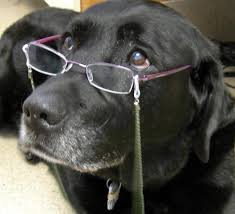
According to the U.K.’s The Telegraph, a growing number of dogs and cats in Britain are suffering from dementia, and veterinarians are warning pet parents that sedentary lifestyles and poor diets are to blame.

An increasing number of dogs are dying of the condition, and cats are displaying “clumsiness” and confusion.

According to veterinarians, an estimated 1.3 million pets in Britain suffer from dementia, with a third of dogs showing signs of mental decline by the age of 8, and two-thirds by the age of 15. In cats, the condition is seen in about half of all kitties 15 and older, and a third aged 11 to 14.

Professor Dr. Holger Volk, a leading veterinary scientist at the Royal Veterinary College, told the Telegraph, “I don’t think that people really realize how serious this problem is.”1 He believes a lack of physical activity and a diet of “cheap pet food” play a primary role in the onset of dementia in dogs and cats.

“We are seeing an increase in pet obesity,” says Volk. “Just as we see health problems among people who are less active so we see the same problems with their pets eating more and getting less exercise and this may lead to an increase in dementia.”

Volk says U.K. pet parents have very little understanding of the problems they create by allowing their animal companions to become inactive and overweight, and this lack of awareness is causing them to miss the signs of declining health in their pets.

Signs of Dementia in Dogs and Cats

According to The Telegraph, signs of dementia in pets include:


✓ Getting “stuck” behind furniture and needing help to get out ✓ Walking in circles
✓ Forgetting what they’ve just done, for example, greeting their owner, and immediately doing it again ✓ Forgetting to eat, or forgetting they just ate
✓ Standing near the hinge side of a door instead of the side that opens ✓ Struggling to find their way around
✓ “Drifting away” from activities

Volk believes the key to preventing or slowing the onset of dementia is to make sure pets get regular, vigorous exercise. “Neurons in the brain go into decline with dementia,” says Volk, “and the more you exercise the more they remain active.”

He also recommends transitioning pets to a high-quality pet food containing fatty acids.

Dementia Rates in U.S. Dogs

Here in the U.S., dementia or cognitive dysfunction syndrome (CDS) in dogs and cats has been on the radar of researchers, the veterinary community and many pet parents for at least a decade.

About a quarter of U.S. dogs 10 years and older show signs of brain aging, and over 60 percent of dogs have symptoms by the age of 15.2 However, dogs as young as 6 can begin to experience mental decline.

In a relatively young dog, it’s especially important to investigate for an underlying illness or disease before making a diagnosis of age-related cognitive decline. In dogs, we look for one or more of the following five common signs of CDS:

  1. Increased total amount of sleep during a 24-hour period
  2. Decreased attention to surroundings, disinterest and apathy
  3. Decreased purposeful activity
  4. Loss of formerly acquired knowledge, which includes housebreaking
  5. Intermittent anxiety expressed through apprehension, panting, moaning or shivering

Other signs of mental decline include failure to respond to commands and/or difficulty hearing, inability to recognize familiar people and difficulty navigating the environment.

There are three main contributors to the changes in an aging brain that cause a gradual impairment in cognitive functioning: oxidative stress from free radical damage, formation of lesions on the brain and alterations in oxygen and energy availability.

The brain is thought to be more sensitive to the effects of oxidation than other tissues of the body. The damage to your dog’s brain caused by oxidative stress can cause a decrease in cognition as well as degenerative nerve disease similar to, for example, Alzheimer’s disease in humans.

The aging process also involves the accumulation of beta amyloid deposits on the brain. These deposits consist of nerve-damaging protein that forms plaque. This “senile plaque” buildup interferes with the transmission of signals from the brain.

How Feline Cognitive Dysfunction Is Measured

Cats can also suffer a decline in their mental faculties, and many veterinarians and feline experts use the acronym DISH to measure cognitive dysfunction in kitties.

D = disorientation. Kitties with CDS may wander aimlessly, stare at walls and appear lost or confused at times. They may also intermittently fail to recognize family members.

I = reduced social interactions. A cat with CDS may seem confused when his guardian arrives home at the end of the day. He may also show less interest in being petted or sitting in his owner’s lap.

S = changes in sleep patterns. An affected cat may sleep more during the day but turn into an insomniac at bedtime, wandering the house and often crying out for no obvious reason.

H = house soiling/housetraining. Cats with CDS frequently lose their housetraining skills. This happens because they either forget the location of the litterbox, or they are no longer terribly concerned about their own cleanliness or perhaps a bit of both.

CDS in cats hasn’t been studied, so no scientific explanation currently exists for what causes the problem in felines. However, in humans and dogs, the condition is thought to be caused by Alzheimer’s-related changes in the brain (the formation of beta-amyloid plaques) or cerebrovascular disease.

In dogs with CDS, it is known that pathological changes in the brain are closely associated with the severity of dementia symptoms, and the same probably holds true for cats.

10 Tips to Help Your Aging Pet Stay Mentally Sharp

Fortunately, there are many things you can do to help your dog or cat maintain good mental function for as long as possible, and delay the onset and progression of cognitive decline.

  1. Feed a nutritionally balanced, species-appropriate diet that includes omega-3 essential fats, such as krill oil, which are critical for cognitive health. The perfect fuel for aging pets is a healthy variety of fresh, living food suitable for your carnivorous cat or dog.
  2. Eliminate all refined carbohydrates (grains, potatoes and legumes) to allow more room for excellent-quality protein, full of critical amino acids, to be fed.

Eliminating extruded foods (kibble) means your pet won’t be consuming the toxic byproducts of the manufacturing process, including heterocyclic amines and acrylamides. You can improve digestion and absorption of nutrients by feeding a less processed diet, not to mention improving your pet’s microbiome, which has been linked to improved cognitive health in humans.

  1. Stop vaccinating and start titering. Vaccines don’t “wear out” over time, and more vaccines means more adjuvants and heavy metals that accumulate in your pet’s brain.
  2. Keep your pet’s body and mind active with regular exercise appropriate for her age and physical condition, and mental stimulation (puzzles and treat-release toys can be beneficial). Make sure your dog has opportunities to socialize with other pets and people. Think of creative ways to enrich your cat’s indoor environment.
  3. Provide a SAMe (S-adenosylmethionine) supplement as a safe and effective way to stall or improve mental decline. Consult your holistic veterinarian for the right dose size for your dog or cat. There are also commercial cognitive support products available.
  4. Medium-chain triglycerides (MCTs) have been shown to improve brain energy metabolism and decrease the amyloid protein buildup that results in brain lesions in older pets. Coconut oil is a rich source of MCTs. I recommend 1/4 teaspoon for every 10 pounds of body weight twice daily for basic MCT support.
  5. Other supplements to consider are jellyfish extracts, resveratrol (Japanese knotweed), which protects against free radical damage and beta-amyloid deposits, ginkgo biloba, gotu kola and phosphatidylserine — a nutritional supplement that can inhibit age-related cognitive deficits. Consult a holistic veterinarian for dosing guidance.
  6. Keep your pet at a healthy size — overweight dogs and cats are at significant increased risk for disease as they age.
  7. Maintain your pet’s dental health.
  8. I recommend twice-yearly veterinary visits for pets no matter the age, but this becomes even more important for dogs and cats getting up in years. Keeping abreast of your animal companion’s physical and mental changes as he ages is the best way to catch any disease process early.

Ask your vet to perform a blood test to check your pet’s internal organ health to make sure you are identifying possible issues early on. There’s also a blood test that measures inflammatory fats you may want to consider. You can find more information at VRD Health.

These recommendations won’t be tremendously helpful for a pet in the advanced stages of cognitive decline, which is why it’s so important to diagnose and begin treating the problem as early as possible. Cognitive dysfunction is a progressive disease that can’t be cured, but early diagnosis and intervention can slow mental decline and offer your aging pet good quality of life.