Pets May Come With a Past — Where to Gather the Best Intel

Pets May Come With a Past — Where to Gather the Best Intel


By Dr. Karen Shaw Becker and comments by Diane Weinmann
Today is National Adopt a Shelter Pet Day, which is observed each year on April 30th to bring awareness to the plight of millions of homeless dogs and cats across the U.S.

If you’re thinking about adding a pet to the family, I encourage you to visit local shelters and rescues in your area. Many online rescues can also arrange transportation services, so don’t necessarily let location dissuade you. There are so many deserving dogs, cats and other animal companions waiting for new homes that I hope every prospective pet parent will consider the homeless population in their area first.

Below you’ll find not only a dozen excellent reasons to adopt a shelter pet, but also six important questions to ask animal shelter staff about any pet you’re considering giving a home to.

12 Great Reasons to Adopt Your Next Pet From a Shelter

Every dog or cat not purchased from a pet store or backyard breeder improves the pet overpopulation problem created by irresponsibility and greed.
Adopting a dog or cat from a no-kill shelter can free up space for older or special needs pets that may not find new homes before the end of their natural lives.
There are plenty of animals to choose from at most shelters. They come in every age, shape, size, coat color and breed mix, and you can find purebreds at shelters as well. In fact, many breeds have their own rescue organizations, so if you’re looking for a purebred, make sure to check both your local shelter and breed rescue organization.
Compared to the cost of purchasing a pet, adopting one from an animal shelter is relatively inexpensive. And if you get a slightly older dog or cat, there’s a good chance he’s already fully vaccinated and sterilized.
Adopting an older pet allows you to skip over the time-consuming, often frustrating puppy or kitten stages of development.
Adopting a mature dog or cat also takes the guesswork out of determin­ing what your pet will look like as an adult — what size she’ll grow to, the thickness and color of her coat and her basic temperament, for example.
Depending on his background, your older pet may already be house-trained or litterbox-trained and know basic obedience commands like come, sit, stay and down.
Many shelters and most rescue organizations do assessments on every new pet taken in, to determine things like temperament, whether the pet has any aversion to other pets or people, whether he is house-trained, has had obedience training, etc.

Many of these organizations also have resources to help pets with lack of training or behavioral issues. So when you adopt a pet from one of these organizations, you have a pretty good idea what to expect from your new dog or cat when you bring him home.

Many shelters and rescues also provide lots of new owner support in the form of materials about training, common behavior problems, nutrition, basic grooming, and general care. In some cases there are even free hotlines you can call for questions on behavior, training, and other concerns.
If you have kids, and especially if the new pet will belong to a child, adopting a shelter animal can open a young person’s eyes to the plight of homeless pets. It can also help him learn compassion and responsibility, as well as how wonderful it feels to provide a forever home to a pet that might otherwise live life in a cage, or be euthanized.
An older adoptive pet can be the perfect companion for an older person. Many middle-aged and senior dogs and cats require less physical exertion and attention than younger animals.
An adopted pet can enrich your life in ways both big and small. The unconditional love and loyalty of a dog or cat can lift depression, ease loneliness, lower blood pressure, and give you a reason to get up in the morning. A kitty asleep in your lap feels warm and comforting. A dog that loves to walk or run outdoors can be just the incentive you need to start exercising regularly.

There are countless benefits to being a pet parent, and when you know you saved your furry companion from an unpleasant fate, it makes the bond you share that much more meaningful.

6 Questions to Ask the Animal Shelter

Contrary to what some people believe, shelter pets are not all damaged goods. However, each abandoned animal has a past, so the more you can learn from the shelter about a pet you’re considering, the more prepared you’ll be to make the right choices for him or her.

What is your soon-to-be pet’s history?

How did he wind up at the shelter? Was he picked up as a stray, or did a previous owner turn him in? Generally speaking, the behavior of an animal who has survived the mean streets will differ from that of a relinquished family pet. This is good information to have for a better understanding of your new dog’s or cat’s behavior and training needs.

Has she been behavior-tested?

Most large shelters and rescue organizations perform basic behavior testing as part of their assessment of the adoptability of the animals they take in. Knowing what types of tests were conducted on your future pet and her results will help you fill in the gaps in her training if you decide to take her home.

Some shelters conduct very thorough behavior assessments on dogs that go far beyond determining adoptability, and can provide insight into whether a particular dog is a good fit for your lifestyle. For example, if a dog you’re interested in is very high-energy and you’re looking for a lower energy lapdog, she’s probably better suited to someone else’s home.

A comprehensive behavior and temperament assessment can determine a dog’s level of sociability with other pets, her degree of independence and whether she’s suited for a home with children or an adult-only home.

Does your prospective pet have a known history of being abused?

If you know or suspect a dog or cat was abused before she came to you, it’s important to keep two things in mind: you shouldn’t expect an overnight change in her, and you shouldn’t count on a complete turnaround in her trust level or behavior. It takes time to help an abused animal learn to be less fearful and develop trust in humans again.

With knowledge, hard work and commitment, a previously abused pet can be transformed into a much-loved member of your family, but she can’t be reborn. It’s important to always remember that. Here are some general guidelines for creating a safe environment for a previously abused dog or cat:

·         Make her feel loved and needed; communicate clearly with her

·         Don’t force anything on her under any circumstances — allow her to adapt to her new family and life at her own pace. Provide her with a safe place where she can be alone when she feels like it

·         Protect her from whatever she fears

·         Create opportunities for her to be successful and build her confidence

·         Feed her a nutritionally balanced, species-appropriate diet and make sure she gets plenty of physical activity

Rehabilitating an abused pet presents a significant challenge, because these animals have been exposed to negative things they can’t unlearn despite your best efforts. But it’s important to feel hopeful, because life-changing progress can be made and there’s nothing more gratifying.

What veterinary care has he received?

Most animal adoption organizations arrange to have pets’ health checked by a veterinarian before they are put up for adoption. Adoptive owners typically receive paperwork detailing the medical care the animal received while at the shelter.

It’s not unusual for large shelters to err on the side of over-treating dogs and cats with an unknown medical history, so your new pet could come home with a fresh spay or neuter incision, dewormed and/or heavily vaccinated. However, some shelters are starting to recognize over-vaccination in rescued pets is a real problem and even suggesting titers in place of unnecessary vaccines.

Many shelters recommend that new owners take their pet to a veterinarian for an exam within a specified number of days from the date of adoption. Sometimes local veterinarians contract with shelters to provide the exams at no charge.

If you feel your dog or cat may have been medically over-treated at the shelter, I suggest also making an appointment with a holistic or integrative vet who can recommend a detoxification protocol to help bring your pet’s body back in balance.

What are the steps involved in the adoption?

Shelters and rescue groups vary widely when it comes to vetting prospective adoptive families. For example, some shelters allow adopters to take a new pet home immediately. Some organizations even have a trial period, where you can test the waters for compatibility before you commit to adoption. Others require you to wait until the animal has been spayed or neutered, dewormed and/or vaccinated at the shelter.

Some organizations require home inspections before releasing a pet; others require potential adopters to bring other pets in the household and family members for a meet-and-greet before the adoption is finalized.

What food has she been eating?

Some shelters send newly adopted pets home with a supply of the food they’ve been eating, but if this isn’t the case with your prospective dog or cat, ask what the shelter is feeding and continue that diet for at least a week or two once she’s home.

It’s likely you’ll want to transition her to a different food, preferably a nutritionally balanced, species-appropriate raw diet, but it doesn’t need to happen on day one. Everything in your pet’s new life with you will be a bit overwhelming and stressful for her in the beginning, so it’s best not to add a dietary change to the mix right away.

If you’re considering adopting a dog, I highly recommend a program called A Sound Beginning, which was lovingly and expertly designed to help rescue dogs and adoptive guardians learn to communicate effectively and form an unbreakable bond.

If you’re thinking about adding a kitty to the family, I recommend you talk with an animal communicator like Diane Weinmann to see how the pet thinks and their likes and dislikes.  Know a little bit about how your household runs and what the pet can expect will go a long way to ensure the new pet will fit in nicely.  Contact Dianefortheloveofanimals@yahoo.com.

Why Do Cats Groom So Often?

Why Do Cats Groom So Often?

By PetPav and comments by Diane Weinmann

Cat lovers know how our cats are such clean pets because they groom themselves all the time.  Not that we’re complaining.  As it turns out, cats spend as much as half of their waking time grooming themselves or other cats! We absolutely enjoy the benefits, but why do cats groom so often?

Cats learn grooming from birth

The mother cat’s first job after giving birth is to remove the amniotic sac, then lick the kitten with her rough tongue to help stimulate its breathing.  Kittens, emulating their mothers, start self-grooming by the time they’re a few weeks old. If they are part of a litter, they are likely to lick and groom one another as well.  Or even when simply sitting next to each other…in harmony!

Here are some of the reasons your cat will groom (which is why it can happen all day!):

Cleanliness

Cats usually groom themselves to stay clean. Their tongue is used like a comb and removes old fur, loose fur, and dirt. Cats are naturally clean animals and this helps maintain a healthy coat and is a sign of good health.

To clean injuries

Cats wash their injuries to cleanse the wounds, and possibly to prevent infection. Licking with a rough tongue can also remove dead skin cell.

To hide their scent from predators

Cats’ sense of smell is fourteen times more powerful than that of humans. Most predators, including cats, track prey through scent. A mother cat in the wild will try to hide her young kittens by removing evidence of their feeding. She will wash herself and them thoroughly after nursing. This is the same instinct as when a cat scratches the floor around the food dish after eating.

To lubricate their fur

When cats groom, their barb-like tongues stimulate the sebaceous glands at the base of their hairs and spread the resultant sebum throughout the hairs.  Their self-grooming also helps rid the coat of dirt and parasites such as fleas.

Emotional grooming

This type of grooming helps a cat feel better emotionally. If your cat was just frightened or feels tense, grooming is a calming mechanism. Emotional or displacement grooming helps them deal with stress.

Temperature control

Cats don’t sweat so grooming themselves is a way to cool themselves down in warm weather and keeps the fur closer to their skin to retain heat in cold weather. When a cat licks and tugs at its fur, it stimulates the follicles to release oils that can also help waterproof your cat.

Mutual grooming

If you have two or more cats, they may groom each other from time to time. It’s a way to express friendship and more of a social activity than a hygienic one. Mutually grooming usually expresses comfort, companionship, and even love among cats. Your cat may even groom you (sign of love).

If your cat stops grooming, this could be a sign of a health issue and it might be time to take your cat to the vet.  On the other hand, if your cat is excessively grooming and pulling out his or her fur, you should speak with your vet to find out the cause.

In my 20 year’s experience with pets, and of course by life with my two cats who have passed into spirit, you will witness a marked decrease in the ability to clean and groom themselves in their later years.  Many reasons cause this decline but the most obvious is their lack of flexibility to contort their bodies to be able to do the job!  Much like people in our later years—we have a hard time touching our toes.


Equine Intelligence: Nine Insights Into the Way Horses Think

By Dr. Karen Shaw Becker


The fact that horses have no visible “weapon,” like the horn on a rhino or the claws on a tiger, gives a major clue as to how their minds work. Their primary form of defense is “flight,” (verses the “fight” some animals may engage in) and as prey animals they are experts at knowing when to flee and executing this action with lightning quick reflexes.

But it’s a mistake to assume that horses are simply a product of their instincts, relying on reflex alone. The fact is, horses are often compared to dogs and cats in terms of intelligence, but it’s much like comparing apples to oranges.

Dogs and cats are predators, and as such have developed very different skills and behaviors compared to horses. Understanding the latter, therefore, won’t come from expecting a horse to behave or think like a dog, or attempting to draw such comparisons, but from striving to understand why a horse’s mind works the way it does.

Equine intelligence researcher Evelyn Hanggi, Ph.D., co-founder of the nonprofit Equine Research Foundation, explained to Horse Talk that horses are more intelligent than many people believe:1

“Common beliefs maintain that horses have a brain the size of a walnut; horses do not think; horses are merely conditioned-response animals; horses cannot generalize; horses have no sense of concept; horses are color blind, have poor acuity and depth perception, and cannot transfer information from one eye to another.

In reality, horses manage not only ordinary daily cognitive tasks but mental challenges as well. In the wild, they must cope with food and water of inconsistent quality or unpredictable distribution, predators that change locations and habits, and a social system in which identities and roles of individuals must be discovered and remembered.”

How Do Horses Think? Nine Key Insights

Dr. Robert M. Miller is an equine veterinarian and behaviorist who has summed up the way horses think in nine concise points. All of them relate back to the fact that horses are flight animals, and this is key to understanding why they do what they do. As summed up by DVM 360, once you understand Miller’s nine points, you’ll begin to understand the complex underpinnings behind horse intelligence.2

Flightiness Does Not Equal Lack of Intelligence

While many equate horses’ (and many prey species’) flightiness as a sign that they’re not very bright, it’s important to understand that flight equals life for horses, who must outrun their natural predators of cougars, wolves and bears in order to survive. Miller told the news outlet:3

“I now realize that the horse in its natural environment, the grassy plains, is a highly intelligent animal. As we go through this list, you will see that the horse rates extremely high on some scales, and in several places, it rates higher than any other domestic animal. I am still learning to respect the intelligence of the horse.”

Horses’ Senses Are Incredible

Because quick response time is a life-or-death matter for horses, they have developed incredibly sensitive senses, from their vision to their nose and tactile awareness. In fact, Miller says they’re the most perceptive of all domestic animals, with an ability to sense slight changes in position in a rider on its back (even a slight turn of the head) and see with virtually 360-degree vision.

Because a horse’s eyes are set on the sides of its head, it’s able to see what’s on both sides, but their depth perception suffers as a result. This is why horses hesitate before crossing a stream — until they’ve learned the route or come to trust their rider.

Horses Learn and Are Desensitized Quickly

Miller believes that horses are faster learners than dogs, cattle, swine and sheep. This is because being able to decode what’s a threat and what’s not is essential for a prey animal like a horse. They also become desensitized to potential threats quickly once they realize they’re not harmful.

Why? Miller told DVM 360, “Because if you’re a flight animal and an unfamiliar stimulus — a thing you’ve never seen before or sound you’ve never heard before — precipitates flight, if that stimulus was harmless and you didn’t quickly desensitize to it, you’d never stop running. There’d be no time to eat, drink, rest or reproduce.”4

Horses Have the Fastest Response Times of All Domestic Animals

This again helps them to survive in the wild, but is an important point to remember if you spend any time around these majestic animals. “[I]f the horse wants to kick you and you’re in an exposed position, you’re going to get hurt. We just can’t move that fast,” Miller says.5

This is especially important if you’re standing in one of horses’ two “blind spots” — directly in front of or in back of them.6 You should always talk to a horse when approaching these areas so the horse knows you’re there and doesn’t become frightened.

Horses Have Excellent Memories

Miller says horses never forget, and this includes both good and bad experiences. Their memory skills were likely helpful in one experiment, in which horses were taught to use a touch-screen computer to discriminate between different shapes and sizes.

The 42-inch touch-screen monitors showed horses different sizes or shapes. If the horse chose correctly by touching the appropriate choice with his nose, he was rewarded with a carrot, which was automatically distributed beneath the screen.7

The horses learned to use the screen quickly, and were presented with different letter combinations (in which X was always the wrong choice) and shapes of varying sizes. The horses were able to identify shape differences similar to chimpanzees and humans, although the horses had more difficulty with closed shapes like squares, triangles and the letters O and D.

We recently visited a horse, Cimba, my daughter had a close relationship with over seven years ago. We didn’t know if he would remember her when we entered the barn, but his response was unmistakable and heartwarming; he was as glad to see her as she was to see him.

Horses Are Easily Dominated

Horses are herd animals and there are leaders and followers within the group. Horses are the most easily dominated among domestic animals, readily accepting leadership from other horses or humans, provided the leader uses the appropriate behaviors. Because horses are herd animals, they shouldn’t be pastured alone.

Interestingly, in the wild, the leader of the herd is typically an older mare (female horse), which some believe gains its alpha role not by strength or power, per se, but rather by experience and attitude, according to Carey A. Williams, Ph.D., extension specialist in equine management at Rutgers University. Williams reported:8

“The older mare has had more experiences, more close encounters, and survived more threats than any other horse in the herd. The requirement of the lead horse is not strength or size; if this were so, then humans could never dominate a horse. Dominance is established not only through aggression but also through attitudes that let the other horses know she expects to be obeyed.”

Horses Have Their Own Body Language

Miller believes it’s important to learn horses’ bodily signals. A horse with its head down, as it is during grazing, signals submission and trust whereas a horse with its head up suggests it’s alert and considering flight. He also advises using non-predatory body positions when approaching a horse, such as avoiding staring at the horse and keeping a relaxed posture.

Controlling a Horse’s Feet Leads to Control of Their Mind

If you control a horse’s movement, you’re in essence controlling the horse, because a horse depends on its feet and ability to flee to survive. Miller explained to DVM 360, “When you are on a call and they bring the horse out, while talking to the owner, first move the horse around in a quiet little circle … The horse will be thinking, ‘This person is controlling where my feet are positioned.’ And submission is the response to that.”9

Horses Hit the Ground Running

As a precocial species, horses are able to stand and run very soon after birth and have full use of their senses. It’s during this time, in the first few days after birth, that imprinting is greatest and foals quickly learn to identify what are threats and what aren’t.

Understanding Horse Intelligence Can Further the Human-Equine Bond

Compared to intelligence research in other animals, relatively little work has been done on the potentially advanced intelligence of horses and much remains to be discovered. It’s recently been revealed, for instance, that horses use subtle signals to ask humans for help when faced with a difficult problem.10 They’re also capable of reading your, and other horses’, facial expressions.11

According to Hanggi, deciphering equine intelligence is a crucial area of study, as only by fully understanding how horses’ minds work can we be sure we’re treating these creatures with the humanity they deserve. As she told Horse Talk:12

“If the cognitive abilities of horses are misunderstood, underrated, or overrated, their treatment may also be inappropriate. Equine welfare is dependent on not only physical comfort but mental comfort as well.

Confining a thinking animal in a dark, dusty stable with little or no social interaction and no mental stimulation is as harmful as providing inadequate nutrition or using abusive training methods. Therefore, it is in the interest of both horses and humans to understand more fully the scope of equine thinking.”


4 Popular Home Remedies For Itchy Skin In Dogs

4 Popular Home Remedies For Itchy Skin In Dogs

Veterinarian Reviewed by Dr. Janice Huntingford, DVM on January 18, 2018
Posted in Dog Skin Allergies


Yellow Labrador scratching

Itchy skin is one of the most common health problems for dogs, largely because it can be triggered by so many things. If fleas or ticks are not the culprit, your dog’s skin might have become inflamed, infected or excessively dry thanks to allergies, yeast, or dust mites. Some dogs have allergies to seemingly harmless foods like chicken, corn or wheat, while others have naturally dry skin that causes them to scratch or lick themselves to the point where bumps and scabs arise.

Making itchy skin even more troublesome is the fact that traditional medications aren’t always as effective as they should be. Apoquel and medicated shampoos, for example, might achieve temporary relief at best. This has prompted resourceful pet parents to turn to simple home remedies that have proven to treat dryness and eliminate several other triggers of itchy skin. The number of these remedies continues to grow, as does the amount of pet parents reporting their effectiveness.

  1. Apple Cider And Vinegar

A 50/50 mix of raw, unfiltered apple cider and vinegar is a highly recommended home remedy because each ingredient has multiple functions. Apple cider balances the pH levels of the skin while eradicating fleas and mites. Vinegar has antibacterial, antiviral and anti-fungal properties. While it is generally recommended that you mix the remedy with water, some pet parents have found success after adding brewed green tea as well.

The solution can reportedly be applied via a spray bottle or sponge as much as twice a day until the itching has subsided. It might sting, however, if it comes into contact with wounds or raw skin. Results can usually be seen after two weeks, which is the same amount of time the solution can be refrigerated before turning moldy.

  1. Coconut Oil

Coconut oil has been known to stop itching when applied topically and/or orally. The first function stems from coconut oil’s fatty acids that moisturize and repair damaged skin, while the latter boosts your dog’s immune system and fights internal infections. Coconut oil can be mixed into your dog’s food, though it might have to be heated beforehand during winter months.

Dosage typically determines on age and size, though numerous pet parents have said that just about any reputable human brand of extra-virgin, pure coconut oil will work for your dog. It seems that the quickest relief (as little as one week) was experienced by pet parents who performed both applications at least once a day.

  1. Yogurt

Yogurt fights skin and yeast infections with natural probiotics that keep healthy bacteria in your dog’s gastrointestinal system. It’s extremely important to note that unless your vet says otherwise, the only type of yogurt your dog should be eating is low-fat, plain and free of sugar or additives.

Small or young dogs are usually recommended one teaspoon a day compared to two teaspoons for larger or older dogs. Some pet parents have seen results in a little over a week, and these results aren’t just limited to skin. Your vet will likely see no issue in continuing to add yogurt to your dog’s meals to ward off all sorts of infections and prevent diarrhea.

  1. Baking Soda

A 50/50 mix of baking soda and water is said to eliminate skin-irritating pathogens while exfoliating itchy skin. The usual recommendation is to use two tablespoons of baking soda and then apply the thickened paste to the affected areas once or twice a day. The paste should then be left on for fifteen to twenty minutes before it is washed off. If your dog is itching all over his or her body instead of a few affected areas, you might want to try adding one cup of baking soda to your dog’s bath water.

Don’t Hesitate To Act

These are just a small portion of the dozens of solutions touted by pet parents whose dogs had itchy skin in every physical area you can think of. In addition to natural home remedies, it would be wise to ask your vet about anything else you can do to prevent itchy skin from emerging ever again, like simply brushing your dog’s coat every day. And whatever the cause may be, itchy skin is not a problem that should be taken lightly since they can indicate serious internal problems, like cancer.


Here’s the Scoop on Cat Poop

Here’s the Scoop on Cat Poop

 By Cheryl Lock

While most cat owners are on the lookout for litter box problems, they may not be paying close enough attention to what’s going on inside the box. As unappealing as it may sound, keeping an eye on your cat’s poop can provide an important window into his health.

By knowing what a healthy bowel movement is supposed to look like, you can notice when something isn’t quite right with your kitty, and figure out what to do about it.

What Cat Poop Reveals About Overall Health

Just like for humans, your cat’s feces can be a predictor of important things going on inside his body. For example, a cat with abnormal feces may be suffering from a digestive disorder or liver or kidney disease, says Dr. Alan Schwartz of Compassion Veterinary Health Center in Poughkeepsie, New York. “In a relatively normal cat, [problems with bowel movements] can also be a sign of a sensitivity to the diet offered, as well as parasites,” he adds.

Many times, when cats start to show signs of kidney disease, they become dehydrated, which causes them to have hard stools, says Dr. M. Duffy Jones of Peachtree Hills Animal Hospital in Atlanta, Georgia. “This can lead to constipation, but also should tip you off to get some blood work run to see if there is early kidney disease.” Of course, constipation can have other causes as well, including anything else that leads to dehydration, intestinal blockages, dirty litter boxes, inactivity, neurologic disorders, painful defecation, and the use of some types of drugs.

Diarrhea can also indicate intestinal upset and inflammation, Jones adds, so it’s important to get it checked out. “It can be caused by anything from worms to things stuck in the intestines,” and many other potential problems, he says.

abrupt change in your cat’s diet will almost always cause a change in stool, Schwartz says. Diet changes can temporarily affect the smell, color, and quality of your cat’s poop, notes Dr. Mark Waldrop of the Nashville Cat Clinic. If your cat is otherwise healthy, however, these symptoms should resolve within three to five days. “While your cat’s feces will never smell like roses, a notable worsening in smell should be evaluated, as it can be a symptom of intestinal disease,” Waldrop stresses.

Frequency of Your Cat’s Bowel Movements


“Cats are all different as far as regularity, but most will have once daily bowel movements,” Schwartz says.

As cats age, however, they may have less frequent bowel movements, Waldrop says. “You may even see times when they skip a day.”

But if your cat goes more than two days without stool production, it’s best to call your vet. When cats are constipated, “they will strain or take an inordinately long time in the box, or frequent the box with no stool produced,” Schwartz says.

On the other hand, too much stool can also indicate something is wrong. If your cat consistently has more than two bowel movements a day, you should consult with your vet, Waldrop says.

Color of Your Cat’s Poop

Under normal circumstances, a cat’s stool is dark brown, Waldrop says. “Black is consistent with digested blood in the stool, especially if it’s shiny and looks like road tar,” he describes. Tan or light brown can be an indication of liver or pancreatic issues, he says, but diets high in fiber will also produce a lighter-colored stool.

If you notice blood in your pet’s stool, make an appointment to see your veterinarian, Schwartz advises, as that can be a sign of a potentially serious problem and provide a route for bacteria to enter your cat’s bloodstream.

Pet parents should also call their vet if they notice mucus in the stool. Your cat’s poop should not have any coating, Waldrop adds. “If you find coating on the stool, it could be an indication of colitis.”

Consistency of Your Cat’s Poop

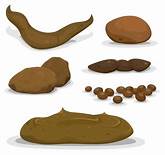
To know what loose or hard stool looks like, you’ll first need to know what regular, healthy stool looks like. The ideal stool should be firm (but not rock hard) and shaped like a log, a nugget, or a combination of the two, Waldrop says.


Keep in mind that the ancestors of domestic cats were desert dwelling creatures. As such, their colons are very effective at removing moisture from the stool, which means it’s normal for their stool to be firm, Waldrop says. “I have a lot of clients bring in normal stool for analysis thinking their cat is constipated,” he says.

Anything that is not formed (i.e., soupy or soft stool) is considered diarrhea, Waldrop says. “Whether it’s liquid or pasty, it’s abnormal and should be evaluated.”

Schwartz notes that it’s important to keep an eye on the consistency of your cat’s stools, especially since cats are prone to inflammatory bowel disease, which is a relatively common cause of diarrhea.

Content of Your Cat’s Poop

“Hair is the most common item noticed in stool, and if it’s not excessive, then this is totally normal,” Waldrop says. If you find large amounts of hair in your cat’s poop, it can be an indication that the cat is over-grooming, he explains, which can be associated with anxiety, itchy skin, or diseases causing excessive shedding.

Tapeworms may also be seen in your cat’s poop, Waldrop says. “They are shiny, white, and about the size of rice,” he describes. “They may also be moving.” Most other intestinal parasites are not visible in the feces.

Other things to watch out for include pieces of cat toys or other household items, such as thread or dental floss. “Some cats are chewers, and if you see these kinds of things in your cat’s stool, you will really need to keep those items out of your cat’s reach, as they can potentially lead to an obstruction,” Waldrop says.

If you notice any of these objects in your cat’s stool, make an appointment with your veterinarian.

What to Do About Cat Poop Issues

As a rule of thumb, never try a home remedy for your cat’s poop issues—or for any malady—without first checking in with your veterinarian, Schwartz says. “Cats are very particular with their sensitivity and tolerance to over-the-counter medicines,” he says.

In addition, it’s always important to make sure your cat has access to fresh water and is drinking enough of it, he says. “Elderly cats are commonly dehydrated because they tend to drink less,” and are prone to diseases that increase their water intake needs.

Jones reminds pet parents to relate their cat’s stools with how the cat is acting. “If your cat is lethargic and the stools change, that is cause for concern,” he says. “If the cat is normal and the stools change, normally I will give them a little time and look for other clinical signs of disease.”

Cat Talk- what the meow means

When Your Cat’s Meowing May Be a Red Flag in Disguise


By Dr. Karen Shaw Becker

A very common question many pet parents have is, “Why does my cat meow constantly? Is he sick, or is he just trying to drive me nuts?” Even if the crying isn’t constant, it can be frequent enough to be of concern, and sometimes it’s just plain annoying. Just as some dogs bark more than others, some kitties tend to meow a lot (just ask anyone with a Siamese at home). If Mr. Whiskers is otherwise healthy and is meowing right at you, he probably wants something. And that something is usually food or attention.

Cats whose owners answer their meows tend to grow more meow-y over time, until the cat and his human are actually having lengthy conversations. And kitties who learn they get food if they meow will ramp up the behavior — especially around mealtime. Senior and geriatric cats also tend to vocalize more, especially at night.

8 Types of Cat Vocalizations

Cats meow to communicate with other cats as well as with humans, and they actually have a rather extensive range of vocalizations. You may know the difference between your cat’s dinnertime meow, for example, and the way she sounds if she’s frightened or annoyed. But many kitty sounds and intonations are more subtle and don’t fit a particular pattern, which can make them harder to interpret. Here’s a cheat sheet for decoding some common kitty chatter:1

Vocalization How It Sounds What It Means Translation
Meow The classic mee-yoww Usually just a shout-out to whoever is around “Hey there!”
Purr Similar to a low idling motor; made by contracting the muscles of the larynx A sign of contentment in most cats; rarely, a sign of anxiety or illness “Backrub feels great… don’t stop!”
Murmur, trill Soft rhythmic “thump” made on exhalation A request or greeting “Pet me?”
Growl, hiss, spit Low-pitched, severe, “I mean business” sound Kitty is feeling fearful, stressed, defensive or aggressive “Back off!”
Shriek or screech High-pitched, loud, harsh scream Kitty is either in pain or about to cause some “Ouch!”
“Don’t touch me!” “Get away from me!”
Chatter Teeth chattering; jaw vibrating Feline hunting sound; frustration from being unable to hunt visible prey “Let me at it… let me at it… let me at it!”
Howl or yowl Loud, drawn out calls Cognitive dysfunction in older cats; aggression; distress “Where are you?”
“Where am I?”
“Why am I yelling?”
Moan Long, low, throaty cry Prelude to vomiting, bringing up a hairball “Get here quick I’m about to make a mess!”

When to Worry About Your Cat’s Meowing

Since you know your pet better than anyone else, it’s up to you to learn his “normal” when it comes to vocalizations so you can immediately pick up on any change in the way he communicates.

Changes in your cat’s meow can signal an underlying medical condition, such as laryngeal disease, high blood pressure or hyperthyroidism. It can also mean he’s dealing with a painful and potentially life-threatening problem such as a urinary tract blockage, especially if he cries out while in his litterbox.

In older cats, increased meowing can be the result of cognitive dysfunction, which is essentially a form of dementia. If your senior or geriatric kitty also seems disoriented, he could be vocalizing due to stress or confusion.

When to Call the Vet

Generally speaking, almost any feline medical condition that results in physical or mental discomfort can cause your cat to vocalize more often or abnormally. If kitty is typically fairly quiet but suddenly gets talkative, or cries when she jumps onto or off of high surfaces, or when you’re holding or petting her, you should make an appointment with your veterinarian.

This is especially true if you’ve noticed other changes, such as a decrease or increase in appetite or sleep patterns, eliminating outside the litterbox, a change in the way she walks or sits or rests, a lack of interest in grooming or a desire to hide away from the rest of the family. Also keep in mind that a normally talkative cat who suddenly grows quiet can also be cause for concern.

Untreated Types of Pain in Dogs

Untreated Types of Pain in Dogs


By Dr. Karen Shaw Becker and comments by Diane Weinmann

The practice of scoring pain is almost exclusively a human medicine tool. A doctor or nurse asks a patient to rate the pain he or she is experiencing with a number, for example, 0 to 10, with 0 indicating no pain, and 10 signifying excruciating pain.

Sadly, the veterinary community has been slow to follow suit. In fact, I regularly have pet parents tell me their vets won’t administer pain medications after surgeries or accidents, even when the client demands them. It breaks my heart that so many animals suffer needlessly, and it infuriates me that doctors who take an oath to relieve suffering fail to do so.

Assessing Pain in Canine Patients

In veterinary medicine, our canine patients can’t tell us in words how much they’re hurting, so pain scoring must be done primarily through observation. It can be used not only with dogs who’ve had surgery, but also any pet dealing with an injury or illness. Since every animal is an individual with a specific pain threshold, to use pain scoring effectively, we must observe the dog before painkillers are given and before any procedure is attempted, no matter how minor (e.g., a blood draw).

We also need to apply some science to the art of observation when determining a dog’s pain score. We need to know average pain levels for the condition the animal has or the surgery about to be performed, and factor those into the equation. This is necessary because many dogs are stoic even when in significant pain.

Pet Pain Scales

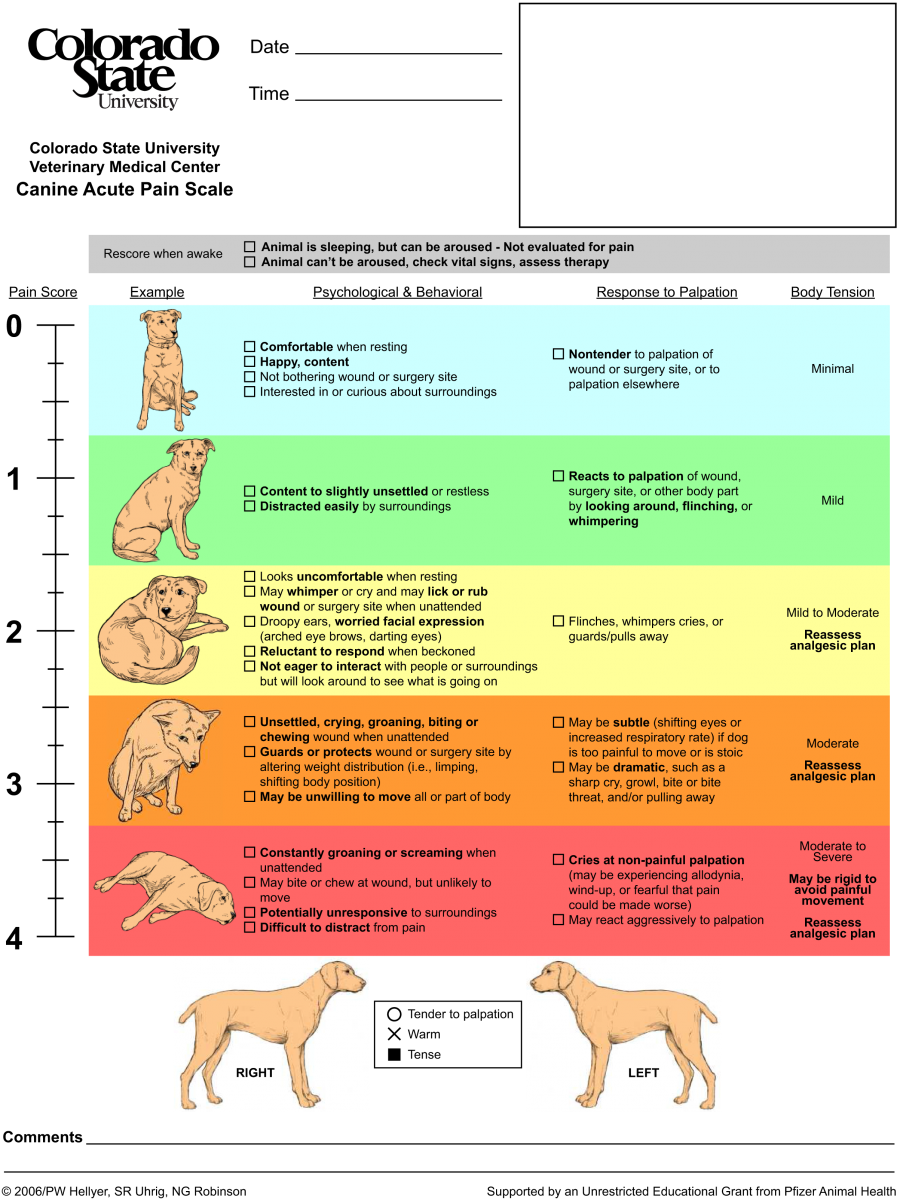
Pain scales such as Colorado State University’s (CSU) below are intended for use by veterinarians and their staffs, but they can also be helpful for pet parents who want to learn what signs to look for to determine if their dog might be in pain.1

Pain score: 0 No pain present. The patient is happy, acts normally, moves comfortably, has a normal appetite and (if applicable) does not bother the surgery site. TPR (temperature) is normal.
Pain score: 1 Mild pain present. This is usually displayed by a slight limp, difficulty getting up or down or a slight increase in TPR. The patient is eating, tail wagging and not depressed.
Pain score: 2 Moderate pain present. The patient shows sensitivity and may lick or chew at the surgical site or wound. The patient may refuse to eat and may seem depressed, and has slow, shallow respirations.
Pain score: 3 Severe pain present. Signs include depression, reluctance to move and sensitivity at the surgical site or wound. The patient will usually not eat, may vocalize and may lie down but not sleep.
Pain score: 4 Excruciating pain present. The patient shows all the signs described with a pain score of 3, in addition to intermittent panting, increased TPR — even at rest — constant vocalizing, profound depression, dilated pupils, aggressiveness and deep breathing.

To view the full detailed CSU pain scales, which include rough drawings of how your dog might appear with a pain score of 0, 1, etc.: Canine Pain Scale.

Signs to Watch for at Home

Determining if your pet is hurting is all about picking up subtle cues. Generally speaking, a cat in pain will make herself scarce, whereas a hurting dog is often a dog with a sad or tense expression. Canines don’t typically whine or cry unless they are in tremendous pain, so here are some other signs to keep an eye out for:2

Lack or loss of appetite Not greeting you as usual
Trembling/shivering Crouching
Not bearing weight on a leg Taking longer than usual to urinate or defecate
Reluctance to climb up or down stairs Excessive panting

What to Do if You Think Your Dog Is in Pain

How your canine companion’s pain is managed depends on what’s causing it, so it’s crucially important to make an appointment with your veterinarian for a thorough exam. Once your vet has evaluated your dog and depending on the root cause of his discomfort, there are a number of integrative therapies that blend nicely to reduce the amount of medications needed to manage pain, including:

There are also some newer therapies I’ve used with good success, including the Assisi Loop, a form of pulsed electromagnetic field therapy. In addition, there are a variety of beneficial supplements you can add to your pet’s diet, again depending on his diagnosis and treatment protocol.

A Type of Pain in Dogs That Often Goes Undiagnosed

Myofascial pain, which is pain in the muscles that results from one or more trigger points, is common in dogs, but because it doesn’t show up on x-rays or other diagnostic tests, it’s often left untreated. The result is that many dogs suffer needlessly with significant, chronic muscle pain.

Trigger points, sometimes described as knots in the muscles, are focal points for inflammation and irritation. They may be in an active or latent phase. In the active phase, a trigger point may be very painful for your pet.

If pressure is applied, pain may radiate from the trigger point to other areas of your dog’s body, such as down the limbs (this is known as referred pain). He may also have latent trigger points that are sensitive, but not as acutely painful as active trigger points. However, even latent trigger points may lead to problems for your dog, including stiffness and restricted range of motion.

Causes of Myofascial Pain

There are many situations that can lead to this type of muscle pain. Some of them may occur suddenly, such as an injury from an unexpected wrenching movement, a fall or a blow to a muscle. Often, however, the development of such pain, and its related trigger points, is gradual.

Just like in humans, dogs may suffer from muscle pain as a result of overuse or muscle imbalance. For example, if your dog runs along a fence every day or favors a back leg due to arthritis, some muscles are being overused and others underused, leading to muscle imbalance and the development of trigger points.

When the pain and related dysfunction becomes chronic, it’s known as myofascial pain syndrome (MPS). Unfortunately, MPS is rarely mentioned in conventional veterinary schools, so it’s often overlooked and left untreated. As veterinarian Dr. Michael Petty notes in his article for dvm360:

“Myofascial pain syndrome is a difficult-to-diagnose and seldom-treated condition in dogs. This is despite the fact that it’s been a recognized pain issue for more than 400 years and entered mainstream human medicine almost 80 years ago. It’s rarely taught in the university setting and there are no books about it.”3

Potential signs of myofascial pain include weakness, muscle tension and stiffness and lameness, or your dog may jump from pain or twitch if you happen to press on a trigger point. Without treatment, trigger points and myofascial pain can turn into a chronic and worsening condition

Treating Myofascial Pain by Relieving Trigger Points

If you suspect your dog is suffering from myofascial pain, see a holistic veterinarian who is experienced at finding trigger points. Once they’ve been located, there are a couple of options for treatment.

One, which is fairly invasive, is dry needling. This involves using an acupuncture needle that is pushed through your pet’s skin to stimulate the trigger point. This may release the tight muscle bands associated with the trigger point, leading to decreased pain and improved function.

Electro-acupuncture and acupressure may also be helpful for some dogs with myofascial pain. Cold laser therapy and ultrasound therapy may be beneficial for dogs that won’t tolerate acupuncture. Another less invasive option is manual manipulation of trigger points using trigger point massage or trigger point therapy. I have found that recurrent trigger point problems can be a result of an underlying chiropractic issue, so if your pet isn’t getting better, consider getting a chiropractic evaluation.


Real life experience from Diane Weinmann

My dog Neko went crazy because some dogs tried to put their faces through our fence.  After they left he ran laps around our back yard because he was so over wrought.  Did I mention he’s a husky?  So once I got him inside and calmed down he flopped down and refused to move.  I figured he was tired from all the running but he was hurting.  Eventually he got up and was limping then holding his leg up and walking on 3 legs.  He was also whimpering.  I immediately started performing reiki energy healing and healing touch for animals on him.  I put an ice pack on the muscle on his hip/leg area.  I also gave him CBD oil to help with pain as I continued to reiki/HTA him and ice his leg.  It took approximately 6 hours for him to really stop whimping when he moved but with rest and repeated healings he completely recovered.  I could have also performed acupressure but was afraid to inflict pressure on an already sensitive area.  In hindsight, I should of went ahead and provided acupressure in addition to the reiki/HTA energy healing. Ah well, live and learn –it’s not like he won’t do it again..he’s a HUSKY!


Senior Cats

By Dr. Becker and comments by Diane Weinmann


By the time your cat reaches the age of 10, she’s officially a senior citizen. The good news is that many cats today are living into their late teens and even early 20s. With the proper care, a kitty in good health at 10 can easily live another 8, 10 or even 12 years. There’s no need to worry that your feline companion is getting older. In fact, this is a great time to take steps to make the second half of kitty’s life with you as healthy and happy as the first half.

7 Tips to Keep Your Senior Cat Healthy and Happy

1. Schedule twice-yearly veterinary visits

Once your cat is into her senior years and beyond, her wellness and nutritional needs can require fine-tuning every four to six months. It’s very important to review weight, muscle tone, joint range of motion, diet, supplement protocol and exercise habits at least semi-annually for older pets.

At veterinary visits, be sure to mention any behavior changes you’ve noticed in your cat, no matter how minor, as these can provide important clues about health problems that may be brewing under the surface. It’s also important to monitor your cat’s weight to ensure she isn’t becoming too heavy or too thin.

The senior pet wellness screen is an excellent tool for early detection of changes in your cat’s health so that treatment, including appropriate lifestyle changes, can begin immediately. As part of the checkup, your vet will perform a physical exam and blood (including thyroid levels), urine and stool sample tests.

The results will provide a snapshot of how well your cat’s organs are functioning, and point to any potential problems. Regular wellness screens also allow your vet to compare current test results with past results to check for changes that may need further investigation.

2. Minimize environmental stressors

Kitties of all ages do best with a consistent daily routine, but older cats tend to get extra stressed when presented with anything new or different in their environment. Your senior kitty may be dealing with some vision and hearing loss, less tolerance for the cold and mental confusion. Cats can and do develop age-related cognitive decline, which means even the smallest change in your kitty’s routine can cause stress.

Your senior cat may become a little cranky and easily irritated. If there are young children or a playful dog at home, it’s important that all family members approach your kitty in a quiet, non-aggressive manner. It’s also important to protect an aging cat from potential bullying by younger or more active pets.

Of course, it’s important to avoid becoming a “helicopter pet parent” who constantly hovers over kitty. He’s still a cat after all, and prefers attention on his own terms! But do make a concerted effort to keep him comfy, secure and relaxed by maintaining a consistent daily routine and providing him with a quiet, cozy hideaway with comfy bedding and a favorite toy or two.

3. Feed your cat like a carnivore

Contrary to what many cat parents and even veterinarians believe, aging pets need MORE protein than their younger counterparts, and the quality is of paramount importance. The more digestible and assimilable the protein is, and the higher the moisture content of the food, the easier it will be for aging organs to process.

Feed kitty a nutritionally balanced, antioxidant-rich, species-appropriate diet that includes omega-3 essential fats such as krill oil. Since moisture is a cat’s best friend, be sure to encourage hydration by offering kitty a variety of water bowls around the house or a drinking fountain, in addition to minimizing or (preferably) eliminating dry food. If your cat is addicted to a poor-quality processed diet, consider adding a supplement such as Feline Whole Body Support.

4. Provide appropriate supplementation

Offering your cat SAMe (S-adenosylmethionine) is a safe and effective way to stall mental decline, improve mobility and assist in liver detoxification. Consult your holistic veterinarian for the right dose size.

Periodic detoxification with the herbs milk thistle and dandelion can also be very beneficial, as can providing super green foods in the form of fresh “cat grass” to nibble on. Chlorophyll, chlorella or spirulina can also be offered in supplement form to enhance your cat’s detoxification processes.

Medium-chain triglycerides (MCTs) have been shown to be safe for cats and can improve brain energy metabolism and decrease the amyloid protein buildup that results in brain lesions in older pets. Coconut oil is a rich source of MCTs and may also reduce hairball issues. I recommend 1/4 teaspoon for every 10 pounds of body weight twice daily for basic MCT support, if your cat will voluntarily eat it.

For aging kitties who prowl the house all night and vocalize, consider low-dose melatonin, which is not only a sedative with a calming effect, but also an antioxidant. I also use rhodiola, chamomile and l-theanine with good results.

5. Make sure kitty stays physically and mentally stimulated

Keep your cat’s body and mind active with regular exercise appropriate for your cat’s age and physical condition, and mental stimulation (puzzles and treat-release toys can be beneficial). Think of creative ways to enrich your cat’s indoor environment and if your kitty never touches the earth’s surface directly (most housecats don’t), consider a grounding pad to help reduce the buildup of EMFs.

Regular massage can help keep your senior cat’s muscles toned and reduce the slackening that comes with aging. Massaged muscles are looser, which makes it easier for your pet to move around comfortably. Massage also improves circulation, encourages lymphatic drainage and eases joint stiffness.

6. Take steps to keep your cat’s aging body comfortable

If kitty seems physically uncomfortable, it’s important not to assume it’s just a natural part of aging. You want to make sure she’s not in pain, so a visit to your vet is in order. The sooner a health problem is diagnosed and treated, in most cases, the better the outcome.

Keeping your cat at a good weight and physically active will help control arthritis and degenerative joint disease as he ages. Chiropractic adjustments and acupuncture can also be very helpful in keeping cats fully mobile in their later years. There are a wide range of supplements that can be added to your cat’s diet to help maintain healthy tendons, ligaments, joints and cartilage. These include:

• Glucosamine sulfate with MSM and eggshell membrane

• Omega-3 fats (krill oil)

• Ubiquinol

• Supergreen foods like spirulina and astaxanthin

• Natural anti-inflammatory formulas (herbs, proteolytic enzymes and nutraceuticals)

In addition, talk to your vet about Adequan injections, which can stimulate joint fluid very rapidly in pets with arthritis. Also insure your cat can get into and out of the litterbox easily. Remember that kitties are very adept at hiding arthritis and other aches and pains, which can limit their ability to climb into high-sided boxes, or boxes kept in bathtubs or up a flight of stairs, for example.

7. Spend some time with your cat every day

Set aside time each day to hang out with your kitty. If she tolerates being brushed or combed, work that into the daily schedule as well, to help her with grooming chores. Trimming the hair around the perineal area is usually much appreciated by older cats. Make sure meals are provided on a consistent schedule, along with playtime and petting/lap time. Organic catnip (for kitties who respond to it — not all do) can be a very effective way to encourage your cat to play.

I know my older cats, Arron and Milo both really enjoyed their snuggle time.  It’s very important for both your pet’s and your own emotional security to spend time together sharing the love and demonstrating how much you mean to each other.  Make sure you spend time each day cuddling because the memories you make together are irreplaceable!


Canine Aggression

By Dr. Karen Shaw Becker and comments by Diane Weinmann

Aggression in dogs can be a touchy subject, because there are many competing schools of thought on what causes it, as well as a lot of emotion around the issue. However, no matter the cause, we can all agree aggressive behavior in canines is a significant problem, with serious ramifications.

Millions of dog bites occur in the U.S. each year, and thousands of people seek medical treatment for their injuries. In addition, aggressiveness is the leading reason for relinquishment of dogs to shelters. Given the extent and seriousness of the issue, it’s important to investigate all potential causes and remedies for canine aggression.

Toward that end, a group of university biologists has been studying the role of two specific hormones in domestic dog aggression, and published their findings recently in the journal Frontiers in Psychology.1

“If there are ways to intervene and affect biological processes that produce aggression, that could have a huge benefit both for people and dogs,” says Evan MacLean, Ph.D., assistant professor of anthropology and director of the Arizona Canine Cognition Center in the University of Arizona School of Anthropology.2

Two Hormones That May Play a Role in Dog Aggression

Past studies of aggression in dogs and other animals have explored the role of testosterone and serotonin. MacLean and his collaborators decided instead to evaluate oxytocin and vasopressin because they’re often considered the “yin and yang” hormones and may play an important role in shaping social behavior.

Oxytocin, nicknamed the “love hormone,” increases in humans when they are physically affectionate with a loved one. Vasopressin, while closely related to oxytocin, is associated with aggression in humans. In fact, studies show high levels of vasopressin in people with chronic aggression problems.

Study of Dogs Shows Link Between Increased Vasopressin Levels and Aggression

For their study, the researchers recruited leash-aggressive family dogs of both sexes and varying ages and breeds. They paired each of those dogs with a nonaggressive dog of the same sex, age and breed (the control group).

Each dog in the study was held on a leash by its owner while a person across the room and behind a curtain played a recording of a dog barking. Then the curtain was pulled back, revealing a life-size dog model with a human. The same scenario was repeated with everyday noises coupled with three common objects: a cardboard box, a trash bag and a yoga ball.

The dogs’ responses and hormone levels were assessed both before and after each presentation. None of the dogs showed aggression toward the box, bag or ball. However, many of the leash-aggressive dogs had aggressive responses (growling, barking and lunging) to the life-size dog model, and those same dogs had higher levels of vasopressin in their systems.

The oxytocin levels remained about the same in the two groups of dogs, so the researchers compared their levels to the oxytocin levels in a group of assistance dogs who are selectively bred to have nonaggressive temperaments. The assistance dogs had higher levels of oxytocin than the study dogs, and higher oxytocin-to-vasopressin ratios as well.

“Seeing high oxytocin levels in assistance dogs is completely consistent with their behavioral phenotype — that they’re very, very friendly dogs that are not aggressive toward people or other dogs,” MacLean said.

These study results suggest a link between vasopressin and aggression, and they also suggest that oxytocin plays a role in inhibiting aggression in dogs.

Findings Could Open the Door for New Ways to Manage Canine Aggression

Past research has focused on the role of testosterone and serotonin in canine aggression, with the result that dog parents are often advised to neuter male dogs to lower their testosterone levels either to prevent or treat aggression. Serotonin is thought to reduce aggression, so it’s not uncommon for dogs with aggressive tendencies to be treated with SSRIs (selective serotonin reuptake inhibitors), which are antidepressants. Neither of these solutions is ideal for every aggressive dog.

Research into vasopressin and oxytocin may lead to new approaches to treating aggressive dogs. Unfortunately, with conventional veterinary medicine leading the charge, those new approaches will most likely be in the form of synthetic drugs that manipulate natural vasopressin and/or oxytocin levels in the body. The good news is the holistic veterinary community is often able to use this type of research to discover nontoxic substances with similar actions and few or no side effects.

Life Experiences May Play a Role in Increasing Vasopressin Levels

MacLean believes life experiences may play a role in increasing a dog’s level of vasopressin.

“There’s a lot of work showing that experiences in your lifetime can change the way hormones function,” MacLean told ScienceDaily. “For a lot of dogs that have aggression problems, the owners report that the onset of the aggressive symptoms happened after some sort of traumatic experience.

Often it was that the dog was attacked by some other dog and is in a hypervigilant state after that event — almost like a post-traumatic reaction.”

The good news is that it’s possible to influence your dog’s behavior by interacting with him in a friendly, nonthreatening way. Studies show these types of loving dog-human interactions actually increase oxytocin release in dogs, and lower vasopressin levels. An added bonus is that your hormone levels also respond positively:

“These are bidirectional effects,” says MacLean. “It’s not just that when we’re petting a dog, the dog is having this hormonal response — we’re having it, too.”

The Ultimate Goal: To Preserve and Protect the Unique and Long-Standing Relationship Between People and Their Dogs

In the final paragraphs of the study, the co-authors make a compelling case for why their work is so important:

“Ultimately, dog aggression is a normal and adaptive social behavior, but expressed in the wrong contexts, or to an extreme extent, its consequences jeopardize the welfare of both humans and dogs in our society. It is likely that dog aggression can be motivated by diverse psychological states, including fear and anger.

These emotional processes may be facilitated by, or produce effects on, OT [oxytocin] and AVP [vasopressin] signaling in the brain. Thus, it is important to consider dog aggression at multiple levels of analysis, addressing both the cognitive processes (e.g., appraisal, learning, inhibition), and underlying physiological mechanisms, which mediate these behaviors.

The studies presented here suggest that OT and AVP may play important roles in these socioemotional processes, and set the stage for future work evaluating whether treatments and interventions for aggression can be improved by considering the roles of these neuropeptides.

Ultimately, we hope that these investigations will lead to increased knowledge of the biology of social behavior, promote human and animal welfare, and help to preserve the unique and long-standing relationship between humans and dogs.”3

Dogs with aggressive or fear-based behaviors aren’t happy campers, and studies such as this one shed light on how we can make life better for those pets and their humans. Dogs are individuals, and a dog’s seemingly inappropriate response to certain stimuli may be entirely appropriate based on his internal wiring and life experiences.

How we manage dogs with aggression is critical in helping them have happier futures, and new treatments coming out of studies like this may provide promising adjunctive therapies to behavior modification programs that help aggressive dogs live more balanced lives.

Diane Weinmann’s dog, Neko, started becoming dog-aggressive while in his backyard and on walks in the parks when he reached the age of 6.  He was raised with a lot of dogs to play with so I feel that it’s definitely hormone based issue.  He’s never had a traumatic incident with another animal that would cause his behavior.  I wish the holistic vets would come up with an essential oil or herb blend to help this issue.


Common Uses of Lemon Balm on Dogs and Horses

Common Uses of Lemon Balm on Dogs

Lemon balm contains, amongst other things, volatile oils, tannins, and flavonoids. These elements give the herb a number of therapeutic effects, including calming and relaxing, anti-viral, anti-bacterial, muscle-relaxing and pain-relieving effects.

In dogs, lemon balm can be used for numerous health issues, including stress, anxiety, depression, and digestive problems, especially gas.

In older dogs, lemon balm can be used to address sleep disorders and reduce agitation and anxiety caused by canine cognitive dysfunction.

Topically, it is also an effective disinfectant for minor cuts and wounds, as well as an effective muscle-relaxant for sores and pains.

On horses, lemon balm’s anti-spasmodic effects on muscle pains and stomach issues is [perfect for stress related situations or environments, like stall rest. Lemon balm can also help horses with metobolic issues by reducing the production of thyroid hormones and ease the symptoms of hyperthyroidism.

How to Use Lemon Balm on Dogs

There are quite a few ways that our dogs can reap the lemon balm benefits. The herb can be used orally or topically depending on what your dog needs. For example:

For Oral Use

To make a lemon balm tea that is strong enough therapeutically, pour 1 cup of boiling water over 2 tablespoons of coarsely chopped fresh leaves (or 2 tablespoons dried herb per cup of water). As this herb is non-toxic and extremely safe, you don’t have to worry about exact dosages or measurements too much.

Cover the brewing tea and let stand until it cools to room temperature.

To give the tea to your dog, either add it to his food or water, or both! Add up to 1 tablespoon of the tea per 20 pounds of body weight twice or three times daily. If you are trying to treat a specific health condition, such
 as gas or anxiety, double that amount.

For Topical Use

Freshly brewed lemon balm tea can also be used topically as a disinfecting rinse for minor cuts and other wounds. To make the rinse even more effective, add 2 teaspoons unrefined sea salt to each cup of tea and stir to dissolve. Simply pour the tea over the wound (be sure that the tea is not hot).

To use lemon balm tea as a cold compress (good for acute injuries), soak a clean wash cloth in the cold
 tea, apply, and hold the compress in place for several minutes. To keep the area cold, soak the compress again and reapply.

As mentioned above, lemon balm has muscle-relaxing and antispasmodic properties. Therefore, it can be used to help ease some aches and pains in dogs caused by chronic conditions like arthritis, hip or elbow dysplasia, or old sports injuries. To this end, make a hot compress using lemon balm tea. The tea should be reasonably hot (but not scalding hot). Soak a wash cloth in the tea, wring just enough to stop dripping, then apply to the affected area and hold it in place for several minutes. Soak the compress again and reapply as needed to keep the area warm for 10 to 15 minutes.

Herbal Honey

Since lemon balm is anti-viral and anti-bacterial, it is a good herb to use to make herbal honey, which can be used topically to dress wounds and treat skin infections, and orally to prevent bacterial or viral infections, help with indigestion, and generally boost the immune system. See this page for instructions to make herbal honey.

Safety of Lemon Balm

As mentioned above, lemon balm is an extremely safe herb, and the only contraindication is, in large amounts, it may interfere with the body’s assimilation of iodine, and may therefore affect the thyroid. However, the amounts of lemon balm used for dogs are not high enough to cause hypothyroidism in dogs.

How to Use Lemon Balm on Horses

Horses can eat the fresh or dried leaves or you can make a tea from the leaves  or a tincture and pour it right on their grain or hay.