Allergies occur when your immune system overreacts to seemingly harmless substances in the environment. People can be allergic to a wide range of things, but some of the more common allergens come from dogs and cats, including their dander.
But is saliva on that list? If your skin ever started itching or you developed a rash after getting licked by a dog, you might wonder if you could be allergic to dog saliva.
Can People Be Allergic to Dog Saliva?
The simple answer is yes, you can be allergic to a dog’s saliva.
In the United States, it is estimated that up to 30% of the population is allergic to dogs and cats.
Many people believe that if you are allergic to pets, it’s the fur that’s the problem. But contrary to popular belief, dog hair is not the culprit. Instead, your body’s allergic responses are directed toward proteins found in a dog’s dander (skin flakes), urine, blood, and saliva.
Dog saliva has multiple protein profiles that may trigger your immune system. In fact, a dog’s saliva has more protein types than their skin, so it can potentially cause more allergies than dander.
If you’re allergic to the proteins in a dog’s saliva and the dog licks you, your immune system will activate and attack the proteins in the saliva just as if they were a virus or bacteria on the skin. This can result in a rash or hives, and your skin can become itchy, red, and/or swollen.
In addition, if your pet licks their fur or your furniture, carpet, clothes, and other items, it leaves salivary proteins that can dry and be dispersed through the air. If you’re allergic to dog saliva and inhale airborne proteins, it can cause watery eyes, sneezing, and/or coughing. In severe cases, this can lead to an asthmatic attack.
That means you do not have to be directly exposed to dog saliva to have an allergic reaction. Interestingly, 90% of households in the United States have detectable levels of dog/cat allergens, which means salivary proteins are carried around by people and on inanimate objects. As a result, people who do not have pets can still be at risk for a reaction through inadvertent exposure.
Can You Be Allergic to Just Certain Dogs’ Saliva?
Yes. Dogs can have different protein profiles, so you can be allergic to saliva from other people’s dogs even if you are not allergic to your own dog’s saliva. Also, you may have become desensitized to allergens in your dog’s saliva over time, which is why you do not react to it.
Dog breed, size, age, and gender do not play a role in determining whether a person will be allergic to the saliva or not. Even two dogs of the same breed will have different protein profiles in their saliva. A person may react to one of the dogs and not the other.
There are some breeds that produce more saliva, like the Saint Bernard, and you would think this would cause more problems for a person with allergies. However, if you do not have a sensitivity to the proteins found in the Saint Bernard’s saliva, there will not be a reaction.
How Do You Know If You’re Allergic to Dog Saliva?
If you think you may have a sensitivity to dog saliva, ask your doctor. They may order a skin-prick test or intradermal skin test. With these tests, a dog salivary/dander protein extract is introduced under the surface of your skin, and the area is monitored over time for signs of redness, inflammation, and swelling.
Another type of test can be performed on your blood that measures the level of immune response to different allergens (including dog saliva).
Chan SK, Leung DYM. Dog and Cat Allergies: Current State of Diagnostic Approaches and Challenges. Allergy, Asthma & Immunology Research. 2018;10(2):97.
Polovic N, Wadén K, Binnmyr J, et al. Dog saliva – an important source of dog allergens. Allergy. 2013;68(5):585-592.
Why did my dog just eat that? As a dog parent, you’ve probably asked this question at some point, whether your dog ate a stick, a rock, or dirt. Consuming objects that are not food-related is an eating disorder called pica. A form of pica called geophagia causes dogs to purposely eat dirt or mud.
Why Does My Dog Eat Dirt?
Your dog’s desire to eat dirt may be caused by nutritional, behavioral, or medical reasons.
Nutritional
All dog foods are not created equally. Some diets do not contain all the nutrients that a dog needs to live a healthy lifestyle.
Dietary deficiencies can cause dogs of any age to eat dirt to obtain minerals, like sodium, iron, and calcium from the soil. Dogs that are underfed may also eat dirt and other objects due to hunger and nutritional deficiencies.
When selecting a good quality dog food, make sure the food you choose meets the World Small Animal Veterinary Association (WSAVA) nutritional guidelines and is made by a large, experienced, and reputable manufacturer. Brands such as Royal Canin, Hill’s Science Diet, and Purina all meet WSAVA guidelines.
Behavioral
Dogs can get bored if they don’t have enough exercise or enrichment, and some will eat dirt to occupy their time.
Dogs with separation anxiety may eat dirt due to stress when they are separated from their pet parents. Dogs can develop anxiety at any age.
Medical
Several medical issues can also cause dogs to want to eat dirt.
Anemia
This medical condition refers to a low red blood cell count. Anemia can be caused by a variety of things, such as hookworms, flea infestation, tick disease, cancer, immune-mediated diseases, or bleeding disorders.
It is more common for puppies to have hookworms since they can typically contract these parasites through their mother’s milk when nursing. However, dogs of any age can get hookworms from the environment if they are not on heartworm prevention.
All dogs are prone to fleas and ticks, which are blood-sucking parasites that can cause severe anemia. Keep your dog on a good flea/tick prevention year-round, such as Simparica, NexGard, or Bravecto.
Adult and senior dogs can develop a severe anemia due to internal bleeding from certain types of cancerous masses. Immune-mediated diseases and bleeding disorders are very rare but can also cause anemia in a dog of any age. Any anemia, if severe enough, can cause a dog to eat dirt.
Portosystemic (Liver) Shunt
A shunt is an abnormal blood vessel that allows blood to bypass a dog’s liver. As a result, the liver receives an inadequate blood supply and does not function properly. Shunts are rare but can be congenital (in puppies) or seen in adult or senior dogs.
Gastritis (Inflammation of the Stomach)
When dogs have an upset stomach, they sometimes eat dirt and/or grass to try to make themselves vomit.
Is Eating Dirt Bad for Dogs?
Absolutely! Eating dirt can pose a variety of problems for dogs. Eating clumps of dirt, mud, or other objects can pose a choking hazard. Chewing and consuming hard objects, like rocks and animal bones that may be mixed in with the dirt, can also fracture teeth.
Aside from the more obvious dangers, here are some others that you may not be aware of.
Gastrointestinal Obstruction
Dirt, rocks, sticks, or other objects, also called foreign bodies, can get stuck in a dog’s esophagus, stomach, or intestines. This is called a gastrointestinal obstruction. Surgery is often needed to treat an obstruction.
As soon as you see your dog ingest a foreign body, call your local animal hospital or emergency vet hospital immediately. A veterinarian may have you bring your dog right to the hospital so that vomiting can be induced to prevent possible obstruction. Timing is crucial. You must get your dog to a vet within an hour of ingestion of the foreign material because a dog’s stomach usually empties within two hours.
Toxins
Another risk of eating dirt or grass is that it may contain pesticides, fertilizers, or other toxins that can be severely harmful to your dog.
If you see your dog eating dirt from a lawn that may have been treated with pesticides or fertilizer, call the Pet Poison Helpline at 855-764-7661 or ASPCA Poison Control at 888-426-4435 immediately.
There is a fee for calling either of these helplines, but you will be advised on whether or not your dog needs immediate medical care. You will also receive a case number that you can give to your local vet or emergency vet.
Damage to the Gastrointestinal Tract
Dirt and rocks may also cause abrasions and inflammation to the lining of a dog’s gastrointestinal tract as they work their way down the esophagus, into the stomach, and through the intestines.
Parasites
Dogs that eat dirt are also more prone to ingesting soil-dwelling parasites, such as Capillaria, Giardia, hookworms, roundworms, and whipworms. They may also ingest fleas that are on the ground, which can transmit a parasite called tapeworms.
What to Do If Your Dog Is Eating Dirt
Eating small amounts of dirt on occasion will likely not harm your dog but should still be discouraged. If your dog eats a lot of dirt or suddenly eats dirt for the first time, this could be a sign of a medical condition and you should call your vet as soon as possible.
The vet can run diagnostic tests to determine an underlying cause and proper treatment.
Take your dog to a vet if they have any of the following symptoms:
Eating dirt frequently or suddenly
Decreased appetite
Straining to poop or irregular bowel movements
Lethargy
Pale gums (sign of anemia)
Vomiting multiple times in a 24-hour period, especially if vomiting occurs soon after eating or drinking
Your vet will want to know the following:
What are your dog’s symptoms?
How long has your dog been sick?
Did your dog eat any foreign material (dirt, rocks, toxins, etc.), and if so, how long ago?
Is your dog taking any medications?
What food is your dog eating? Any recent diet changes?
Any vomiting and/or diarrhea?
Is your dog taking heartworm and flea/tick prevention regularly? Has there been a lapse in prevention?
Your vet may need to do several diagnostic tests to determine why your dog is repeatedly eating dirt or foreign objects, including:
Baseline blood cell count (CBC), electrolyte panel, and chemistry panel to check for anemia, liver disease, and possible causes of gastritis
Urinalysis to check for urate crystals in the urine (a possible sign of a portosystemic shunt)
Fecal float and fecal antigen tests to check for intestinal parasites
Gastrointestinal panel to test for exocrine pancreatic insufficiency
Bile acid test to assess liver function and help in the diagnosis of a portosystemic shunt
Abdominal ultrasound to look for cancerous masses, portosystemic shunt, thickened intestinal wall (suggestive of a food allergy or inflammatory bowel disease), cancer, or gastrointestinal obstruction
Endoscopy/colonoscopy and biopsies of the gastrointestinal tract to determine if there is inflammation, infection, or cancer
Food trial to test for food allergy
How to Keep Your Dog From Eating Dirt
Here are some tips to keep dogs from eating dirt and help protect them from parasites that can come from soil.
Proper Diet
Feed your dog a good quality diet so your dog receives the proper nutrition to live a healthy lifestyle. Talk to your local vet about the best diet to feed your dog.
It is recommended that most dogs eat twice a day. Dogs under 10 pounds should eat 3-4 small meals a day. If your dog is only being fed once a day and you notice that they are eating things outside (dirt, sticks, rocks) or objects in your house, this may be due to hunger. It may help to divide your dog’s daily food portions into 2-3 meals to keep your dog’s stomach content throughout the day.
Supervised Walks
Leash-walk your dog whenever you go outside so they are always under direct supervision. Then you will know if your dog tries to eat anything unusual. You can immediately remove an object from your dog’s mouth and lead your dog away.
If it is too difficult to walk your dog on a leash, or your dog is quick to eat dirt or other objects, try having your dog wear a basket muzzle. This muzzle sits loosely over the mouth and will prevent your dog from being able to eat dirt and other foreign objects.
Parasite Prevention
Keep your dog on year-round heartworm and flea/tick prevention to protect them from intestinal parasites, fleas, ticks, and heartworm disease. Heartworm prevention is prescription only. An oral flea/tick prevention is the best way to protect your dog from fleas and ticks and also requires a prescription.
Reducing Anxiety and Boredom
Make sure your dog gets plenty of exercise and has toys to play with. This will help reduce anxiety and prevent your dog from eating dirt out of boredom.
If your dog suffers from severe anxiety, consult with your local vet. You may also need to hire a professional dog trainer or seek help from a boarded veterinary behaviorist to learn how to ease your dog’s anxiety.
It’s an important question you need to answer because, left unchecked, mold exposure in dogs can cause serious health problems (and it’s true for you too).
Your dog is continuously exposed to mold spores in the air. Like humans, some dogs are more susceptible to mold spores than others. By understanding how to spot and address mold exposure, you can protect your dog from the harmful effects of mold.
What Is Mold?
Mold is a fungus that grows anywhere there’s moisture. Outdoors, mold typically grows in damp shady areas. Indoors, mold can grow anywhere in your home that gets damp and retains moisture. Mold spreads by releasing spores into the air … and the spores can grow on just about any surface.
Every home has moisture issues, whether from condensation, high humidity or water leaks. And every home has the elements that are required for mold growth … moisture, oxygen and organic material. Mold can damage your home structure and create costly repairs … but worse, mold can damage the health of the people and pets who live there.
The health risks of human exposure to mold are well documented. According to the CDC, symptoms of mold exposure can include nasal stuffiness, eye irritation, wheezing, or skin irritation. More severe reactions may include fever and shortness of breath. People with chronic lung illnesses may develop mold infections in their lungs.
And it’s not just people who can get sick from mold … it can harm your dog too. So here’s a closer look at mold exposure in dogs …
Is Mold Bad For Dogs?
Yes, mold is bad for dogs (as well as people). Mold exposure in dogs can cause adverse health effects like …
Lung and respiratory issues
Damage to the gastrointestinal tract
Serious digestive problems
Allergic reactions
Neurological issues, including tremors and seizures
While the immediate impact of mold is often treatable in the short term, longer term exposure can be more serious and more difficult to manage. When left untreated, mold exposure can lead to organ damage, creating more serious complications.
The dangers of mold exposure in pets came to light in 2007, when a veterinarian found pulmonary hemorrhages in two cats during pre-op procedures (1). Both cats died after complications. According to the report, the home was contaminated with mold from flood damage.
The Truth About Black Mold Do dogs get sick from black mold? You may have heard that black mold is the most dangerous type of mold, but this isn’t really accurate. In reality, there are over 10,000 species of mold, many of which look quite similar. These species of mold come in a variety of colors and shapes, so you usually can’t identify it just by looking at it.
Any color mold exposure in dogs can be dangerous. So what should you be looking out for?
Dog Mold Exposure Symptoms
Symptoms of mold exposure in dogs include:
Respiratory distress (rapid or labored breathing)
Nasal discharge
Coughing, wheezing, sneezing
Lethargy
Bleeding from the mouth and/or nose
Some dogs will have an allergic reaction … with excessive scratching, chewing or licking that can lead to fur loss and the development of painful sores.
If your dog eats mold, it can cause reduced appetite, vomiting and changes in stool.
Signs and symptoms of mold exposure can mimic other health conditions. If your dog is showing any combination of the above symptoms, it’s a good idea to take her to your vet.
Long-Term Mold Exposure In Dogs
Over time, mold can cause other problems. One of the long-term consequences of mold exposure in dogs can be aspergillosis, an opportunistic fungal infection. Aspergillosis usually occurs in the nasal passages (nasal aspergillosis).
Symptoms of nasal aspergillosis include
Nasal pain, swelling, discharge
Nose bleeds
Sneezing
Reduced appetite
Note: There’s a systemic type of aspergillosis called disseminated aspergillosis (2). Animals with disseminated aspergillosis may experience spinal pain, bone inflammation, fever, vomiting, and weight loss. These symptoms generally develop more gradually after mold exposure. However, disseminated aspergillosis isn’t common … according to the Merck Veterinary Manual, it’s seen most often in middle-age, female German Shepherds. Dogs with compromised immune systems are also at higher risk.
DNM RECOMMENDS: Four Leaf Rover offers Immunity, a blend of 7 organic mushrooms selected to support your dog’s immune system. Buy Immunity now >>
Where To Find Mold
Because of its location underground, most people recognize that the basement is a prime spot for water leaks and mold. A recent survey found that 55% of homeowners and renters have lived in a home with a wet basement. But water has ways of getting in that are not immediately obvious … and those are the places where mold can thrive. Check these less obvious places for mold in your home:
Cluttered Places When airflow is blocked by clutter, your heating, ventilation, and air conditioning (HVAC) system can’t properly circulate the air. Condensation can build up on your curtains and vents, creating a moist environment where mold can grow.
Steamy Spaces Your kitchen, bathrooms, laundry room and other areas that get steamy and humid are problem areas that need proper ventilation fans to remove the damp air.
Dripping Water Leaky pipes and drips from condensation that forms on pipes and windows create conditions for mold to grow.
Refrigerator Drip Pan The drip pan is a place where standing water goes unnoticed and undisturbed — the perfect environment for mold growth.
Air Conditioning Ducts Mold can grow in organic matter, standing water or condensation in your air conditioning ducts. Preventative maintenance can keep mold from growing in your air conditioning system.
How To Prevent Mold In Your Home
To keep your dog and your family safe from mold, it’s important to remove existing mold and take steps to prevent mold growth.
Check the underside of hidden areas such as ceiling tiles, drywall, carpets, and wallpaper for mold, since these places can attract and retain moisture. You may be able to remove small areas of mold from solid surfaces with vinegar or baking soda. Be sure to wear gloves and goggles and avoid breathing in mold or mold spores.
Keep your home’s interior as dry as possible. Repair your leaky basement, roof, pipes, windows, and other areas where water is getting in or accumulates from drips or condensation.
Ensure that your bathroom and kitchen fans and all ventilation systems are working as they should.
If water does get in, clean and thoroughly dry the area as soon as possible.
If you find large areas of mold, you may want to hire professional help to take care of the clean up.
When Should You Call A Pro?
It’s important to remember that mold infestation often involves more than meets the eye. If you suspect you have hidden mold, or if the moldy area is too large to clean up with vinegar or baking soda, your safest course of action is to call a professional.
A general contractor or handyman won’t necessarily have the expertise to manage the job. The Environmental Protection Agency (EPA) recommends you “make sure the contractor has experience cleaning up mold.” Be sure that the professionals you hire have experience, can provide references (be sure to check the references!) and are bonded and insured.
What Will The Pros Do? When you hire a professional to assess the situation and remove mold from your home, expect the process to look something like this:
First, the company should inspect your home and advise you of the extent of your mold problem. Ask them to provide you with a written schedule (including how much time areas of your home will be unavailable to you), instructions on how to prepare and what to expect. For your own safety, your family will not have access to rooms or areas where the mold cleaning team is working.
To prevent the mold spores from dispersing into the air, the mold removal specialist will seal off the work area with plastic sheeting. You may have to turn off your heating or air conditioning systems.
They’ll remove and discard mold-damaged building materials (drywall, insulation, baseboards, carpeting etc). Restoration is not typically included as part of the mold clean-up.
In addition to fans and high efficiency particulate air (HEPA) vacuums to remove mold spores, most services use antimicrobial chemicals to clean the mold and the stains. Some services use “green” cleaning solutions but even “green” cleaning product can contain dangerous ingredients. A 2015 Australian study found that 100 percent of goods labeled “natural,” “organic,” “non-toxic,” or certified as green gave off at least one potentially toxic chemical (3).
The mold removal service should show you where and how the water is getting in. Remember that moisture is what allows the mold to grow so you will need to take steps to keep the water out in future. Your mold removal company may offer this service or should be able to recommend a provider.
If you suspect your dog is ill due to mold exposure, talk to your vet. She may not consider the possibility that your dog’s symptoms stem from mold. In addition to treating your dog’s symptoms, be sure to check your home for hidden mold and call a professional if you’re unable to manage the clean-up on your own.
By: Austin Werner is the President of Real Seal LLC, a basement waterproofing company based in Schaumburg, IL. Real Seal is committed to personalized and expedited service and, of course, dry basements. Check Real Seal LLC out at http://therealsealllc.com
According to recent research, 70% of U.S. households have at least one pet, and they spend over $126 billion a year on their care. If you’ve been thinking about launching a pet care business, you have picked the perfect time to start.
If you love exercise and dogs, a dog walking role position is a good choice. Canine experts advise dogs need at least 30 minutes and up to two hours of exercise a day. You can help busy pet parents by providing this daily service for their pooches.
Dog Training
If you are great at teaching dogs how to behave or do a few tricks, consider becoming a dog trainer. This job teaches pet parents and their pups habits for a healthy lifestyle. It is best to get certified first so you are prepared to handle different breeds with the right communication style. The startup cost for this business is low as you can train at the pet’s home, a park or in your backyard.
Pet Sitting
Many pets love to stay in their home when their parents go away. Cats, in particular, prefer their surroundings over a boarding service. As a pet sitter, you stop in daily to provide food and water, exercise time, and lots of love and attention. Cats also need their litter box cleaned and daily brushing. It’s a great idea to snap a couple of photos and text them to the pet parent to show how well Fluffy or Fido is doing under your care. To get started, offer your services for free to a couple of households who promise to refer you to their friends and family.
Dog Groomer
Regular grooming is essential to keep a dog healthy, especially during hot weather. Many dog owners prefer to have a dog groomer take care of this instead of doing it themselves. Take a course or intern with a professional to learn the proper techniques. Once you have the tools, you can offer in-home services, open a salon or work out of your house.
Make a Plan
Make a business plan with details on how you’ll establish and maintain your company. Consider creating a “doing business as” name for your company so you can easily offer new services or sell products under a different name. A DBA is also helpful if the web domain name you wanted for your business isn’t available, as you can market it under another name.
Promote Your Company
Creating a Facebook page and website for your new business helps you market your services to potential clients. Include some testimonials from happy customers and lots of photos of your furry clients.
Advertise your dog walking business by printing up business cards and handing them out to people walking their dogs in your neighborhood or local park. Word of mouth referrals should help your business grow. For a dog training business, offer a free class or two at a local park or post your training videos online. Have business cards ready to give to any dog owners you encounter.
Now is a great time to turn your love of animals into a business. Consider one of these startup ideas to begin your new venture.
Rosanne (left) and Diane (right) at the Indie Author Showcase
Performing gentle acupressure sessions on your senior horse can help enhance his spirit, strength, and longevity.
The more time that passes, the dearer our senior horses become. We share many good times and a few hardships with these equines, growing closer to them through each new experience. So when their beautiful bones become more visible, the hairs around their muzzle turn gray, and they develop a hitch in their step – it’s not easy for us to watch. But while a senior horse often loses his status in a herd, and might not be able to sail over jumps with as much ease, he can still thrive well into his golden years! As long as he’s still here, there are steps you can take to maximize his quality of life – including acupressure.
Supporting his spirit
The more you can support your senior horse during this period of his life, the longer you will have him to love. Chinese medicine offers caring, gentle methods of nourishing your senior horse’s spirit, strength, and longevity. By promoting the harmonious flow of chi, blood, and other vital substances within the horse’s body, you can help him through these latter years in comfort.
Specific acupressure points, called “acupoints”, address and enhance the spirit as your aging horse adjusts to his changing status within the herd. Helping our horses live healthfully and comfortably as they age is the goal, and there are acupoints to help accomplish this.
According to Chinese medicine, emotions impact the horse’s entire being. The ancient Chinese saying, “The spirit is housed in the heart and revealed in the eyes,” couldn’t be truer for horses. When we see a horse with dull, absent-looking eyes, we know he is suffering. An aging horse is bound to lose status in the herd, and is bound to experience a wide variety of emotions during the adjustment period – from fear and anxiety to resignation and withdrawal. Offer your senior an acupressure session that can help calm and nourish his spirit, and clear his mind.
Strengthening muscles
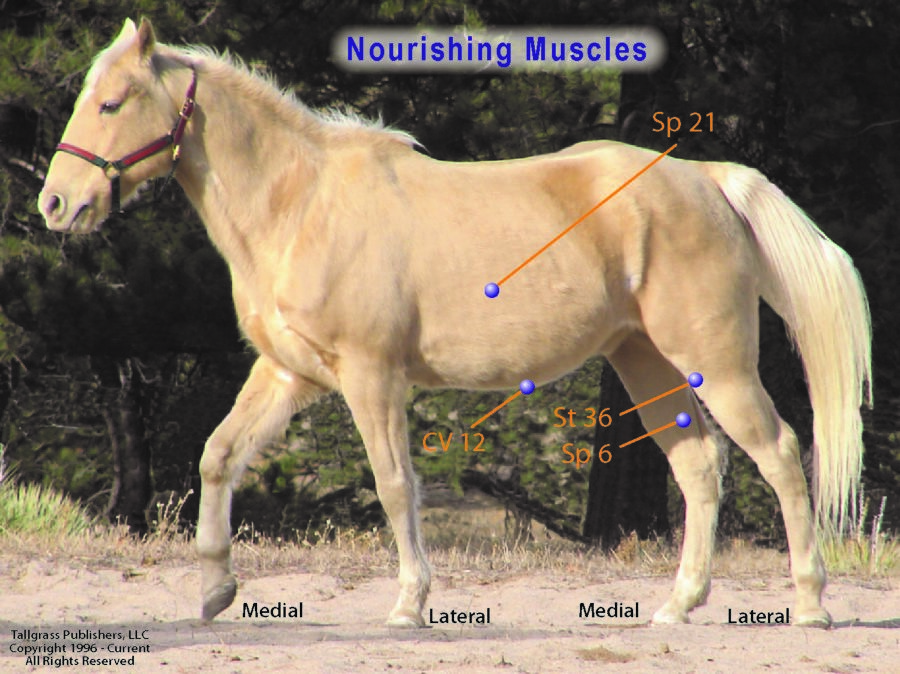
Muscle tone and mass decrease with age; that’s the way it is. However, there are acupoints that enhance the circulation of energy and nourishing blood to the horse’s muscles, helping to sustain and build strength even as he ages. Two actions must occur to accomplish this. First, the horse’s digestive system must be able to break down the ingested forage into bioavailable nutrients; and second, the horse’s vascular system must be able to circulate nutrient-rich blood to the muscles.
When stimulated, the acupoints indicated in the chart below help strengthen muscles and sustain muscle tone, while also supporting digestion and blood circulation.
Equine longevity
Living a long time is one thing. Living a long time in good health is another. We all wish for our senior horses to live long and well. Chinese medicine is known for its attention to longevity. Ancient Chinese doctors knew that longevity is dependent on a robust flow of life-promoting energy (chi), blood, and the circulation and balance of all the vital substances needed to nourish the body. This is a tall order, acupoints known to enhance longevity have been used for thousands of years.
Between current conventional medicine and ancient Chinese medicine, we have the opportunity to enjoy our senior horses longer than ever before. These elders have nourished our lives, so it feels good to offer them acupressure sessions that help them feel their best. In many ways, our caring nourishes us both.
Humping is a common term for what veterinarians call mounting behavior. This is when a dog puts their front legs around another dog, and then thrusts their pelvis repeatedly (the humping motion). The mounting behavior can be directed towards the hind end of another dog, or sometimes the other dog’s head or side, or even toward a person.
Both male and female dogs, whether they are spayed or neutered or not, can perform mounting behavior. So why do dogs hump dogs, people, toys, or just the air, even after they are fixed?
Reasons Why Dogs Hump
Mounting behavior is a natural, instinctive behavior that occurs in puppies 3-6 week of age, most commonly during play. Both male and female puppies may mount each other.
Mounting can also occur when adult dogs play with another dog or person. People commonly think mounting behavior is strictly sexually motivated.
In unneutered male dogs, mounting behavior is in fact influenced by testosterone—it will occur in the presence of an unspayed female dog or a female dog in heat. But people assume the behavior will stop once their dog has been neutered. While neutering will reduce the mounting behavior by 50-60%, not all humping behavior is sexual in nature.
While there may be a hormonal reason that causes a dog to mount, humping behavior is not always triggered by hormones.
Humping can occur when dogs are excitable, such as during play or after greeting another dog. Some dogs may perform this behavior when they see their favorite dog friend or person.
Sometimes dogs hump to get their pet parent’s or another person’s attention. It is difficult for most people to ignore a dog when they are mounting their leg. If the person is sitting on the ground, the dog may mount them from the side or their back.
Mounting behavior can also be one way of conveying social status in dogs. Some dogs may mount other dogs to assert their status, but this behavior is usually accompanied by additional social signaling. Most social communication between dogs can occur without it escalating to one dog mounting the other. It is less likely to occur in a social context with the pet parent. In most cases of humping, there is another underlying cause.
Why Is My Dog Trying to Hump All of the Sudden?
This behavior may seem to come out of nowhere when a male dog reaches sexual maturity around 6-18 months of age, depending upon the breed of the dog. Some female dogs may mount people or objects when they are in heat. If the mounting behavior increases in frequency during this time period, it is most likely hormonally driven in intact animals.
If your dog is already spayed or neutered, then there may a learned component to this behavior. Every time your dog humps, you may be inadvertently reinforcing their behavior.
For example, your dog may mount you to tell you they want to play. You might push them away using your hands or legs. In your dog’s mind, this strategy worked to get your attention and you are now “wrestling” with them.
Why Do Dogs Hump People?
Humping behavior can be directed toward a person when a dog is excited. It is a sign of mental or emotional arousal. The behavior can be a physical outlet for the dog or a way of seeking attention.
Some dogs may just mount the person, but other dogs may mount and escalate to biting when the person tries to push them off. Legs are the most mounted areas because they are easily within a dog’s reach. However, it is not uncommon for dogs to mount any body part within reach.
Dogs may select a person to mount based on their relationship with the individual. It may be a sign that the dog prefers the person. Or it could actually be a sign that the dog may be anxious about that person. You would need to look at the dog’s relationship to the person to understand the underlying motivation.
Children can be targets of dog humping due to their size and depending on the dog’s previous experience or relationship with a child.
Why Do Dogs Hump the Air?
Some dogs may be excited or emotionally aroused but have been previously punished for humping. In this case, a dog may not be sure whether they should make physical contact or not. These dogs would be most likely to hump the air next to another dog or a person.
Why Is My Dog Humping My Cat?
If your dog humps your cat, it may be a sign of excitement or part of play, if the two pets do usually play with each other. Some small dogs may mount a cat if there is social conflict between them.
Should You Let Dogs Hump Things?
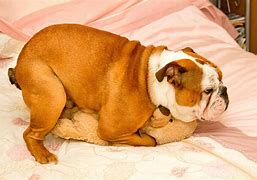
Some dogs hump their favorites toys, blanket, or pillow. They may hump regardless of whether you’re around or not and in any environment.
Some dogs may hump when they are anxious. This is referred to as displacement behavior. The dog is anxious and engages in a particular behavior as an outlet for their anxious energy, similar to an anxious person tapping their foot.
If your dog engages in this behavior for a short period of time and is not causing any injuries, then there’s no harm in allowing your dog to hump. It may be a self-soothing behavior for your dog.
However, if you think it’s an unsightly problem, you need to engage your dog in another behavior whenever they try to mount an object. This may mean keeping all pillows, toys, and blankets out of your dog’s reach.
When Is Humping a Problem in Dogs?
Humping can be a problem when your dog spends most of their time performing this behavior. If you have difficulty distracting and redirecting your dog from humping, it may be a sign of compulsive behavior.
In male dogs, frequent episodes of mounting may cause dermatitis over their foreskins. It is a serious problem when a male dog humps objects frequently enough that he causes lesions to form on the tip of his penis. The lesions can be painful, and in some cases, they can cause scarring at the tip of the penis, therefore forming a urinary blockage.
A dog with this condition needs immediate medical attention.
Frequent expression of mounting behavior can also exacerbate a painful condition, such as if your dog already has degenerative disc disease or osteoarthritis in their hips or knees.
How to Stop Dog Humping
It may be very embarrassing to see your dog mount other dogs, people, or children. Many pet parents may pull their dogs away and scold them. This does not teach a dog to stop performing the behavior. Instead, it may increase a dog’s anxiety.
Pet parents may also be inclined to place their dog on leash, tether them, or if at home, place their dog in a crate or another room to calm down. While these options do stop the humping behavior, better options include distracting your dog and redirecting them to perform alternate behaviors.
It is difficult for a dog to hump another dog if you focus your dog’s attention on chasing their favorite ball, for example. Or you could call your dog and engage them in calming behaviors, such as getting them to sit or lie down next to you.
When your dog engages in more appropriate behaviors, give them plenty of treats, praise, and attention. You can also keep your dog focused for longer by offering food puzzle toys or a long-lasting chew.
References
1. Beaver B V. Canine Behavior Insights and Answers 2nd Edition. 2nd ed. Saunders; 2009.
2. Hopkins S, Schubert T HB. Castration of adult male dogs: effects on roaming, aggression, urine marking, and mounting. J Am Vet Med Assoc. 1976.
3. Bergman L. Canine Mounting: An Overview. NAVC Clin Br. Published online 2012.
It’s a common misconception that our feline friends are not affectionate creatures. Yes, it’s true that earning the love of a cat is not always easy, but when a cat begins to show trust and adoration for you, there’s often no better feeling of accomplishment.
Their furry counterparts, dogs, are much more open with their love through licking, wagging tails, constant and sometimes overbearing attention, and obvious “come play with me” body language.
Cats are much more subtle in showing their love, though that does not mean that the shared bond between cats and humans is any less than with dogs. It just means that you’ll need to work harder to understand your cat’s love language and boundaries in order to build trust.
12 Signs Your Cat Loves You
Body language is most important when understanding how a cat shows love. Here are some common signs that your cat loves you:
1. Slow Blinking
Eyes are said to be the windows to the soul. With some animal species, eye contact should be avoided, as it can be interpreted as being aggressive.
Cats, on the other hand, use eye contact with their people to show adoration, and often only directly look into the eyes of those that they trust and love.
They often will make eye contact with lowered eyelids and steady, slow blinks. This is considered a feline version of a kiss, and you can even try slow blinking to show love back to cats.
2. Headbutting
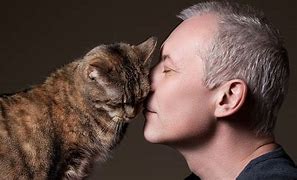
Your cat may bump their head against you or rub their cheeks against you to show affection. This is a social behavior that is formed in kittenhood through headbutting other kittens and their mother.
It is often an attempt to mark you with their scent to claim you as one of their own. It helps cats bond together and is offered to their humans to show love.
3. Grooming
Cats groom each other as a display of affection, and this behavior will extend to humans when trust is built. Cats will often lick their people or allow them to brush them.
Licking is similar to the grooming they would perform on their feline friends and allows for marking of each other. Grooming builds a bond between cat and human. Just be certain to watch for fast tail swishing and listen for any growling or hissing, because grooming, especially with brushing, can be overstimulating if it’s forceful or goes on for too long.
4. Kneading
Cats usually knead with their front paws. This is a behavior that begins in kittenhood and is associated with nursing on their mother. Kneading is believed to bring comfort and perhaps endorphins to the brain after nursing has ceased.
Relaxed cats that knead are showing contentment. They will often knead when you gently pet or stroke them. Sometimes cats knead to create a softer sleeping spot, which is considered an innate behavior.
5. Showing Their Belly
This is often considered the ultimate sign of trust for a cat. Cats only lie on their backs and show their bellies when they are in their most relaxed state.
This is not an invitation to pet or rub your cat’s belly, though! They are simply communicating that they feel comfortable and safe enough to reveal one of the most vulnerable parts of their body. If you go in for the belly rub, be careful, as your cat might retaliate with a bite or scratch.
6. Meowing
Cats will often give us short, quiet meows when we speak slowly and softly to them and they feel comfortable. If the meows get longer and drawn out or turn to hisses, then that is a sign that your kitty has had enough interaction.
7. Purring
Cats often purr to show contentment when they are resting near you or when you’re petting them. They may also purr when they’re nervous, but this is often paired with different body language such as laying their ears back, putting their head down, fast tail-swishing, or hiding.
8. Greeting You at the Door
Your cat is trying to show you that they missed you when they greet you at the door. This is often followed by walking in-between your legs and curling their tail around your legs. Sometimes it’s also accompanied by meowing and “rattle-tail” behavior, where your cat will shake their tail quickly.
This is your cat’s way of welcoming you home. They may also be telling you something more important, like they’re ready to eat, they need fresh water, or their litter box needs to be cleaned, so be sure to check these things.
9. Following You
Cats will often follow those that they love and trust around the home, or even outdoors if your kitty is an outdoor cat. It is similar to the greeting at your front door, where they follow behind you and keep you in sight at all times. They may also weave around your legs.
10. Tail Language
Cats often use their tails to express adoration for their owners. A content cat will often hold their tail in an upright position with a “C-shape” or hook at the very top. They may slowly wag their tail back and forth and allow it to touch you when they are lying next to you. Sometimes they will even rattle their tail while walking when they are very happy to see you.
11. Bringing You Presents
Cats are hunters at heart. A cat that is allowed outdoors will continue this hunting behavior by killing rodents and birds and bringing the remains back to their humans as a “gift.”
Though this may turn your stomach, it truly is a sign of love and pride. Your cat wants to reward you for your love. Indoor cats will often do this with toys or objects since they do not have the option to hunt live game.
12. Sleeping Near You
A cat who chooses to sleep on or close to you is showing their love and trust in you. Even if they choose to lie just out of reach for petting, this means that they feel safe and trust that you will protect them, or they will protect you if danger appears.
Cats show love in many ways. Their body language, behaviors, and vocalizations often tell us a lot about their level of trust and adoration. Acknowledging and understanding these behaviors can help build a strong, loving bond with your cat. A cat’s love is not always easy to gain, but once trust is built, there is no better relationship.
You’ve probably seen cats being hugged, kissed, and carried, and still looking totally content with life. And then there’s the opposite scenario—a kitty that doesn’t hesitate to take a swipe at you if you just try to pet them or walk by them too closely.
With the big difference in personalities, it’s hard to know if a particular cat likes being hugged. Do some just tolerate it? Do some actually like being hugged? Should you hug your cat?
Do Cats Like Hugs?
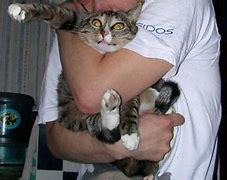
The truth is, many cats HATE to be hugged. They don’t like being held against their will, and especially not in a firm fashion.
If you’ve witnessed the average cat being hugged, you’ve probably seen squirming, meowing, panting, and eventually, claws. Don’t take it personally—most cats view hugging as a form of human-induced torture, pleasurable to the human part of the equation only.
However, some cats do seem to enjoy it. So what is the difference here? There are a lot of factors that help determine whether cats love or hate hugging. Here are a few.
Learning to Like Hugs in Kittenhood
Some cats may get used to being hugged in kittenhood. If you have a very young kitten and they grow up being hugged, they are more likely to enjoy (or at least tolerate!) hugging than, for example, an adult feral cat that you bring into your home.
Easygoing Cat Breeds
Some cat breeds are said to be more mellow than the average cat, including the Ragdoll, Scottish Fold, and Sphynx.
These breeds lean more toward the easygoing side, so they are more likely to enjoy handling or hugging. That said, cats are still individuals, and you may well find that your Ragdoll cat hates hugging every bit as much as your Domestic Longhaired cat.
On the whole, however, adopting a sweet and mellow kitty from your local shelter and spending time with them on a daily basis is just as likely to yield affectionate results.
How You Hug Your Cat
How you approach your kitty may influence the response you get, too. If you swoop in like a giant predator, catch them off guard, and hoist them to the ceiling, that probably isn’t going to go over well. However, if you work up to it slowly, starting with some face scratches, then body rubs, your cat may let you hug them, too.
How Can You Tell If Your Cat Likes Hugs?
Cats are the masters of subtlety, unless they don’t like something. You will likely know quite quickly whether your cat is a fan of hugs just by observing their body language. Cats that enjoy hugs lean into them. They will often purr, headbutt you, and sometimes even drool.
On the other hand, cats that don’t like hugs try to flee, push you away, and give you signals that they are annoyed. They may lay their ears back, swish their tail, and even growl. Some cats will actually “freeze,” leading you to think that they don’t mind being hugged, but if you look at them closely, they may have dilated eyes and a stressed expression.
A safe general rule is to immediately let go of any cat that struggles or acts like they don’t want to be held, cuddled, or hugged—and be prepared to beg for forgiveness.
There are other ways to share affection with your cat, such as gentle scratches, grooming them with a cat brush, and giving them treats. The best bet is to find out what your kitty enjoys so the bonding time is pleasant for both of you.
When your cat yawns, you might get a brief glimpse at what’s going on in their mouth. After taking a peek, cat owners often ask themselves, “Are my cat’s gums normal?”
The eyes might be the window to the soul, but the gums are the window to your cat’s oral health. Cats are masters at hiding illness, so inspecting the gums is a good place to start—if they let you!
If your cat is okay with it, check their gums on a regular basis to detect potential health concerns.
Traits of healthy cat gums
Gums with the following characteristics indicate your kitty is in good health.
Pink color: Healthy cat gums are light pink in color. The ideal shade of pink is one that’s neither too bright nor too pale. Some cats, particularly black and orange ones, naturally have black or spotted gums. This is normal as long as the gums have been black their whole life. Double check with a vet to make sure black is a normal color for your cat’s gums.
Slippery and wet: When you run a finger along your cat’s gums, they should feel slippery and coated in saliva. This is a good indicator that your kitty is well hydrated.
Smooth texture: Healthy cat gums should feel smooth, not bumpy. Some cats develop black or brown spots that look like freckles as they get older. Pigmentation is a normal part of the aging process for some senior kitties so long as the gums still have a smooth texture.
Unhealthy gums and their diseases
Schedule a trip to the vet if you notice any of these abnormal characteristics.
Red or bright pink gums: Redness indicates the presence of gingivitis when it appears around teeth or along the gum line. Gingivitis can progress to periodontal disease, in which case the entire gum line will look either red or bright pink. Gums that suddenly change to these colors could mean your cat is experiencing heat stroke. Heat stroke can quickly turn fatal and requires an immediate trip to the vet.
Gums growing over teeth: Pet parents should be concerned if their cat’s teeth look like they’re sinking below the gum line. This is a clear sign of a dental disease called tooth resorption. Tooth resorption occurs when a tooth slowly deteriorates and gets absorbed back into the jaw bone. It’s a long, painful process that most older cats experience at some point in their life.
Dry or tacky gums: Your cat’s gums shouldn’t feel sticky or dry to the touch. If that’s the case, your cat might be severely dehydrated. This symptom sometimes appears along with the redness associated with heat stroke. Encourage your kitty to drink lots of water right away. If the gum’s moisture doesn’t return to normal, you’ll need to visit an emergency clinic, where vets can rehydrate your cat.
Blue, purple or gray gums: All of these colors are cause for immediate concern. Gums that have paled into a blue, purple or gray hue indicate your cat isn’t getting enough oxygen. This could be due to pneumonia or a blockage in the wind pipe. Don’t wait a second longer—these colors require immediate medical attention!
White or pale pink gums: While blue indicates a lack of oxygen, white or pale pink gums mean your kitty has poor blood circulation. It’s possible their body isn’t producing enough red blood cells, but these colors could also be a warning sign for internal bleeding. Most cats who recently sustained an injury will exhibit white or pale pink gums. Check with your vet for a proper diagnosis.
Bumps, craters or lesions: A bumpy gum texture usually indicates that something’s wrong. Cats develop bumps or lesions on their gums for a variety of reasons. In some cases, the bumps are malignant tumors associated with oral cancer. This is especially true if the bumps are quite painful. Gums that are pockmarked with craters or open sores could mean your kitty has a bacterial infection caused by poor dental hygiene. No matter the cause, anything other than a smooth texture warrants a trip to the vet.
If your cat seems off, their gums are the first place to look. A change in color, texture or moisture can speak volumes about your kitty’s health. While unhealthy gums can indicate a problem, pet parents shouldn’t jump to conclusions about what their cats may or may not be experiencing. Abnormal gum characteristics are your cue to visit a vet clinic where the experts can accurately determine the proper next steps.
Water is the most important nutrient that we provide for horses on a year around basis. Horses need 2 to 3 times more water than other feedstuffs. An 1100 lb horse on a dry forage diet at an average temperature of 68 degrees Fahrenheit will need a minimum of 6-7 gallons of water per day or 48-56 lbs of water, and many horses will drink more water than the minimum. We all appreciate that the water requirement may double at high temperatures, but may not realize that at -4 degrees Fahrenheit; the quantity required is about 10-12 gallons per day, or actually higher than at moderate temperature. The onset of cold weather can actually increase the requirement for water because there is no fresh grass and the air is very dry.
There is a misconception that domestic horses can easily eat enough snow to survive. While horses in the wild do adapt to lower water intakes, partially because food intake is also frequently reduced, horses can survive longer without food than they can without water. Reduced water intake can also impair digestion and potentially contribute to the incidence of impaction colic.
It also requires a great deal of energy to eat snow, melt the snow in the body and raise the fluid temperature to normal body temperature of 99.5- 100.5. Increasing the temperature of 10 gallons of water from 32 degrees to 100 degrees takes about 1372 Calories or about the amount of digestible energy in a pound of feed. Melting the snow to get to water will take a great deal more energy and the horses will not readily eat a pile of snow the size of 20 five gallon buckets. It takes about 10 inches of snow to have one inch of water.
Providing horses with fresh clean water at an appropriate temperature all year around is a great management tool to reduce the risk of colic, maintain healthy digestion, maintain body condition and even save a bit of money on feed cost!





 Diane Weinmann's HOPE