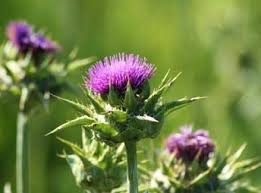
Milk Thistle for Pets

MILK THISTLE FOR PETS

By Rodney Habib,  Dogs Naturally Magazine and Pet Wellbeing

Milk Thistle is a well-known ‘liver herb’ for both people and pets. It can be used to support general liver health and detoxification, and has an overall excellent safety* profile.  A company called Pet Wellbeing offers a full-spectrum Milk Thistle, extracted from the whole seeds.

Milk Thistle can provide natural support for pets experiencing:

  • Long or short term prescription drug administration
  • Fatty liver
  • Liver diseases
  • Cholestasis (bile obstruction from liver to small intestine)
  • Cancer (including liver cancer)
  • Diabetes (with careful monitoring of blood sugar levels)

Milk Thistle is commonly given to pets while concurrently administering prescription drugs. Examples include: treatment for Heartworm, pain medications, steroids, and a vast number of other medications that can affect the liver. The liver is the organ with a primary role in metabolizing drugs and helping the body excrete toxic substances. If your pet is being given medications, some liver support is highly recommended.

So how does it work?

Milk Thistle helps protect and strengthen liver cells, stimulates their repair and regeneration, and even promotes production of new liver cells. Milk Thistle is an excellent herb for supporting general detoxification as well as recovery after infections.

Milk Thistle is often prepared in an alcohol base for optimizing extraction of its beneficial compounds; however, alcohol is not ideal for our pets. Pet Wellbeing Milk Thistle is first alcohol-extracted to ensure potency, and then the alcohol is removed and replaced with glycerin, providing a safe, alcohol-free product for your pet. Milk Thistle is gentle enough for long-term use.

Additional Uses

Milk thistle not only helps treat and prevent liver disease. Below is a list of treatment claims linked to the plant:

  • Kidney disease: If there has been kidney damage to your pet because of an infection milk thistle has been show to greatly decrease the amount of time it takes your pet to heal. • Pancreatitis: Although rare in cats, pancreatitis is very common in dogs. Milk thistle can be given to your dog and cat to help alleviate the symptoms.
  • Cancer: Milk thistle has been shown to decrease the effects of cancer in a pet’s body. While there haven’t been many studies done, there have been enough that it has shown improvement and helps protect against the potential for cancer in your pet.
  • Diabetes: Pets suffering from diabetes that are given milk thistle at least once per week have been shown to not have to have nearly the amount of insulin that they would have had to take otherwise.

Clearly, milk thistle has an array of positive effects throughout the body.

However, milk thistle should not be used as a preventative, or a “just in case”; rather, it should be used as a means of cleansing the liver after exposure to toxins (i.e. drugs, vaccines, chemicals, etc.) or as a treatment to liver damage. Milk thistle stimulates the growth of new liver cells in order to replace those that are dead or dying, and helps protect against toxins which could cause further damage.

Remember, medicinal herbs shouldn’t be used for extended periods of time.  Gregory L. Tilford and Mary L. Wulff explain in their book entitled Herbs for Pets: The Natural Way to Enhance your Pet’s Life: “Despite much of the publicity that has been generated about this ‘wonder herb’, milk thistle should not be used as a daily food supplement. Milk thistle is a medicine that is best reserved for situations in which the liver is already under abnormal stress.” Most holistic doctors feel that milk thistle should be administered for 3-6 weeks with a 1-3 week break.

Also, pregnant and lactating pets should not be given milk thistle because the research is still inconclusive.

You can find milk thistle in most health food stores or health sections of your local grocery store. It can be found in capsule, tablet and tincture forms.

The usual recommended extract of milk thistle contains 70 to 80 percent silymarin. Each extract should be labeled with the silymarin percent. The tincture can be administered at a starting dose of 1/4 tsp. per 20lbs of animal’s body weight per day. The daily dosage should be taken in 2-4 equally divided doses. With the powder format, administer 2-5mg per 1lb of the animal’s body weight, 2 to 3 times per day. Read labels carefully, discuss dosages and, although there are no known drug interactions, it’s always important to consult with your veterinarian.

 *If your pet is on any medications, always inform their vet of any natural remedies or supplements that are being considered for use, to avoid possible drug-herb interference.

You can read more about Milk Thistle and order it with the URL below:

http://www.petwellbeing.com/products/dog-liver-disease?gclid=CImb4cf6g8UCFQqEfgodhTQA_w#description


Milk Thistle for Cat Liver Disease

  • Helps maintain liver health in cats
  • Health support during use of drugs (like chemotherapy)
  • Helps support regeneration of damaged liver cells
  Milk Thistle for Dog Liver Disease
Essential for dogs with liver disease & dogs taking medications such as:

  • Steroids
  • Heartworm prevention
  • Pain or anti-inflammatory medications

Milk Thistle

WALKING YOUR DOG WITH RETRACTABLE LEASHES

Please don't walk me with a retractable leash !
Please don’t walk me with a retractable leash !

By Dr. Becker and recommendation by Diane Weinmann

A retractable leash is not so much a leash as it is a length of thin cord wound around a spring-loaded device housed inside a plastic handle. The handles of most retractable leashes are designed to fit comfortably in a human hand. A button on the handle controls how much of the cord is extended.

Retractable leashes are popular primarily because they aren’t as confining as regular leashes, allowing dogs more freedom to sniff and poke around on walks. But unfortunately, there are many downsides to this type of leash.

10 Reasons Not to Use a Retractable Leash

  1. The length of retractable leashes, some of which can extend up to 26 feet, allows dogs to get far enough away from their humans that a situation can quickly turn dangerous. A dog on a retractable leash is often able to run into the middle of the street, for example, or make uninvited contact with other dogs or people.
  2. In the above scenario, or one in which your pet is being approached by an aggressive dog, it is nearly impossible to get control of the situation if the need arises. It’s much easier to regain control of – or protect — a dog at the end of a six-foot standard flat leash than it is if he’s 20 or so feet away at the end of what amounts to a thin string.
  3. The thin cord of a retractable leash can break – especially when a powerful dog is on the other end of it. If a strong, good-sized dog takes off at full speed, the cord can snap. Not only can that put the dog and whatever he may be chasing in danger, but also the cord can snap back and injure the human at the other end.
  4. If a dog walker gets tangled up in the cord of a retractable leash, or grabs it in an attempt to reel in their dog, it can result in burns, cuts, and even amputation. In addition, many people have been pulled right off their feet by a dog that reaches the end of the leash and keeps going. This can result in bruises, “road rash,” broken bones, and worse.

5 .Dogs have also received terrible injuries as a result of the sudden jerk on their neck that occurs when they run out the leash, including neck wounds, lacerated tracheas, and injuries to the spine.

  1. Retractable leashes allow dogs more freedom to pull at the end of them, which can look like aggression to another dog who may decide to “fight back.”
  2. The handles of retractable leashes are bulky and can be easily pulled out of human hands, resulting in a runaway dog.

8.Along those same lines, many dogs – especially fearful ones – are terrorized by the sound of a dropped retractable leash handle and may take off running, which is dangerous enough. To make matters worse, the object of the poor dog’s fear is then “chasing” her, and if the leash is retracting as she runs, the handle is gaining ground on her – she can’t escape it. Even if this scenario ultimately ends without physical harm to the dog (or anyone else), it can create lingering fear in the dog not only of leashes, but also of being walked.

9.Retractable leashes, like most retractable devices, have a tendency to malfunction over time, either refusing to extend, refusing to retract, or unspooling at will.

10.Retractable leashes are an especially bad idea for dogs that haven’t been trained to walk politely on a regular leash. By their very nature, retractables train dogs to pull while on leash, because they learn that pulling extends the lead.

If your dog is well trained, gentle mannered and smart enough to master a regular leash and a retractable leash without being confused, you could be one of the rare guardians that can walk your pooch on any kind of leash without increasing risks to either one of you.

Recommendation – don’t use them!

I can tell you from personal experience that our retractable leash broke out on a walk and the panic that I felt in my heart is not worth it.  Not to mention, I repeatedly received nasty cuts from the leash.  I realize I am not the most coordinated person but I will not willingly ever use that type of leash again.  Believe it or not, I use a horse lunging line to walk my dog.  It has a handle like any other leash but is extremely long.  The extra length helps me not be pulled by my husky (we all know pulling is in their DNA) which in turn, is easier on my arthritic knees.   I simply keep the extra length of leash looped in my hand and when I need to let it out a little or pull it in– it is very easy.   With this type of “leash” I am able to immediately curtail by dog’s wandering on our walk especially if someone is passing us or if he should not be walking on a strip of lawn that has been chemically treated.  Dogs love to smell grass, trees and fire hydrants—that’s all part of the fun of going for a walk.  They get to experience a different part of the world.  Let them enjoy it safely !

Echinacea – Immune System Booster for Dogs

You notice your dog is suddenly not himself.

He’s dragging himself around and doesn’t have that typical bright look in his eye.

Echinacea-- the herb of choice for an immune system boost
Echinacea– the herb of choice for an immune system boost

Clearly, his immune system is fighting something.

Do you reach for the echinacea?


What Is Echinacea?

Here’s an interesting bit of trivia.  Echinacea species is part of the sunflower family. Echinacea (purple coneflower) was “discovered” in the late 1800’s by a traveling salesman named Joseph Meyer. He learned about it from the Plains Indians while traveling. Meyer brewed it up as an alcohol tincture and sold it as a cure-all. He even proved its effectiveness by drinking his tonic and letting rattlesnakes bite him. He never got sick … and that was the start of the phrase “snake oil salesman.”

Like Joseph Meyer, you may also know echinacea is a great immune booster … and that’s certainly true. But how you use echinacea will determine how well it works for your dog. So first, you need to understand how echinacea works.

How Does Echinacea Boost The Immune System?

There are a lot of immune-boosting herbs and they work in different ways. The way echinacea works is really interesting.

First, it contains echinacoside, a natural antibiotic that works the same as penicillin; so it can kill a broad range of viruses, bacteria, fungi, and protozoa. This makes it a really valuable herb to have around for wound healing and sick dogs. Echinacea also contains echinacein, which protects against germy attacks by neutralizing the tissue-dissolving enzyme hyaluronidase, which germs produce.

If you like technical explanations, echinacea can increase macrophage activation — by increasing production of interferon gamma. In addition, one study showed that Echinacea extracts can boost T-cell production by up to 30 percent more than immune boosting drugs. Echinacea also increases production of the chemokines interleukin-8 and MCP-1, which enhance the migration of immune cells to the site of infection.

 So What Does All That Mean?

When your dog is exposed to kennel cough or bacteria his immune system fires up its defenses to fight those bugs.  Echinacea works the same way but it actually offers no threat to the body at all.

So when you give your dog echinacea, his immune system perceives it as a threat and powers up. But because echinacea isn’t harmful to the body at all, the immune system has nothing to attack … so it stays charged up on standby, waiting for a threat to arrive so it can pounce on it.

But there’s a downside to this type of immune booster …

Sooner or later, your dog’s immune system figures out you’ve been yanking its chain and stops responding to the echinacea.

When you’re using immune boosters like echinacea, it’s a good idea to use them off and on … or your dog’s immune system will catch on to your trickery. Herbalist Greg Tilford recommends five days on and two to three days off.

When you take this time off, your dog’s immune system will forget all about that false threat and you can pull its leg over and over again, keeping it on high alert.

 Timing Is Everything

Timing is critical to success. To work, echinacea must be given while your dog is incubating sickness, not when he’s full-out sick. So it’s important to look at and feel your dog every day to catch the early signs of illness – then you can jump on the echinacea and know it will help him. Once your dog shows full-out symptoms of illness, his immune system will already be responding, so there’s no point in giving him echinacea.

The key to echinacea is ramping up the immune system before illness strikes!

Consider adding echinacea daily for a week or two, then a few days off.

Some studies show that daily doses of echinacea can extend lifespan and reduce the growth of cancer cells, so it’s an important addition to your dog’s diet. Or you can give it to your dog when he’s traveling, under stress or any other time when his immune system could come under attack.

 Is Echinacea Safe? That Depends!

Some dogs can be sensitive to the antigens in echinacea and you may see allergy symptoms. These dogs shouldn’t take echinacea. Also, many dogs suffer from immune mediated diseases and echinacea can aggravate these diseases. So if your dog has this type of chronic disease, it’s best to check with your holistic vet before giving him echinacea.   This would include any disease where the immune system actually works against itself, such as in multiple sclerosis, leukosis (where an overpopulation of white blood cells already exists), diabetes mellitus, feline AIDS, or any condition which involves an increased immune response.  When used in the presence of any of these diseases, echinacea can have aggravating effects.

It’s important to understand the power of echinacea really relies on a healthy immune system. If your dog is healthy, then echinacea will work great to boost his ability to fight disease before it happens.

Remember– echinacea’s roles are always complimentary to a healthy immune  system.   Consult your holistic veterinarian if you are uncertain of your animal’s level of disease resistence, before using echinacea.

How Much Should I Give?

There are two main varieties of echinacea: purpurea and angustifolia. They’re similar, but also have complementary properties. Formulas that use both are more likely to be effective. It’s also worth noting that most of echinacea’s immune boosting power is in the seeds and root.  For dogs, give 12 to 25 drops of echinacea tincture, three times daily or follow directions on bottle.

Where you can buy it:animal apawicary

www.onlynaturalpet.com

Suggested Use

  • Depending on how acute the problem is should determine the amount and frequency of application.
  • This tincture may be mixed with food, put on a treat, applied with dropper or syringe directly into mouth (wash with hot water after touching mouth to avoid contaminating the bottle contents), or mixed with up to 1/2 cup of warm water.

Maintenance – Dose may be fewer drops, at a once per day dose

Immediate Problem or Infection – Dosage will get better results with a higher, more frequent application.

Pet Type Daily Dosage
Cat & Small Dogs 10 – 20 Drops (0.25 mL – 0.5 mL) 1 – 2 times daily
Medium & Large Dogs 20 – 40 Drops (0.5 mL – 1 mL) 1 – 2 times daily

by Greg Tilford  c.2010, Dogs Naturally Magazine and Diane Weinmann

Pet CPR

http://www.nbcmiami.com/news/local/Help-My-Pet-Isnt-Breathing-How-To-Administer-CPR-To-Your-Pet-300548141.html

CPR for your Dog

By Dr. Ian Kupkee

April is the American Red Cross’s Pet First Aid Awareness Month. What better time to go over the basics of administering CPR to your pet?

Let me start by saying I hope my readers never need this information. No pet parent wants to think about the possibility that their pet might stop breathing and collapse. Unfortunately, the unthinkable can, and sometimes does, happen. Knowing the basics of CPR can give pet owners the confidence needed to stay calm and work the problem in a life or death situation.

Be Prepared

One of the basic elements of pet CPR is the chest compression. I’ll get to the details in a moment, but before administering chest compressions, you must first be able to locate your pet’s heartbeat. In the spirit of preparedness, it’s a good idea to learn how to do this before an emergency strikes. When your pet is lying on her right side, the heart will be facing upward. Gently pull the front leg back, and feel for the heartbeat near what we would call the armpit. You can also find a pulse at the femoral artery, but the heartbeat is the easiest to find. This activity can easily be incorporated into routine down time with your pet. You can take your time, and your pet will simply think she is getting a massage! The more you practice, the more easily you will be able to locate your pet’s heartbeat. Be prepared. You don’t want to waste time finding it in an emergency situation when every second counts

The ABC’s of CPR

Now let’s imagine a worst-case scenario. Fluffy has collapsed. First, call for help. If you can perform CPR while someone else drives you to the vet, you will greatly improve your pet’s chances. Next, remember your ABC’s. In addition to being very easy to remember, in rescue medicine, ABC is an acronym: Airway Breathing Compression

Check to see if she is breathing by watching for a rise and fall of the chest, and putting your face close to her mouth in an attempt to hear or feel any breaths. If she has indeed stopped breathing, you will need to open the Airway by lining up the head with the neck. Next, open the mouth, gently pull out the tongue, and have a look inside. You’re looking for a foreign body that might be blocking the Airway. If you see one, reach inside and pull it out. Get your hand out of the mouth quickly, as the pet may wake up startled, and frightened animals often bite. If there’s nothing there, you’ll need to start rescue Breathing. Hold the pet’s muzzle closed, put your mouth over the nose of a large dog, or the nose and mouth of a small dog or cat. Give four to five quick rescue Breaths – not too deeply, just enough to make the chest rise. Make sure the chest falls between Breaths. Check for a heartbeat, and if you don’t feel one, you’ll need to start chest Compressions.

Before beginning chest Compressions, be sure Fluffy is lying on her right side, so that the heart faces upward. Place the heel of your hand over the heart, lock your hands together, straighten the arms and give 30 rapid chest Compressions. For a large dog, Compressions should go down about two to three inches. For small dogs and cats, a half inch to full inch is an adequate Compression. After your 30 Compressions give two more rescue breaths, then resume chest compressions. This is called a cycle, and is defined by 30 compressions, followed by two rescue breaths. After four cycles – or about one minute – check again for a heartbeat and signs of independant breathing. If you can’t find either, keep going – 30 compressions, two rescue breaths.

You can continue for as long as 20 minutes, but by then, you really need to be at your vet’s office or an emergency clinic if you want to give your pet the best chance of survival.

This truncated recap can be printed out and placed in your pet’s first aid kit – Know how to find your pet’s heartbeat in advance. – Know your ABC’s: Airway, Breathing, Compression. – In an emergency situation, call for help and get someone to drive you to the vet. -Lie your pet on the right side. -Quickly check for heartbeat and breathing -Align the head and neck -Pull the tongue out -Look inside for a foreign body -Close the muzzle, give 4-5 rescue breaths -Check for signs of life -Give 30 chest compressions -Give two rescue breaths -Repeat three more times -Check for signs of life -Keep going if needed

Remember, your can really increase your pet’s chances if you do this on the way to the vet. Even if you are able to revive your pet at home, get her to the vet for follow up care and observation. Diagnostics performed in the wake of an emergency can give your veterinarian an idea as to what caused the crisis in the first place. There is nothing quite like the rush one gets from successfully administering CPR. That being said, you’re not likely to want to do it again anytime soon.

http://www.nbcmiami.com/news/local/Help-My-Pet-Isnt-Breathing-How-To-Administer-CPR-To-Your-Pet-300548141.html

dog with vet
dog with vet


TREATS FOR DOGS WITH SPECIAL NEEDS

Compliments of Animal Wellness Magazine

If your dog has a health issue such as arthritis, cancer or diabetes, you need to watch what they eat.  Being certified in canine nutrition I know that providing healthy food and treats for your pet is your first defense against disease.

Good, healthy food and treats please!

The treats in this article are easy to make – just refer to the chart at the end of the article to find your dog’s condition, select from the ingredients specified, then follow the instructions for mixing and baking.

 Instructions:

  1. Choose four cups of whole flour. You can use one flour or a combination.

2.Choose 1½ cups of filling. Have fun with it. Depending on the flour/s used, additional liquid may be needed.

3.Choose 2 teaspoons of healing spices.

4.Combine all ingredients in a food processor or blender, until the dough pulls away from the side of the bowl. This recipe can also be mixed by hand.

5.Preheat your oven to 325°F. Cover a large cookie sheet with parchment paper, for easy cleanup.

6.Turn out dough onto a lightly floured surface and knead well.

7.Roll out and cut the dough into desired shapes using cookie cutters or cut it into squares. You can also take small pieces of dough, roll them out to the thickness of a crayon, and use a sharp knife to cut pieces appropriate to the size of your dog.

8.Bake for 20 minutes, then turn the oven down to 175°F and bake for 40 more minutes. Turn the oven off and allow biscuits to cool completely before removing.

9.Store in an airtight container or Ziploc bag.

Treat Ingredients for Common Conditions

Health Issue Whole Flour Filling Healing Spices
Arthritis Oats, brown rice, chia, quinoa, coconut Pumpkin puree Ginger, turmeric
Cancer Chickpea, sweet potato, oats Fruit and/or vegetable mash, including apples, blueberries, broccoli, carrots, green beans, pumpkin, and/or shiitake mushrooms Cinnamon, carob, turmeric, green tea
Diabetes Brown rice, quinoa, oats Applesauce, green vegetables, pumpkin puree Cinnamon, oregano, thyme
Gastrointestinal problems Oats, chia, coconut Applesauce,  pumpkin puree Cinnamon, carob, ginger, turmeric, dill
Heart Brown rice, oats, sweet potato Broccoli, carrots, green beans, squash, blueberries Cinnamon, oregano, turmeric, green tea
Kidney Brown rice, oats Green beans, squash, turnips, zucchini, carrots, cranberries Cinnamon, ginger, parsley
Liver Quinoa, oats, coconut Shiitake mushrooms, broccoli Ginger, parsley, turmeric


Rocky River Book Festival April 25th 10-3PM

A Tail of Hope's Faith by Diane Weinmann
A Tail of Hope’s Faith by Diane Weinmann

Book Festival Author Flyer – 2015

I will be signing my book  A Tail of Hope’s Faith at the Rocky River Book Festival on Saturday April 25th from 10:00-3:00pm

Note the location of the Rocky River Public Library Book Festival

To accommodate the crowd, our Book Festival will be held at:

Don Umerley Civic Center

Auditorium

21016 Hilliard Blvd.

Rocky River, OH 44116

(It’s behind Rocky River City Hall which is located on the corner of Hilliard Blvd. and Wagar Road.)


Herbal-First-Aid-Kit

As seen in Dogs Natural Magazine by Dana Scott

You read that right … you can make a first aid kit out of nothing but herbs.

Herbs can be so powerful and effective, they’re a great addition to any dog’s first aid kit!

And the best part is, unlike the usual antiseptic, antibacterial, immune-suppressing products found in most first aid kits, these amazing herbs will help your dog out not only in the short term, but they’ll protect his immune system from the long-term damage those harsh products can cause.

So are you ready to to learn about the herbs you’ll want to carry in your non-medicine cabinet?

I thought you might be!

Here are the top five essential topical herbs you should have in your canine first aid kit.

Building Your Herbal First Aid Kid

Before you build your kit, consider what trouble your dog can get into. Things you might want to be prepared for include:

Cuts and scrapes

Insect bites

Rashes

Muscle aches and pain

Bleeding and bruises

Burns

Abscesses

Your herbal first aid kit can handle more than just cuts and scrapes, so why not be prepared for other common issues too? When you’re prepared, then you’ll find it easier to avoid chemical-based products.

Here’s a list of all-natural, safe and effective herbs you’ll want to have in your kit.

Calendula (Calendula officinalis)

Calendula heals skin fast! It helps regenerate skin and can even prevent scarring. It also has antibacterial, anti fungal and antiviral properties, to make sure the wound stays clean and pathogen-free.

Calendula can be applied as a salve or tea to cuts, burns, bites, scrapes, abscesses and fungal infections. Just be careful if applying it to open wounds that look infected … calendula is such a good wound healer, it can heal infected wounds like abscesses so quickly that the infection can’t get out. So just make sure the wound isn’t draining before using calendula.

Comfrey (Symphytum officinale)

Comfrey is well known as “bone knit.” It’s earned this name because of its great affinity for fast tissue healing, including skin, muscle, tendons and even bones.

Comfrey can be applied topically on the affected area as a salve, poultice or tea to speed the healing process for sore joints, burns and swelling. Dried comfrey can also be used as a styptic to stop bleeding – just apply the dried herb directly to the skin … and make sure you have it on hand when cutting nails!

Plantain (Plantago major)

Plantain is a common weed found most anywhere in North America, where it likes to grow alongside paths and roads. Plantain is a great wound healer and anti-inflammatory and can be used to treat insect bites and stings, poison ivy and burns. It can even work as a drawing agent, pulling foreign bodies out of paws and ears.

Plantain can be used directly on the affected area as a poultice. To make the poultice, just chew up some leaves (look down, they’re everywhere!) and apply them right to your dog’s skin! Plantain works great for bug bites.

Aloe (Aloe barbadensis)

Aloe vera is renowned for its ability to soothe irritated skin. It’s an easy-to-grow potted plant that many people keep in their homes for the treatment of burns … and it works great for healing burns and relieving the pain and inflammation they cause, especially when applied right away. Aloe can also promote wound healing in soft tissue; it reduces inflammation and increases blood supply.

Aloe works best if you just apply the fresh plant, because bacteria can grow in commercial aloe products or juices. Avoid using aloe on deep or infected wounds, or severe burns.

Yarrow (Achillea millefolium)

Yarrow is a great addition to your first aid kit. It can be used as a salve or poultice, or the fresh plant can also be used.

Yarrow is anti-inflammatory, helps builds new tissue and  stop bleeding, so it’s most effective when used to treat bruises, sprains and strains. Yarrow also protects against bacteria and fungi, so it’s also a great choice for cuts, bites, burns and stings. It can be used as a salve, poultice or tea.

Preparing A Homemade Herbal Salve

Salves are very easy to prepare and contain three basic ingredients:

  • Herbs (8 to 10 oz)
  • Coconut Oil (2 to 3 cups)
  • Beeswax (1 oz )

You can make your salve with just one herb or several herbs. Try to find organic herbs whenever possible and buy the herbs ground … the finer they’re ground up, the more healing properties you’ll get in the salve. If you’re using whole herbs, then just grind them up into a fine powder in your coffee grinder, Vitamix or Magic Bullet before using for your salve.

Place the coconut oil and powdered herbs in a small crockpot set on low or warm, a dehydrator or double boiler set to very low (shoot for 100 to 140 degrees).  Let them warm for a day or two.

The coconut oil will soon take on the color of the herb you’re using, which means that the herbal properties have transferred to the oil. Once your oil has reached this color, place a strainer and a few layers of cheesecloth over a bowl and strain the herbs from the oil.

Take the bowl of strained oil  and mix in 1 ounce of beeswax for every 8 ounces of strained oil. Put the beeswax and oil back into your crockpot until the beeswax melts into the oil, then remove it from the heat.

Pour the salve into a wide jar and store it in a warm cupboard, where it’s ready to use!

Preparing A Topical Herbal Tea

To prepare an herbal tea, place 8 tablespoons fresh herb or 4 tablespoons dried herb in a teapot, then add a quart of boiling water.

Allow it to steep for 20 minutes, strain out the herb and allow the water to cool.

Allow the tea to cool, then pour it into a spray bottle and spritz it on your dog’s affected skin three to five times a day.

Keep the remaining tea in the fridge, where it will keep for a few days.

That’s it! Five simple, easy herbs to get you started.

NOW IF YOU WANT MORE INFORMATION CHECK OUT THE ONLINE CLASS BELOW…..

This six week long, live and interactive course will give you all the tools you need to make your own herbal  supplements to save money and give your dog a leg up on health. You’ll leave this course with:

1) A solid plan for using herbs for detoxification and health,

2) A good repertory of medicinal herbs you can start using to help your dog with illness and pain,
3) A list of critical herbs that can prevent cancer and other common diseases in your dog   4) A guide to growing and preparing your own herbs at home.   Don’t wait to long to sign up … we’ve decided to keep this class small because it will be interactive, so it will fill fast!

http://www.dogsnaturallymagazine.com/offers/herbology-course-2/?inf_contact_key=7b4892e526d371e094957446ec116cda1f88a93496def739957bf47fdfeb5df8

Herbal First Aid by Dogs Naturally Magazine (Dana Scott)

Animal Hospice

Animal Hospice

That terrible time has finally arrived.  The time every pet parent dreads.  Your beloved animal family member is showing their age, is significantly slowing down, has a debilitating disease or has been diagnosed as terminal.  What do you do?

Do you want to make your pet’s last days memorable?  Are you interested in finding holistic ways to help them in their time of need?  How about trying to extend the time they have left ensuring their quality of life is still acceptable.   Maybe you think that taking them to the vet to have them euthanized before they suffer too much is the kindest thing you can do. There is not an easy answer to any of these questions.   Before you are overwhelmed with worry, let me shed some light on your options and put some facts into perspective to help you make the best decision for your pet, yourself and your family.  Knowing what you would do ahead of time relieves some of the burden when the actual event occurs.

First let me explain a few words you may hear but not completely understand.  Palliative care is provided when no hope or cure is available for your pet’s health condition.  It tries to provide the best quality of life for your loved one.  This type of care does not necessarily mean your pet is terminal but may require some special attention and help.

End of life care is the term given to any care given to a pet that has been diagnosed as terminal.  If you provide care for your beloved animal until they are euthanized, this is considered end of life care entailing palliative care.

Let me give you an example of what I mean.  My horse had a severe case of colic but as the vet was treating her he found that she had blood in her stomach caused by a tumor that in turn resulted in giving her colic.

Colic is an illness where her intestines have a blockage, impaction or are twisted.  The vet recommended euthanizing her immediately.  I chose to let her recover from the colic and see how her quality of life was after that.  Amazing, she recovered immediately and acted like nothing was wrong with her.  I discussed the issues and care I could provide myself with my vet.  I expressed that I wanted to give her a good quality of life until she displayed symptoms that were unmanageable.  I didn’t want her to be in pain for any significant amount of time.   So we had four wonderful months together making memories.  During those months I periodically had to give her a pain shot which my vet graciously taught me to do.  It felt wonderful to be able to care for her and ensure our last days together were memorable.

With Animal hospice often times considerable effort and time will be required of the pet owner.  Are you up for the challenge?   Be assured no one will judge you one way or the other.  Many reasons will factor into what you choose to do for your beloved animal friend.  Maybe you can’t get away from work, your health won’t allow you to care for your pet, or it is financially not possible.  It could be you are emotionally overwhelmed at the thought of caring for your pet for an indefinite period of time.   However, if you have the time and ability to learn new things, providing animal hospice for your pet may be the right choice for you.

Ask your vet about the services they can provide to you in this situation.  Many vets may not wish to provide animal hospice because they are not staffed to be able to provide round the clock care.   You do have alternatives.  You can learn some holistic healing modalities yourself or can hire someone to assist you.  If you choose, ask your vet for help provide pain relief medicine for your pet ahead of time to make it through at least one night until you can get to medical help.

There are companies that provide animal hospice in your home.   One company in particular, in the Cleveland area (Joycares Personalize Pet Care), uses both traditional western medicines along with holistic healing modalities to provide a well- rounded compliment of care for your pet.  When the end does come, and it always does, they can euthanize in your pet’s home to avoid the last nasty trip to the vet when your pet doesn’t transition into spirit on their own.

Here is a list of some holistic healing modalities to assist your pet to be more comfortable when they are ill:

Telepathic Animal Communications

Healing Touch for Animals

Bach Flower Essences

TTouch

Essential Oils-Aromatherapy

Tuning Forks

As you can see they are many holistic healing modalities that can assist you and your pet through their transition period.  Please know that they are no right or wrong answers to how you decide to face the fact that your beloved pet is ill.  Only you can know what resonates with you and your lifestyle when it comes to providing care for your pet.  Please know that whatever method you choose when your pet is sick, your beloved animal companion will not judge you.   They accept decisions with an open heart. Why not ask them how they would like the situation handled?

As an animal communicator, I have spoken to many animals on this topic and have received a wide range of answers.  If possible, let your pet decide in the end what is best for them.  Some have very strong opinions on whether they wish assistance as they transition or want to try to leave their body on their own.  Many really cherish the time you spend (if you can) providing healing to them.  Some animals have told me they do not want you to fuss over them and they don’t want to cause you further inconvenience.  Your wonderful animal companions truly believe they are here to make your life easier, not harder.  As a well- loved member of your family don’t they deserve the same care you would provide to anyone else?  Only you can know what is in your heart.

Rainbow Bridge
Rainbow Bridge
Healing Hands using Healing Touch for Animals or Reiki
Hope enjoying the sun while in animal hospice

Conventional vs Alternative Animal Healing Methods, part 2

Photo courtesy of Natural Healers (http://www.naturalhealers.com/alternative-medicine/animal-therapy/)

In last week’s blog I discussed the differences between traditional veterinary, alternative, complementary and integrative care.  In today’s blog I am going to explain some treatment options that fall under alternative and complementary care.

A holistic vet can bring a wide variety of treatment options that may have a wide encompassing affect than just using traditional veterinary medicine.  After all, we are simply seeking the best for our pets, right?  A holistically trained vet or alternative therapy provider can bring the following treatment options to the table for consideration and use with your pet which can be used as a stand- alone healing modality or in conjunction with traditional veterinary care:

Aromatherapy using therapy grade essential oils to heal emotional and physical issues can be used  alone or with other healing techniques.

Animal communications can be used to heal emotional issues.  It uses telepathy to communicate a thought from one person/animal to another. Technically, telepathy is the communication between beings using thoughts, feelings, desires, or other means that cannot be understood in terms of known scientific laws.  Telepathy is considered a form of extra-sensory perception and is often connected to various paranormal phenomena such as precognition, clairvoyance and empathy.

Bach flower essences are all natural, very dilute solutions made from spring water, an alcohol preservative, and the parts of specific flowers. They are used to help balance the emotions and bring about a state of equilibrium in living organisms, and have been successfully used with people and animals to treat a specific emotion or state of mind such as fear, anger, apathy, anxiety, anger, grief, etc.  This healing technique does not negatively interact any other healing modalities.

A Certified Nutritionist can recommend changes including mineral supplements, enzymes, vitamins, fatty  and amino acids to make up nutritional shortfalls in the diet which will complement any other medical steps.

Massage uses the sensation of touch to engage your pet’s mind. A light touch brings awareness to the coat and upper layers of connective tissue and surrounding superficial muscles. Stronger pressure heightens awareness of deeper muscles, tendons, joints and ligaments. Joint mobilization promotes body-movement awareness and gives the animal permission for exploration of movement to rediscover his “place of comfort.”

Chiropractic care maintains each joint, especially the spine.  By freeing the spinal nervous system which is connected to the brain, they can establish pain free flow of energy from the brain through to the extremities.

Energy-based body work which includes: TTouch, Healing Touch for Animals, Reiki, and acupressure to elicit a state of well-being emotionally or physically and is great for relieving pain and stress.

Healing with crystals uses the energy of the crystal to invoke both physical and emotional healing.

Color therapy has been known to strengthen, cleanse, invigorate, balance and may regulate metabolic processes positively influencing bodily functions and moods.  It harnesses the nutritional aspects of color to provide emotional, physical, anti-aging, and spiritual benefits.

Certified Herbalist using Traditional Chinese Medicine (TCM) uses plant remedies to treat a variety of ailments. For example, alfalfa is used for arthritis and allergies.

Acupuncture uses very fine needles inserted into specific areas on your pet’s body to balance the flow of energy.

Homeopathic remedies are used to jumpstart the animal’s own healing response with very diluted substances that cause the same symptoms the dog is suffering from. For instance, a dog with diarrhea would be given tiny amounts of a substance that causes diarrhea.

Be aware that some veterinarians don’t care for alternative therapies since, unlike conventional veterinary medicine; most of them haven’t been scientifically proven to work.  However, that doesn’t mean they’re ineffective; it just means they haven’t been put to the test in well-conducted studies.

There are plenty of vets who are open to the alternative approach. Some veterinary schools now provide studies in holistic medicine, and some vets offer alternative therapies alongside conventional treatments as they see the benefit in treating the whole animal not just the disease.  Why not try everything possible to bring your beloved animal companion into wellness?