Dog has a Runny Nose??—Check it out!

By Dr. Karen Becker DVM

Many pet parents believe if their dog’s nose is warm or dry, it means they’re sick. Actually, that’s a myth. A warm dry nose by itself doesn’t mean your pooch is under the weather. Normal, healthy dog noses go from moist and cool to warm and dry and back again quite easily.

However, it’s important to distinguish between a moist nose and a runny nose. Runny noses aren’t nearly as common in dogs as they are in children (thankfully), but they do happen, and for a variety of reasons. If your four-legged family member develops nasal discharge (the technical name for a runny nose), it’s important to investigate the cause.

Relatively Benign Reasons Your Dog Might Have a Runny Nose

In some dogs, an entirely harmless reason for occasional colorless, odorless, watery discharge from the nose can be exercise or excitement.

Another cause of this type of runny nose is irritation of the nasal cavities from seasonal or environmental allergies, or an inhaled foreign object. If your dog has been playing outdoors and suddenly develops nasal discharge, especially with sneezing, I recommend making an appointment with your veterinarian.

If you notice your dog’s nose tends to run whenever spring rolls around, or each time you light a scented candle in your home (which I don’t recommend, by the way), she could be dealing with seasonal allergies or an irritant in her indoor environment. Household chemicals that trigger a runny nose and sneezing in people can cause the same symptoms in dogs. Indoor irritants like cologne, cigarette smoke, household cleaners, fiberglass, pesticides and aerosol deodorants can trigger a reaction in sensitive dogs.

Situations like these should be addressed to identify and eliminate or at least minimize triggers related to your pet’s nasal discharge. Seasonal and environmental allergies in dogs tend to start out mild, but grow progressively worse over time.

A seemingly harmless occasional runny nose caused by an allergen can turn into a significant allergic response, which in dogs is most often expressed through the skin. Intense itching, hot spots and other skin problems are very often the culmination of months or years of unaddressed allergies.

It’s also important to note that in brachycephalic breeds (dogs with flat or “pushed in” faces) the nasal passages are compressed. This can trigger a runny nose and other symptoms when there’s an upper respiratory infection or exposure to irritants. These breeds include the Boston Terrier, Bulldog, Cavalier King Charles Spaniel, Pekingese and the Pug.

5 Serious Causes of Nasal Discharge in Dogs

There are several more serious reasons for nasal discharge in dogs, most of which also involve sneezing, coughing or other symptoms. The following five potential causes for your dog’s runny nose require veterinary attention.

1. Foreign bodies — A “foreign body” in your dog’s nose means there’s something in there that shouldn’t be. For example, if your furry family member likes to dig in the dirt or obsessively sniffs the ground, chances are she’ll wind up with some soil, grass or the occasional bug up her nose.

This can cause her nose to run, and will also trigger sneezing to expel the foreign material. Hunting and sporting dogs who spend a lot of time outdoors running at full speed through natural settings can also wind up with odd things (e.g., twigs or sticks) up their nose.

Sneezing and nasal discharge are your dog’s body’s attempt to expel the foreign invader. Sometimes, however, medical intervention is required. Signs of the presence of a foreign object in your dog’s nose include sneezing, pawing at the nose and nosebleeds.

You might also notice your pet’s breathing is noisier than normal, and there might be a visible bulge or lump on one side of the face or nose.

2. FoxtailsFoxtails are treacherous little plant awns that are ubiquitous in California, reported in almost every state west of the Mississippi and have recently spread to the east coast as well.

In late spring and early summer, foxtail plant heads turn brown and dry, and scatter across the landscape. The tiny spikes on the plant heads allow them to burrow into soil, and wildlife also helps spread them around. The foxtails can eventually make their way into the noses, eyes, ears, mouths and just about every other opening of a dog’s body. They can get deep into your dog’s nostril or ear canal or under the skin in no time, and often too fast for you to notice them.

If your dog’s nose suddenly starts running and he’s sneezing uncontrollably, he could have a foxtail in his nose. If you suspect he’s been exposed to foxtails or is exhibiting suspicious symptoms, I recommend you consult your veterinarian or an emergency animal clinic as soon as possible.

3. Infections — Whereas bacterial and viral infections of the upper respiratory tract typically cause coughing, an infection caused by the opportunistic Aspergillus fungus causes sneezing and nasal discharge.

A nasal Aspergillus infection is thought to develop from direct contact with the fungus through the nose and sinuses, which occurs when a dog is exposed to outdoor dust, hay or grass clippings. Symptoms include pain and bleeding and/or discharge from the nose, sneezing and visible swelling.

In addition, an infected tooth or its root can cause sneezing and nasal discharge. In canines, the third upper premolar has roots that are very close to the nasal passages. If this tooth or one close by becomes infected, sneezing and nasal drainage can be the result.

4. Nasal tumors — Chronic nasal discharge and sneezing can be symptoms of a nasal tumor. These tumors are unfortunately fairly common in dogs, especially breeds with longer muzzles like the Collie. Second- and third-hand tobacco smoke has been identified as a significant cause of nasal cancer in pets. Most types of nasal tumors do not metastasize, but they do spread locally, destroying the structures of the nose.

5. Nasal mites — Nasal mites are microscopic little bugs that can take up residence in your dog’s nose and sinuses. They cause terrible itching in the nose, which triggers fits of sneezing, as well as chronic nasal discharge and even nosebleeds.

Your dog can get a nasal mite infestation by digging in the dirt with her face, or by going nose-to-nose with an infected dog. The mites can be identified by taking a nasal swab and looking at it under a microscope. If there is an infestation, the mites will be visible.

If you notice nasal discharge, swelling or an unpleasant odor from your dog’s nose or the area around it, or if she seems to be having trouble breathing or is making abnormal respiratory sounds, it’s time to make an urgent appointment with your veterinarian.


Ears have it!

By Dr. Karen Becker and  comment by Diane Weinmann

Recurring ear problems are very common in dogs. Otitis externa is the medical term for inflammation or infection of the outer canal of the ear, and some dogs are more prone to the condition than others. I suspect many persistent ear infections in dogs are treated, but never actually resolved. I also think we don’t talk enough about the importance of routine ear maintenance for canine companions.

There are two basic causes of ear problems in dogs: chronic inflammation, and infection. Untreated inflammation can lead to infection. If your dog’s ears are warm to the touch, red, swollen or itchy, but there’s little to no discharge, chances are the problem is inflammation. However, if one or more of those symptoms is present along with obvious discharge, it’s usually a sign of infection.

How Dogs’ Ears Become Inflamed

  1. The most common reason for ear inflammation in dogs is allergies. An allergic response to food or something in the environment can cause inflammation throughout your pet’s body, including the ears. A dog with allergy-related ear inflammation will sometimes run his head along furniture or the carpet trying to relieve his misery.

He may also scratch at his ears incessantly, or shake his head a lot. If you see any of these behaviors, check your dog’s ears for redness and swelling.

  1. Another cause of ear inflammation is moisture, also known as “swimmer’s ear.” We see this primarily during the summer months when dogs are outdoors playing in lakes, ponds and pools.

Wet ear canals and a warm body temperature are the perfect environment for inflammation and/or infection to develop. That’s why it’s important to thoroughly dry your dog’s ears each time he comes out of the water, has been outdoors in the rain or snow and after baths.

  1. The third major reason for ear problems is wax buildup. The presence of earwax is normal, but dogs have varying amounts. Some dogs need their ears cleaned daily, while others never have a buildup. Certain breeds produce more wax than others, such as Labradors and other retrievers who tend to love the water. If you have one of these breeds, you should get your dog accustomed to having her ears cleaned while she’s a puppy.

Other breeds, such as Bulldogs, Cocker Spaniels and Poodles can also produce an abundance of wax that needs regular attention.

When Inflammation Turns to Infection

Ear infections in dogs usually involve the outer canal, which is surprisingly deep. The medical term for these infections is otitis externa, but if the infection recurs or never really clears, we call it chronic otitis. There are a number of things that can cause otitis including:

  • Foreign material in the ear, such as from a plant like a foxtail
  • Water in the ear that creates a moist, warm environment
  • Excess glands in the ears that produce wax and sebum
  • Narrowing of the ear canal
  • Heavy, hanging ears

If your dog has an ear infection, it’s very important to identify whether it’s a bacterial or fungal infection, or both, in order to treat the problem effectively.

The Difference Between Fungal and Bacterial Ear Infections

By far, the most common cause of fungal ear infections in dogs is yeast. Yeast is always present on the bodies of animals, but when the immune system isn’t in prime condition, the fungus can grow out of control and cause an infection. Most dogs prone to yeast infections need to have their ears cleaned and dried frequently. If the problem seems chronic or there’s a persistent infection that just won’t clear up, there’s probably an underlying immunological cause that should be investigated.

For much more information on yeast, including how to deal with yeasty ears, view my video and article on yeast infections in dogs. Bacterial infections of the ear are actually more common than fungal infections. Bacteria are either pathogenic or nonpathogenic. Pathogenic bacteria are abnormal inhabitants of your pet’s body, picked up from an outside source, for example, contaminated pond water.

Nonpathogenic bacteria are typically staph bacteria that are normal inhabitants of your dog’s body. Occasionally these bacteria can overgrow and overwhelm the ear canal. Any normal, helpful bacteria can grow out of control and cause an infection in a dog with an underperforming immune system.

Why An Accurate Diagnosis Is so Important

Veterinarians diagnose yeast infections with cytology, which means looking at a smear of the ear debris under a microscope. An accurate diagnosis of a bacterial ear infection requires an ear culture. Your veterinarian will swab your dog’s ear and send the sample to a lab to determine what type of organism is present, and what medication will most effectively treat it. Never let your veterinarian simply guess at what bacteria is causing your pet’s ear infection. Instead, ask them to find out.

It’s very important to finish the medication your veterinarian prescribes, even if your dog’s ear infection seems to clear up before the medication is gone. Stopping the medication early can lead to regrowth of resistant organisms. In addition, while your dog is being treated for an ear infection, be sure to keep his ears clean and clear of gunk so the topical medication you put into the ears can reach the infected tissue.

Natural, Nontoxic Treatments for Bacterial Ear Infections

Unfortunately, these days more and more ear infection culture results are showing the presence of bacteria that are resistant to most conventional medications. These are cases in which complementary therapies are not only a last hope, but can provide highly effective, nontoxic relief.

One example: A 2016 study tested the effectiveness of manuka honey to treat bacterial ear infections in 15 dogs.1 Researchers applied 1 milliliter (mL) of medical grade honey in the dogs’ ears for 21 days. The results showed the honey “promoted rapid clinical progress,” with 70 percent of the dogs achieving a “clinical cure” between seven and 14 days, and 90 percent by day 21.

In addition, the bacteria-killing activity of the honey worked against all bacteria species tested, including multiple strains of drug-resistant bacteria. It’s important to note that it doesn’t appear the antimicrobial activity of honey is enough on its own to resolve every ear infection. Most of the dogs in the study had complete symptom relief by day 21; however, several still had bacterial infections.

Another remedy for resistant ear infections that’s receiving a lot of attention is medicinal clay. Green clay has been shown to effectively treat a variety of bacteria that have been implicated in chronic ear infections, including pseudomonas and MRSA.2

Preventing Ear Infections

As I mentioned earlier, some dogs are much more prone to ear infections than others. If your pet is one of the unlucky ones, I recommend checking his ears daily or every other day at a minimum. It’s wax, moisture or other debris collected in the outer ear canal that invites infection.

The solution is simple, but you must do it consistently: Clean your pet’s ears when they’re dirty. If his ears collect a lot of wax every day, they need to be cleaned every day. If his ears don’t produce much wax or other gunk you can clean them less often, but you should still check them every day and take action as soon as you see the ear canal isn’t 100 percent clean and dry.

If you think your dog might already have an ear infection, it’s important to make an appointment with your veterinarian before you begin a cleaning regimen. In many cases an infection leads to rupture of the eardrum, which requires special cleaning solutions and medications. For healthy canine ears, a few of my favorite cleaning agents include:

Witch hazel Organic apple cider vinegar mixed with an equal amount of purified water
Hydrogen peroxide, a few drops on a cotton round dabbed in coconut oil Green tea or calendula infusion (using cooled tea)
One drop of tea tree oil mixed with 1 tablespoon coconut oil (for dogs only — never cats) Colloidal silver

Please never use rubbing alcohol to clean your dog’s ears! It can cause burning and irritation, especially if the skin is inflamed. Use cotton balls or cotton rounds only to clean the inside of the ear canal. You can use cotton swabs to clean the outer area of the ear, but never inside the canal, as they can damage your dog’s eardrums.

The best method for cleaning most dogs’ ears is to saturate a cotton ball with cleaning solution and swab out the inside of the ear. Use as many cotton balls as necessary to remove all the dirt and debris. Another approach is to squirt a small amount of solution directly into the ear, then follow with cotton balls to wipe the ears clean. However, this method may make your dog shake her head wildly, drenching you in ear cleaning solution!

Just a few minutes spent cleaning and drying your pet’s ears as necessary (this means daily, in many cases) will make a huge difference in the frequency and severity of ear infections — especially in dogs who are prone to them.

Diane has many pet clients that have chronic ear issues.  She always recommends Dr. Melissa Shelton DVM essential oils.  The Canine ear spray is a great preventative treatment to avoid those nasty infections.

Canine Ear Spray

Ingredients:  Fractionated Coconut Oil, Water, Grain Alcohol, Essential Oils of Copaiba (Copaifera officinalis) , Lavender (Lavendula angustifolia), Lemongrass (Cymbopogon flexuosus), Melaleuca alternifolia, Citronella (Cymbopogon nardus), Clove (Syzygium aromaticum), Helichrysum (H. italicum), Rosemary (Rosmarinus officinalis Verbenone Chemotype), Lemon (Citrus limon), Frankincense (Boswellia carterii)

Canine Ear Spray is intended as a spray to be used with a variety of ear conditions in dogs.  Essential oils contained within this product exhibit anti-parasitic, anti-fungal, anti-bacterial, anti-tumoral, and anti-inflammatory properties.  In our veterinary hospital, the use of this spray has proven incredibly beneficial for dogs with chronic ear conditions, and especially those that are resistant to many traditional drugs and antibiotics.  Many of our patients were near surgical removal of the ear canal (Total Ear Canal Ablation or TECA surgery) prior to starting on the Canine Ear Spray.  In clinical use, we see great comfort with the use of the spray and also vast improvements in infection, swelling, and pigmentation.  A major benefit to a spray such as this – is that is actually supports a healthy immune system, instead of shutting the immune system off – as in the case with steroid use.

There are many factors that may contribute to your dog’s chronic, recurrent, or first time ear condition.  Please read more about other changes you can make in your dog’s lifestyle that will help you to combat chronic ear infections and allergies.

Directions for Use:

Shake well before each use.  Spray 1-3 pumps into the ear(s), once to twice a day.  You are not trying to saturate the ear canal or drip the solution into the ear canal directly.  Coating the outer surface of the ear and upper part of the exposed ear canal, will result in the “traveling” of this solution to deeper parts of the ear.  Monitor the ear tissues for any signs of irritation, and stop use if noted.  Generally this recipe is used for 2 weeks or longer.  Work with your veterinarian to determine frequency and length of use, based on response and recheck ear smear results.

This recipe has been used long term, for several months at a time or more when needed.  However, if irritation occurs, please discontinue use.  Although this new formulation of the Canine Ear Spray rarely creates irritations, if it does occur, placing Fractionated Coconut Oil into the ear and onto any irritated surfaces will help decrease any issues.  Fractionated Coconut Oil is safe for use in the ear – however we do not recommend filling the entire ear canal with it.

If your dog is very resistant to having a “spray” in the ear, you can spray the product onto your fingers and wipe gently into the ear and ear canal.  


To order

http://www.animaleo.info/canine-ear-spray.html

Hyperthyroidism in Cats

Hyperthyroidism in Cats

By Dr. Karen Becker

Recent research has revealed that yet another chemical substance found in households may be contributing to feline hyperthyroidism, a disease that affects a significant percentage of cats over the age of 10. The chemicals are called per- and polyfluoroalkyl substances (PFAS), and they are widely used as water and oil repellents. According to ScienceDaily:

“PFAS are a family of more than 3,000 structures of highly fluorinated chemicals used in industrial processes and consumer products, such as protective coatings for carpets, furniture and apparel, paper coatings, insecticide formulations, and other items.”1

PFAS are used in many industrial applications calling for nonstick or slick surfaces, such as food packaging, stain- and water-resistant fabrics, nonstick cookware and firefighting foam. These chemicals are now ubiquitous in our environment, having migrated into the air, household dust, food, soil, and ground, surface and drinking water.

Study Links PFAS Chemicals to Hyperthyroidism in Cats

For the study, a team of researchers at the California Environmental Protection Agency looked at blood levels of PFAS in two separate groups of Northern California kitties, most of which were at least 10 years old. The first group of 21 was evaluated between 2008 and 2010; the second group of 22 was sampled between 2012 and 2013.2

The researchers observed that the higher the blood levels of PFAS, the more likely the cat was to be hyperthyroid. One type of PFAS in particular, perfluorooctanoic acid (PFOA) was significantly higher in hyperthyroid kitties. These findings “… may indicate a possible link between PFAS levels and cat hyperthyroid, warranting a larger study for further investigation,” according to the research team.

In a bit of good news, the scientists noted a slight decline in PFAS blood levels between the first group of cats tested eight to 10 years ago, and the second group tested more recently. This mirrors recent results in humans as more companies phase out use of these chemicals, and presumably, as people gradually replace PFAS-treated household items.

Reducing Your Family’s and Pet’s Exposure to PFAS

Your best bet is to avoid all products that contain or were manufactured using PFAS, which will typically include products that are stain-resistant, waterproof or nonstick. From the Environmental Working Group:3

Find products that haven’t been pre-treated and skip optional stain-repellent treatment on new carpets and furniture
Cut back on fast food and greasy carryout food, since these foods often come in PFC-treated wrappers
Especially when buying outdoor gear, choose clothing that doesn’t carry Gore-Tex or Teflon tags, and be wary of all fabrics labeled stain- or water-repellent
Avoid nonstick pans and kitchen utensils — opt for stainless steel or cast iron instead
Pop popcorn the old-fashioned way, on the stovetop, since microwaveable popcorn bags are often coated with PFCs on the inside.
Choose personal care products without “PTFE” or “fluoro” ingredients; also avoid Oral-B Glide floss, which is made by Gore-Tex

It’s also important to filter your pet’s drinking water, and yours, to remove contaminants such as fluoride, chlorine, heavy metals and others. Household tap water typically contains enough toxic minerals, metals, chemicals and other unhealthy substances to damage your pet’s health long term.

Flame Retardants: Another Enemy of Indoor Kitties

Polybrominated diphenyl ethers (PBDEs), or flame retardants, are another type of household chemical that has been linked to overactive thyroid in cats, and a 2017 study confirmed the results of earlier studies that prove the high levels of PBDEs measured in indoor kitties are from house dust.4

PBDEs have been used since the 1970s in textiles, electronics and furniture to prevent them from burning, but like PFAS, they aren’t chemically bound to the product material, so they drift into the environment and cling to particles in the air such as house dust.

A number of these chemicals have been banned for use in household products, but they are extremely persistent and can leach into the environment for many years. Contaminated household dust can be inhaled as well as ingested, and can have an adverse effect on the health of kitties.

Brominated Flame Retardants Are Known Endocrine Disruptors

Prior studies of PBDE blood levels in cats have focused primarily on potential causes of feline hyperthyroidism, however, the intent of this study was to measure levels in healthy cats to establish their dust exposure.

The researchers took “paired samples” from the homes of each of the cats, meaning they took both dust samples and blood samples at the same time. They found evidence not only of brominated and chlorinated contaminants currently in use, but also chemicals that have been banned for decades. According to study co-author Jana Weiss, Ph.D.:

“By taking paired samples, we have greater insight into the environment that the cats live in. Moreover the cats in the study spent the majority of their time indoors and therefore air and dust in the home is expected to contribute more than the outdoor environment.”5

The study results are a heads up not only for cat guardians, but also anyone with small children, because both kitties and kiddos engage in a lot of “hand-to-mouth activities.”

“The brominated flame retardants that have been measured in cats are known endocrine disruptors. It’s particularly serious when small children ingest these substances because exposure during development can have consequences later in life, such as thyroid disease,” said Weiss.

Minimizing PDBE Exposure at Home

Most new foam products are not likely to have PBDEs added. If you have foam items in your home, office or vehicle that were purchased before 2005, however, they probably contain PBDEs. The Environmental Working Group offers the following tips to help limit your family’s and pet’s exposure to PBDE-containing products:6

Whenever possible choose PBDE-free electronics and furniture; PBDEs shouldn’t be in mattresses, couches and other foam products sold in 2005 or later, however they’re still put in some new televisions and computer monitors
Avoid contact with decaying or crumbling foam that might contain fire retardants, including older vehicle seats, upholstered furniture, foam mattress pads, carpet padding and kid’s products made of foam
Use a high-efficiency particulate air (HEPA) filter vacuum cleaner, since these vacuums capture the widest range of particles and are also good for reducing lead or allergens in house dust
Replace couches, stuffed chairs, automobile seats and the like that have exposed foam (if you can’t afford to replace them, cover them with sturdy cloth and vacuum around them frequently)
Don’t reupholster your older foam furniture, especially in homes where children or pregnant women live
Be careful when removing or replacing old carpet, since PBDEs are found in the foam padding beneath carpets; isolate the work area with plastics, and avoid tracking construction dust into the rest of your house
The replacement chemicals for PBDEs in foam are not fully tested for their health effects, so buy products made with natural fibers (like cotton and wool) that are naturally fire-resistant and may contain fewer chemicals

Did You Know PBDEs Are Also in Commercial Cat Food?

The same researchers who published the 2017 study I mentioned earlier also measured PBDE levels in cat food (both canned and kibble) matching the diets of the kitties in the study. They found that blood levels of PBDEs in the cats also significantly correlated with concentrations of those chemicals in the cat food.

In addition, another recent study concluded that fish-flavored cat food is a problem.7 A team of Japanese scientists evaluated cat food and feline blood samples and discovered that the type of polychlorinated biphenyl (PCB) and PBDE byproducts found in both the food and blood samples are derived from marine organisms.

The researchers were also able to simulate the way in which the bodies of cats convert the type of chemical present in the food into the type of chemical seen in the cats’ blood samples.

Based on their results, the team concluded the byproducts detected at high levels in cats’ blood samples likely came from fish-flavored food and not exposure to PCBs or PBDEs. However, further work is needed to determine the link between the metabolites (byproducts) and hyperthyroidism. If you’re wondering how these chemicals wind up in fish-flavored cat food, Dr. Jean Hofve of Little Big Cat explains it very well:

“There is a link between the feeding of fish-based cat foods and the development of hyperthyroidism, which is now at epidemic levels. New research suggests that cats are especially sensitive to PBDEs … [which are] found at higher levels in both canned and dry cat foods than dog foods; and more in dry than canned cat foods.

Fish-based foods are even worse, because marine organisms produce PDBEs naturally and can bioaccumulate up the food chain to high levels in fish; this compounds the exposure cats get from fabrics and dust.”8

5 Tips to Help Prevent Hyperthyroidism in Your Cat

  1. Rid your environment of flame-retardant chemicals
  2. Provide an organic pet bed
  3. Feed a nutritionally balanced, fresh, species-appropriate diet to control iodine levels in your cat’s food, since iodine has also been linked to hyperthyroidism
  4. Avoid feeding your cat a fish-based diet, since seafood is a very rich source of iodine, and cats aren’t designed to process a lot of iodine
  5. Avoid feeding soy products to your kitty, as they have also been linked to thyroid damage

I also recommend checking your cat’s thyroid levels annually after the age of 7.


Fall and Winter Pet Hazards

Fall and Winter Pet Hazards

By Dr. Karen Becker and comments by Diane Weinmann

The change of seasons from summer to fall, and fall into winter, while often beautiful, also brings potential hazards for furry family members that pet parents should be aware of.

Fall and Winter Pet Hazards

  1. School supplies — One risk the change of seasons from summer to fall presents for pets is, believe it or not, back-to-school supplies. For example, if you’ve indulged your kids with fruit-scented pencils and erasers, they can attract your dog like a moth to a flame. Common school supplies that present a potential choking hazard for pets include:
Erasers Crayons
Glue sticks/bottled glue Markers
Coins Pencils (splinters)
Action figures/small dolls Pens (especially the caps)
Bouncy balls Paperclips

While these items are considered low toxicity to pets, there is the potential for gastrointestinal (GI) upset and even a digestive tract blockage, so be sure your children keep their school supplies out of reach of four-legged family members.

  1. Antifreeze — Another substance used in the colder months of the year that is highly toxic to pets is antifreeze. The good news is antifreeze poisoning can be easily avoided by taking a few simple precautions:
  • Look for antifreeze products containing the safer propylene glycol rather than highly toxic ethylene glycol
  • Keep antifreeze containers tightly closed and stored out of reach of your pets
  • Dispose of empty or used antifreeze containers properly
  • Be careful not to spill antifreeze, and if you do, clean it up immediately; check your car radiator regularly and repair leaks right away
  • Don’t let pets roam unsupervised where they may have access to antifreeze

Fortunately, U.S. manufacturers of antifreeze and engine coolants have begun to add bittering agents (e.g., denatonium benzoate) to their products to discourage pets, children and wildlife from sampling the sweet-tasting liquid.

  1. Rat poison — Once the weather cools down, rats and other rodents search for shelter and warmth in and under buildings, and in response, people put out rodenticides that are highly toxic to pets. Every fall, most veterinarians see several pets that have been poisoned.

Homeowners put out bait to control the mice and rats, assuming their pet won’t or can’t get into it. Even people who hide the bait around their homes can wind up with a poisoned pet. Tips for protecting your pet from rodent bait toxicity:

  • If you have rodents around your home, I recommend a live trap called the Havahart®, which is a humane trap that catches mice, rats and other rodents so you can remove them from your home without using toxins or poisoning your environment.
  • If you must use a bait trap with a killing agent, select a product that contains an active ingredient other than deadly bromethalin. For example, diphacinone and chlorophacinone are short-acting anticoagulants, and most veterinarians will be familiar with standard methods of diagnosis and treatment. But again, I don’t advocate using these products if at all possible.
  • Supervise your dog or cat when she’s outside to ensure she never has a chance to consume rodents or rodent bait around your home or neighborhood.

If you suspect your pet has ingested any type of rodenticide, get her to your veterinarian or the nearest emergency animal hospital right away, and if possible, bring a sample of the product she consumed so the vet staff knows what type of poison they need to address.

Diane Weinmann has personal experience with rat poison.  Her husband was trying to eliminate the mole issue in their back yard and put this poison in the holes the moles created.  My dog, Cocoa, a basset black lab mix, was intrigued by the smell and ate it. He was fine one minute running through the yard and the next he was having convulsions!  We rushed him to the hospital and several days later and tons of money we got our dog back but it was a miracle!  We almost lost him and the vet, God Bless him, stayed with him all night to ensure he pulled through.  So obviously, I do not condone any poisons on your property!  My husband felt horrible and of course, as a good wife, I never let him forget it!

  1. Toxic mushrooms — Fortunately, 99 percent of mushrooms present little or no problem for pets or people; however, the remaining 1 percent can be fatal for most mammals if ingested. And to make matters worse, very few people can tell the difference between a toxic mushroom and a safe one.

Since dogs typically come across wild mushrooms during walks and other outdoor activities, especially if you live in a region with lots of moisture, it’s important to take extra care to keep pets away from areas where mushrooms might be sprouting. Dogs tend to be attracted to two deadly mushroom species: Amanita phalloides and Inocybe. Both varieties have a fishy odor, which may be the lure.

The Amanita muscaria and Amanita pantherina varieties of mushroom also have a fishy odor, and are also frequently eaten by dogs. They contain the toxic compounds ibotenic acid and muscimol, which in rare instances can cause death in dogs.

The Inocybe and Clitocybe mushrooms contain a compound called muscarine that can be lethal to dogs. Since muscarine doesn’t seem to be a problem for humans, it’s assumed dogs must be uniquely sensitive to it. Some Scleroderma mushroom species are also toxic to dogs, but the poisonous substance hasn’t yet been identified.

To ensure your dog isn’t tempted, mushrooms in yards (yours and your neighbors’) should be removed promptly before neighborhood pets have a chance to notice them. As a general rule, veterinarians and pet poison experts consider all mushroom ingestions in pets toxic unless a quick and accurate identification of the mushroom can be made.

If you know or suspect your dog has eaten a mushroom, immediately contact your veterinarian, the nearest emergency animal clinic, or the 24/7 Pet Poison Helpline at 855-764-7661. If your pet throws up or poops, collect a sample, place it in a plastic bag and bring it with you.

Again, Diane Weinmann has a pet client, a golden retriever that DIED from eating mushrooms and another golden that just got violently ill for several days!

  1. Snakes — Snakes preparing for hibernation during the winter months may be more visible in the fall, which can increase your pet’s risk of being bitten. Fortunately, most snakes in the U.S. aren’t poisonous, but even a nonvenomous snakebite can be dangerous for dogs and cats. Tips to keep your pet safe:
If you see a snake, don’t walk by it; turn around and head back the way you came
Clear away snake hiding spots in your yard by removing toys, tools and undergrowth
Be aware that snakes can strike across a distance equal to about half their body length
Keep walkways clear of brush, flowers and shrubs
Clean up any spilled food, fruit or birdseed, which can attract rodents, one of snakes’ favorite foods, to your yard
When walking your dog (or cat), keep him on a leash
Steer clear of long grasses, bushes and rocks
Familiarize yourself with common snakes in your area, including those that are venomous


As you can see, you can never be too careful with our beloved pets and you must protect them as best you can from dangers that they are not aware of!

Aging Pet Needs Your Attentive Care

By Dr. Becker


Have you noticed that your once laid-back, happy-go-lucky pooch has become anxious, crabby or noticeably more aggressive? Changes in behavior and personality are not unheard of in dogs, especially as they get older.

Unfortunately, some owners may give up on their long-time pets rather than attempting to understand the underlying reasons for the personality changes and taking steps to address them.

In one study published in the Journal of Applied Animal Welfare Science, 65 percent of owners who relinquished their dog to a shelter reported a behavioral reason — most often aggression — behind the decision.1

Surrendered dogs also tended to be significantly older, which suggests that in some cases a lingering behavioral issue combined with age may have triggered the family’s breaking point.

You can prevent this from happening in your own family by first understanding some common reasons why a “good” dog may suddenly turn “mean.”

Be Aware of Changes as Your Dog Ages

Chronic pain, cognitive impairment, changes in vision, sense of smell and hearing and metabolic problems all become more common as your dog gets up in years, and each may contribute to crankiness and aggression.

Your dog may startle more easily, which could lead to seemingly unprovoked aggression. If your dog feels more vulnerable or weak, he may act aggressive out of fear or may nip at anyone who touches him in a painful area.

If your dog was at all prone to anxiety as a pup, such as struggling with separation anxiety or noise phobias, he’s likely to become even more anxious with age.

This, in turn, may result in increased irritability and fear, which may result in aggression toward strangers or unfamiliar pets. Your dog may also have less tolerance for being touched and may act aggressively if you try to restrain him.

Other medical issues, including changes in mobility and hormones, may also lead to increased aggression. In addition, dogs of all ages may be affected by changes in your household (such as the addition of a new baby or pet) and may act out of sorts until he’s given time to adjust.

Cognitive Decline May Also Result in Aggression

Changes in your dog’s brain function may also occur with age. Dogs suffering from cognitive decline or dementia may desire less interaction with other pets and even their owners. If pressed to play or interact, some dogs may become agitated, distressed or even aggressive in order to stop the interaction.

A dog with dementia may become easily disoriented or startled, which can also lead to formerly uncharacteristic aggression. Even if your senior dog is generally healthy, don’t startle him awake — if you must wake him up, try blowing on him gently, as it will be far less stressful.

Personality changes, increased irritability and less patience are more the rule rather than the exception in aging pets and this may be further heightened by cognitive decline.

Seeking Professional Help Is a Must

If your dog has become unpredictably aggressive and you’re at the point where you’re fearful of having him around strangers or even your own children, there’s still hope.

A professional trainer or behavior expert may be able to modify your pet’s behavior and give you practical solutions as well so your pet can stay in your home.

For instance, Dr. Ilana Reisner, a veterinary specialist in animal behavior and spokesman for the American Veterinary Medical Association (AVMA), advises parents to avoid leaving children in a room with a dog who has a history of biting, unless two adults are also present (one of whom keeps a close eye on the dog at all times).2

Dr. Reisner also suggests seeking the help of an animal behavior specialist who can visit your home environment and work with all family members to come up with a solution.

Calming herbs and acupuncture can also be helpful when used in conjunction with behavior modification. There are several excellent cognitive-supportive nutraceuticals that may also be of benefit to aging dogs.

Changes You Can Make to Support Good Behavior in Your Aging Dog

While unprovoked aggression is best tended to with professional help, there are many DIY solutions you can try out if your dog has simply become crabbier, more anxious, irritable or easily startled with age.

For starters, respect his boundaries. If he seems to no longer enjoy being rubbed on his belly, don’t force it. And if he growls, avoid punishing him for it. Instead, recognize that your dog is giving you a warning or telling you he needs to be removed from the situation.

Stop doing whatever is making your dog uncomfortable and/or move him to a location where he feels safe again.

In addition, if you know loud noises make your pet anxious, try to avoid them in your home and certainly take extra precautions during thunderstorms, the Fourth of July or large gatherings in your home.

A dog that used to be social during family parties and events may now exclude himself. Some older dogs may be safer kept in a separate room with a chew toy during social events.

You may, for instance, create a cozy space for your dog in a quiet room, with softly playing music or white noise, to protect your dog from undue stress.

In addition, you should seek regular preventive veterinary care for your dog. Your pet should be seen at least once a year for a regular check-up in conjunction with organ function testing, which helps identify degenerative changes before organ failure occurs.

However, if he is older or has a chronic health condition, a check-up with a proactive, functional medicine vet every six months is wise. It’s during these exams proactive vets measure muscle mass, range of motion, cognitive health and early changes in vision and other senses that can be best addressed when identified early on.

Your veterinarian can help you determine any painful areas in your pet and, if your pet is suffering from chronic or acute pain, provide natural options for relief. This alone may dramatically change your pet’s behavior for the better. It’s important to keep in mind that if your pet suddenly has a change in personality or behavior, there’s virtually always an underlying reason why. Once you figure out what it is, there are often steps that can be taken to improve it.

Like humans, dogs may become crankier with advancing age. Rather than assuming there’s no hope, recognize that this means they’re depending on your attentive care more than ever and address the situation as soon as minor changes in behavior are noted.


An Alarming New Lump or Bump on Your Pet?

By Dr. Karen Becker


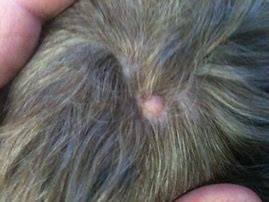
Let’s say you’re giving your dog a nice massage or a bath, and as you run your hands over his body, you suddenly feel a strange lump under his skin. Random lumps and bumps are so common in dogs that this scenario plays out every day all over the world, but it’s still alarming when it happens to you and your dog.

Especially as dogs age, they can develop harmless growths beneath the skin, many of which turn out to be fatty tumors, or lipomas. Lipomas are benign fatty masses enclosed in a thin capsule, and they’re the most common type of noncancerous soft tissue growth in dogs. Any dog, regardless of breed, gender or age, can develop a lipoma (or several).

Fatty tumors in dogs typically develop just beneath the skin’s surface on the neck, upper legs, underarms or torso. However, they can occur anywhere on the body, including in muscle tissue. If the lipoma is under the skin, it will have a soft, squishy feel and you’ll be able to move it around. If it’s in muscle tissue, it may feel very firm.

Certain Dogs May Have a Tendency to Develop Lipomas

It’s true that any dog can develop a fatty tumor — young, old, spayed, neutered, obese or thin. However, in my experience there’s a link between the number and size of lipomas on a dog, his ability to metabolize fat and his overall vitality.

If a dog doesn’t have a vibrant, thriving metabolism, what tends to happen is he accumulates fat in what I call “glumps.” When you or I gain weight, we tend to gain it in several places on our bodies. When a dog with inappropriate fat metabolism gains weight, he adds glumps of fat in one spot. These are lipomas, or benign fatty masses.

Certain breeds tend to acquire more lipomas than others, including Labrador and Golden Retrievers, making many vets wonder about a possible epigenetic component to the formation of these benign masses. Some holistic and integrative veterinarians also believe lipomas and other fatty tumors are a sign that a dog’s body is not able to effectively eliminate toxins via processes involving the liver, kidneys, and intestines.

And according to Traditional Chinese Medicine (TCM) principles, lipomas are a manifestation of “stagnant Qi,” or “phlegm” (an “energetic blockage” that eventually manifests in a physical, benign mass). Regardless of how or why lipomas occur, it’s important to know they are usually nothing to fear, but do require monitoring.

Most Fatty Tumors Don’t Require Surgery

Many veterinarians recommend removal of every lump, bump and skin tag, but many of us in the integrative veterinary community prefer to leave confirmed benign lumps (like lipomas) alone unless they are seriously interfering with a dog’s mobility or quality of life.

When you bring your dog in for a suspicious lump, your veterinarian should perform a fine needle aspirate to determine whether the mass is something to worry about or simply a benign lipoma. If it comes back as a harmless fatty mass, it should be noted on your dog’s body chart, including its size and the date. Then it can be watched for any changes in size, shape or appearance.

If your dog’s lipoma grows in size, depending on its location it may be medically necessary to remove it before it’s big enough to impinge on his quality of life. This would include, for example, a growing lipoma in the armpit that’s changing the dog’s gait, or one on the sternum that rubs against the carpet every time he lays down, causing skin abrasions.

Some lipomas remain the same size throughout a dog’s life. They’re nothing to worry about, and it’s only necessary to watch them for growth or any sort of change. Bottom line: I very rarely surgically remove lipomas except in situations where the lump is affecting range of motion or the dog’s gait or comfort level.

If the dog’s quality of life is suffering, if she’s no longer walking comfortably, if there’s ribcage rotation or if she’s compensating in ways that are causing skeletal problems, often removing the lipoma will dramatically improve her musculoskeletal health. In those cases, it’s best to remove the mass sooner rather than later, because the bigger the lump, the bigger the incision.

Surgical removal of a lipoma is called debulking surgery. Debulking means we remove the majority of the mass, but not all of it. Benign fatty tumors are frustrating to deal with because while we can remove all the visible fat, there are always (and I do mean always) fat cells that remain.

They can be in the fascia, slipped down into the musculature or on the underside of the skin. Those fat cells have a memory, and unfortunately, lipomas can reform.

We call the procedure debulking because we can’t promise we’ll completely remove all the fat cells or that the lipoma won’t reappear in the same location. However, despite the tendency of lipomas to regrow in the same spot, you should still consider removal under certain circumstances.

7 Ways to Helping Your Dog Avoid Lipomas

To give your canine companion the best chance to avoid fatty tumors, it’s important to keep her in good physical condition while also supporting her metabolism, immune and lymphatic systems, and organs of detoxification.

  1. Do at-home physical exams very consistently. The more comfortable you are with knowing what’s normal, when it comes to being in touch with every inch of your dog’s external terrain, the sooner you will know when something is changing, like a fat glump starting. Massaging tiny accumulations of fat, early on, can help dissipate these annoying masses from gaining momentum and becoming a problem down the road.
  2. If you’re feeding a processed diet, your pet is getting a dose of chemical additives and carcinogenic byproducts like heterocyclic amines and acrylamides with every bite. And keep in mind that grain-free kibble has just as many synthetic nutrients and usually a higher glycemic index than regular kibble, so pets eating grain-free food are really no better off when it comes to dietary stress.

Feed a whole, fresh, organic, non-GMO, nutritionally balanced and species-appropriate diet to reduce metabolic stress. Pet food in its natural state provides needed moisture and ensures the highest level of biologic assimilation and digestion.

  1. Provide clean, pure and high-quality drinking water. Your pet’s drinking water shouldn’t contain fluoride, chlorine, heavy metals or other contaminants. I recommend filtering not only your pet’s drinking water, but also yours; however, I don’t recommend alkaline water for pets.
  2. Be mindful of your dog’s BMI (body mass index) and body condition score. Pets can be thin and under-muscled, as well as overweight/obese. Thin dogs who don’t get daily exercise can also develop lipomas. Regular exercise provides your dog with countless benefits, including promoting regular elimination.

Exercise also stimulates blood circulation and the lymphatic system, so toxins are moved efficiently to the liver and kidneys for processing. Physical activity also improves respiration and helps your pet eliminate mucus from the respiratory tract.

  1. Forbid smoking in your home, and use only nontoxic cleaning products. Consider investing in an air purifier to control dust mites. Avoid polluting your pet’s indoor air quality with perfumes, air fresheners and scented plug-ins or candles. These products are heavily laden with chemicals and are known to cause or worsen respiratory conditions like asthma in both people and pets.

Toxins in the air also come from the off-gassing of chemicals from new synthetic household items like flooring, carpeting, furniture, drapes and even pet beds. Unless you’re providing an organic pet bed made without chemicals that specifically states it contains all-natural fibers and hasn’t been chemically treated, you should assume it has been treated with flame retardants.

  1. Consider periodic detoxification for your dog. We all try to reduce toxin exposure in our pet’s environment, but it’s nearly impossible to avoid all sources of exposure, so providing an occasional detoxification protocol for your pet can be very beneficial.

Circulation-enhancing therapies such as massage and chiropractic treatments also assist in detoxification. Adding a tablespoon of raw, unfiltered apple cider vinegar for every 20 pounds of weight to your dog’s food each day may also help prevent fat from accumulating over time.

  1. Don’t allow your dog to be over-vaccinated or overmedicated. This includes avoiding all unnecessary vaccines, veterinary drugs (e.g., antibiotics and steroids) and chemical flea/tick preventives. You want to ensure your four-legged family member is protected against disease, but overdoing vaccines, chemical preventives and other types of drugs can dramatically increase the level of toxicity in the body.


Urinary Blockages in Cats

Urinary Blockages in Cats

By Jennifer Coates, DVM

One of the biggest emergencies that pet parents can face is urinary blockage in cats. Treatment often involves a panicked trip to the veterinary clinic (usually at the least convenient time possible) and hospitalization for the intensive care and monitoring needed to save the cat’s life.


If your cat has blocked once, he is at high risk for it happening again. So whether you’re looking to prevent a recurrence or to protect your cat from every having to experience this condition in the first place, it’s important to be informed about ways to prevent urinary blockages in cats.


What Causes Urinary Blockages in Cats?


Urinary blockages (also called urinary obstructions) are usually caused by plugs of proteinaceous sludge, crystals and/or small stones that become lodged within a cat’s urethra—the tube leading from the urinary bladder to the outside of the body. Neutered males have very narrow urethras, which explains why these cats have, by far, the highest incidence of urinary blockages. Urinary obstructions can also be caused by involuntary muscular contractions called urethral spasms or, less frequently, by tumors, infections, trauma and other conditions.


Urinary Obstruction Symptoms


When a cat is blocked, he will frequently squat like he is going to pee, but little to no urine will come out. Urine continues to flow into the bladder, and the pressure and pain increase. Additionally, the toxic waste products that are supposed to exit the body in the urine begin to back up within the bloodstream leading to symptoms like lethargy, disorientation and vomiting. Without timely treatment, a cat’s bladder can eventually rupture. Needless to say, get to your veterinarian immediately if you think that your cat may be blocked.


How to Prevent Urinary Blockages in Cats


In some cases, your veterinarian may identify a particular risk factor that increases the chances that your cat will become blocked. For example, a cat who has a history of developing urinary crystals or stones made of struvite (magnesium ammonium phosphate) will often benefit from eating a food that contains low levels of magnesium and phosphorus and promotes a urinary pH that makes it less likely that crystals will form. If your cat has a history of urinary blockages, make sure to ask your veterinarian about any specific prevention strategies that he or she can recommend.


If the cause of your cat’s urinary blockage can’t be identified or you simply want to prevent the condition from developing in the first place, don’t worry, you still have good options. The following three strategies will go a long way towards lowering the risk of urinary blockages in cats:


·         Provide enrichment. Research has shown that environmental enrichment and stress relief play a huge role in maintaining a cat’s urinary (and overall) health. Stress relief can take many forms. For example, you may need to modify your cat’s living arrangements if he is routinely fighting with other cats in your home. More generally, cats love a regular schedule so keep his routine as predictable as possible. Give your cats lots of opportunities to exercise their bodies and minds. Play with him, and purchase or make new cat toys and rotate through them regularly. Make use of food puzzles. Place perches near windows. Have lots of cat scratchers available.

·         Manage the cat litter box. You want your cat to keep his bladder as empty as possible so make his “bathrooms” pleasant and easy to access. Always have at least one more box available than the number of cats in your home and don’t place them all in one out of the way location. Keep all the boxes scrupulously clean. Determine what type of box and litter your cat likes best. Large, uncovered boxes with a deep layer of unscented, clumping litter are generally the most popular.

·         Keep your cat hydrated. You cat should be well hydrated so his urine stays dilute. Feed canned food rather than dry. Place several water bowls throughout your house and keep them clean and filled with fresh water. Some cats prefer drinking from a running source of water. An easy-to-clean cat water fountain can be an excellent investment.


Follow these tips and any advice from your veterinarian and you can rest assured that you’ve done everything possible to protect your cat from developing a urinary blockage.


10 Signs of Cancer to Keep an Eye Out for in Your Senior Dog

10 Signs of Cancer to Keep an Eye Out for in Your Senior Dog

Veterinarian Reviewed by Dr. Janice Huntingford, DVM on August 8, 2018
Posted in Dog Cancer as seen in PetWellbeing


Your dog is getting older and as they do, you want to be on the lookout for potential health concerns that may impact their quality of life in their later years. Cancer is one such disease your dog can develop as they age and it’s a leading cause of death in older canines. In some cases, cancer is treatable, but it needs to be caught early on. Here are 10 of the most common signs of developing cancer in aging dogs:

  1. Loss of appetite: Your dog eats normally, but suddenly is inattentive to his food or eating smaller and smaller portions, disinterested in treats or other food that used to bring joy. This may be a sign that your dog has a loss of appetite or there has been a change in health that is preventing an interest in food. This could indicate a larger problem.
  1. Problems eating: Perhaps it is not loss of appetite, but instead a physical problem with being able to eat? Loss of teeth could be an explanation, but cancer of either the mouth or throat could also be a potential cause. If it seems that your dog is in pain while eating, affecting how much they eat, it may be time to take them in to the vet.
  2. Weight loss: Loss of appetite and problems eating could result in significant weight loss. If you do not catch the first two problems, you will likely notice the change in your dog’s physical appearance. Significant weight loss for any reason is unhealthy, but it could signal a disease like cancer.
  3. Lumps, bulges and signs of tumors: Every time you groom your dog, or even after taking them for a walk outside, you should be in the habit of doing a general check of your dog’s body. Besides any tics or other things that could cause problems with your dog’s health or skin, you may also find unnatural lumps that could signal the initial stages of a tumor. If you are unsure whether or not what you have found is benign, be sure to take your dog to the vet.
  4. Open wounds that do not heal: When your dog goes for a walk or hike with you, it may be a frequent occurrence to find scratches or scrapes on their skin. It is not normal, however, if these continue to bleed or remain unhealed for long periods of time. This could signal the dog’s inability to heal, which may be part of a larger problem.
  5. Vomiting/diarrhea: If your dog is either vomiting or having diarrhea, it’s likely the result of something they ate or that upset their stomach. However, whenever both vomiting and diarrhea are present at the same time, this is an emergency situation. Take your dog to the emergency vet right away to be looked at and taken care of.
  1. Bad odor: Bad odor can come from a variety of places and have a variety of causes. However, if your dog has extremely bad breath or smells even after teeth brushing or grooming/bathing, it may be time to have a vet check on the cause. It could be that a tumor or lesion is causing the odor.

7.Problems relieving themselves: If you notice that your dog is bending in a strange way to relieve themselves, or even yelping in pain, this is a sign something is wrong. This could indicate a disease in the area, or any number or skin-related issues that could be causing pain or distress in your dog.

  1. Increased lethargy: Your dog is normally a ball of energy, bouncing around the house and begging to be let outside. But now, he is quiet, sleepy, and laying down for inordinate amounts of time. This increased lethargy could have a variety of causes, but one reason could be the amount of energy your dog’s body is using to fight a disease or larger problem. He may simply not have enough energy leftover to spend doing the things he loves, like begging for treats.


  1. Stiffness of joints: Lethargy and stiffness of joints can be easy to mix up, and so it is important to pay attention to how your dog reacts to long walks or having to jump in and out of the car. Stiffness of joints can prevent these activities and can be attributed to arthritis or be indicative of a larger issue.

Caught early, cancer is more treatable than if realized in a more advanced stage. Be sure to provide your dog with routine veterinary visits as part of your prevention plan. And if your dog exhibits any combination of symptoms above, consider taking them right away to seek medical attention. Your senior dog may not be as spry as they once were, but that doesn’t mean they’re not tough enough to fight back against cancer if it develops!


What Causes Fatty Tumors In Dogs?

What Causes Fatty Tumors In Dogs?


Toxic Overload

Allopathic medicine is baffled by the cause of fatty tumors in dogs, usually attributing them to random chance, age and genetics. While age and genetics can contribute to the formation of lipomas, there’s something else that needs attention …

Toxins.

The build-up of toxins is often overlooked by mainstream veterinary medicine. From a holistic perspective, when lipomas form it’s a sign that the body is congested and energy isn’t flowing like it should. Toxins and fat get trapped and walled off by the body’s immune system as it pushes contaminants to the outside in an effort to protect and sustain internal organ function.

Your dog’s lymphatic system consists of a network of lymph ducts, nodes and vessels that transport lymphatic fluids to the bloodstream. A major player in the body’s immune function, the lymph system delivers nutrients to its cells while removing wastes.

When your dog’s elimination systems become congested and slow down, this stagnation can lead to blocked circulation causing lipomas and other chronic diseases. This build-up of wastes is sometimes referred to as a dog’s “toxic load.”

So where do these toxins come from? Your dog’s every day environment. Toxins can include:

·         Vaccines

·         Environmental contaminants like glyphosphates, pesticides and herbicides

·         Water contaminates like chlorine and fluoride

·         Heavy metals

·         Pharmaceuticals

·         Flea and tick medications

·         Grooming products like chemically laden shampoos

[Related: How can you minimize your dog’s exposure to toxins? Here are some tips]

Diet

Another contributing factor to toxic load is diet. Everything you feed your dog either contributes to disease or fights it. The cleaner his diet, the less your dog’s body needs to process it.

When your dog eats, his organs (liver, gallbladder and pancreas) decide how to react. This means they either release the enzymes needed to break down and assimilate nutrients or assume the body is under attack and issue an immune response. This leads to inflammation and slow digestive motility resulting in food staying in the digestive tract too long.

When foods aren’t properly broken down, it can result in the formation of toxins which can lead to a vicious cycle of stagnation and chronic inflammatory conditions.

Too Much Fat?

One of the problems about fatty tumors in dogs is the belief that too much fat equals fatty tumor formation. This isn’t true if the body is breaking down the fats.

It’s actually the type of fat that’s the problem, like the rancid and oxidized oils found in kibble. Some examples are rendered animal fat, vegetable oil and GMO soy and canola oils. Sadly, canola oils can be found even in higher end and “all natural” treats.

Your dog’s body sees these undigested oils as immune attackers and the body goes into defense mode, protecting itself by depositing and walling off fat mixed with toxins in the form of a lipoma.

If you suspect your dog isn’t breaking down his food properly, make sure he’s getting clean filtered water, pre and probiotics and digestive enzymes daily.  If you’re a kibble feeder, consider moving your dog to a fresh food diet.

When traditional raw isn’t in your realm of possibility, options like commercial raw food, dehydrated and freeze-dried dog foods are available. You can also home cook for your dogs to add variety, especially if you have senior dogs.

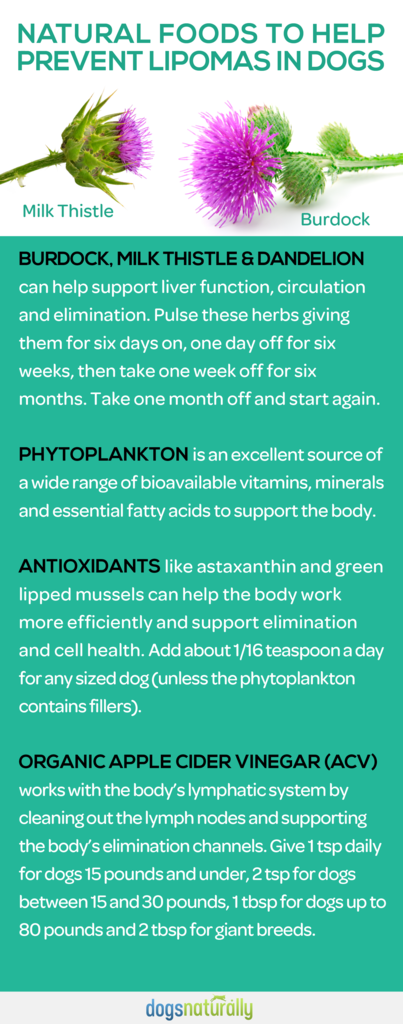
There are also some natural foods that you can add to your dog’s food to help prevent lipomas. Here are some of my favorites:

·         Add a basic regimen of burdock, milk thistle and dandelion can help support liver function, circulation and elimination. Pulse these herbs giving them for six days on, one day off for six weeks, then take one week off for six months. Take one month off and start again.

·         Phytoplankton is an excellent source of a wide range of bioavailable vitamins, minerals and essential fatty acids.

·         Antioxidants like vitamin C and amino acids can help the body work more efficiently and support elimination and cell health.

·         Organic apple cider vinegar (ACV) can be a powerful ally in the prevention and treatment of lipomas. ACV assists in liver detoxification as it stimulates circulation and energy flow. ACV works with the body’s lymphatic system by cleaning out the lymph nodes and supporting the body’s elimination channels. Give 1 tsp daily for dogs 15 pounds and under, 2 tsp for dogs between 15 and 30 pounds, 1 tbsp for dogs up to 80 pounds and 2 tbsp for giant breeds.

Movement Is A Must

Circulation is the key to the continuous elimination of toxins from the body. Since the lymphatic system doesn’t have a pump like the circulatory system, (the heart) it needs movement to efficiently work. Chiropractic care, acupuncture and acupressure help support energy flow but don’t forget about walking! The average American dog gets less than 15 minutes of exercises per day. That also means 15 minutes or less of breathing fresh air.

For any dog with lipomas or prone to forming fatty tumors, walking and fresh air are a must.

One of the best things you can do for yourself and your dog to stay healthy is walking outside. The simple movement helps circulate energy throughout the body and keep the lymphatic system moving as well as stimulate motility in the digestive system.


6 Herbs To Help Shrink Fatty Tumors In Dogs

Along with exercise, herbal remedies can help the body expel toxins, support the liver, kidney, and digestive systems and shrink and eliminate fatty tumors.

1. Chamomile (Matricaria chamomilla) and dandelion (Taraxacum officinale). These bitter herbs can help break down fats in the body by stimulating the digestive system. Dandelion and chamomile help clear heat (inflammation) from the body and decrease stagnation of fluids and energy. Dandelion increases circulation by thinning fluids and supports the linings of the gut by decreasing permeability. It stimulates the release of bile by the gallbladder to help digest fats. Dandelion is a potent lipoma fighter due to its ability to facilitate the removal of toxins through the kidneys and liver.

·         You can add dandelions to your dog’s diet or use a tincture of dandelion giving 1/2 drop of tincture for every pound of weight twice daily. Chamomile makes an effective infusion (a tea steeped 20-30 minutes) added to your dog’s food. Add 1 Tablespoon for every 30 pounds of body weight.

2. Burdock root (Arctium lappa) supports the lymphatic system, the liver and the kidneys. Burdock root combined with milk thistle (Silybum marianum) is an excellent way to help the body rid itself of pharmaceuticals and move heat through the liver. Like dandelion, burdock root helps the gall bladder release bile to support the digestion of fats. Burdock root is cooling to any inflammatory condition of the liver and digestive system.

·         Give as a tincture, 5 drops for every 30 pounds twice a day.

3. Chickweed (Stellaria media) moves fluids through the body and brings down inflammations throughout the entire system. It clears toxins out of the tissues with the help of the kidneys and liver. Used internally and externally, Chickweed helps dissolve lipomas and break up clumped fatty tissue. Diuretic in nature, it helps export toxins through the kidneys especially when combined with a lymphatic stimulant like cleavers (Galium aparine).

·         Give as a tincture, 5 drops for every 30 pounds twice a day.

4. Self-Heal (Prunella vulgaris) is an herb often overlooked for preventing and treating tumors. Like dandelion, self-heal is common in yards and treated like a weed. A superlative lymphatic herb moving fluids in and out of tissues downward through the kidneys. Self-heal removes heat in the liver moving stagnant fluids and improving circulation.  It is safe to use internally and externally to redistribute and break up fatty tissue.

·         Give as a tincture, 1/2 drop of tincture for every pound of weight twice daily.

5. Turmeric (Curcuma longa) a popular anti-inflammatory increases blood flow with its warming nature. It improves digestion and soothes intestinal muscles while protecting the liver as well as stimulating bile secretions from the gallbladder. Turmeric should be used cautiously with dogs that can’t control their body temperature.

·         Give 150 mg per 30 pounds of your dog’s weight twice a day.

6. Violet (Viola odorata) is one of the best lipoma herbs and it’s also safe for long-term use. Violets help dissolve hard and soft accumulations in the body through the lymphatic system. They’re cooling so they work especially well for hot conditions like fatty tumors. You can use violets internally and externally. Herbalist Juliette de Bairacli Levy used violet leaf as a poultice along with an infusion of the leaf and flower to remove any type of cyst or lipoma.

·         To make an infusion, use 1 tsp for small dogs in a half-cup of water and divide into morning and evening doses. For medium dogs use 1 tbsp and 2 tbsp for large dogs. As a tincture, give 5 drops for every 30 pounds twice a day.

Note: General guidelines for using these dosages is giving them for six days on, one day off for six weeks, then take one week off for six months. Take one month off and start again.

[Related: Do you know how to use herbs for pain relief for your dog? Here’s how]

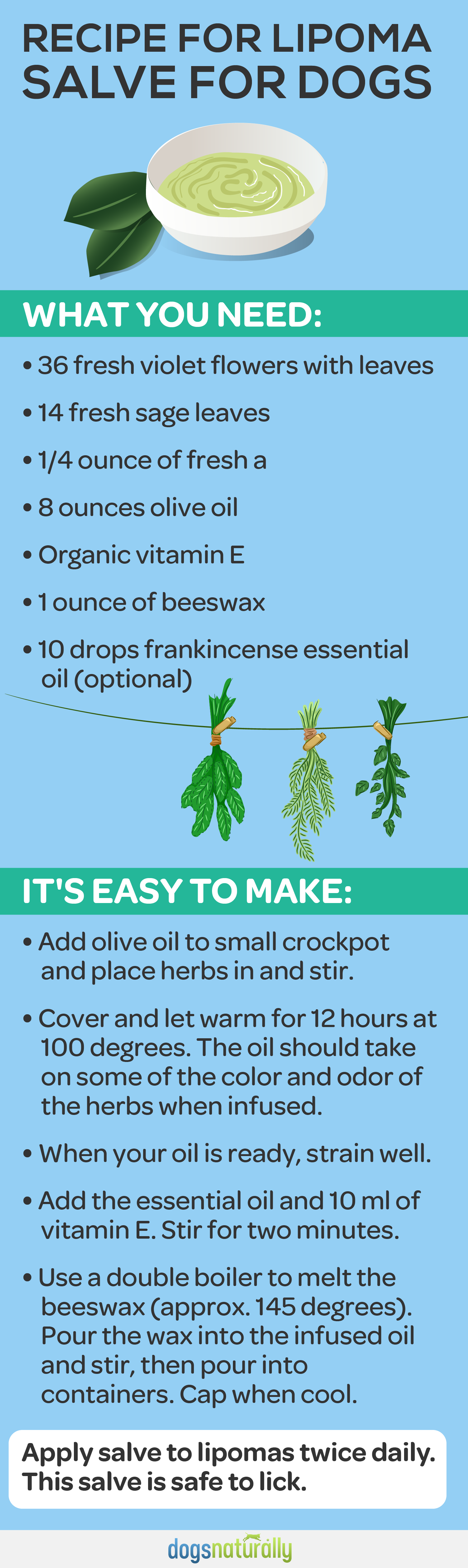
Easy Lipoma Salve Recipe

What you need:

·         36 fresh violet flowers with leaves

·         14 fresh sage leaves

·         1/4 ounce of fresh chickweed

·         8 ounces olive oil

·         Organic vitamin E

·         1 ounce of beeswax

·         10 drops frankincense essential oil (optional)

It’s easy to make:

·         Add olive oil to small crockpot and place herbs in and stir.

·         Cover and let warm for 12 hours at 100 degrees. The oil should take on some of the color and odor of the herbs when infused.

·         When your oil is ready, pour through a strainer into a glass pitcher.

·         Add the essential oil and 10 ml of vitamin E and stir for two minutes.

·         When you’re ready to make your salve, use a double boiler to melt the beeswax (approx. 145 degrees). Pour the wax into the infused oil and stir, then pour into containers and cap when cool.

Apply salve to lipomas twice daily. This salve is safe to lick. I like to make large batches of this salve in the springtime when fresh herbs are available.

Using herbal remedies with patience and consistency can support the body’s elimination channels. Recovery from lipomas is individual and some dogs will respond at a faster pace than others.

The goal is to slowly dissolve fatty tumors so the body isn’t overwhelmed with toxins and the herbs and the other healing methods I’ve mentioned in this article as well as homeopathy offer effective ways to support the body’s elimination channels while working to get the body back in balance. Working with these methods will not show success quickly but with patience and consistency, you’ll see these fatty lumps get smaller and in many cases disappear.


Mistakes Which Can Make Your Dog Depressed

Mistakes Which Can Make Your Dog Depressed

By Dr. Karen Shaw Becker and comments by Diane Weinmann

Science hasn’t figured out yet whether dogs suffer from depression in the same way people do. They certainly experience mood and behavior changes, but those changes are usually temporary and traceable to a recent event in the dog’s life. For example, perhaps the kiddos just headed back to school after a summer spent swimming and playing with their dog, and she misses having them around. Or maybe you’ve just added a puppy to the family and your older dog is feeling left out.

Dogs who suffer the loss of a family member (human or pet) often go through a grieving period. And of course many dogs abandoned at shelters suffer a period of sadness and uncertainty.  Grief relief in the form of a custom made bach flower essence can help the transition period of loss.  Contact Diane at Dianefortheloveofanimals@yahoo.com for a custom treatment bottle to deal with grief for yourself or your pet.

The problem with diagnosing clinical depression (which is different from short-lived episodes of depressed behavior) is that even in humans, there’s no biological test to identify the condition. Medical doctors take note of symptoms and what the patient tells them about their feelings to arrive at a diagnosis.

Many people who cannot talk and hear pets must rely on their powers of observation to determine if a canine companion is feeling down in the dumps. Generally speaking, when a vet or veterinary behaviorist or animal communicator describes a patient as depressed, the dog is displaying a change in normal behavior.

6 Reasons Dogs Get Depressed

1. She’s dealing with an undiagnosed medical problem

If your dog’s behavior changes, even if you suspect you know why, it’s always a good idea to check in with your veterinarian. Many changes in behavior symptomatic of depression, including lack of appetite, potty accidents in the house, sleeping more than usual, reluctance to exercise and sudden aggressive behavior in a dog who has never shown aggression, can also be signs of any number of underlying medical conditions.

2. He’s feeling ignored

A healthy dog who is feeling depressed may lose interest in eating or playing, become destructive, have accidents in the house or stop running to greet you when you come through the door. Like a sleepy, sluggish dog, a depressed pooch often just needs more quality time with his human.

Get into the habit of spending an uninterrupted hour with your dog each day engaging in physical pursuits, grooming rituals, training exercises and good old tummy rubs. It will lighten both your moods!

3. She’s not getting enough exercise

Sadly, some dogs become socially inhibited when they aren’t getting enough exercise and playtime. This can take the form of a decrease in interaction with other family members, or choosing to isolate themselves in their crate or another room. If your normally happy dog suddenly isn’t, consider the possibility that she needs more exercise.

Most dogs need much more physical activity than their owners realize. Your dog should be getting an absolute minimum of 20 minutes of sustained heart-thumping exercise three times a week. Thirty minutes is better than 20, and six or seven days a week is better than three.

Minimum exercise requirements prevent muscle atrophy, but don’t necessarily build muscle mass, strengthen tendons and ligaments, hone balance and proprioception, or enhance cardiovascular fitness, which is why more is always better. If you can provide your dog daily walks as well as additional daily training sessions to meet your other exercise goals, even better!

4. He’s suffered the loss of a human family member or pet

It’s not unusual for dogs to grieve the loss of a person or animal friend they are bonded with. According to the late Dr. Sophia Yin, a veterinarian and applied animal behavior specialist, dogs feel the same basic emotions humans do, including grief, fear, anger, happiness, sadness and even possessiveness.

When a dog is mourning a loss, depression is common. Signs of depression in dogs mimic those in people — sleeping more than normal, moving more slowly, eating less and showing a limited interest in playing.

If your dog seems depressed at the loss of a person or animal he was close to, engage him in activities he enjoys, such as a walk, a game of fetch or a trip to the dog park. It’s really a matter of distracting him with things he enjoys until sufficient time has passed and he’s no longer looking around every corner for the one who is now absent from his life.

And it’s best not to expect a quick fix. It can take from a few weeks to a few months before your dog’s depressed mood begins to lift.  Again as mentioned above,  a custom Bach Flower essences treatment bottle can help your pet deal with their grief holistically.

5. Her favorite human is depressed

Your dog is very observant of your emotional state, which she can detect by observing the tone of your voice, your body language and other subtle clues, including your pheromones (how you smell). The way you move, speak and behave all send subtle signals to your dog that indicate your mood.

For example, when you’re in a situation that’s stressful to your dog, such as at your veterinarian’s office, she’ll look to you to help her calm down. If, however, you seem tense and nervous, she’ll likely become even more anxious. Your dog is extremely intuitive; so if you’re feeling blue, don’t be surprised if she seems depressed as well.

6. He’s being subjected to punitive behavior training

Dogs who are punished for undesirable behavior instead of being rewarded for positive behavior may stop interacting with their owners in an attempt to avoid punishment. They adopt a depressive state of mind called “learned helplessness” because they feel powerless to avoid negative situations.

I can’t stress strongly enough the importance of positive reinforcement behavior training, not only to help your dog become a good canine citizen, but also to preserve and protect the close and priceless bond you share with him.

5 Tips for Helping a Depressed Dog

1. Keep daily routines as consistent as possible. Pets do best when they know what to expect from one day to the next. Try to keep mealtimes, exercise, walks, playtime, grooming, bedtime and other daily activities on a consistent schedule. Exercise is a powerful tool to help increase your pooch’s endorphins, or “feel good” hormones. Lots of walks (with plenty of opportunities to sniff) can be a powerful mood enhancer.

2. Keep your dog’s diet and mealtimes the same and spice up what’s on the menu. It’s important to continue to offer him the same food he’s used to, at the same time each day, but if you find your dog isn’t interested in eating much, consider offering a yummy knucklebone for dessert, or make a tasty treat for training time that he hasn’t had before.

Store what he doesn’t eat in the fridge, and offer it to him again at his next regularly scheduled mealtime. Use his hunger to help him get his appetite back by resisting the urge to entice him with unhealthy food toppers.

3. Be careful not to inadvertently reward your dog’s depression. It’s only natural to want to comfort your sad pet, but unfortunately, giving attention to a dog who is displaying an undesirable behavior can reinforce the behavior. Obviously the last thing you want to do is reward a lack of appetite, inactivity or other types of depressed behavior in your dog. Instead, you want to help her over the hump.

A better idea is to try to distract her with healthy, fun activities that provide opportunities for positive behavior reinforcement. This can be a walk, short training sessions, a game of fetch, nose work or offering her a food puzzle toy or recreational bone.

4. Give it time. Your dog’s depression may take a few days or even weeks to blow over, but eventually most pets return to their normal lively selves. If at any point you feel your pet is suffering unnecessarily or there is something more going on than a case of the blues, I recommend discussing the situation with your vet or a veterinary behaviorist.

5. Use natural remedies, if needed. There are some excellent homeopathic and Bach flower remedies that can be easily administered to your depressed dog until you see an emotional shift for the better. Some of my favorites include homeopathic Ignatia, several Bach flower remedies including Mustard and Honeysuckle, and Green Hope Farm Grief and Loss.  Custom treatment bottles for your unique situation can be obtained from Diane Weinmann at Dianefortheloveofanimals@yahoo.com.