Why do some dogs bark more than others? Maybe your neighbor’s dog barks nonstop when he’s gone, or maybe your dog barks at every breeze, shadow or whisper. And then there are dogs that hardly ever make a peep.
You might love your dog unconditionally, but a dog that barks at everything and anything can get a bit exhausting. No one enjoys being jarred out of sleep to the cacophonous sound of dog barking in the middle of the night—especially when there seems to be no reason for it.
So, what causes one dog to bark more than the others? Here are three factors that could contribute to a noisy household.
Genetics and Breed-Specific Characteristics
Genetics and breeding for specific traits can play a big role in a dog’s proclivity for barking.
According to Dr. Stefanie Schwartz, a board-certified veterinary behaviorist based in Orange County, California, the frequency of a dog’s bark can vary from breed to breed, and it all depends on how their ancestors were bred.
“Barking was emphasized in some breeds more than others,” says Dr. Schwartz. She explains that this trait was likely “selected by our ancestors to help guard human settlements.”
Not all breeds known for barking will necessary be noisy, however. For instance, terriers tend to be more vocal. But not all terriers will bark excessively, says Dr. Schwartz. Huskies and Nordic breeds are also known to howl more than others, while most Basenjis don’t bark at all, says Dr. Schwartz.
Environmental Factors
Dogs get used to their environments, and they will react to sounds that are unexpected (like a knock at the door) and those that they don’t hear often.
If a dog was raised in a bustling city where they’re used to hearing constant noise, they’ll probably be less apt to bark in a noisy urban environment. But a dog who was raised in a quiet, rural area may bark at any sound.
“A city dog wouldn’t react to a siren (cops, ambulance) because it becomes part of the background noise, compared to a country dog [who lives] where things are quieter and less chaotic,” says Dr. Schwartz.
Unintentional Rewarding of Dog Barking
“Some dogs learn to bark for attention regardless of breed,” says Dr. Schwartz. “Barking is a response to not getting their needs met.” She also says that, “Barking can be a learned behavior where the dog signals to the owner, ‘I need something.’”
“It goes back to that basic of rewarding behavior,” says Dr. Katie Malehorn, DVM a staff veterinarian at Friendship Hospital for Animals in Washington, D.C. She explains that dogs will keep doing something if they are getting rewarded for it.
Many owners may pay more attention to the dog when he’s barking—accidentally rewarding him for the behavior, says Khara Schuetzner, a certified professional dog trainer and owner of The Doggie Spot based in Shawnee, Oklahoma.
Dr. Schwartz gave the example of one woman who gave her dog a treat every time he barked—giving him attention and fulfilling his need for food—and inadvertently training him to bark.
What You Can Do to Stop Dogs From Barking So Much
To help lessen your dog’s barking, figure out the root cause of the behavior.
Dr. Schwartz explains that you need to find out what the triggers are for dog barking. Once you figure out the triggering behavior, the best approach is to work with a dog trainer and veterinarian (or a veterinary behaviorist) to find the best ways to help your dog find alternative, more productive behaviors.
Dr. Malehorn says that you will need to be patient. Many dog owners won’t seek help or try to work on excessive barking until it becomes a serious issue. At this point, it is going to take time, consistency and a good training plan to break the habit.
Just about every cat owner has experienced excited meowing, the rubbing against your legs and the pleading stare—let’s face it, cats have a way of getting what they want! Unfortunately, sometimes when they get that worked up for a meal or treat, moments later, we’ll hear the familiar sound that sends us running for the paper towels. And then there’s the cleanup of the snack that now lies on the floor, looking completely undigested. How do we stop this cycle of cats eating too fast?
A Cat That’s Eating Too Fast Might Regurgitate the Meal
The good news is that there are several ways to slow down a cat that’s eating too fast. But first, what triggers the reflex that leads to regurgitation? Kitty eats too quickly—especially dry cat food—which then absorbs water, swells and sends the memo to the brain that the animal has overeaten.
The brain does the logical thing: Too much food in? Let’s get rid of some, and the regurgitation reflex is triggered. This is slightly different from the mechanism involved in cat vomiting, which can be a more concerning symptom. That being said—if your pet regurgitates frequently or shows any additional sign, such as weight loss, a trip to your veterinarian is warranted.
How to Slow Down Your Cat’s Eating
A good first step is to determine what is being regurgitated. If it is always the same brand of cat treats, for example, perhaps a switch to a different brand is in order. If it is always dry food, kitty may do better on canned, which also boasts a large number of health benefits and may be better in the long run. However, if no diet changes are in the future, it is possible to reduce or stop the bouts of regurgitation.
Try a Nonconventional “Bowl”
The first, and often simplest option, is to not use a typical cat food bowl, but instead spread the portion out on a 9- by 13-inch baking pan. This will space the food out markedly, leaving plenty of gaps between the kibbles or the chunks of canned food. Kitty must then take a bite—move along–take another bite—move along, markedly slowing the process from the typical GULP where half the bowl is eaten! Most of the time, this can slow the process down enough to resolve the problem.
Add an Obstacle
For cats that still eat too fast, however, or for those that do better with more traditional cat bowls, adding nonedible “obstacles” to the bowl can be helpful. This should be something too large for kitty to eat, and maneuverable enough that they can push it around while trying to get at the food below it.
Common items include ping pong and golf balls. If we are adding a second layer to the 9- by 13-inch baking pan strategy, larger balls such as tennis balls can be used. They will not work well for feeders that hold a large amount of food and replenish themselves automatically.
Use Automatic Cat Feeders
There are several types of automatic cat feeders that offer a feeding strategy that might be helpful. Some of these, like the PetSafe Eatwell 5-meal automatic pet feeder, can be set to open on a schedule and feed small meals frequently—which often helps prevent the regurgitation.
However, for many reasons—including weight control and appetite monitoring—the automatic feeders that don’t have portion control are generally not recommended or appropriate for feeding most cats.
Some automatic cat feeders have an ice pack below the bowl, to keep canned food fresh all day long—perfect not only for the “gulpers” in the house but also those kitties who just like being served fresh food multiple times per day (and who doesn’t?).
These cat interactive toy options have the additional benefit of exercise and mental stimulation on top of providing nutrition—which more accurately simulates how it would be if the cat had to “work” to get its meals as it would in the wild.
Each of these techniques are most effective if kitty is being fed an appropriately portion-restricted amount of food and being fed once or twice per day. So, if you have stepped on yet another pile of regurgitation and swear it will be the last one, never fear. There are a number of options you can choose from, and certainly, one (or more!) will work for both you and your cat! I’m sure your kitty would rather have that favorite meal or snack in her tummy rather than on the floor, as well.
Dog wheezing is a health issue that you should never brush aside.
While this condition can be triggered by your canine family member simply being exposed to everyday allergens and will disappear just after a few minutes, dog wheezing can also result in potentially life-threatening situations in some cases.
Apart from walking you through the possible factors that could set off wheezing in dogs, this blog post will also give you a rundown of the proper home remedies for dog wheezing you should use when this problem strikes.
Let’s start the discussion by touching on the likely reasons why your dog is wheezing…
WHY IS MY DOG WHEEZING?
Wheezing in dogs occurs when something partially impedes the flow of air in or out of your canine family member’s airway. The source of this blockage could either be in the bronchi—the main tubes of the lungs—or the windpipe.
The high-pitched “wheezing” sound is basically created when the air moving from the lungs to the windpipe brushes against the said blockage during exhalation.
However, it is crucial to take note that there are several possible reasons why this wheezing sound is created, which can be anywhere from mild irritation to an underlying health issue.
Now we’ve got that out of the bag, let’s touch on the causes of dog wheezing that you need to keep in mind…
WHAT CAUSES WHEEZING IN DOGS?
There are eight (8) common causes of dog wheezing, namely genetics, foreign bodies, cardiovascular ailments, allergies, bronchitis, infections and inflammations, as well as kennel cough and collapsed windpipe. We’ll go through each one of these in detail below:
GENETICS
Interestingly, genetics play a key role in dog wheezing. Should either of both of your canine family member’s parents—the biological ones, in this case—be predisposed or have actually suffered from wheezing in dogs due to some underlying condition, then it’s also likely that he will be susceptible to this health issue as well.
FOREIGN BODIES
If your precious pet is anything like most dogs, chances are he loves to chew on anything that he finds fascinating like toys, sticks, various foodstuffs, plastic lids, and even chunks of wood. It is not uncommon that some of these things may splinter or break into pieces, which can get lodged inside his airway, leading to coughing and wheezing.
CARDIOVASCULAR AILMENTS
Canine cardiovascular illnesses such as mitral valve disease, congestive heart failure, as well as cardiomyopathy, can cause the accumulation of fluid inside the lungs. This fluid can eventually spread out in and around a dog’s airway, which results in wheezing.
Just to emphasize, while this factor is mostly observed among senior dogs, it can also occasionally be noted in younger pooches that are suffering from a heart condition.
ALLERGIES
Akin to human beings, your canine family member can also be prone to allergy attacks. These can be triggered by dust, mold, certain types of food, pollen, industrial chemicals, as well as cigarette smoke and vapors from vapes, resulting in dog wheezing.
As these allergens make their way inside your dog’s respiratory system, they tend to set off an immune response that causes his airway to constrict, which can make breathing a bit difficult. Moreover, insect bites and stings can also lead to similar consequences.
BRONCHITIS
Bronchitis is a respiratory illness that is characterized by the irritation of the main tubes of the lungs called “bronchi.” As this disease progresses, the lining of the bronchi gets inflamed and eventually swells, hindering the air to freely flow from the windpipe to the lungs and vice versa.
The more pronounced this swelling becomes, the harder it is for the air to move to and fro the lungs and windpipe, causing the high-pitched wheezing sound.
INFECTIONS AND INFLAMMATIONS
When your dog is suffering from an infection and or inflammation affecting the respiratory system, the most prominent immune responses that his body sets off are nasal discharge, bouts of coughing and sneezing, as well as a constricted airway.
This can also be accompanied by the buildup of phlegm in your canine family member’s sinuses and throat, which can hamper the flow of air in his windpipe and lungs, causing dog wheezing sooner or later.
KENNEL COUGH
Characterized by persistent bouts of dry coughing, kennel cough is a type of respiratory infection that irritates the lining of a dog’s airway making it difficult for him to breathe. This illness also causes parts of the throat and windpipe to swell, which can lead to dog wheezing.
COLLAPSED WINDPIPE
A collapsed windpipe, also referred to as tracheal collapse, involves the unexpected falling in of cartilage that hold the trachea together. Depending on the severity of the collapse, a dog may experience bouts of coughing that have a distinctive honking sound as well as intermittent wheezing spells.
Next, let’s find out if dog wheezing can be deemed as an emergency situation or not…
IS DOG WHEEZING AN EMERGENCY?
More often than not, dog wheezing is not to be deemed as an emergency situation. This condition can be simply your dog’s body’s response to everyday allergens like dust and pollen, as well as contact with blades of grass and twigs that could give him quite a ticklish sensation.
But the thing is this doesn’t mean that wheezing in dogs should be just shrugged off altogether. Here are the crucial indicators that you need to keep an eye on to determine if this condition is potentially life-threatening for your pet already:
He is visibly having a difficult time inhaling and exhaling
His breathing is really shallow yet at a very fast pace
His heart rate is significantly (and abnormally) high
His gums and tongue have a noticeable bluish or purplish tinge
He breathes with his mouth open with intermittent gagging and coughing
He will exhibit signs of severe anxiety like aimless movement and prolonged whining
Make sure you immediately seek medical attention or provide emergency care for your canine family member as soon as you notice these signs. Paying no heed to the same could lead to extremely serious or even fatal consequences for your animal companion.
Now we’ve got that covered, let’s check out the dog wheezing natural remedies that you need to include in your home pet care kit to deal with this health issue the right way…
DOG WHEEZING HOME REMEDIES
Unlike what a lot of people mistakenly believe, over-the-counter bronchodilators and antibiotics are not just your only options when it comes to properly supporting your canine family member during wheezing in dogs.
The next time your beloved pet goes through this condition, make sure you give him these all-natural dog wheezing home remedies. What’s really interesting is that the following natural remedies can also be used as a preventive measure for this health issue:
BREW UP SOME ELECAMPANE TEA.
According to the National Center for Biotechnology Information (NCBI), elecampane—also known as elf wort, elfdock, and horse-heal—contains ample amounts of the organic compound alantolactone, which has been seen to help relax constricted airways in cases of respiratory inflammation.
Moreover, follow up studies on elecampane reveal that alantolactone has a noticeable therapeutic effect to airways that were suppressed or impeded by cigarette smoke exposure.
To use elecampane as a home remedy for dog wheezing, steep a teaspoon of this dried root herb in a cup of hot water for at least ten (10) minutes. Let the mixture cool down completely. You can either give this elecampane tea to your dog straight, one teaspoon at a time twice a day, or add in a couple of teaspoons of the same to his water.
INFUSE YOUR DOG’S WATER WITH A BIT OF ECHINACEA.
Another study published in the NCBI reveals that echinacea is abundant in a starch-like chemical called arabinogalactan, which showed noticeable therapeutic effects when used to deal with upper respiratory tract infections and inflammations.
Arabinogalactan has also been seen to help alleviate the pain and discomfort caused by health issues like otitis media and pharyngotonsillitis that are often set off by infections and inflammations in the upper respiratory tract.
To use echinacea as a home remedy for dog wheezing, steep a teaspoon of dried echinacea flowers in a cup of hot water for at least ten (10) minutes. Stir it gently with a spoon to make sure that all of the bits are really soaked.
Once the mixture has cooled down completely, you can give your dog two (2) teaspoons of echinacea tea straight twice per day. Alternatively, you can also add the same amount of echinacea tea to his water.
KEEP RESPIRATORY INFLAMMATIONS AT BAY WITH LICORICE ROOT.
The NCBI highlights another study where licorice root has been seen to inhibit the accumulation of 11-hydroxysteroid dehydrogenase, which staves off the onset of allergic responses, particularly in the respiratory system.
To use licorice root as a home remedy for dog wheezing, steep a teaspoon of it in a cup of hot water for at least fifteen (15) minutes. Let the mixture linger for a few minutes after it has cooled down completely.
You can give your dog two (2) teaspoons of licorice root tea straight twice per day. Alternatively, you can also add the same amount of the same to his water.
Since licorice root is naturally slightly bitter, you can add a bit of honey to this concoction to make the whole thing sweeter and easier for your pet to consume.
MULLEIN LEAVES CAN HOLD BACK RESPIRATORY INFECTIONS.
Another study published in the NCBI stresses that extracts derived from mullein leaves show the ability to “inhibit the growth of bacteria involved in respiratory infections,” which can trigger dog wheezing.
To use mullein leaves as a home remedy for dog wheezing, steep a teaspoon of this herb—you can go for either the fresh or dried variety—in a cup of hot water for at least ten (10) minutes. Let the mixture cool down completely.
You can either give this mullein tea to your dog straight, one teaspoon at a time twice a day, or add in a couple of teaspoons of the same to his water.
QUERCETIN CAN HELP STABILIZE YOUR DOG’S RESPIRATORY RATE.
According to MDPI, foods rich in quercetin such as dark cherries, unpeeled apples, and blueberries have been seen to help promote stabilized respiratory rates when consumed on a regular basis.
Additional studies note that animals previously often exposed to cigarette smoke have a higher chance of normalizing their respiratory rates as compared to those that did not.
To use quercetin as a home remedy for dog wheezing, integrate foods rich in this antioxidant into your canine family member’s regular diet.
In the next part of our discussion, I’d like to share a natural and high-quality product you can go for if your dog is going through a bout of wheezing…
A HIGH-QUALITY NATURAL PRODUCT YOU SHOULD CHECK OUT
HomeoAnimal’s BRONCHIAL CLEAR is designed to support respiratory capacity and promote better lung health.
Besides being made with natural homeopathic ingredients, my team and I at HomeoAnimal have also ensured that each of the components that make up BRONCHIAL CLEAR are also first-rate to only give your pet the best like you would have also wanted.
To use BRONCHIAL CLEAR to support your canine family member during dog wheezing, you only need to give him a single spray of this product in his mouth once a day. You can also mix it with his water as an alternative application.
Moreover, make sure you stop administering BRONCHIAL CLEAR once the symptoms have disappeared. It is also important to take note that this product is not to be used as a preventive measure.
CONCLUSION
This brings our walkthrough on the home remedies you can use for dog wheezing to a close.
I hope that you learned a lot from our discussion, especially the part where I emphasized that wheezing in dogs should not be left to chance. Rather it should be given immediate and proper care and attention like having BRONCHIAL CLEAR in your dog home care checklist.
In case you’re looking to learn more about keeping your canine family member happy and healthy using natural means, make sure you sign up for our FREE HEALTH ADVISOR GUIDANCE right now to get the lowdown on the products and treatment options that best fit your animal’s health needs.
Naturally with you and your pet, every step of the way!
In cats, it can be difficult to tell the difference between retching/vomiting, regurgitation, and coughing. These are all very different and come with different possible causes, so it is important to try and differentiate between them.
Vomiting is the active motion of ejecting contents from a cat’s stomach and small intestines out through their mouth. This is different than regurgitation, which is a passive motion where no force is needed to eject contents through the cat’s mouth. You might also mistake these for coughing if you didn’t witness anything coming out.
The best thing to do is to take a video, if possible, to show your veterinarian. They can help you determine whether it really is vomiting, and if so, why your cat is throwing up. Here’s some helpful information on cat vomiting causes and possible treatments.
Why Is My Cat Throwing Up?
Your veterinarian will ask a variety of questions to determine why your cat is vomiting. These include:
Have you switched your cat’s diet recently?
Have you started any prescribed or over-the-counter medications?
What diet, including all treats, is your cat on?
Do you have other cats in the house, and if so, are they also vomiting?
Is your cat indoor and/or outdoor?
How often is your cat vomiting, and what does the vomit look like?
There are several possible causes of cat vomiting, and these questions will help guide your veterinarian in the right direction. Possible reasons why cats throw up can be broken into two categories—gastrointestinal causes and non-gastrointestinal causes.
Knowing what your cat’s vomit looks like is very important, as different diseases can cause the vomit to have a more distinct appearance. Here are some examples of vomit color/consistency and possible causes for each.
Bile/Yellow
Cats will vomit bile when they have an empty stomach. This can happen if you are only feeding your cat in the morning and they go 24 hours without food, or it can happen when cats are anorexic. Food stimulates the gall bladder to contract, but when the gall bladder does not contract, the bile can back up into the small intestines and stomach.
Blood
Blood can be seen with ulcerations, or if your cat vomits several times in a row, this can cause an irritation of the stomach lining and esophagus because of the increased acid. Blood can also be present if there is a clotting abnormality, which can be seen with certain diseases and some toxins (rat poisoning, for example).
White Foam
White foam in cat vomit is oftentimes seen because the lining of the stomach and/or small intestines is inflamed from many possible causes.
Water/Clear Liquid
If your cat is vomiting clear liquid, it can be the fluid contents of the stomach, or your cat might have drunk too much water. There are many possible diseases that can cause cats to drink too much water, including diabetes mellitus and kidney disease.
Worms
The most common type of worm seen in cat vomit is roundworms. If your cat vomits a worm, it is important to bring this to your veterinarian so they can treat the issue appropriately.
Food
Cats who eat too much or too fast can vomit food, and it typically it appears in a tubular shape. They can also vomit food if they become nauseous shortly after eating, if there is a foreign body obstructing the food from moving into the small intestines, or if they have a food allergy.
Hairballs
Cats can occasionally vomit hairballs, especially cats who overgroom or cats with long hair.
Brown Liquid
This is usually indicative of digested blood further down the intestinal tract and can be seen with ulcerations, foreign bodies, or even hairballs in the intestines.
Green Vomit
If your cat is throwing up green vomit, this usually indicates that the food or substance was brought up from the small intestines. The mixture of the vomitus with bile can turn the color green.
Mucus
Mucus is typically seen if your cat is regurgitating and not vomiting. If you see mucus, it is very important to determine if your cat is actually vomiting or if they are regurgitating.
Cat Vomiting With Other Symptoms
Oftentimes when cats do vomit, they have other symptoms, too. Describing all of your cat’s symptoms to your veterinarian will be important in determining the right diagnostics or treatments.
Your cat is vomiting and not eating.
It is very common for cats to not want to eat if they are nauseous. You can see this with a variety of conditions, including foreign bodies, kidney and liver disease, severe diabetes, inflammatory bowel disease, etc.
Your cat is vomiting and constipated.
If your cat hasn’t defecated in a couple of days and is straining to go, they are likely constipated. This can cause a backup of contents in the small intestines and stomach, causing cats to vomit.
Your cat is vomiting and having diarrhea.
This combination of symptoms tells us that there is not only inflammation within the stomach but also within the small and/or large intestines.
Your cat is vomiting and sneezing.
If your cat has acute vomiting and sneezing, they could have contracted a virus (such as coronavirus). It is not uncommon for cats who become sick (vomiting) to also develop an upper respiratory tract infection. This is because a large portion of cats contract certain viruses, such as herpesvirus, as kittens, and can be acting normal until they are immunocompromised.
Your cat is vomiting and drinking a lot.
Cats can vomit after they drink a large amount of water. They can also have disease that cause them to drink a lot and have vomiting, such as kidney disease, diabetes mellitus, and cancer.
Your cat is vomiting and pooping on the floor.
Cats may defecate on the floor if they have constipation or have an increased urgency to go, which can be seen with intestinal inflammation and diarrhea.
Should I Call the Vet if My Cat Throws Up?
You should call your veterinarian right away if:
Your cat vomits more than two to three times in a row.
Your cat has other symptoms, such as not eating and diarrhea. If your cat is also having diarrhea, it will be difficult to keep them hydrated without seeing your veterinarian.
Your cat does not eat or drink for 12 hours and has vomited several times in a row.
Your cat has already been diagnosed with an illnesses (such as diabetes, kidney disease, and hyperthyroidism). This is an emergency, and your cat should be seen immediately, as this could mean that their disease is progressing. Early medical intervention is necessary in these patients, as they can become dehydrated very quickly.
Your cat has vomited a worm. You need to deworm your cat and any other animals in the household as soon as possible. It is also important to keep the environment clean and scoop the litter boxes several times a day to ensure that your pets do not get reinfected.
Can I Give My Cat Anything at Home for Vomiting?
Unfortunately, there are not many over-the-counter medications that will help cats not vomit. If your cat does start to vomit, do not give them anything by mouth (including water or food) for several hours.
When Can I Feed My Cat Again After They’ve Thrown Up?
After waiting several hours, you can try to give your cat about 25% of what you would normally feed to see if they can keep it down. Then gradually increase the amount over the next 24 hours. If your cat starts vomiting again, you will need to seek veterinary help.
How Vets Treat Cat Vomiting
It’s important to distinguish between acute vomiting and chronic vomiting. Chronic vomiting is defined as a cat who vomits more than once a week or has been vomiting on and off for more than three months. This is much different than a cat who suddenly starts to throw up (acute).
Treating Acute Vomiting in Cats
The first step in properly treating your cat for vomiting is identifying the underlying cause. First, your veterinarian will do noninvasive diagnostics. This includes:
A chemistry and CBC (general blood tests) to screen for diseases such as kidney disease and diabetes.
A fecal exam to rule out parasites.
Abdominal radiographs to rule out larger tumors or foreign bodies that might be causing an obstruction.
If these tests are normal, and your cat is acutely vomiting, your veterinarian will likely recommend supportive treatments with anti-nausea medications.
Cats that vomit from hairballs can be placed on a special high-fiber diet along with a medication to help ease the passage of hairballs.
Treating a Cat That Keeps Throwing Up (Chronic Vomiting in Cats)
If your cat continues to vomit or has a history of chronic vomiting, further testing would be indicated as described below:
Gastrointestinal panel: This will test the pancreas enzymes to rule out pancreatitis. It will also look at cobalamin and folate to determine if there is evidence of malabsorption in the small intestines.
Abdominal ultrasound: This imaging modality is very sensitive at identifying smaller foreign objects that x-rays cannot. This ultrasound looks at the pancreas and helps measure the wall of the gastrointestinal tract. It will also help rule out any enlarged lymph nodes that can sometimes be seen with cancer.
Chest x-rays: These may be recommended if it is not clear whether your cat is vomiting, regurgitating, or coughing. Chest x-rays are also recommended in older cats to rule out evidence of cancer.
In some cases, the diagnostics come back normal or do not provide a definitive diagnosis. This can be seen if the disease is at the cellular level of the small intestines.
In this instance, the next step would be obtaining biopsies of your cat’s gastrointestinal tract to differentiate between inflammatory bowel disease, food hypersensitivity, and gastrointestinal lymphoma. Your veterinarian may try a new diet prior to obtaining biopsies in the event that this is related to a food allergy.
You’re walking along with your 80-pound, long-haired German Shepherd one warm, sunny afternoon. You’re breaking a bit of a sweat, but you feel fine in your shorts and tank. But then you look over at Thor, and he’s not looking too good. His eyes are glassy, he’s panting a lot and he’s starting to pull back on the leash. “But, it’s not that hot,” you say to yourself. “What’s up with Thor?”
Thor is probably on his way to heat stroke. Heat stroke in dogs can be dangerous.
What Is Heat Stroke In Dogs?
Your dog gets heat stroke when he’s having trouble regulating his body temperature.
Your dog doesn’t sweat the way you do. He only has sweat glands in his nose and in the pads of his feet. And his only real recourse when he’s overheating is to pant, which sometimes isn’t enough.
Add in the fur that covers his body and the fact that his paws are usually in direct contact with the hot sidewalk … and It’s easy to see how he can get much hotter than you can, and much faster.
Heatstroke in dogs is dangerous. It can cause permanent brain or organ damage.
A dog’s normal body temperature is somewhere between 100.5 to 102.5 degrees. A dog will start to experience heat stroke when he temperature is over 105 degrees. At around 106 to 108 degrees, irreversible organ damage can occur. It can even cause death. Try to keep a thermometer handy and check his temperature if you suspect heat stroke.
Pay close attention any time the weather is warm. The longer your dog suffers, the worse the damage will be.
Signs Of Heat Stroke In Dogs
So how can you tell if your dog’s struggling? Here are some signs of heat stroke in dogs:
Excessive panting
Excessive thirst
Glazed eyes
Hyperventilation
Increased salivation
Dry gums that are pale or grayish
Bright or dark red tongue or gums
Rapid or erratic pulse
Weakness, staggering, confusion, inattention
Vomiting
Diarrhea
Rectal bleeding
Collapse
NOTE: Breeds with flat faces like Pugs and Boxers, elderly dogs and puppies are at higher risk. Dogs with existing health conditions may also overheat faster.
You need to take immediate action. Again, heat stroke can cause permanent organ damage. if your dog doesn’t cool down, his breathing can slow or stop. He may have seizures or fall into a coma.
So, what should you do if you think your dog has heat stroke?
Dog Heat Stroke Treatment At Home
If your dog has heat stroke, his condition can progress quickly, so take action as soon as you suspect a problem.
1. Get Him Into The Shade
Since heat is the obvious problem, you want to get him out of direct sunlight and into a cooler spot as soon as possible. Find a shady spot under a tree, preferably in a grassy area, which will be cooler than asphalt or concrete.
2. Apply Cool Water
Get water on his inner thighs and stomach where there are more large blood vessels, and on the pads of his feet. Use running water from the faucet or hose. If you’re out on a walk, ask a neighbor if you can use theirs!
3. Air Him Out
To help cool your dog, make sure the water you’re putting on him can evaporate. Don’t cover him up with a wet towel or blanket. Covering him will create a sauna effect instead of allowing the water to evaporate. Keep him in the open air and out of enclosed areas like a kennel. If you can get him near a fan or air condition, or in a breezy spot if you’re outside, that will help.
4. Keep Him Moving
Encourage your dog to stand or slowly walk around while he’s cooling down. You want his cooled blood to circulate throughout his body.
5. Give Him Small Amounts Of Cool (Not Cold )Water
If he gulps down too much water too fast, it can cause vomiting or bloating. But he needs to stay hydrated. If he doesn’t want water, give him chicken or beef broth.
Once your dog has started to cool down, take him to his vet right away. You don’t want to keep trying to cool down your dog for too long or you’ll risk him getting hypothermia.
Even if your dog seems fine, he’ll need a veterinary exam. There may be underlying damage to his organs that you can’t see. The effects of heat stroke can continue for 48 to 72 hours.
The most common cause of death following heat stroke is disseminated intravascular coagulopathy (DIC). This happens when the blood coagulates throughout the body. It can occur hours or days after the heat stroke episode. Again, even if your dog seems much better, a vet exam is the best way to make sure.
DNM RECOMMENDS: Kin+Kind offers Flea + Tick Prevent! to provide all-natural protection from fleas and ticks for your dog in summer months. Buy Kin+KInd now >>
Homeopathic Remedies For Heat Stroke In Dogs
Cooling down your overheated dog and getting him to the vet is critical. Homeopathic remedies can help if you have them handy. Use 6C or 30C potency if you have it … but if you have the remedy in a different potency, use whatever you have. Choose the remedy that best fits his symptoms according to the descriptions below. Dose every 5-15 minutes for up to 3 or 4 doses. If he doesn’t seem better, try one of the other remedies listed.
Belladonna – your dog is red, has dilated pupils, bounding pulses, and is burning up, or even comatose use this remedy – and get him to the vet as fast as you can.
Aconitum napellus – This is a good first choice at first sign of heat stroke. If your dog needs this remedy, he may also seem very fearful or anxious.
Gelsemium– If your dog needs this remedy, he may seem very weak and his muscles may be trembling.
Glonoinum– This remedy can help when your dog overheats from too much sun exposure. You may see vomiting and weakness. His heart may pound. His ears and gums may look red, or even alternating from pale to red. HIs eyes may look red and staring, protruding or dry.
For all these remedies, follow the instructions on How To Give A Homeopathic Remedy at the link below. A dose is usually about 3 pellets but the number really doesn’t matter, so you can give more or less.
When it comes to heat stroke, . Heatstroke is completely avoidable if you take some precautions
Whether you’re heading out for a hike or your dog’s playing in the backyard, remember these tips:
Always be aware of the temperature and the potential for heat stroke.
Find spots that offer some shade and a place for your dog to get a break out of direct sunlight.
Make sure your dog always has access to cool, clean water and a way to cool himself down. Carry plenty of drinking water and a portable bowl so you can give him a drink if he’s panting.
If your dog likes to paddle or swim, on really hot days it’s a great idea to take him for a walk in the woods near a creek or lake.
If your dog has a tendency to feel the heat. consider buying a cooling vest or bandana.
Don’t ever leave your dog in a parked car on warm days – even with the air conditioning running. AC can fail and make the car hotter by blowing heated air instead of cold.
Don’t shave your long haired or double-coated dog in summer. It may seem like he’d be cooler, but it actually makes overheating more likely. Find out why …
Heat stroke is very dangerous for your dog … so be prepared, and don’t let it happen!
How do ticks end up on your pet? Some common misconceptions are that ticks jump, fly, or fall from the trees. In fact, these are all false.
Ticks have pear-shaped bodies and four pairs of legs. Their body design, combined with their feeding needs for each part of their life cycle, determine how they get to their host to feed.
However, none of these modes of mobility include jumping. And since they don’t have wings, either, they can’t fly.
Here’s a breakdown of how ticks get around and how they find and attach to their hosts.
Questing: A Tick’s True Mode of Travel
Ticks are unique in that they are opportunistic creatures. They wait for their host to come to them. This is a process known as “questing.”
The very patient tick uses its rear pairs of legs to hold on to a leaf or blade of grass as it grabs on to the next host animal that brushes past it.
How Ticks Detect Nearby Hosts
The questing period is not completely passive and random. Ticks have perfected this mode of survival by using their senses to detect movement and carbon dioxide exhaled by animals.
This gives them a better chance of connecting with a host animal so that they can feed and survive. Many species of ticks need to feed on a bloodmeal in the periods between each life stage in order to grow.
How Ticks Choose a Host
Certain varieties of ticks have preferred hosts. For example, the deer tick (also known as the black-legged tick), prefers to feed on white-tailed deer. But if a dog presents itself as a convenient host, the tick may feed on the dog.
The American dog tick prefers the dog as a host, but it can feed on a human if need be. These examples simplify the selection process for hosts, which can be quite intricate and can even differ with each type of tick (soft or hard) and each stage in their life cycle.
But overall, despite the fact that they might have preferred hosts, ticks are opportunistic creatures. They will get their bloodmeal whenever they can. It’s all about what animal happens to brush by them so they can attach and feed.
How Ticks Attach
In many tick species, larvae quest at ground level, while adults climb higher in hopes of grabbing on to a larger animal as it passes by. Some ticks will attach quickly, while others crawl around on the host, looking for thinner skin to attach to.
These differences in tick location and attachment make it especially important to check your pet’s ears and the bottom of their paws to remove potential ticks that may have attached. Ticks will find the most hidden spots on your pet.
Some flea and tick products can be applied topically, while others are worn as collars or taken orally. Discuss with your vet which flea and tick control options would be the safest and most effective for your pet.
While many pet kibbles are improving in quality, it’s never a bad idea to add some extra nutritional value and variety to these foods. If your dog or cat eats a kibble-based diet, here are some foods and meal toppers that will enhance its nutritional impact.
Not long ago, most kibble-based diets were regarded as the least favorable way to feed your dog or cat. They were lacking in whole meat ingredients, and were full of grains, empty fillers, preservatives, and other less-than-ideal ingredients. The cheaper brands haven’t changed much, but many manufacturers are now taking steps to formulate healthier kibble diets that better meet feline and canine nutritional needs. Whichever kibble-based diet your dog or cat may eat, it never hurts to supplement it with fresh foods or meal toppers. Not only does this add more nutritional value, but it also gives your animal some extra flavor and variety. Here are some ideas to get you started.
Bone broth
Many cats and dogs, especially those eating dry foods, don’t drink enough water, so adding hydration to their diets is essential. Bone broth is easy to add at mealtime, and is a good source of protein, the amino acid glycine, and collagen.
Coconut oil
This oil can be used both topically and orally to keep your animal’s coat shiny. As an added bonus, it can reduce inflammation in a cat’s digestive tract. Lauric acid, a saturated fat found in coconut oil, can soothe inflammation all over the body.
Natural probiotics
Dairy products such as kefir, yogurt and buttermilk, as well as fermented vegetables including sauerkraut, ginger carrots, kimchi and beets, can aid in digestion and help ease the symptoms of chronic diarrhea in cats and dogs.
“Digestive issues are very prevalent in modern dogs,” say certified pet food nutrition specialist, Holly Montgomery. “They can be due to stress, environmental toxins, antibiotic treatment, medications and more. In fact, it’s at the point now where I recommend probiotics for every dog.”
Fresh fruits and vegetables
Dogs may enjoy eating kale, spinach, carrots, green beans, broccoli, etc. with their kibble. For fruits, consider pieces of apple (minus the seeds and core), blueberries, cranberries, cantaloupe and bananas. Some cats like carrots, peas, broccoli florets, green beans, zucchini, spinach, and winter squash. Be sure to avoid fruits and veggies that are toxic to animals – prime examples are onions, grapes and raisins.
Hint: Vegetables should be lightly steamed or pureed to enhance digestibility and nutrient absorption.
Goat’s milk
Raw goat’s milk can be beneficial for both cats and dogs. It may be served with the kibble or on its own, and it also freezes well for treats. Goat’s milk can be a good alternative for animals with sensitivity to bovine milk.
Pumpkin Puree
High in soluble fiber, pumpkin puree is a popular go-to treatment for cats and dogs experiencing diarrhea or constipation. Adding a bit to their meals can help them have regular bowel movements. It can also help dogs and cats with indigestion or upset stomachs.
Hint: Cooked sweet potatoes, without skins, have similar benefits to pumpkin.
Do you know what items in your kitchen are poisonous to dogs and cats? Pet toxicology experts identify top 10 toxins commonly found in a pantry.
When you think of your pantry, images of household staples, cooking supplies, snacks and other food items come to mind. In reality, what you may find is a pantry full of potential pet poisons.
In honor of National Poison Prevention Week, March 20-26, the toxicology experts at Pet Poison Helpline reviewed their case data and developed a list of the top 10 potential pet poisons commonly found in your pantry.
“Most people don’t realize that common household foods for human consumption can be toxic to pets, especially if they consume them in large quantities” said Dr. Renee Schmid, a senior veterinary toxicologist at Pet Poison Helpline. “Many pets join the family in the kitchen, and often have access to the pantry. Hidden inside that pantry are a number of items that are either dangerous on their own or contain ingredients that can be toxic to pets.”
Here is Pet Poison Helpline’s Top 10 Pantry of Pet Poisons:
1. Alcohol
Animals are at a high risk for developing alcohol poisoning even with small amounts of alcohol. Low blood sugar, lethargy and seizures can occur.
2. Chocolate
The darker the chocolate, the higher the amount of methylxanthines, increasing the risk of poisoning. Keep away to avoid vomiting, diarrhea, and agitation. Large ingestions can result in heart rhythm changes and even seizures.
3. Coffee beans/grounds
Caffeine is a stimulant for everyone – too much can cause tremors and a racing heart. Keep your pet off of the ceiling and out of the hospital.
4. Garlic and onion
Garlic and onion can cause vomiting and diarrhea, as well as anemia and other red blood cell changes depending on the amount ingested due to sulfur containing oxidants.
5. Macadamia nuts
These nuts can cause dogs to have difficulty walking, which can be stressful and dangerous around stairs. Additional risks include joint pain and pancreatitis.
6. Raisins
Ingesting only a few raisins can result in kidney injury for your furry pet. Early signs include vomiting and lethargy.
7. Salt
Pets should never be given salt. Salt is a poison for dogs and can cause vomiting, tremors and seizures.
8. Tea
Small dogs and cats may have too much caffeine from a bag of tea and all pets might have trouble passing the bag with a string.
Xylitol/birch sugar and dogs are not a good combination. Beware of seizures from low blood sugar as well as possible liver failure – this is not a sweet treat!
10. Yeast
When mixed into a dough, yeast organisms are busy making alcohol and lots of gas through fermentation. The dough can expand in the stomach, blocking the ability for the dough and gas to pass through. The alcohol produced may result in alcohol poisoning.
When it comes to managing pain in dogs and cats, these alternative modalities have a lot to offer. Consider trying one of these options before reaching for the pain meds.
Animals experience pain just like we do. But because dogs and cats are so stoic, most people don’t realize their animals are suffering. In nature, animals that show signs of pain or weakness are targets for prey, so they have adapted to hide their pain in order to survive. Learning how to recognize pain in your dog or cat is the first step, along with getting the problem properly diagnosed by your veterinarian. And there are many ways to manage pain besides medication. This article explores some alternative modalities for pain management in dogs and cats.
Recognizing pain in your companion animal
In dogs and cats, pain presents as a change in behavior or mobility (see sidebar). For instance, a dog experiencing pain from arthritis may not want to perform daily activities, such as going for long walks, or may have a hard time getting in and out of the car. Cats in pain may hesitate or avoid jumping onto higher surfaces, may hide more often, or experience a decreased appetite.
If you notice these signs in your own dog or cat, take him to the veterinarian for a checkup. Pain can arise from many different conditions and it’s important to find out which one is bothering your own animal so he can be properly treated.
Pain management – 11 alternative solutions
Fortunately, there are many ways you and your animal’s healthcare team can help manage pain and extend his quality of life.
1. Physical rehabilitation
Physical therapy is a service often used in human medicine to help patients recover from surgery or restore tissue function after an injury. Likewise, many modalities used in animal physical rehabilitation help reduce pain and inflammation to improve an animal’s comfort.
2. Laser therapy
3. Thermal therapy
Thermal therapies such as heat and cryotherapy are often used to improve circulation or decrease inflammation and swelling. Ice is added after surgical procedures to help reduce pain and swelling, whereas heat can be applied to sore muscles or stiff joints to provide circulation to the tissues and joints.
4. Therapeutic ultrasound
Therapeutic ultrasound uses low energy sound waves to warm up the tissue. It improves flexibility and promotes healing while decreasing pain and inflammation. It’s often used for animals with soft tissue trauma, such as muscle and tendon strains or sprains.
5. Extracorporeal shockwave therapy
This device uses high energy sound waves to stimulate the tissue, causing a physiologic response that leads to endorphin release for pain management, and promotes tissue healing. Animals that benefit from shockwave therapy include those suffering from arthritis, muscle and tendon injuries, or bone fractures that are not healing as expected. There are many different types of shockwave therapy, some of which may require light sedation due to the loud sound and intensity of the shocks.
6. Electrotherapy
Also known as E-Stim or TENS (Transcutaneous Electrical Nerve Stimulation), electrotherapy uses an electrical current that is applied to a painful area to inhibit the sensory response to pain. Electrical stimulation can help in cases involving arthritis, post-surgical recovery, or soft tissue injuries or trauma.
7. Pulsed electromagnetic field therapy
8. Acupuncture
Acupuncture uses small needles inserted into specific points on the body, causing a physiologic response. Acupuncture releases the body’s natural endorphins, which help control pain. It also stimulates nerves, which is beneficial for animals experiencing neurologic dysfunction like IVDD or degenerative myelopathy. Arthritis and soft tissue injuries also benefit from acupuncture.
9. Therapeutic exercise
Therapeutic exercise is used in animal rehabilitation to help strengthen weakened muscles that may be associated with an injury or post-operative recovery. Arthritis causes pain in the joints leading to weakness in the muscles. Therapeutic exercises help improve strength and mobility in arthritic animals, and those recovering from surgery or injury.
10. Hydrotherapy
Hydrotherapy, such as swimming in warm circulating water, or walking on an underwater treadmill, provides buoyancy while reducing pain on injured joints. The warm water causes vasodilation and increases blood flow to the tissue, which helps decrease pain in the muscles and joints. The hydrostatic pressure of the water provides body awareness that is helpful in older dogs, or those suffering from neurologic disease. The resistance of the water also improves strength as the animal swims or walks against the water.
11. Massage
Last but not least, massage and manual therapies alleviate taut muscles and increase circulation to the tissues. Massage brings blood flow to the tissue, providing oxygen and nutrients to the area. It can reduce pain by decreasing muscle spasms and improving the flexibility of joints. Massage can also decrease stress and anxiety, which can exaggerate pain. Most animals – and their humans – would benefit from a massage!
Ask your veterinarian if he or she offers any of these pain-relieving modalities, or seek out a veterinary rehabilitation center in your area. It is important to understand that although these modalities have therapeutic effects for managing pain and discomfort, other medical interventions may be added to your dog or cat’s regimen to provide the best pain relief and improve overall comfort. It is also important to know that not all animals are candidates for every modality, and that a consultation with a trained veterinary professional is necessary to discuss the best options for your own dog or cat.
As nature’s most powerful antioxidant, astaxanthin benefits canine endurance, aging, vision health and more.
Daily antioxidants are known to support canine health in a variety of beneficial ways. They promote a healthy immune response, support eye health in aging dogs, and contribute to a normal inflammatory response. Antioxidants also help neutralize potentially harmful free radicals.
Free radicals are reactive molecules produced both as by-products of the body’s natural physiology, and as a result of interaction with the environment. Antioxidants produced naturally by the body work together with dietary antioxidants to control and balance the level of free radicals in the body. When this balance is tipped in favor of free radical accumulation, oxidative stress and damage can occur to healthy cells. Oxidative stress can happen anywhere in the body, including in the muscles, eyes, skin, and brain.
Since all antioxidants work somewhat differently, a varied diet containing many is the most beneficial.
Astaxanthin, a natural antioxidant
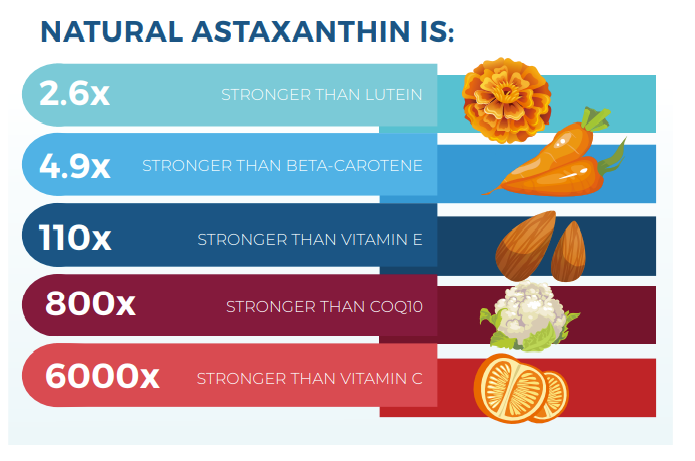
Astaxanthin can boost a dog’s antioxidant capacity, helping to control oxidative stress. Natural astaxanthin is a targeted mitochondrial ingredient whose antioxidant activity is reported to be higher than that of beta carotene, lutein and vitamin E.
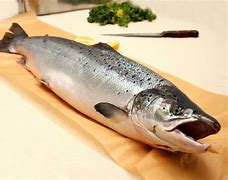
Natural astaxanthin is red in color and belongs to the family of antioxidants called carotenoids, which are most commonly found in fruits and vegetables. However, unlike carotenoids such as the beta-carotene found in carrots, lycopene found in tomatoes, and lutein found in spinach, natural astaxanthin is found in red-colored seafoods like lobster, crab, shrimp and salmon. For dogs and people, the main dietary source of natural astaxanthin is wild salmon. However, salmon is a rare protein in commercial dog food, and a dog would have to consume four filets of wild king salmon daily to get a beneficial amount of astaxanthin.
Natural astaxanthin has some features that make it unique among antioxidants:
It is one of nature’s most powerful antioxidants, which means it is very good at quenching free radicals. One study revealed that astaxanthin is 6,000 times stronger than vitamin C, 110 times stronger than vitamin E, and even three to five times stronger than its cousin carotenoids, lutein and beta carotene.
Astaxanthin is a fat-soluble antioxidant that can access cell membranes, unlike water-soluble antioxidants. This is important because cell membranes are made of lipids, which are especially sensitive to oxidation. Natural astaxanthin has a unique structure that can span the cell membrane from end to end for better membrane coverage and antioxidant protection.
Though it favors all membranes, as much as 50% of all membrane-bound astaxanthin has been found in mitochondrial membranes, the energy-producing parts of the cell that also produce free radicals as a by-product of their metabolic activity. This means that natural astaxanthin is poised at the site of free radical production to help neutralize these unstable molecules before they start a chain reaction that can damage healthy mitochondria and tissue.









 Diane Weinmann's HOPE