Pancreatitis in Dogs

By Dr. Karen Shaw Becker
 

Pancreatitis (inflammation of the pancreas) is a very serious condition that probably doesn’t get the attention it warrants. In humans, the disease is reportedly fatal in 5 to 15 percent of cases. In dogs, it’s even more dangerous — from 27 to 58 percent of patients with the disease don’t survive it.1

Inflammation of the pancreas disrupts its normal functions, which include secreting insulin to balance blood sugar levels, and producing digestive enzymes such as amylase, lipase and protease, which are necessary for nutrient digestion and absorption.

Severe damage to the pancreas can trigger a massive inflammatory reaction known as systemic inflammatory response syndrome (SIRS), characterized by increased capillary permeability, fever, rapid heart rate, a drop in blood pressure and ultimately, multiple organ failure. In addition, as the result of a process called autodigestion, dogs can develop severe necrotizing pancreatitis in which entire portions of the pancreas are completely destroyed.

Potential Risk Factors and Triggers for Pancreatitis in Dogs

Risk factors for canine pancreatitis include:

Obesity Hypothyroidism
Diabetes Middle age or older
Cushing’s disease Small breed
Pre-existing gastrointestinal (GI) disease

According to veterinary journal dvm360, about 25 percent of dogs with acute diabetes also have acute pancreatitis.2 The condition is also more common in dogs who have had recent surgery, especially procedures involving the abdominal cavity. In addition, certain drugs are also suspected of triggering acute pancreatitis, including anti-seizure drugs such as potassium bromide or phenobarbital, prednisone and other catabolic steroids, and even the diuretic Lasix.

Dietary indiscretions are also very commonly implicated in attacks of pancreatitis and typically involve high-fat foods such as fatty meats, turkey skin, bacon grease, etc. In my experience, processed pet food also plays a role in pancreatitis in pets (more about that shortly).

Any dog can develop pancreatitis, but several small breed dogs are predisposed, including the Miniature Schnauzer, Cavalier King Charles Spaniel, Cocker Spaniel, Sheltie, Toy Poodle and the Yorkshire Terrier.

Signs to Watch For

Pancreatitis in dogs can cause a variety of symptoms that are also seen in many other conditions, and they can range from mild to very severe. A 1999 study showed that in dogs with acute pancreatitis that ultimately proved fatal, the following symptoms were reported:3

Anorexia (91 percent) Abdominal pain (58 percent)
Vomiting (90 percent) Dehydration (46 percent)
Weakness (79 percent) Diarrhea (33 percent)

When the disease is very severe, inflammation can become systemic, which can cause shock or cardiovascular (circulatory) collapse. The most common symptoms veterinarians see when examining dogs with acute pancreatitis are dehydration, excessive drooling and lip-licking (signs of nausea), and abdominal pain. Since these symptoms are present in a wide variety of diseases and disorders, a thorough diagnostic workup should be performed, including bloodwork and x-rays or scans.

Veterinarians have historically diagnosed pancreatitis using a blood test called the PLI (pancreatic lipase immunoreactivity) test. More recently, Texas A&M University has developed a test for canine pancreatic-specific immunoreactivity called the Spec cPL test. There’s also now a cPL test that offers results almost immediately at the vet clinic, without the need to ship the sample to an outside lab.

Treatment Options and Prognosis for Dogs With Pancreatitis

There is no procedure or medication that cures pancreatitis, so treatment is supportive, with the goal of reducing the dog’s symptoms. Supportive therapy includes:

  • Intravenous (IV) fluids to address dehydration, hypovolemia (decreased blood volume) and electrolyte imbalances
  • Pain management
  • Antiemetics to alleviate nausea and vomiting
  • Enteral nutrition (tube feeding)

In most cases of pancreatitis, antibiotics are unnecessary and unhelpful. In addition, nonsteroidal anti-inflammatory drugs (NSAIDs) and steroid medications like prednisone should be avoided.

Dogs who suffer an acute bout of pancreatitis can have different outcomes. Some recover fully with no further issues, some recover but go on to suffer from chronic pancreatitis, and some dogs have recurrences of acute pancreatitis. In dogs with coexisting conditions such as diabetes, successful treatment of pancreatitis depends on successful treatment or management of other diseases.

Preventing Pancreatitis (or Its Recurrence)

Veterinarians are seeing increasing numbers of both dogs and cats with pancreatitis, and I’m convinced processed pet food plays a big role. High-carbohydrate diets affect insulin levels, which affect the pancreas.

KetoPet Sanctuary has made some interesting discoveries about dogs consuming unadulterated (raw) fat versus dogs eating cooked (processed) fat, in that raw fat (even very high-fat diets) did not cause pancreatitis in their cohort of patients, but cooked fat did induce pancreatitis in some patients, even in small amounts.

So the question we should be asking is, do the highly processed, poor-quality fats (heated repeatedly, up to four times during the manufacturing process before “pet food” is created) contribute to the epidemic of chronic, low-grade pancreatitis occurring worldwide in pets? I’m suspicious.

In addition, processed pet food is devoid of natural enzymes that help reduce pancreatic stress, which is why I suspect the pancreas of many pets exists in a state of chronic, low-grade inflammation. Food that doesn’t contain natural enzymes triggers the pancreas to try to make up the difference. If it fails to perform adequately, pancreatitis results. In addition, many pets are fed high-fat diets, which we know are a cause of pancreatitis.

Dogs (and cats) are designed to get supplemental enzymes from the foods they consume, since their ancestral diet is loaded with living foods that contain abundant enzymes. In the wild, dogs consume portions of the GI tracts of their prey, which is a rich source of enzymes. They also consume the glands, including pancreatic tissue, which are abundant in naturally occurring enzymes.

Even if you’re a raw feeder, chances are you aren’t giving your dog the stomach contents of prey animals, since this is where parasites reside. What this means is that even pets consuming a nutritionally balanced, species-appropriate raw food diet can be enzyme deficient.

One of the most important steps you can take to lower your dog’s risk of a repeat episode of pancreatitis is to provide a rich source of digestive enzymes, either through feeding pancreatic tissue (which is unappealing to most pet parents, and can be difficult to source) or a supplement. This will help reduce the stress your pet’s pancreas is under to produce enough enzymes to process food.

So if you have a dog who’s currently dealing with pancreatitis, has had it in the past or if you want to take preventive measures to reduce the likelihood your pet will develop the condition, adding digestive enzymes to his food that contains no cooked or processed fat at mealtime is a great way to help reduce pancreatic stress.
 

Reducing Vet Clinic Anxiety: Fear Free, Low Stress Handling and Cat Friendly Veterinarians

Reducing Vet Clinic Anxiety: Fear Free, Low Stress Handling and Cat Friendly Veterinarians

By Victoria Schade and comments by Diane Weinmann

A visit to the vet clinic can be stressful for both pets and their people. For many cats and dogs, a simple wellness exam is actually a series of increasingly scary and uncomfortable manipulations that might result in the animal lashing out at the practitioner. And for pet parents, the stress of watching their best friend go through necessary yet anxiety-inducing exams might deter them from returning to the veterinarian for important health checks.


That doesn’t have to be the case. Three revolutionary certifications are changing the way veterinarians interact with their patients, and in turn, are changing the way pets and their people view their time in the vet clinic. Practitioners report less stress on both sides of the exam table, which leads to better diagnostics and happier, healthier patients.


What Is Fear Free Certification?


Developed by Dr. Marty Becker in 2016, the mission of Fear Free Certification is to prevent and alleviate fear, anxiety and stress in pets by inspiring and educating the people who care for them. The certification process includes a series of courses, both online and in person, that is available to veterinary professionals as well as all individuals employed at a vet clinic, from veterinarians and nurses to customer service representatives and practice managers.


The Difference Between Traditional and Fear Free Handling


According to Dr. Joanne Loeffler, DVM and Fear Free Certified Practitioner at the Telford Veterinary Hospital in Telford, Pennsylvania, the primary difference is the way the practitioner interacts with the patient.


“The traditional way of doing veterinary medicine was to make the pet deal with whatever procedure we needed to get done,” says Dr. Loeffler. “That would mean pinning an animal down, forceful restraint, etc., for sometimes unnecessary things, like a nail trim.”


Dr. Loeffler says that using Fear Free techniques allows the practitioner to change their approach to consider the animal’s emotional state in order to accomplish procedures. She adds, “Fear Free is a culture change from the way most of us were taught how to handle animals. In the time I’ve been involved in Fear Free, I’ve seen such a change in the compliance rate of my patients and clients. Fear Free is about treating the animal with respect and working with them to realize the vet’s office isn’t such a scary place.”


Fear Free Certification and the Diagnostic Process


“Lower stress means better diagnostics,” says Dr. Loeffler. “By having a more compliant patient, we can get more accurate heart rates, temperatures and blood pressures, and even some bloodwork values (like glucose) are more accurately assessed on a calm patient versus a stressed one. Also, when a pet has continued low-stress visits with us, a pet owner will be more likely to bring them in earlier if they get sick, which often translates into a better and quicker response to treatment.”


What Is the Cat Friendly Practice Program?


Established by the American Association of Feline Practitioners (AAFP) and the International Society for Feline Medicine (ISFM), the Cat Friendly Practice program (CFP) is a global initiative designed to elevate care for cats by reducing the stress for the cat, the caregiver and the entire veterinary team.


According to Dr. Elizabeth J. Colleran, DVM, MS, Diplomate Feline Specialty Practice and Cat Friendly Practice Task Force Chair, CFP is a self-paced online program that walks veterinary practices and professionals through all the tasks necessary to reduce the fear and stress of a cat’s visit to the vet clinic.


How Cat Stress at the Veterinarian Is Different Than Dog Stress


“Cats have a very deep connection to their home. They don’t like to leave it. Ever.” Dr. Colleran explains. “The anxiety begins as soon as they leave their ‘home range.’ From there, each new experience adds a bit more stress: strangers, loud noises, unusual odors, quick movements. Once fully anxious, they will stay that way for a long, long time. Cats have uniquely heightened senses and are more sensitive to stimuli than many other animals—sensations can be overwhelming for cats.”


Cats can also show redirection anger, which means that they will lash out at anyone in front of them at the peak moment of stress. Many owners will try to calm their cats during stressful times, putting themselves at risk of scratching, or even worse, a cat bite.


Benefits for Veterinarians Using Cat Friendly Practice Protocols


Cat Friendly Practice veterinarians note that the designation can decrease anxiety for everyone in the exam room. In a 2017 survey, CFP veterinarians said that their patients are less stressed; their clients are happier about the visit experience; and their clients noticed that how much these specialized vets care about cats. “Understanding how cats experience the world gives CFPs the tools to make the changes essential to make health care easy,” Dr. Loeffler says.


What Is Low Stress Handling Certification?


The Low Stress Handling Certification program was developed by Dr. Sophia Yin and released in 2014. Certification involves completing 10 online lecture and lab courses, passing a multiple-choice exam at the end of each lecture, and passing a final multiple-choice exam. Dr. Sally J. Foote, DVM, CABC-IAABC, LSHC-S and Low Stress Handling Silver Certified veterinarian states, “This is an in-depth program in the fundamentals of behavior, understanding the patient in front of you right now, and how to approach and deliver care right now to this animal in a less stressful way.”


The Difference Between Traditional and Low Stress Handling


Dr. Foote notes a connection between the traditional use of force during an exam and the animal’s stress levels. “The most common misstep by veterinary clinics not using Low Stress is adding more people for restraint to get the job done, like vaccinations, nails or blood draw, and not removing or reducing the triggers that are increasing the stress in the animal.” She adds that recognizing when the animal has had enough, and either using medication to assist the exam process or splitting up care, is also important for the health of the animal and safety of the practitioner.


How Does Low Stress Handling Aid Veterinarians and Pets?


Low Stress Handling techniques teach veterinarians to better understand the emotional states of the animals they’re examining, which can reduce the animal’s reactivity, and in turn reduce injury risk to the practitioner. Dr. Foote states that clients are more likely to come in when care is needed rather than trying to avoid the stress of care on the pet.


“I have also heard many veterinarians say that the client finds the veterinarian more credible because the veterinarian recognizes what this pet is feeling,” says Dr. Foote. “So if this vet can recognize stress and fear, they certainly must be able to recognize a bigger medical problem.”


Helping Your Pet Feel More Comfortable at the Vet


Dr. Foote says that creating a handling plan based on the animal’s needs and combining the efforts of both the veterinarian and pet parent in reducing the patient’s stress is the most effective approach.


She suggests open communication with your veterinarian as a way to reduce stress in the exam room. “Tell the veterinary staff and veterinarian before the exam begins what part of your pet’s body they do not like touched [and] how they like to be approached—for example, no reaching or avoid looking in the eye.”


Cats


Much like with dogs, the process of traveling to the veterinarian often sets the stage for intensifying anxiety. Dr. Loeffler says that one of the most powerful ways cat parents can reduce this stress buildup is to teach their cats to love their cat carriers. Leave the carrier out and place bedding and cat toys inside well in advance of a scheduled visit, so that when the time comes to head to the cat veterinarian, the cat will already have a positive association with the carrier.


Dogs


Dr. Loeffler believes that the first step to a happier vet visit for dogs is a stress-free car ride, as well as teaching your dog simple placement cues that are helpful during the exam. Dr. Loeffler says that teaching a dog to stand for an exam and blood draw can go a long way in making the exam more comfortable for everybody involved.


Bringing a hungry pet and high-value dog treats can also help, as well as establishing a comfort level with muzzling beforehand, since veterinarians often need to examine areas that may be painful, which puts them at risk for biting.


You can also talk to your veterinarian about using anxiety management products for dogs or cats, like holistic calming treats or sprays that can help to diffuse stress.  Diane recommends rescue remedy the premade Bach Flower Essence.  Give 5-6 drops to your dog or cat directly into their mouth or on food 10 minutes before leaving your house.  You can re-dose with no issues and there are no interactions with any meds your pet may be on!


How to Check for Dog Ear Problems

How to Check for Dog Ear Problems


By Teresa K. Traverse and comments by Diane Weinmann

Having a dog ear infection or other dog ear problem can cause a great deal of discomfort, so it’s important for pet parents to notice when there’s an issue. Most pet parents are probably not in the habit of peering into your dog’s ears every day.


To help protect the health of your dog’s ears, it’s smart to get into a routine of checking them at least once a week. That way you are able to spot any potential dog ear infections or problems, and you can take proactive measures before these issues develop into more serious dog ear problems.


Getting your dog used to having their ears handled as a puppy will make it easier to handle them when checking for or treating dog ear infections in the future.


Here’s some advice from veterinarians on how to check your dog’s ears, what to look for and how to keep them healthy.


Signs of Dog Ear Problems


You should check the ears about once a week, especially if your dog has had skin or ear issues in the past. If you have a hanging ear dog breed, be sure to lift up the flap and check on their ears more often to watch for infection or disease. Dr. Loft says you can shave around the ear opening so it’s not as hidden.


Before you get out the dog hair clippers, though, make sure to ask a professional groomer or veterinarian how to shave this area properly to avoid rashes or wounds that can lead to infection and irritation.


Some surefire signs that your pup is suffering from a dog ear problem are:


  • Pungent odor
  • Discharge
  • Blood
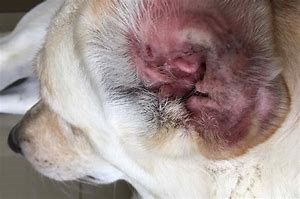
  • Irritated or red skin
  • Inflammation


Dr. Goetz cautions that if part of your dog’s ear feels like a pillow or balloon, he might have an aural hematoma. Essentially, the dog has broken blood vessels underneath the skin, which causes the ear flap to start to fill with blood. If you notice that your dog’s ear flap has started to look inflated or swollen, you should take them to your veterinarian right away. They will examine the ear and decide on an appropriate course of treatment.


If you notice any of this in your dog’s ears, then it is time to make a trip to your veterinarian.


Common Behaviors That Indicate Dog Ear Problems


If your dog is excessively scratching or pawing in the ear, tilting his head or excessively flipping his head, it may also be a sign that he is experiencing discomfort, says Dr. Matthew Goetz, DVM, medical director for the Arizona Animal Welfare League and SPCA in Phoenix.


If your dog is turning in circles, off balance, ataxic or uncoordinated, tripping over objects, or showing signs of vertigo, it could be a sign of a middle or inner ear infection, which is serious and should be treated immediately, says Dr. Klaus Earl Loft, DVM, a veterinary dermatologist at Angell Animal Medical Center in Boston, Massachusetts.


Another sign of a dog ear problem that you may not have expected is if you notice other dogs continually sniffing at your pup’s ear. Dr. Loft suggests that this could also be a sign of ear infections in dogs.


How a Vet Might Treat Your Dog


If your pup’s ears show any signs of infection, or you’ve noticed any of the behaviors that indicate an infection, you need to take your pet to see the vet before trying any type of treatment at home.


“The reason why it’s really important that you go see your veterinarian before you start any medication is that it’s important that the vet be able to look into your dogs’ ear and make sure that the ear drum is still intact. If you have a ruptured ear drum, and you put certain medications in there, it can cause deafness,” says Dr. Goetz.


A vet will perform an ear swab first. The ear swab tests for yeast, bacteria, ear mites and white or red blood cells. If you suspect an ear infection, heading to the vet is important.


A vet might need to send test results to a lab to determine the best treatment, depending on the infection. Most veterinarians can look at the sample through a microscope and determine the cause of acute and external ear infections. Chronic and middle/inner ear infections often need a culture that is then submitted to a lab for evaluation.


Dogs will typically receive antifungal or antibacterial medications, says Dr. Goetz. For a really severe ear infection, Dr. Goetz may prescribe oral antibiotics. If you’re having trouble administering ear medication, Dr. Goetz advises asking your veterinarian about long-lasting ear medications, which can last for 10-14 days.


How Often Should You Clean Dog Ears?


When it comes to cleaning dog ears, Dr. Loft warns pet parents that too much ear cleaning can actually damage your pet’s ears.


“I’m not encouraging people to clean the ear every day and do it as a precautionary, because that sometimes will render the ear more susceptible to maceration [when the skin breaks down after exposure to moisture] or infections,” says Dr. Loft.


Although you shouldn’t be cleaning your dog’s ears often or as a preventative method, there may be instances where you will want to clean them. This should be done after you’ve consulted your vet and discussed treatment.


If your dog is prone to ear infections, you may want to consider cleaning his ears weekly or monthly. You will also want to take extra precaution if you take your dog swimming or submerge his ears during a bath. Try drying them out afterwards or even cleaning them, since moisture in the ear can cause infection. Most veterinary recommended ear cleaners contain a safe drying agent which allows residual water to evaporate, which lessens the risk of infection after swimming or bathing.


How to Clean Dog Ears


According to Dr. Loft, “It’s best to stay away from harsh products like alcohol, vinegar or peroxide, which can make a bubbly sound inside the ear and scare your dog.” To clean your dog’s ear, you should always use an ear cleaner that is made specifically for dogs.


Never use cotton swabs on or in your pet’s ears for any reason. This can lead to serious injury and a trip to the emergency vet.


Here are the steps:


  1. Dr. Loft recommends holding the bottle over the ear canal and gently squeezing the solution into the ear. He advises not putting the bottle or tip in the ear directly.
  2. You then massage the base of your dog’s ear to loosen up the debris within the ear
  3. Let your dog shake their head. By shaking their head, your dog is bringing the softened wax and debris to the front of the ear canal, which makes it easier for you to clean away.
  4. Use a large cotton ball to wipe away all the wax and debris. Be gentle when wiping inside your pup’s ears. The skin within the ear is very sensitive and can be injured if you continually wipe at it.


Chronic Dog Ear Infections


Goetz says having your dog’s ear infections treated early is important for ear health. This is especially crucial for chronic ear infections.


Some chronic infections are so bad that surgical removal of the ear canal is the only option left for pain control—total ear canal ablation (TECA) surgery.


“If you have chronic ear infections that go untreated, you’re definitely going to be predisposed to having hearing loss earlier in life,” says Goetz.


Diane, animal communicator and holistic healer for pets highly recommends a product called Canine Ear spray by Dr. Melissa Shelton that will help reduce ear infections on your dog if used regularly.  Many of my clients have had great success with regular use. Here is the info about the product below:


Ingredients:  Fractionated Coconut Oil, Water, Grain Alcohol, Essential Oils of Copaiba (Copaifera officinalis) , Lavender (Lavendula angustifolia), Lemongrass (Cymbopogon flexuosus), Melaleuca alternifolia, Citronella (Cymbopogon nardus), Clove (Syzygium aromaticum), Helichrysum (H. italicum), Rosemary (Rosmarinus officinalis Verbenone Chemotype), Lemon (Citrus limon), Frankincense (Boswellia carterii)Canine Ear Spray is intended as a spray to be used with a variety of ear conditions in dogs.  Essential oils contained within this product exhibit anti-parasitic, anti-fungal, anti-bacterial, anti-tumoral, and anti-inflammatory properties.  In our veterinary hospital, the use of this spray has proven incredibly beneficial for dogs with chronic ear conditions, and especially those that are resistant to many traditional drugs and antibiotics.  Many of our patients were near surgical removal of the ear canal (Total Ear Canal Ablation or TECA surgery) prior to starting on the Canine Ear Spray.  In clinical use, we see great comfort with the use of the spray and also vast improvements in infection, swelling, and pigmentation.  A major benefit to a spray such as this – is that is actually supports a healthy immune system, instead of shutting the immune system off – as in the case with steroid use.

There are many factors that may contribute to your dog’s chronic, recurrent, or first time ear condition.  Please read more about other changes you can make in your dog’s lifestyle that will help you to combat chronic ear infections and allergies.

Directions for Use:

Shake well before each use.  Spray 1-3 pumps into the ear(s), once to twice a day.  You are not trying to saturate the ear canal or drip the solution into the ear canal directly.  Coating the outer surface of the ear and upper part of the exposed ear canal, will result in the “traveling” of this solution to deeper parts of the ear.  Monitor the ear tissues for any signs of irritation, and stop use if noted.  Generally this recipe is used for 2 weeks or longer.  Work with your veterinarian to determine frequency and length of use, based on response and recheck ear smear results.

This recipe has been used long term, for several months at a time or more when needed.  However, if irritation occurs, please discontinue use.  Although this new formulation of the Canine Ear Spray rarely creates irritations, if it does occur, placing Fractionated Coconut Oil into the ear and onto any irritated surfaces will help decrease any issues.  Fractionated Coconut Oil is safe for use in the ear – however we do not recommend filling the entire ear canal with it.

If your dog is very resistant to having a “spray” in the ear, you can spray the product onto your fingers and wipe gently into the ear and ear canal.


To order

http://www.animaleo.info/canine-ear-spray.html


Chronic vomiting in cats

Chronic vomiting in cats

By Dr. Karen Shaw Becker

Chronic vomiting in cats is unfortunately so common that many pet parents and even some veterinarians view it as “normal” behavior. However, in my professional opinion, chronic vomiting, even in kitties with hairballs, is a sign something’s wrong and needs to be investigated. After all, big cats in the wild don’t routinely vomit.

Wild cats also don’t have hairball issues, which is why I believe recurrent hairballs in housecats is also a sign that something’s amiss. Other common causes of persistent vomiting in cats include a poor diet, food intolerances, eating too fast and too much time in between meals.

Other causes include enzyme deficiencies, gastrointestinal (GI) problems that result in hairballs, toxin ingestion and underlying medical conditions like kidney disease and GI cancer.

Problem: Hairballs

If your kitty is vomiting hairballs, you’ll see cylindrical wads of hair and debris, probably some undigested bits of food, and usually a little phlegm to hold the disgusting little mess together.

Long-haired cats and cats who are really into grooming themselves — and often all the other cats (and dogs, and even people) in the house — typically have more hairball issues than normal. Cats eating dry food don’t get enough moisture in their diet, so their organs tend not to function as efficiently as they should. And unlike dogs, kitties don’t make up the deficiency by drinking lots of water, so they often end up chronically mildly dehydrated.

A GI tract that is moisture-depleted is less able to transport a hairball than the digestive tract of a well-hydrated cat eating a species-appropriate diet. Cats in the wild pass hair in their feces on a regular basis. Felines have tiny bristles on their tongues and are designed to process swallowed hair. Recurrent hairballs are abnormal.

What to do: Brush your cat and feed a moisture-rich diet. To help prevent your cat from swallowing so much hair that it forms hairballs in his GI tract, you’ll need to brush him regularly. If he’s grooming everyone in a multi-cat household, you’ll also need to brush the other kitties.

If your cat is eating exclusively dry food and you can’t or aren’t willing to switch to a different diet, I recommend adding bone broth to his dry food and a bit of fiber to each meal, or a petroleum-free hairball remedy, or even a dab of coconut oil on his front paw. I also recommend fiber and coconut oil together. Kibble fed cats definitely need additional GI lubrication to help ingested hair pass through the digestive tract.

Problem: An Underlying Medical Condition

Many cats today have inflammatory bowel disease (IBD), or irritable bowel syndrome (IBS), which causes intermittent vomiting. IBD can progress to GI lymphoma in cats, which is another reason that chronic vomiting in any kitty should be investigated medically.

In addition to lymphoma, other types of GI cancers can also cause vomiting, as can metabolic disorders like hyperthyroidism, which is a very common disease diagnosed in older kitties. Organ disease or a malfunction of the organs of detoxification, including the liver and the kidneys, will also cause vomiting.

What to do: Make an appointment with your veterinarian. Your vet should first rule out all potential medical reasons for vomiting, for example kidney failure, liver failure, hyperthyroidism or GI cancer.

If all those problems are ruled out and your veterinarian is concerned about potential IBD or IBS, I recommend submitting a blood sample to the GI lab at Texas A&M University for a functional GI test. That test can determine if your cat is dealing with malabsorption and maldigestion, or a disease of the small intestine or pancreas.

Many cats have a reduced number of hairballs and vomiting episodes when their unbalanced microbiome is addressed by switching to a species-appropriate diet, or at a minimum, have probiotics added to their food.

Problem: Poor-Quality Cat Food

Cats fed processed diets containing rendered ingredients may vomit due to poor-quality, biologically inappropriate ingredients. Rendered ingredients that wind up in pet food are leftovers from the human food industry, and can include animal pieces and parts like bird feathers, snouts, beaks, eyes, hooves and nails.

These are very low-quality ingredients with low-to-no bioavailability that are difficult for cats to digest, which can cause GI upset. Cats tend to have upper GI issues, so they vomit. Dogs typically have lower GI issues, and are more apt to develop diarrhea.

Since the introduction of processed pet food, many cats have been fed diets that are not species-appropriate, which has led to the development of food intolerances and allergies — a very common reason for intermittent vomiting over a period of months or years.

If your kitty is at a healthy weight with a normal energy level, but just throws up occasionally, food sensitivity could be the culprit. Food sensitivities develop when the same foods are fed over and over, which happens a lot with cats because they get addicted to certain foods and refuse to eat anything else.

Feeding the same type of protein, even if it’s excellent human-grade quality, can over time create GI inflammation and food sensitivities. So it’s not just about feeding good-quality protein, but also switching proteins frequently. I recommend transitioning cats with GI upset to human-grade cat food (which unfortunately can be very difficult to find), and then to a fresh food diet.

What to do: Upgrade your cat’s diet. I prefer a raw diet for cats who will eat it, but even gently cooked fresh food is a huge improvement over processed pet food. I also recommend rotating proteins every three to four months to avoid hypersensitivity reactions.

If you believe your cat may have a food hypersensitivity or allergy, I recommend Dr. Jean Dodd’s Nutriscan saliva test, which can provide help in choosing a diet that’s less reactive for your kitty. The good news is I’ve found that correcting food sensitivities, removing noxious or unnecessary ingredients from a cat’s diet, as well as transitioning to a species-appropriate, fresh food, natural diet eliminates most of the common causes of vomiting in cats.

If you feed your cat treats, be sure to offer only high-quality treats. You don’t want to spend money upgrading your kitty’s diet and then feed junky treats that can create GI inflammation and vomiting. So if you feed treats, it’s important to offer the highest quality you can afford. Or better yet, make homemade cat treats.

In store-bought treats, you should look carefully at the label and avoid anything containing propylene glycol, FD&C red #4, ethoxyquin, chemical dyes, emulsifiers, surfactants and other questionable ingredients. All those additives, preservatives and other chemicals can cause GI inflammation and vomiting.

It’s also important to note that contrary to what many people think, cats don’t need milk. Animals are only suited to digest and process milk from their own species. Drinking the milk of a different species past weaning can cause or exacerbate GI inflammation. If your cat can’t tolerate cow’s milk, it can cause vomiting, so if you’re giving him milk, I recommend you stop offering it.

Problem: Enzyme Deficiencies

Sometimes a kitty’s pancreas doesn’t produce enough digestive enzymes, such as lipase, protease and amylase, which can result in acute or chronic pancreatitis. Pancreatitis (inflammation of the pancreas), is very common in cats, and even if there are no other obvious symptoms, can be an underlying cause of intermittent vomiting.

What to do: Supplement with digestive enzymes. Cats evolved to eat an entirely fresh food diet, primarily mice, which is a very rich source of digestive enzymes that is entirely missing from processed cat food. That’s why I recommend adding a digestive enzyme to your cat’s diet.

If your kitty’s pancreas is producing adequate enzymes, adding additional enzymes to her food won’t cause any problems. However, if her pancreas is not secreting sufficient enzymes, supplementing ensures she’ll have what her body needs to process her food. Providing a high-quality digestive enzyme can help reduce vomiting as well as the potential for pancreatitis.

Problem: Speed Eating

Another very common reason cats throw up is from eating too fast. Your cat’s esophagus is horizontal and flat. Everything he eats has to travel horizontally before it moves into the stomach.

In cats with a tendency to wolf their meals, the food can back up in the esophagus and push against the lower esophageal sphincter. This can result in regurgitation of part or all of the meal, undigested, within moments of swallowing. This seems to be a special problem in multi-cat households in which all the kitties are fed in the same area at the same time, which can spark competition.

There’s usually at least one gobbler in the group, and when the food bowls hit the floor, he scarfs his own meal in a flash and then visits everyone else’s bowl to see about leftovers. He’s such a little glutton that he often ends up returning all that hastily eaten food to the floor.

What to do: Provide separate eating areas in multi-cat households. If you have a scarfer in the house, you need to feed your kitties in separate areas so they can’t see or hear the others eat. It’s best if you can close the door behind each cat, because it won’t take long for your gobbler to figure out where the rest of the bowls are if he can still get to them.

Give them about 20 minutes of solitude to eat their food slowly and uninterrupted, then remove the bowls. This may slow down your gobbler, reduce or eliminate the vomiting, and keep him from getting fat. It also allows your slower-eating kitties to relax while they dine.

If you have just one cat but she’s a gobbler, you may need to split her meals into smaller portions and feed her more often so the food doesn’t come right back up. You can also use a mini-muffin tin to slow her down. Just put a bit of food in each individual muffin cup. Moving from cup to cup will naturally slow her down.

If you don’t own a mini muffin tin, you can also try spreading the food out over a large cookie or baking sheet. If you prefer something more high-tech, there are slow-feed bowls you can purchase that provide essentially the same benefit.

Problem: Too Much Time Between Meals

Cats fed on a regular schedule, for example, at 7:00 AM and 5:00 PM each day, tend to start looking for their meal an hour or so earlier because their bodies know it’s getting to be that time.

Around the same time, your cat’s stomach begins releasing digestive substances like hydrochloric acid, gastric juices and bile in anticipation of the upcoming meal. If you’re late with her meal, she may throw up a white foamy liquid mixed with a bit of yellow bile.

This is because the digestive substances irritate the lining of the stomach when there’s nothing in there for them to work on, so your cat’s body gets rid of some of the acid to prevent further irritation.

What to do: Offer a pre-meal snack. If this scenario is occurring with your cat, give her a little something to snack on before you feed her, like a treat or a small bite of her meal. This will give her stomach juices something to digest and should alleviate the vomiting.

Problem: Toxin Ingestion

Rarely, poisoning can also be the cause of acute vomiting in kitties. It’s rare, but it happens. If you have a cat who is otherwise healthy, especially an indoor-outdoor kitty, and he suddenly starts vomiting, you should be concerned he has ingested something toxic.

Even if your cat is indoors only, unfortunately, many types of houseplants are poisonous for cats — and many cats like to sample houseplants. It’s important to make sure you’re not bringing anything into your home that could potentially poison your feline family member.

It’s important to note that since cats are designed to eat fresh food, they’ll nibble on anything fresh in your house if they’re not provided a fresh food diet. Since felines don’t have a biological requirement for plants, it’s a good bet most house-plant sampling cats are trying to supplement a processed diet with living foods.

What to do: Offer safe greens to your cat, and safely store all household chemicals out of reach. If you have kitties that like to snack on your houseplants, I recommend providing them roughage that is more palatable and safer than houseplants. You can do this in the form of cat grass, which is wheatgrass, or by offering fresh sunflower sprouts.

Any pesticides, herbicides or household cleaners that are stamped “call poison control” need to be safely stored out of the way of cats. You should assume that any cleaner you’re using in your house will ultimately be ingested by your cat, because kitties lay on surfaces, and they’re fastidious groomers.

All your household cleaners should be cat-friendly. I can’t emphasize enough that if you are still using traditional toxic household cleaners, if you have cats, one of the best gifts you can give them is to switch to nontoxic household cleaners.


What Causes Fatty Tumors In Dogs?

What Causes Fatty Tumors In Dogs?


Toxic Overload

Allopathic medicine is baffled by the cause of fatty tumors in dogs, usually attributing them to random chance, age and genetics. While age and genetics can contribute to the formation of lipomas, there’s something else that needs attention …

Toxins.

The build-up of toxins is often overlooked by mainstream veterinary medicine. From a holistic perspective, when lipomas form it’s a sign that the body is congested and energy isn’t flowing like it should. Toxins and fat get trapped and walled off by the body’s immune system as it pushes contaminants to the outside in an effort to protect and sustain internal organ function.

Your dog’s lymphatic system consists of a network of lymph ducts, nodes and vessels that transport lymphatic fluids to the bloodstream. A major player in the body’s immune function, the lymph system delivers nutrients to its cells while removing wastes.

When your dog’s elimination systems become congested and slow down, this stagnation can lead to blocked circulation causing lipomas and other chronic diseases. This build-up of wastes is sometimes referred to as a dog’s “toxic load.”

So where do these toxins come from? Your dog’s every day environment. Toxins can include:

·         Vaccines

·         Environmental contaminants like glyphosphates, pesticides and herbicides

·         Water contaminates like chlorine and fluoride

·         Heavy metals

·         Pharmaceuticals

·         Flea and tick medications

·         Grooming products like chemically laden shampoos

[Related: How can you minimize your dog’s exposure to toxins? Here are some tips]

Diet

Another contributing factor to toxic load is diet. Everything you feed your dog either contributes to disease or fights it. The cleaner his diet, the less your dog’s body needs to process it.

When your dog eats, his organs (liver, gallbladder and pancreas) decide how to react. This means they either release the enzymes needed to break down and assimilate nutrients or assume the body is under attack and issue an immune response. This leads to inflammation and slow digestive motility resulting in food staying in the digestive tract too long.

When foods aren’t properly broken down, it can result in the formation of toxins which can lead to a vicious cycle of stagnation and chronic inflammatory conditions.

Too Much Fat?

One of the problems about fatty tumors in dogs is the belief that too much fat equals fatty tumor formation. This isn’t true if the body is breaking down the fats.

It’s actually the type of fat that’s the problem, like the rancid and oxidized oils found in kibble. Some examples are rendered animal fat, vegetable oil and GMO soy and canola oils. Sadly, canola oils can be found even in higher end and “all natural” treats.

Your dog’s body sees these undigested oils as immune attackers and the body goes into defense mode, protecting itself by depositing and walling off fat mixed with toxins in the form of a lipoma.

If you suspect your dog isn’t breaking down his food properly, make sure he’s getting clean filtered water, pre and probiotics and digestive enzymes daily.  If you’re a kibble feeder, consider moving your dog to a fresh food diet.

When traditional raw isn’t in your realm of possibility, options like commercial raw food, dehydrated and freeze-dried dog foods are available. You can also home cook for your dogs to add variety, especially if you have senior dogs.

There are also some natural foods that you can add to your dog’s food to help prevent lipomas. Here are some of my favorites:

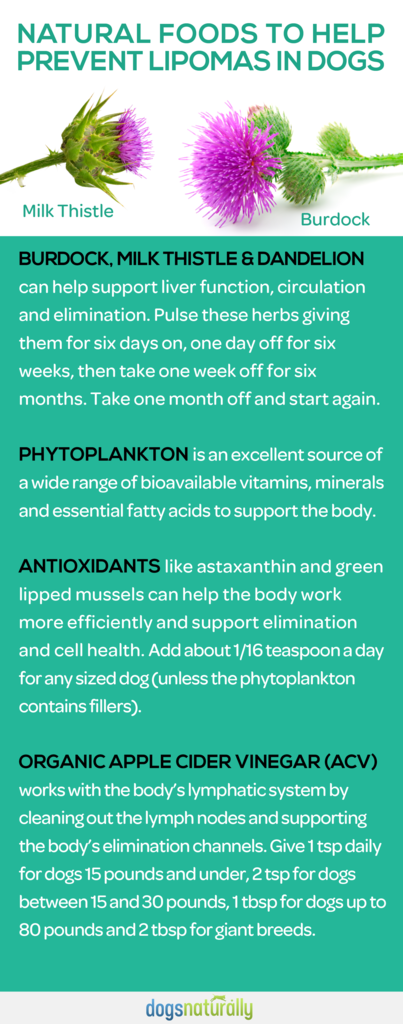
·         Add a basic regimen of burdock, milk thistle and dandelion can help support liver function, circulation and elimination. Pulse these herbs giving them for six days on, one day off for six weeks, then take one week off for six months. Take one month off and start again.

·         Phytoplankton is an excellent source of a wide range of bioavailable vitamins, minerals and essential fatty acids.

·         Antioxidants like vitamin C and amino acids can help the body work more efficiently and support elimination and cell health.

·         Organic apple cider vinegar (ACV) can be a powerful ally in the prevention and treatment of lipomas. ACV assists in liver detoxification as it stimulates circulation and energy flow. ACV works with the body’s lymphatic system by cleaning out the lymph nodes and supporting the body’s elimination channels. Give 1 tsp daily for dogs 15 pounds and under, 2 tsp for dogs between 15 and 30 pounds, 1 tbsp for dogs up to 80 pounds and 2 tbsp for giant breeds.

Movement Is A Must

Circulation is the key to the continuous elimination of toxins from the body. Since the lymphatic system doesn’t have a pump like the circulatory system, (the heart) it needs movement to efficiently work. Chiropractic care, acupuncture and acupressure help support energy flow but don’t forget about walking! The average American dog gets less than 15 minutes of exercises per day. That also means 15 minutes or less of breathing fresh air.

For any dog with lipomas or prone to forming fatty tumors, walking and fresh air are a must.

One of the best things you can do for yourself and your dog to stay healthy is walking outside. The simple movement helps circulate energy throughout the body and keep the lymphatic system moving as well as stimulate motility in the digestive system.


6 Herbs To Help Shrink Fatty Tumors In Dogs

Along with exercise, herbal remedies can help the body expel toxins, support the liver, kidney, and digestive systems and shrink and eliminate fatty tumors.

1. Chamomile (Matricaria chamomilla) and dandelion (Taraxacum officinale). These bitter herbs can help break down fats in the body by stimulating the digestive system. Dandelion and chamomile help clear heat (inflammation) from the body and decrease stagnation of fluids and energy. Dandelion increases circulation by thinning fluids and supports the linings of the gut by decreasing permeability. It stimulates the release of bile by the gallbladder to help digest fats. Dandelion is a potent lipoma fighter due to its ability to facilitate the removal of toxins through the kidneys and liver.

·         You can add dandelions to your dog’s diet or use a tincture of dandelion giving 1/2 drop of tincture for every pound of weight twice daily. Chamomile makes an effective infusion (a tea steeped 20-30 minutes) added to your dog’s food. Add 1 Tablespoon for every 30 pounds of body weight.

2. Burdock root (Arctium lappa) supports the lymphatic system, the liver and the kidneys. Burdock root combined with milk thistle (Silybum marianum) is an excellent way to help the body rid itself of pharmaceuticals and move heat through the liver. Like dandelion, burdock root helps the gall bladder release bile to support the digestion of fats. Burdock root is cooling to any inflammatory condition of the liver and digestive system.

·         Give as a tincture, 5 drops for every 30 pounds twice a day.

3. Chickweed (Stellaria media) moves fluids through the body and brings down inflammations throughout the entire system. It clears toxins out of the tissues with the help of the kidneys and liver. Used internally and externally, Chickweed helps dissolve lipomas and break up clumped fatty tissue. Diuretic in nature, it helps export toxins through the kidneys especially when combined with a lymphatic stimulant like cleavers (Galium aparine).

·         Give as a tincture, 5 drops for every 30 pounds twice a day.

4. Self-Heal (Prunella vulgaris) is an herb often overlooked for preventing and treating tumors. Like dandelion, self-heal is common in yards and treated like a weed. A superlative lymphatic herb moving fluids in and out of tissues downward through the kidneys. Self-heal removes heat in the liver moving stagnant fluids and improving circulation.  It is safe to use internally and externally to redistribute and break up fatty tissue.

·         Give as a tincture, 1/2 drop of tincture for every pound of weight twice daily.

5. Turmeric (Curcuma longa) a popular anti-inflammatory increases blood flow with its warming nature. It improves digestion and soothes intestinal muscles while protecting the liver as well as stimulating bile secretions from the gallbladder. Turmeric should be used cautiously with dogs that can’t control their body temperature.

·         Give 150 mg per 30 pounds of your dog’s weight twice a day.

6. Violet (Viola odorata) is one of the best lipoma herbs and it’s also safe for long-term use. Violets help dissolve hard and soft accumulations in the body through the lymphatic system. They’re cooling so they work especially well for hot conditions like fatty tumors. You can use violets internally and externally. Herbalist Juliette de Bairacli Levy used violet leaf as a poultice along with an infusion of the leaf and flower to remove any type of cyst or lipoma.

·         To make an infusion, use 1 tsp for small dogs in a half-cup of water and divide into morning and evening doses. For medium dogs use 1 tbsp and 2 tbsp for large dogs. As a tincture, give 5 drops for every 30 pounds twice a day.

Note: General guidelines for using these dosages is giving them for six days on, one day off for six weeks, then take one week off for six months. Take one month off and start again.

[Related: Do you know how to use herbs for pain relief for your dog? Here’s how]

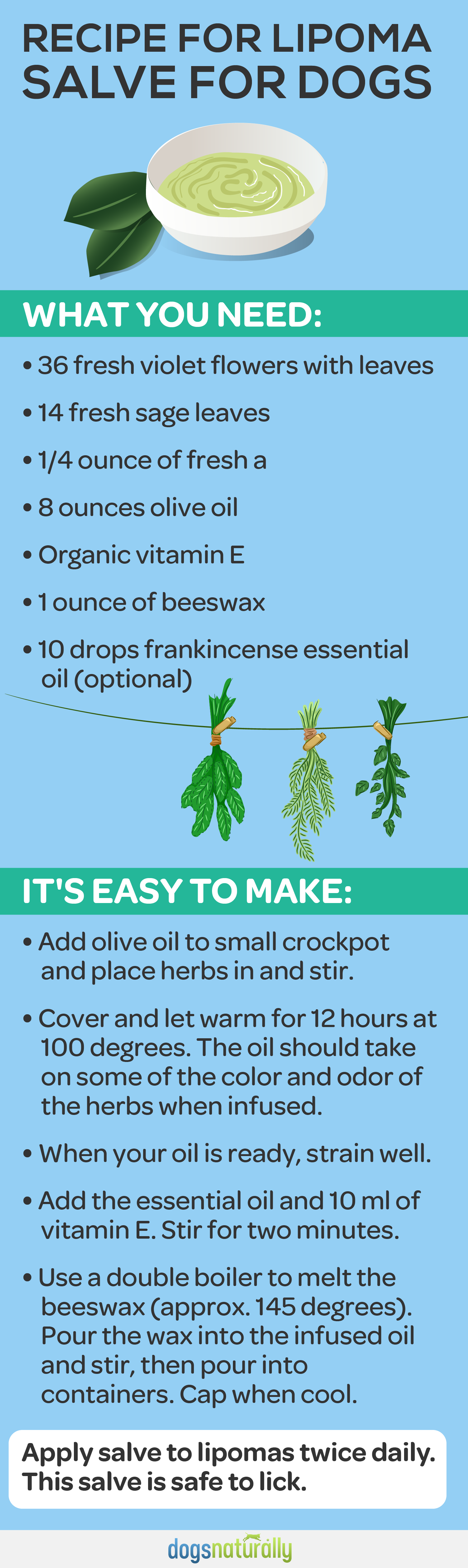
Easy Lipoma Salve Recipe

What you need:

·         36 fresh violet flowers with leaves

·         14 fresh sage leaves

·         1/4 ounce of fresh chickweed

·         8 ounces olive oil

·         Organic vitamin E

·         1 ounce of beeswax

·         10 drops frankincense essential oil (optional)

It’s easy to make:

·         Add olive oil to small crockpot and place herbs in and stir.

·         Cover and let warm for 12 hours at 100 degrees. The oil should take on some of the color and odor of the herbs when infused.

·         When your oil is ready, pour through a strainer into a glass pitcher.

·         Add the essential oil and 10 ml of vitamin E and stir for two minutes.

·         When you’re ready to make your salve, use a double boiler to melt the beeswax (approx. 145 degrees). Pour the wax into the infused oil and stir, then pour into containers and cap when cool.

Apply salve to lipomas twice daily. This salve is safe to lick. I like to make large batches of this salve in the springtime when fresh herbs are available.

Using herbal remedies with patience and consistency can support the body’s elimination channels. Recovery from lipomas is individual and some dogs will respond at a faster pace than others.

The goal is to slowly dissolve fatty tumors so the body isn’t overwhelmed with toxins and the herbs and the other healing methods I’ve mentioned in this article as well as homeopathy offer effective ways to support the body’s elimination channels while working to get the body back in balance. Working with these methods will not show success quickly but with patience and consistency, you’ll see these fatty lumps get smaller and in many cases disappear.


Disposing of cat litter in an eco-friendly manner

Disposing of cat litter in an eco-friendly manner


By Kate Hughes

Many pet parents are concerned with the impact that their pets are having on the environment. Maybe they’ve already adjusted their lifestyles to incorporate more sustainable products—like bamboo toothbrushes and reusable straws, taken a closer look at their recycling habits and even started to dabble in composting. But, for even the most eco-friendly pet parents, there’s one item that isn’t that easy to find a green alternative for—cat litter.


But there are green ways to dispose of cat waste and cat litter. With the right materials and a little know how, cat owners can reduce their eco-paw print and dispose of their kitty’s leavings in a way that is less harmful to the environment.


Searching for a Sustainable Cat Litter


Disposing of cat litter in an eco-friendly manner begins with the composition of that litter. “Clay litter is not the most sustainable option,” notes Ramsey Bond, a recent graduate of Colorado Mountain College in Glenwood Springs, Colorado, whose studies focus on sustainability. For her senior project, Bond worked closely with the Colorado Animal Rescue (C.A.R.E.), a nonprofit animal care organization in Glenwood Springs, Colorado, to develop animal waste composting procedures that lessened the shelter’s eco-footprint and transformed it into an overall more sustainable facility.


Bond strongly suggests that any person looking to lessen the environmental impact of their cat litter switch to a wood pellet-based product. “Wood pellet-based litters are a renewable resource and are ideal for composting,” she explains.


C.A.R.E. uses wood pellets from a local feed store, but other available options include the Okocat natural wood clumping cat litter, Simply Pine cat litter, Feline Pine original cat litter and Next Gen Pet Products Cypress Fresh litter with green tea.


Tracey Yajko, canine behavior and community outreach manager at C.A.R.E., says that her organization had been using pine pellets as their go-to cat litter for many years. “We switched to pine pellets for two reasons—cost and disease prevention,” she explains. “When bought in bulk, it’s less expensive than clay-based litters, and it’s dust-free.”


While seasoned cat owners might be hesitant to change the type of cat litter they’ve been using, as cats are notoriously picky about their cat litter boxes, Yajko adds that most of the cats at C.A.R.E. have no issues with the pine pellet litter. “There are some older cats that are a little finicky about their litter, but 90 percent of our animals take to the pine litter without any issues,” she says.


To the Compost Heap


As Bond noted, wood-based cat litter is ideal for composting, which is perhaps the eco-friendliest way to dispose of cat litter and waste. But you must be very careful about reaching the correct temperature to destroy pathogens.


Unless you’re using an enzyme to help break down waste or can guarantee that the compost bin is heating to over 145°F, you don’t want to use this fertilizer in a vegetable garden. “There are some pathogens in cat waste that are harmful to humans. If you can get temperatures over 145°F, you can destroy those pathogens and the fertilizer should be safe,” Bond says.


“By combining wood and cat feces, you’re creating instant compost,” she explains. “All you need to start composting is a carbon source and nitrogen source. Wood is carbon; cat waste is nitrogen. Add sunlight, water and time, and all of those components will break down naturally.” Bond’s project launched this spring, and by summer, she and C.A.R.E. are hoping that the compost is far enough along that it can be used as fertilizer for trees and other plants.


How to Compost


Bond says that people looking to compost their cat’s waste should research their options and look into local ordinances before they begin. “There are so many different ways to compost, but the two most popular are the bucket method and starting an in-ground compost area,” she notes.


Buckets can be expensive and are only able to compost a small amount at a time, but this may not be an issue for people with only one cat. In-ground methods can handle more volume, but you should research to make sure your property isn’t anywhere near a water source. “You’ve got to check where your water table is if you live near a water source, because there can be runoff and leaching from your compost. You have to consider that you’re basically creating a mini landfill and should treat it as such,” Bond explains.


Bond suggests that anyone thinking about composting their cat’s waste read the book, “The Pet Poo Pocket Guide” by Rose Seemann. “It has so much information and really lays out all of your options as a pet owner,” she says.


Flushing Cat Waste


For apartment dwellers, composting what’s in your cat’s litter box might not be possible. However, Bond says that there is another eco-friendly way to dispose of cat waste—flushing it.


“If someone lives in an apartment, I’d say their best bet would be using a wood pellet litter and disposing of solid waste in the toilet,” she says. Keep in mind that we’re only talking about flushing the actual cat waste here.


“But if you’re going to go this route, check with local waste management companies first. You want to be sure that their treatment methods will kill all the bacteria and pathogens commonly found in cat feces,” says Bond.


But, can you flush the cat litter with it?


Bond cautions that people who live near the coasts or other major waterways shouldn’t flush their cat litter. “In coastal regions in particular, you never want to flush cat waste because it can contain Toxoplasma gondii, a bacteria that causes toxoplasmosis,” she says. “This bacteria can contaminate water and cause people to get sick.”


Keep an Open Mind


Bond says that part of the reason cat waste is having such a negative impact on the environment is that so many people are simply used to using clay litter. There are other options out there that are so much more eco-friendly. “All you have to do is be open to using them and you can decrease your—and your cat’s—carbon footprint,” Bond says.


Image via Africa Studio/Shutterstock.com


How Old is Your Dog Really?


How Old is Your Dog Really?

By Johnathan Vance


Today, I sat outside in the warm breeze and watched one of my four, furry little rays of joy pounce around the yard. As I watched her chase bugs and bark at the deer, it dawned on me just how impressive she was. My little Daisy is nearly twelve years old and is just as spry as any dog half her age. Twelve is pretty old for a dog, as almost everyone knows, but just how old is it really? As humans age, we arrive at these various milestones of bodily failure. In our thirties, we begin to complain that our livers don’t process our all-nighters like they used to in college. In our forties, we go for the “just to be safe” checkups that often make us very uncomfortable. In our fifties, we’ve all got something wrong and are actively working to slow or alleviate its progression. Our sixties are pills and lifestyle changes and anything beyond them is gravy, though not literally, because we aren’t allowed to have gravy anymore. The real question is, why can’t we see these defining moments of health change as easily in our pets? Is my dog really “old” if she runs freely about the yard chasing animals ten times her size? What about her rescue friend, Zoie? They’re roughly the same age, but the level of their activity is drastically different. So, how old is my dog really?

A Dog’s Human Age

We’ve all heard the wives’ tale, “Each human year is equivalent to seven dog years,” but it’s not even remotely that simple. A year of time is, in truth, no different to a dog than it is to us. There is no alternate set of sensations to a year. Dogs are not self-aware and tracking their remaining years. So, how can we reasonably ask how many dog years are in one human year? In reality, you can’t. A year is a year. What you’re really asking is, “how does the rate of aging in dogs compare to the rate of aging in humans?” While not entirely accurate, the chart below is a good ball park: From WebMD

The Rate of Living Theory

The chart is really illustrating the rate of maturation in small, medium, and large dog breeds. Dogs are similar to humans and other mammals in that each individual can vary greatly from another. Much of the modern science of aging is based on The Rate of Living Theory. This theory, proposed by Max Rubner in 1908, suggested that length of mammalian life was directly related to metabolism. He came to this conclusion by observing that larger mammals tended to outlive smaller ones. The oddity in the theory is that small dogs tend to outlive larger dogs. The reasons for this are a lot deeper than the scope of this article and involve more than one metabolic rate in calculations of calorie usage. For our purposes, we will assume a broader understanding. Nonetheless, this theory plays a big part in the understanding of a dog’s maturation cycle.

Maturation Stages of Dogs

The first stage of maturation in dogs is, of course, puppyhood. This is often the cutest stage in a dog’s life, while also being one of the most influential in training. Due to the rapid growth experienced in this stage, the first year of a dog’s life is comparative to our first fifteen. This stage lasts between six to eighteen months. The second stage in maturation is Adolescence, which lasts more or less time based on when puppyhood ends. Think of these months as the difficult teenage years of a human child. Most agree that the third stage, adulthood, begins anywhere between one and three years of age. When this stage occurs is very important to interpreting your dog’s human age. The first three years of a dog’s life is a time of exponential growth as it relates to human age. By reaching full adulthood, a dog can be seen as twenty four years old. As early as six years, and as late as ten, the dog will enter the senior stage. Ultimately, though, the rate of increase per human year, at this point, is anywhere from 3-7 years. As mentioned before, this greatly depends on the size of the dog and individual genetics.

Size as it Relates to Aging

Most resources on oxidative science, or Redox Biology, are fairly limited on concrete facts. However, cell oxidation is why organisms age and die. Typically, as mentioned above, larger mammal species tend to have longer life spans than their smaller counterparts. In the case of dogs, this is less true. Often, the larger the dog breed, the less time it has on this earth. There are several theories regarding why this is, but the most popular right now relates to the levels of a certain growth hormone found in larger breeds. This hormone, IGF-1, is responsible for the increase in size. It is believed that the hormone has a direct correlation with the effects of aging in these breeds. Small to medium sized dogs tend to have much lower levels of this hormone in their blood at all times in life. The general debate around this find, though, revolves around whether or not big dogs age faster, or earlier. It is unclear if the aging process simply begins at earlier stages of a large dogs life or if, once it begins, completes very rapidly. There is evidence to support that both could be simultaneously affecting the dogs, so it is hard to determine which plays the bigger role. One thing is for certain, the experiments necessary to discover the truth behind it would potentially be considered cruel and unusual. So, maybe we’re better off not knowing!

The Bottom Line

Unfortunately, the best calculation for your dog’s human age will only be available after you say goodbye forever. That’s too depressing, so let’s use the chart! My little Daisy may be sixty-four years old in human years, but she’s as healthy as she was in her twenties. Here’s to ripe old age for all our furry friends.


Mistakes Which Can Make Your Dog Depressed

Mistakes Which Can Make Your Dog Depressed

By Dr. Karen Shaw Becker and comments by Diane Weinmann

Science hasn’t figured out yet whether dogs suffer from depression in the same way people do. They certainly experience mood and behavior changes, but those changes are usually temporary and traceable to a recent event in the dog’s life. For example, perhaps the kiddos just headed back to school after a summer spent swimming and playing with their dog, and she misses having them around. Or maybe you’ve just added a puppy to the family and your older dog is feeling left out.

Dogs who suffer the loss of a family member (human or pet) often go through a grieving period. And of course many dogs abandoned at shelters suffer a period of sadness and uncertainty.  Grief relief in the form of a custom made bach flower essence can help the transition period of loss.  Contact Diane at Dianefortheloveofanimals@yahoo.com for a custom treatment bottle to deal with grief for yourself or your pet.

The problem with diagnosing clinical depression (which is different from short-lived episodes of depressed behavior) is that even in humans, there’s no biological test to identify the condition. Medical doctors take note of symptoms and what the patient tells them about their feelings to arrive at a diagnosis.

Many people who cannot talk and hear pets must rely on their powers of observation to determine if a canine companion is feeling down in the dumps. Generally speaking, when a vet or veterinary behaviorist or animal communicator describes a patient as depressed, the dog is displaying a change in normal behavior.

6 Reasons Dogs Get Depressed

1. She’s dealing with an undiagnosed medical problem

If your dog’s behavior changes, even if you suspect you know why, it’s always a good idea to check in with your veterinarian. Many changes in behavior symptomatic of depression, including lack of appetite, potty accidents in the house, sleeping more than usual, reluctance to exercise and sudden aggressive behavior in a dog who has never shown aggression, can also be signs of any number of underlying medical conditions.

2. He’s feeling ignored

A healthy dog who is feeling depressed may lose interest in eating or playing, become destructive, have accidents in the house or stop running to greet you when you come through the door. Like a sleepy, sluggish dog, a depressed pooch often just needs more quality time with his human.

Get into the habit of spending an uninterrupted hour with your dog each day engaging in physical pursuits, grooming rituals, training exercises and good old tummy rubs. It will lighten both your moods!

3. She’s not getting enough exercise

Sadly, some dogs become socially inhibited when they aren’t getting enough exercise and playtime. This can take the form of a decrease in interaction with other family members, or choosing to isolate themselves in their crate or another room. If your normally happy dog suddenly isn’t, consider the possibility that she needs more exercise.

Most dogs need much more physical activity than their owners realize. Your dog should be getting an absolute minimum of 20 minutes of sustained heart-thumping exercise three times a week. Thirty minutes is better than 20, and six or seven days a week is better than three.

Minimum exercise requirements prevent muscle atrophy, but don’t necessarily build muscle mass, strengthen tendons and ligaments, hone balance and proprioception, or enhance cardiovascular fitness, which is why more is always better. If you can provide your dog daily walks as well as additional daily training sessions to meet your other exercise goals, even better!

4. He’s suffered the loss of a human family member or pet

It’s not unusual for dogs to grieve the loss of a person or animal friend they are bonded with. According to the late Dr. Sophia Yin, a veterinarian and applied animal behavior specialist, dogs feel the same basic emotions humans do, including grief, fear, anger, happiness, sadness and even possessiveness.

When a dog is mourning a loss, depression is common. Signs of depression in dogs mimic those in people — sleeping more than normal, moving more slowly, eating less and showing a limited interest in playing.

If your dog seems depressed at the loss of a person or animal he was close to, engage him in activities he enjoys, such as a walk, a game of fetch or a trip to the dog park. It’s really a matter of distracting him with things he enjoys until sufficient time has passed and he’s no longer looking around every corner for the one who is now absent from his life.

And it’s best not to expect a quick fix. It can take from a few weeks to a few months before your dog’s depressed mood begins to lift.  Again as mentioned above,  a custom Bach Flower essences treatment bottle can help your pet deal with their grief holistically.

5. Her favorite human is depressed

Your dog is very observant of your emotional state, which she can detect by observing the tone of your voice, your body language and other subtle clues, including your pheromones (how you smell). The way you move, speak and behave all send subtle signals to your dog that indicate your mood.

For example, when you’re in a situation that’s stressful to your dog, such as at your veterinarian’s office, she’ll look to you to help her calm down. If, however, you seem tense and nervous, she’ll likely become even more anxious. Your dog is extremely intuitive; so if you’re feeling blue, don’t be surprised if she seems depressed as well.

6. He’s being subjected to punitive behavior training

Dogs who are punished for undesirable behavior instead of being rewarded for positive behavior may stop interacting with their owners in an attempt to avoid punishment. They adopt a depressive state of mind called “learned helplessness” because they feel powerless to avoid negative situations.

I can’t stress strongly enough the importance of positive reinforcement behavior training, not only to help your dog become a good canine citizen, but also to preserve and protect the close and priceless bond you share with him.

5 Tips for Helping a Depressed Dog

1. Keep daily routines as consistent as possible. Pets do best when they know what to expect from one day to the next. Try to keep mealtimes, exercise, walks, playtime, grooming, bedtime and other daily activities on a consistent schedule. Exercise is a powerful tool to help increase your pooch’s endorphins, or “feel good” hormones. Lots of walks (with plenty of opportunities to sniff) can be a powerful mood enhancer.

2. Keep your dog’s diet and mealtimes the same and spice up what’s on the menu. It’s important to continue to offer him the same food he’s used to, at the same time each day, but if you find your dog isn’t interested in eating much, consider offering a yummy knucklebone for dessert, or make a tasty treat for training time that he hasn’t had before.

Store what he doesn’t eat in the fridge, and offer it to him again at his next regularly scheduled mealtime. Use his hunger to help him get his appetite back by resisting the urge to entice him with unhealthy food toppers.

3. Be careful not to inadvertently reward your dog’s depression. It’s only natural to want to comfort your sad pet, but unfortunately, giving attention to a dog who is displaying an undesirable behavior can reinforce the behavior. Obviously the last thing you want to do is reward a lack of appetite, inactivity or other types of depressed behavior in your dog. Instead, you want to help her over the hump.

A better idea is to try to distract her with healthy, fun activities that provide opportunities for positive behavior reinforcement. This can be a walk, short training sessions, a game of fetch, nose work or offering her a food puzzle toy or recreational bone.

4. Give it time. Your dog’s depression may take a few days or even weeks to blow over, but eventually most pets return to their normal lively selves. If at any point you feel your pet is suffering unnecessarily or there is something more going on than a case of the blues, I recommend discussing the situation with your vet or a veterinary behaviorist.

5. Use natural remedies, if needed. There are some excellent homeopathic and Bach flower remedies that can be easily administered to your depressed dog until you see an emotional shift for the better. Some of my favorites include homeopathic Ignatia, several Bach flower remedies including Mustard and Honeysuckle, and Green Hope Farm Grief and Loss.  Custom treatment bottles for your unique situation can be obtained from Diane Weinmann at Dianefortheloveofanimals@yahoo.com.


Feline inappropriate elimination

Feline inappropriate elimination

By Dr. Karen Shaw Becker and comments by Diane Weinmann

Feline inappropriate elimination — a fancy name for those times when kitty pees (or poops) outside the litterbox — accounts for about half of all reported behavior problems in cats. Sadly, it’s the reason pet owners give most often when they relinquish their kitty to an animal shelter. According to Dr. Nicholas Dodman, a professor at Tufts University’s Cummings School of Veterinary Medicine and founder of the Tufts Animal Behavior Clinic:

“It is a cold, hard fact that cats who fail to use the litter box once a week are four times more likely to be relinquished; if they eliminate outside the litter box daily, these odds increase to over 28:1. About 4 percent of cats urinate outside the litter box weekly, and 1 percent eliminate outside the litter box daily.”1

Cats relieve themselves outside the litterbox for a number of reasons, some having to do with natural feline tendencies, and others involving their environment. Often there are both natural and situational factors underlying a problem with inappropriate elimination. The three main causes for feline inappropriate elimination are:

1.    A medical problem

2.    Urine marking

3.    Aversion to the litterbox

Estimates are that 10 to 24 percent of all kitties have an inappropriate elimination problem at some point in their lives.

Medical Conditions That Can Cause Inappropriate Elimination

If your cat suddenly forgets her manners and starts either peeing or pooping outside the litterbox — especially if she starts using the bathtub or a sink instead —the first thing I recommend is a visit to your veterinarian. There are a number of medical conditions that can contribute to inappropriate elimination, including feline lower urinary tract disease (FLUTD), urinary tract infection, cystitis, obstruction of the urethra, diabetes, cognitive dysfunction and hyperthyroidism.

Diagnosing and treating an underlying medical condition is extremely important to your kitty’s health and to resolving inappropriate elimination behavior. Your veterinarian will perform a physical exam, and order a complete blood count, a blood chemistry profile, a urinalysis and check the thyroid if your cat is older. If the problem involves pooping outside the box, a fecal sample will be taken.

If your cat gets a clean bill of health from the vet but is a senior or geriatric kitty, it’s possible the aging process is causing changes in her elimination habits. For example, does she have to climb stairs to get to the litterbox? Is the box easy for her to get into and out of? It can be challenging to determine if a cat is uncomfortable or in pain. If your older cat is otherwise healthy but could be experiencing joint pain, make sure you’re doing all you can to make it easy for her to use her litterbox.

Urine Marking

Urine marking can be hormonally driven, but it’s most often the result of a natural system of feline communication, or stress. Both male and female cats spray, as do both neutered and intact cats. However, neutered cats spray less, and neutering can reduce or eliminate spraying in some cases.

Kitties who urine-mark generally use the litterbox normally, but also perform marking behaviors. Some cats do both house soiling and urine marking, but it’s easy to tell the difference between the two once you know what to look for.

Urine marking, when it takes the form of spraying, typically happens on vertical surfaces. However, some cats urine-mark on horizontal surfaces, which can make it more difficult to determine whether you have a marking problem or a house-soiling problem. Where your cat marks is of primary significance. Generally speaking:

·         If he marks under windows or on baseboards, he may perceive a threat from animals outside, usually other cats

·         If he marks on or near furniture or doors inside your home, he might be having problems with other cats in the household

·         If your cat marks personal belongings, such as clothes, bed linens, a favorite chair or a computer keyboard, he’s probably experiencing some anxiety about the human who owns those things

Other places cats are known to urine-mark are on shopping bags just coming into the house, heating registers and household appliances.

Resolving urine marking involves identifying and addressing the source of your kitty’s stress. When did the marking begin, and what was happening in your cat’s environment at that time? Just as cats favor certain scratching surfaces, they also return to the same spot to urine-mark. You’ll need to use an enzyme-based product for cleanups to remove stains and odor.

You might also want to spray a synthetic pheromone like Feliway on kitty’s favorite marking spots. Cats also “mark” by rubbing their cheeks against objects (for example, the top of their human’s head), and Feliway may encourage your cat to mark with his cheeks instead of his urine.

It’s important to note that urine marking can be difficult to manage, as often the root cause, if determined, can’t be resolved completely. And sometimes despite addressing all possibilities, cats still mark. 

One option is talking to an animal communicator, like Diane Weinmann to understand the underlying problems your kitty has.

Litterbox Aversion

Cats who are happy with their bathrooms behave more or less like this:

·         Approach and jump or climb into the box without hesitating

·         Take a little time to poke around and choose a good spot

·         Dig a hole

·         Turn around and do their business

·         Inspect the result and then cover it up with litter

Cats who are developing a litterbox aversion may approach it tentatively. They may balance on the side of the box or put only two feet in. They may actually use the litter, but immediately leap from the box when finished. Worst case they may walk to the box, sniff at it, turn, walk away — and eliminate elsewhere. Pooping outside the box, but very close to it, is almost always a litterbox aversion problem.

Your cat can decide she doesn’t like her litterbox for any number of reasons. Perhaps it isn’t being cleaned frequently, or not frequently enough for her comfort. Maybe she’s sensitive to a chemical used to clean the box, or perhaps she’s not fond of a box with a hood. The box may be in a noisy or high-traffic location, or where another pet in the household can trap her in there.

Tackling Kitty’s Litterbox Aversion

Extra boxes for multi-cat households. If you have multiple cats, you may need to add more boxes. The general guideline is one box per cat, and one extra.

Litter preference. It could be kitty doesn’t like the type of litter in the box, or it’s not deep enough (4 inches is recommended). You can discover your pet’s litter preference by buying the smallest amount available of several kinds of litter, and several inexpensive litterboxes. Place the boxes with different litters side by side and see which box gets used most often.

Studies on the types of litter cats prefer show they are quite particular about particle size. The cat’s evolutionary substrate, for potty purposes, is sand. When kitties started living indoors, clay litter came along and most cats were okay with it. But clay has its own issues, as do corn- and wheat-based litters.

These days, there’s a wide selection of organic and natural types of litters on the market, but many of them feature big particle sizes, which don’t appeal to most cats. Kitties also don’t like synthetic scents or odor control additives in their litter. The litter I use for my own cats is our own Biocharged Kitty Litter made with organic biochar. Biochar has a large surface area and is a recalcitrant, which means the charcoal itself holds onto things such as water and smells.

Our litter has incredible clumping properties, which means it lasts longer and there’s less total wetness and mess. It’s also 100 percent biodegradable and compostable. And it’s entirely fragrance-free, because the carbon helps to lock in odors.

Litterbox location. Find locations for litterboxes that are somewhat out of the way, and away from noisy household machinery and appliances. Choose warm locations in the house rather than the basement or garage. And make sure boxes aren’t close to kitty’s food or water bowls.

Litterbox cleanliness. Boxes should be kept scrupulously clean. They should be scooped at least once a day and more often if you’re dealing with a potential litterbox aversion situation. Dump all the used litter every two to four weeks (I recommend every two weeks, minimum), sanitize the box with soap and warm water (no chemicals), dry thoroughly and add fresh litter. Plastic litterboxes should be replaced every year or two.

To review, litter box aversion can usually be resolved by:

·         Determining the type of litter and litter box your kitty prefers

·         Using the right amount of litter (4 inches, minimum, at all times)

·         Keeping the boxes scooped, and doing a thorough cleaning at least every two weeks

·         Having enough boxes and locating them in safe, easy-to-access locations

Diane has encountered many litter box issues in her 20 years as an animal communicator.  Many litterbox problems are related to changes in the household, cleanliness and actual litter preference.  Please note that sometimes cats change their mind about the preference of litter they like so the tried and true litter you’ve used for years may not cut it any longer.  Contact Diane at Dianefortheloveofanimals@yahoo.com to schedule an animal communication session.


5 Classic Signs of Canine Aging

By Dr. Karen Shaw Becker


Much as we’d like our canine companions to stay forever young, sadly, just like us, they get older. The good news is it’s the care and love we give them throughout their lives that allows them to grow and thrive and reach their golden years.

Once your dog starts to show signs of aging, it’s important to focus on making his senior and geriatric years as happy, healthy and comfortable as possible. One age-related condition that many older dogs develop is canine cognitive dysfunc­tion (CCD), which is similar to Alzheimer’s diseases in people and is the result of an aging brain.

Clinical signs of cognitive dysfunction are found in 50 percent of dogs over the age of 11, and by the age of 15, 68 percent of dogs display at least one sign.1 And because large and giant breed dogs age more quickly than smaller breeds, dogs as young as 6 can begin to experience mental decline.

Symptoms of CCD

There are five classic signs of cognitive decline in dogs:

1.    Increased total amount of sleep during a 24-hour period

2.    Decreased attention to surroundings, disinterest, apathy

3.    Decreased purposeful activity

4.    Loss of formerly acquired knowledge, which includes housetraining

5.    Intermittent anxiety expressed through apprehension, panting, moaning or shivering

Other symptoms include failure to respond to commands and/or difficulty hearing, inability to recognize familiar people and difficulty navigating the environment. Additional physical manifestations of CCD can include excessive licking, lack of grooming, fecal and urinary incontinence, and loss of appetite.

5 Ways to Help Your Older Dog Maintain Cognitive Function

1. Feed a nutritionally balanced, species-appropriate diet

A species-appropriate, nutritionally balanced diet that is rich in healthy fats, including omega-3 fatty acids such as krill oil and other healthy fats, including MCT oil, is very important for cognitive health.

The perfect fuel for an aging dog is a variety of living, whole foods suitable for a carnivore. Eliminate all refined carbohydrates, which are just unnecessary sugar. No grains, potatoes or legumes. Replace those unnecessary carbs with extra high-quality protein. Eliminate extruded diets (kibble) to avoid the toxic byproducts of the manufacturing process.

Dog foods are manufactured in a way that creates byproducts that can affect cognitive health, including heterocyclic amines, acrylamides and advanced glycation end products, or AGEs. Fresh, biologically appropriate foods provide the whole food nutrients an aging brain requires. The right diet will also enhance the microbiome, which has been linked to improved cognitive health in humans, and I’ve seen an improvement in dogs as well.

2. Offer supplements beneficial to older dogs

When it comes to supplements, I typically recommend digestive enzymes and probiotics for all older pets. If your dog needs additional fiber in the diet, choose natural sources such as psyllium husk powder, ground dark green leafy veggies, coconut fiber or canned 100 percent pumpkin.

I also almost always recommend an omega-3 fatty acid supplement such as krill oil (my favorite), another fish body oil (but not cod liver oil) or algal DHA for pets who are allergic to seafood.

Most aging dogs can benefit from joint and antioxidant supplements such as glucosamine sulfate with MSM, cetyl myristoleate, egg­shell membrane, perna mussel (green-lipped clam), several homeopathic remedies, ubiquinol, supergreen foods and natural anti-inflammatory formulas (herbs such as turmeric and yucca, proteolytic enzymes, SOD and nutraceuticals).

3. Provide plenty of opportunities for exercise, socialization and mental stimulation

Senior and even geriatric dogs still need daily exercise to maintain good health and a resilient frame. While older dogs can’t exercise or compete with the same intensity as the younger set, they still derive tremendous benefit from regular walks and other age-appropriate physical activity. There are three types of strengthening exercises that can also be of tremendous help to aging canine bodies:

·         Passive range-of-motion (PROM) exercises can benefit both incapacitated and physically healthy pets

·         Balance and proprioception (spatial orientation and movement) exercises help older pets remain flexible while also encouraging improved balance and physical stability

·         Targeted strengthening exercises are designed to work the big muscle groups that help with standing, walking and running

No matter how old your dog is he still needs regular social interaction with other pets and/or people. As is the case with humans as we age, if your four-legged family member doesn’t stay active and involved in life, his world can become a confusing, intimidating place. He needs regular exposure to other pets and people, but take care not to over stimulate him — short periods of socialization and playtime in controlled situations are ideal.

Food puzzle and treat release toys provide fun and a good mental workout, as does nose work and brief training sessions to refresh his memory or teach him a new skill.

4. Minimize stress

Fortunately, there are many things you can do to minimize anxiety and stress in your older dog. Senior and geriatric dogs, especially those with CCD, are often disoriented, so sticking to a dependable daily routine can help your pet stay oriented, which will reduce her anxiety. Try to get up and go to bed at the same time each day, feed her at the same times and go for walks on a set schedule.

Keeping your dog at a healthy weight and physically active will help control arthritis and degenerative joint disease as she ages, ensuring she remains comfortable and mobile. Chiropractic adjustments, stretching, water exercises and acupuncture can also provide enormous benefits in keeping dogs mobile in their later years.

Regular massage can help keep your senior dog’s muscles toned and reduce the slackening that comes with aging. Massaged muscles are looser, which makes it easier for her to move around comfortably. Massage also improves circulation and encourages lymphatic drainage. It can ease the stiffness of arthritis, which helps your pet maintain his normal gait and active lifestyle. Massage also loosens the muscles around joints, which helps promote ease of movement.

If your dog is having some urine dribbling or incontinence as a result of her age (and not caused by an underlying condition that should be addressed), provide her with more frequent potty trips outside. You can also reintroduce her to her crate if she was crate trained initially. Acupuncture can also be very beneficial for age-related incontinence.

If your dog has problems hearing or seeing, use odor cues like essential oils or pheromone products to help her find her way around. Also consider purchasing or building ramps if your dog is having trouble getting into the car or up on the bed or a favorite chair, and if she’s slipping or unsure on bare floors, add some runners or area rugs.

For sleep problems, try increasing her daytime activity level. Let her sleep in your bedroom. Sleeping near you should help ease any anxiety that is contributing to her nighttime restlessness. Guide your dog with clear cues and easy-to-follow instructions, and when you talk to her, keep your voice quiet, calm and loving.

5. Schedule regular senior wellness check-ups

I recommend twice-yearly wellness visits for pets no matter the age, but this becomes even more important for dogs getting up in years. Keeping abreast of your animal companion’s physical and mental changes as he ages is the best way to catch any disease process early.

Ask your vet to perform a blood test to check your pet’s internal organ health to make sure you are identifying possible issues early on. Keeping abreast of your pet’s physical and mental changes as he ages is the very best way to catch any disease process early.

Over-vaccinating is something older animals do not need, so advocate for your older dog by refusing additional vaccines. You can replace the vaccines with titers. A titer is a blood test that measures protective immunity. Chances are your dog is very well-protected. Switch to titering to help reduce her toxic load.